The Great Game Round-Up brings you the latest newsworthy developments regarding Central Asia and the Caucasus region. We document the struggle for influence, power, hegemony and profits between a U.S.-dominated NATO, its GCC proxies, Russia, China and other regional players.
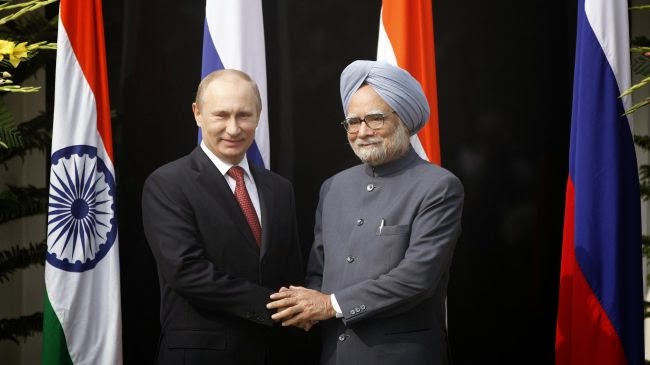
While China is building a New Silk Road and wrapping up deal after deal in Central Asia, India has so far failed to secure much-needed energy supplies from the region. Instability in Afghanistan and problematic relations with neighboring Pakistan complicate India's efforts even more since the country lacks direct access to Central Asia. New Delhi still dreams of the implementation of the Turkmenistan-Afghanistan-Pakistan pipeline but this project has for now been suspended. In order to strengthen relations with the Central Asian states and to increase the current trade volume of merely $700 million a new, more pro-active approach is desperately needed, as Dr. Arvind Guptar, Director General of India's Institute for Defence Studies and Analyses, recently argued. Indian Prime Minister Manmohan Singh addressed this issue during his visit to Russia this week and made the case for closer cooperation between the two countries in Central Asia:
Events in central and southern part of Central Asia are important for security of both Russia and India. Currently India is strengthening its historical ties with Central Asian states and looks forward for closer cooperation with Russia in the region, he said.
The minister said that cooperation between Russia and India can play an important role in promoting peace, stability and economic development in Afghanistan. It may also be effective in dealing with common challenges such as extremism, terrorism and drug trafficking, he added.
 German News, German Breaking News, German Latest News