The Great Game Round-Up brings you the latest newsworthy developments regarding Central Asia and the Caucasus region. We document the struggle for influence, power, hegemony and profits between a U.S.-dominated NATO, its GCC proxies, Russia, China and other regional players.
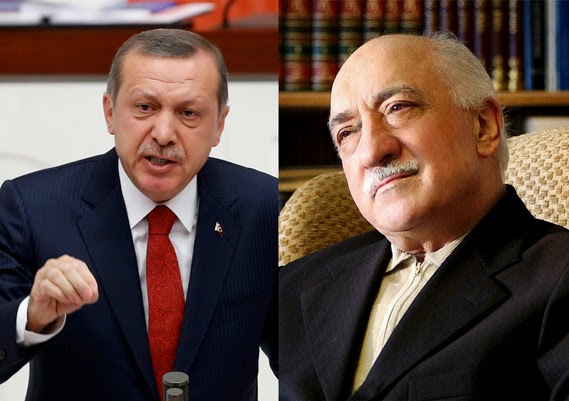
Although the U.S.-backed Gülen movement has tried to topple Turkish Prime Minister Recep Tayyip Erdogan by all available means, the controversial political leader managed to achieve a decisive victory in Turkey's recent local elections, which were viewed as a “referendum” on the Erdogan-led government. The Turkish PM did not waste any time by celebrating and instead continued his crackdown on the Gülen movement. Less than a week after the vote, the fight against the vast network of CIA puppet Fethullah Gülen led Erdogan to Azerbaijan, where Hizmet enjoys a strong presence:
Gülen: Top Issue in the Agenda of Erdoğan’s Visit to Azerbaijan
Azerbaijan has always had a tremendous importance for the Gülen movement, partly because that is where they started to expand and where they met success. Further development throughout the Caucasus and post-Soviet Central Asia helped them become one of the most powerful and influential transnational Islamic movement present in more than 130 countries. Still, Azerbaijan is the one place outside Turkey where the movement is the most involved. Indeed, numerous businesses and educational companies managed by Gülen’s disciples and sympathizers operate here. Among them are the highly visible international Qafqaz University, a network of 15 high schools and more than 20 Araz prep schools spread around the country. Besides, some major media, like the newspapers Zaman Azerbaijan, the radio station Burç and a TV channel, are close to the Gülen movement.
 German News, German Breaking News, German Latest News