The Great Game Round-Up brings you the latest newsworthy developments regarding Central Asia and the Caucasus region. We document the struggle for influence, power, hegemony and profits between a U.S.-dominated NATO, its GCC proxies, Russia, China and other regional players.
After nearly four years of negotiations, the European Union und Kazakhstan finally agreed on a new enhanced Partnership and Cooperation Agreement (PCA) during this week's visit to Brussels by Kazakh President Nursultan Nazarbayev. The agreement, which is expected to be signed next year, “aims to boost cooperation in around 30 policy areas including trade and foreign and security policy.” Given that the PCA is a far weaker deal than the infamous European Union Association Agreement and that the Kazakh negotiators had been “very careful that the agreement respects their country's commitments to the Customs Union and the Eurasian Economic Union,” the Kremlin won't get worked up over the agreement. With the PCA negotiations concluded, Nazarbayev travelled to Minsk to attend summits of the Commonwealth of Independent States, the Eurasian Economic Community and, most importantly, the Eurasian Economic Union, which welcomed a new member:
Armenia Joins Eurasian Union
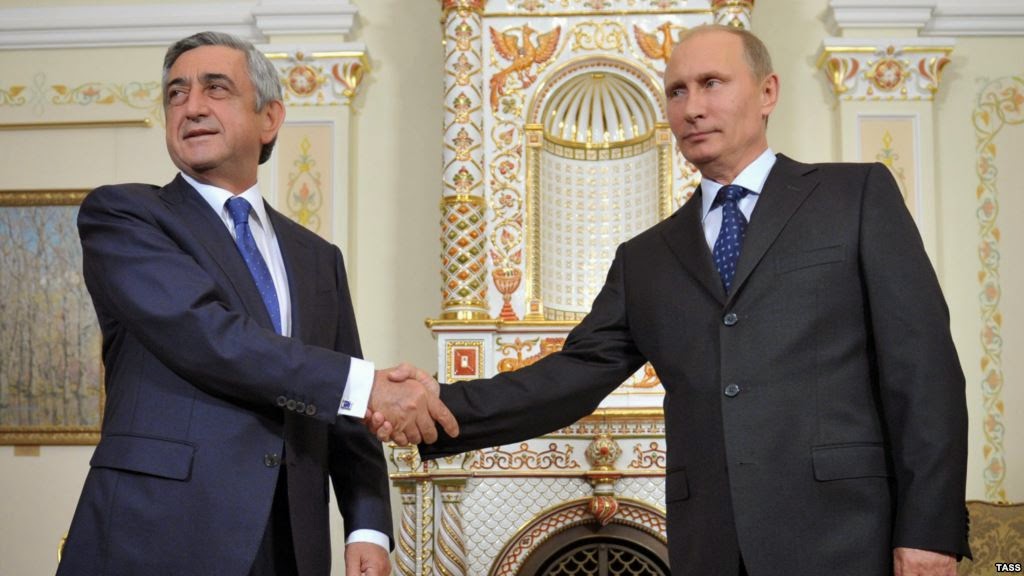
After months of delay, Armenia formally joined the Eurasian Economic Union (EEU) of Russia, Belarus and Kazakhstan on Friday, drawing praise from Russian President Vladimir Putin.President Serzh Sarkisian signed a corresponding accession treaty with Putin and Presidents Nursultan Nazarbayev of Kazakhstan and Aleksandr Lukashenko of Belarus at a summit of the Russian-led bloc held in Minsk.
Speaking at the gathering, both Putin and Sarkisian expressed hope that the treaty will be ratified by the parliaments of the EEU’s three member states by the end of this year. The Armenian president said his country should be able to “start working from January 1” as a full-fledged member of an alliance which critics fear will restore Russian hegemony over much of the former Soviet Union.
 German News, German Breaking News, German Latest News