Three months ago, Armenia and Azerbaijan were on the brink of all-out war after the worst clashes in years over the disputed Armenian enclave of Nagorno-Karabakh in Azerbaijan had left more than a dozen soldiers dead. Russian President Vladimir Putin brought both sides to the negotiating table to prevent a further escalation of the conflict and Azerbaijani President Ilham Aliyev readily agreed to postpone the recapture of Nagorno-Karabakh, which fueled speculation that Baku had provoked the clashes for political reasons. Azerbaijan has shown a pattern of provoking such events in order to get the international community to devote more attention to the conflict. Moreover, the escalation of violence in late July/early August coincided with a crackdown on human rights activists and NGOs. After this short period of heavy fighting the situation calmed down and last month French President Francois Hollande hosted “constructive” talks between Aliyev and his Armenian counterpart Serzh Sargsyan. The two leaders agreed to continue the dialogue to find a negotiated peace to the Karabakh conflict but this week's downing of an Armenian helicopter doesn't bode well for the shaky peace process:
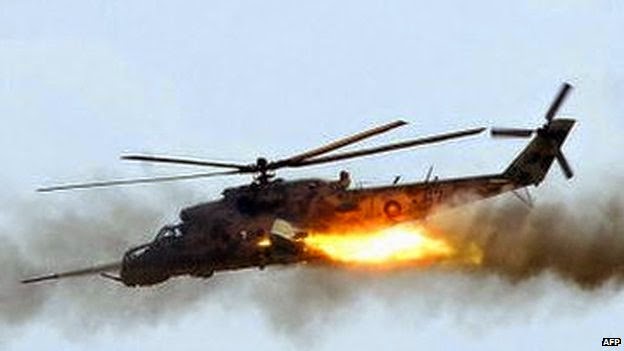
The armed forces of Azerbaijan shot down and destroyed an Armenian military helicopter in the Nagorno-Karabakh region on Wednesday, the defense ministries of both countries said.
The incident threatened to set off another cycle of violence between the two South Caucasus neighbors over Nagorno-Karabakh, which is part of Azerbaijan but along with some surrounding territory has been under the control of Armenian soldiers and local Armenian forces since a 1994 cease-fire.
Nagorno-Karabakh said the helicopter belonged to its armed forces and was on a training flight near the cease-fire line. All three crew members on board were killed, a high-ranking officer with the Nagorno-Karabakh forces told the AP. The officer was speaking on condition of anonymity because he was not authorised to release the information.
 German News, German Breaking News, German Latest News