Guide to answering the Canadian MAID consultation questionnaire.

Alex Schadenberg
Executive Director, 

Euthanasia Prevention Coalition

I urge EPC supporters to participate in the Canadian Department of Justice Medical Assistance in Dying (MAID) consultation questionnaire

(Link to the consultation webpage).

I wrote this guide to answering the Maid consultation questionnaire because some of the questions are biased and imply support for MAID. 

Please complete the consultation questionnaire and express your opposition in the comments section. The questionnaire provides an opportunity to leave additional comments and I strongly urge you to do so.


(Link to the Consultation Questionnaire).

Section A requires your demographic information. No problem.

Section B outlines the MAID criteria in Canada. Notice how that the law was changed based on the Quebec court decision. The law now states: A person does not need to have a fatal or terminal condition to be eligible for MAID.

Section C asks the question:
​​1. Do you think the current safeguards would prevent abuse, pressure or other kinds of misuse of MAID after eligibility is broadened to people whose deaths are not reasonably foreseeable?

The answer is NO.

2. The next section asks about potential “safeguards”:

a) A different reflection period (currently a 10-day reflection period) between the submission of a person’s written request for MAID and receiving MAID

(This question is not clear whether the “different reflection period” would be more than 10 days or less than 10 days. Answer this question how you want.)

​​b) MAID should be available only when the practitioner and the patient both agree that reasonable treatments and options to relieve the person’s suffering have been tried without significantly improving the person’s situation.
(This question assumes that MAID should be available).

Answer: Very Important

​​c) A mandatory psychological or psychiatric assessment to evaluate the person’s capacity to consent to receiving MAID.

Answer: Very Important

​​d) Making sure the person requesting MAID is aware of all the means available to potentially relieve their suffering, including health and social support services (for example counseling, disability support, palliative care)

Answer: Very Important

​​e) Mandatory consultation with an expert in the person’s medical condition and circumstances (for example a gerontologist, psychiatrist, or social worker), in addition to the already mandatory 2 medical assessments

Answer: Very Important

​​f) Retrospective review of MAID cases by a committee to verify that the eligibility criteria and safeguards were satisfied and in place

Answer: Very Important

​​g) Special training and tools to assist physicians and nurse practitioners to assess areas of potential vulnerability (for example mental health issues, or potential outside pressures or influences)

Answer: Very Important

​​h) An obligation for the physician and nurse practitioner to offer to discuss their patient’s situation with their family members or loved ones with the patient’s consent

Answer: Fairly Important

3. Do you have any other comments you want to share about possible safeguards for people who are eligible for MAID, but not at the end of life?

(Please comment on the lack of oversight of the law. The law allows doctors or nurse practitioners who approve a death, to also carry-out the death, to also report the death. This system allows doctors and nurse practitioners to self-report, meaning there is no oversight over the law).

Section D deals with advanced requests for MAID.

The question asks:
1. Imagine that a person makes a request for MAID, is found to be eligible, and is awaiting the procedure. A few days before the procedure, the person loses the capacity to make health care decisions, and cannot provide final consent immediately before the procedure. In your opinion, should a physician or nurse practitioner be allowed to provide MAID to a person in these circumstances?


Answer: NO

​​2. Imagine that a person is diagnosed with a medical illness that, over time, will affect their mind and take away their decision-making capacity, such as Alzheimer’s disease. The person prepares a document that says they consent to receive MAID if specific circumstances arise at a later date, after they no longer are able to consent.

​​In your opinion, should a physician or nurse practitioner be allowed to provide MAID to a person in this situation once the circumstances in their document have arisen and they otherwise meet the MAID criteria, even if they can no longer consent?


Answer: NO

​​3. Do you have any other comments you want to share about allowing MAID to be provided to a person who has an advance request but is not able to consent to MAID at the time of the procedure?


Allowing MAID (euthanasia) for someone who cannot consent denies the person the right to change their mind since only competent people have the legal right to change legal documents. Further to that, the person cannot consent to have their life ended, a decision that is irrevocable.

Section E asks for additional comments.

Please express your opposition to euthanasia (MAID).

(Link to the consultation questionnaire).

If you have any concerns, email me at: alex@epcc.ca

Please read some of these articles to help with providing additional comments:

  • Historical: Canadian Senate passed euthanasia law in time for summer break (Link).
  • Canada’s euthanasia deaths increased by 50% in 2018 (Link).
  • Ontario euthanasia deaths are rising quickly (Link).
  • UN Disability rights envoy urges changes to Canada’s euthanasia law (Link).
  • Québec court expands euthanasia law by striking down the terminal illness requirement (Link).
  • Physically healthy depressed man died by euthanasia in BC (Link).
  • Ontario doctor experiences abuse of euthanasia law (Link).
  • Québec Fourth Interim Euthanasia Report, 13 deaths did not comply with the law (Link).
  • BC Health Minister orders Delta Hospice to do euthanasia by February 3 (Link).

USA, California: Community Choice Aggregator Chooses Geothermal Over Other Renewables

San Luis Obispo “flipped the switch” to Monterey Community Power, a renewable and carbon-free energy provider (Mustang News)

San Luis Obispo and Morro Bay switched to using only renewable and carbon free energy on January 1.
Their new primary energy provider — Monterey Bay Community Power (MBCP) — is a not-for-profit organization that provides only renewable and carbon free energy to their customers, including Monterey, San Benito and Santa Cruz Counties.

MBCP provides two enrollment options. The first is MB Choice, which San Luis Obispo and Morro Bay residents were automatically enrolled in. For this plan, 66 percent of the energy is generated by hydroelectric sources and 34 percent by renewable energy sources, which includes 12 percent geothermal sources, 11 percent solar sources, 11 percent wind sources and 0.3 percent biomass and biowaste sources, according to the MBCP website.

USA: American Council on Renewable Energy Recommends Climate Policy Approaches to Impact Renewable Energy Growth and Investment

ACORE Examines Policy Options That Most Effectively Put Renewable Energy to Work (News Release)

With growing emphasis on climate policy heading into the 2020 election season, American Council on Renewable Energy (ACORE) – the GRC is a member – has released a white paper assessing notable climate policy approaches for their impact on renewable energy growth and investment, including a federal high-penetration renewable energy standard or clean energy standard, a technology-neutral tax credit, and carbon pricing regimes.

The new report, Advancing America’s Climate Leadership: Policy Options That Most Effectively Put Renewable Energy to Work, helps lay the groundwork for implementation as ACORE offers policy design recommendations and identifies complementary measures to ready the electric grid for the higher levels of renewable energy penetration necessary to achieve ambitious greenhouse gas (GHG) emissions reductions.

Here are some of the report’s key takeaways:

  • A federal high-penetration renewable energy standard (RES) or clean energy standard (CES). 
  • A technology-neutral tax credit for zero or low-carbon electricity generation.  
  • Carbon pricing.
  • We must modernize our antiquated electrical grid.

Global: Calendar of Geothermal Energy Events

Geothermal Energy Calendar from the Geothermal Resources Council

Webinar: Can coatings help mitigating material challenges in geothermal energy production? (TWI)

22 January, 3.00pm GMT

23 January, 10am to 6pm, National Press Club, Washington, DC
Will Pettitt, Executive Director of the Geothermal Resources Council (GRC) will be representing the geothermal community.
https://www.usea.org/event/usea-annual-state-energy-industry-forum

GTO Quarterly Webinar – Geothermal Technologies Office

23 January, 11:00am PST
Register………

Geothermal Technology in Canada: Future Pathways Workshop
23-24 January, Waterloo Institute for Sustainable Energy, Ontario, Canada
https://www.eventbrite.ca/e/geothermal-technology-in-canada-future-pathways-workshop-tickets-80481342863

Webinar – Climate change solutions: Geothermal energy opportunities in Scotland (Scottish Enterprise)
29 January, 2pm – 4pm (GMT), 6:00am – 7:30 am (PST)
https://register.gotowebinar.com/register/2540935491179057933?source=ukgeos

Geoenergy and Society: In Theory and Practice – A Sustainable Earth Institute virtual conference (University of Plymouth)
30 January
https://plymouth.onlinesurveys.ac.uk/geoenergy-and-society

Tackling environmental concerns for deploying geothermal energy in Europe (GEOENVI)
4-5 February, Brussels, Belgium
https://www.geoenvi.eu/events/tackling-environmental-concerns-for-deploying-geothermal-energy-in-europe-save-the-date/

GT’2020 Türkiye Jeotermal Kongresi
5-6 February, Ankara, Turkey
https://geothermalturkey.org/

Geothermics for Petroleum Engineers (IGA Academy)
5-6 February, Aberdeen, Scotland, UK
https://www.geothermal-energy.org/event/geothermics-for-petroleum-engineers/

Stanford Geothermal Workshop – 45th Annual
10-12 February, Stanford, California, USA
https://geothermal.stanford.edu/events/workshop

GEMex Final Conference (GEMex Project)
18-19 February, Potsdam, Germany
http://www.gemex-h2020.eu/

European Geothermal PhD Days (EGPD 2020)
24-26 February, Pamukkale University, Denizli, Turkey
http://www.pau.edu.tr/egpd2020/en

Geothermal Production Technology (IGA Academy)
4-5 March, Amsterdam, The Netherlands
https://www.geothermal-energy.org/event/geothermal-production-technology/

GeoTHERM – Expo & Congress
5-6 March, Messe, Offenburg, Germany
https://www.geotherm-offenburg.de/de/geotherm_messe_kongress_geothermie

Geothermal Project Development, Economics and Risks (IGA Academy)
11-12 March, Basel, Switzerland
https://www.geothermal-energy.org/event/geothermal-project-development-economics-and-risks/

3rd IGC Invest Geothermal Finance & Investment Forum
26 March, Frankfurt, Germany
https://www.investgeothermal.com/

DGG/SEG Joint Geothermal Workshop: Geophysical Exploration from Fossil to Geothermal Reservoirs
27 March, Munich, Germany
https://dgg2020.dgg-tagung.de/deutsch/veranstaltungen/seg-dgg-workshop/

Joint GRC-SPE Workshop – High Temperature Well Cementing
“Exploring Geothermal and Oil and Gas Synergies”
30 March – 1 April, San Diego, California, USA
https://www.cement.mygeoenergynow.org/

9th ITB International Geothermal Workshop 2020
1-2 April, Bandung, Indonesia.
https://geothermal.itb.ac.id/

World Geothermal Congress 2020
27 April – 1 May, Reykjavik, Iceland
www.wgc2020.com/

EGU General Assembly 2020
Including session: Exploration, utilization and monitoring of conventional and unconventional geothermal resources
3-8 May, Vienna, Austria
https://www.egu2020.eu/

Geothermal Regulations, Legislations and Incentives (IGA Academy)
6-7 May, Basel, Switzerland
https://www.geothermal-energy.org/event/geothermal-regulations-legislations-and-incentives/

The 7th International Meeting on Heat Flow and the Geothermal Field
(GFZ German Research Centre for Geoscience)
12-14 May, Potsdam, Germany
http://www.ihfc-iugg.org/meetings/2020-potsdam

Geothermal Volcanology Workshop 2020 (Institute of Volcanology and Seismology)
5-9 September, Petropavlovsk, Kamchatsky, Russia.
http://www.kscnet.ru/ivs/conferences/GeothermVolc2020/indexEN.html

1st Inaugural Canadian Geothermal Summit 2020 (UAlberta Geothermal Research Group)
Commercialization and research of Canada’s vast geothermal resources
9-10 September, Edmonton, Alberta, Canada
https://www.cgsummit2020.com/

Geothermics for Petroleum Geoscientists (IGA Academy)
16-17 September, London, UK
https://www.geothermal-energy.org/event/geothermics-for-petroleum-geoscientists/

44th GRC Annual Meeting & Expo
18-21 October, Reno, Nevada, USA
https://reno2020.mygeoenergynow.org/

Eighth Africa Rift Geothermal Conference (ARGeo-C8)
2-8 November, UNEP headquarters, Nairobi, Kenya
http://theargeo.org/

COP 26 – Climate Change Conference
9-20 November, Glasgow, Scotland, UK
https://unfccc.int/

Geothermal for Heating and Cooling (IGA Academy)
18-19 November, Warsaw, Poland
https://www.geothermal-energy.org/event/geothermal-for-heating-and-cooling/

45th GRC Annual Meeting & Expo
3-6 October, 2021, San Diego, California, USA
https://www.mygeoenergynow.org/

Lethal Problems with Medical Futility and Disability Bias

This article was published by Nancy Valko on January 15, 2020.

Nancy Valko

By Nancy Valko

In 2018, Chris Dunn survived a freak diving accident that left him paralyzed, mostly blind and on a ventilator to breathe. He spent most of the next year in an ICU in rural Maine.

Unable to see, eat, breathe or move on his own, the 44 year old father and concrete work spent his days in bed listening to the History Channel and hoping for a chance to show he could do more.

Efforts to find a rehab center failed. Even worse, hospital administrators and others were encouraging Chris’s mother Carol to put him in hospice to die. As the article states:

“Drugged up and confined to bed, Chris waited while dealing with a hospital staff that didn’t know what to do with him. ‘There would be nurses that would come in and tell me, ‘You know you’re making your son suffer,’ says Carol. ‘I mean, what’s a mother to do with that?’” (Emphasis added)

However, Carol refused to give up trying to find help for Chris and after 7 months, finally contacted the United Spinal Association. Jane Wierbicky, a longtime nurse and a member of the Association’s Resource Center team worked to help find a rehab center in Atlanta.

Now Chris only uses the ventilator a few hours a night, got outdoors to catch a fish, and returned home to spend Thanksgiving with his mother and girlfriend.

With the help of his mother and a team of advocates, Chris hopes to eventually live in an accessible apartment.

Medical care for Chris was not futile.

Medical Futility

The National Council on Disability defines “medical futility” as

“an ethically, medically, and legally divisive concept concerning whether and when a healthcare provider has the authority to refuse to provide medical care that they deem ‘futile’ or ‘nonbeneficial’. A “medical futility decision” is a decision to withhold or withdraw medical care deemed “futile” or “nonbeneficial.” (Emphasis added)

Because of my professional and personal experiences with disability bias as well as my volunteer work with people with disabilities, I have seen firsthand the potentially lethal effects of medical futility decisions based on disability. I have been writing on this topic for years, most recently on Missouri’s Simon’s Law enacted after the parents of a baby with Trisomy 18 and a heart defect who died later found out that doctors had ordered a “Do Not Resuscitate” and withheld life-sustaining treatment without their knowledge due to a secret medical futility policy at the Catholic hospital treating their son.

Recently, I found out that the National Council on Disability just published a 82 page comprehensive report titled “Medical Futility and Disability “ as part of a five-report series on the intersection of disability and bioethics.

In a letter to President Trump, the Council chairman states that the series:

“focuses on how the historical and continued devaluation of the lives of people with disabilities by the medical community, legislators, researchers, and even health economists, perpetuates unequal access to medical care, including life-saving care.

and notes that:

“In recent years, there has been a push to regulate medical futility decisions on the state and institutional levels. State laws, which vary greatly in their content and approach, define the protections, or lack thereof, of a patient’s wishes to receive life-sustaining treatment. Hospitals have turned to process based approaches, utilizing internal ethics committees to arbitrate medical futility disputes. Despite the increased attention, however, disability bias still finds its way into futility decision making.” (All emphasis added)

The Council identifies four factors that are influencing the futility debate today: “Advanced life-saving medical technology, Changes in healthcare reimbursement, Evolving concepts of patient autonomy and the Rise of the right-to-die movement”.

The report also extensively explores the legal issues and several court decisions involving medical futility like the Terri Schiavo and Haleigh Poutre cases.

State Laws

The Council report also evaluated current state laws regarding medical futility decisions and found only 11 with strong patient protections, 19 without patient protections, 19 with weak patient protections, and 2 with time-limited patient protections.

Further complicating the state laws is the lack of transparency for patients or other family members regarding an institution’s medical futility policies. Hospitals are rarely transparent with their medical futility policies, as in the Simon’s Law case. The report is right when it states that “the disclosure of medical futility policies is essential to providing patients, their surrogates, and their families with the information they need to protect their rights and ensure accountability”.

The Council also notes that “Disability nondiscrimination laws, including the ADA and Section 504 of the Rehabilitation Act, provide a viable, yet largely unexplored vehicle for enforcing the rights of people with disabilities in the medical futility context.”

The report ends with recommendations for Congress, the executive branch, medical and health professional schools, professional accreditation bodies, healthcare insurers and state legislatures to combat the problem of disability bias in healthcare.

Conclusion

One of the reasons I chose to become a nurse decades ago was the strong ethical principles in medicine. We were educated to treat all patients to the best of our ability regardless of race, disability, socioeconomic status, etc. “Quality of life” was something to improve, not judge. The traditional hospice philosophy was to neither hasten nor prolong dying.

But over time, I saw ethics change. As the report itself notes, the advances in technology, changes in health care reimbursement, evolving concepts of patient autonomy and the rise of the right-to-die movement led to radical changes in both law and medical ethics.

The concept of medical futility was no longer limited to medically certain circumstances of treatment ineffectiveness but, all too often, also to the patient’s (and sometimes the family’s) perceived “quality of life”.

Such disability bias is often unrecognized, even by the medical professionals caring for the person, but it is a real bias that must be eliminated in our society.

I admire people like Chris Dunn and his determined mother who show us the possibilities when people with even severe disabilities get a chance to have the best life possible.

Education: Five Day Course on Prospecting and Producing of Geothermal Energy

Course – Prospecting and Producing of Geothermal Energy (NExT – a Schlumberger Company)

February 10 – 14, 2020, Bali, Indonesia
February 24 – 28, 2020, Bali, Indonesia
March 16 – 20, 2020, La Defense, France
Cost: USD 4,200-4,800

This five-day course focuses on geothermal methods for analyzing conventional and unconventional geothermal systems, and developing geothermal reservoirs. The course is designed for exploration, production, and development geoscientists.

Lectures show how geothermal analysis can reduce the risk associated with geothermal prospects, how to predict quality from inexpensive wellbore measurements, and ow to identify reservoir heat transfer in conductively and advectively dominated reservoirs.  It provides interpretive guidelines for reservoir thermal signatures of various transient and steady-state heat transfer processes and teaches how to distinguish the overprint of steady-state conductive geotherms by various steady-state and transient processes. Participants learn how to derive thermophysical rock properties from geophysical conventional logs, and how field and lab techniques can be combined to estimate geothermal prospects.

More Information and Register………

USA, Massachusetts: Geothermal Well-Field to Heat and Cool 19-Story Building from 1,500 Feet Deep Well

Boston’s Largest Carbon-Neutral Building Breaks Ground (ArchDaily)

KPMB Architects and Suffolk recently broke ground on Boston University’s new Center for Computing and Data Sciences. The Center aims to be a striking new addition to Boston University’s central campus and its first new major teaching center in a half-century. As the tallest building at Boston University, the 19-story, 350,000-square-foot structure will bring the institution’s mathematics, statistics and computer science departments under one roof.
The Boston University Center for Computing and Data Sciences will be the largest carbon-neutral building constructed in Boston since the city’s Climate Action Plan Update in 2019. In addition to being 100 percent fossil fuel-free, the facility will feature state-of-the-art shading, triple-glazed windows and more sustainable elements. The building will tap into a geothermal well-field, a sustainable natural energy source 1,500 feet below the surface of the earth. The moderate temperatures of the deep geothermal well, coupled with state-of-the art insulation and natural light, will keep the 345,000 square foot building warm in the winter and cool in the summer, all without the use of fossil fuels. Also, the building is designed to be resilient to coastal flooding which is projected in long-term worst-case scenarios.

USA, Nevada: More Electric Vehicles Will Boost Geothermal Energy Development in Silver State – Report

Electrifying Nevada’s 21st Century Transportation System: Actions, Opportunities, Aspirations (Governor’s Office of Energy)

Converting the transportation sector increases load on Nevada’s electric system, accelerating new energy resource development — both solar and geothermal —  to serve the State’s growing needs and also demand beyond its borders.

Nevada’s future is electric, powered by its abundant sunshine and geothermal resources. Since the late 1990s, the State’s energy policy has been to maximize the use of these resources for energy independence and also develop the markets for it. As recently as 2016, Nevada’s Governor Brian Sandoval emphasized the strategic importance of the energy industry, directing a path to “become the nation’s leading producer and consumer of clean and renewable energy.”

The disruption of the transportation sector is no longer speculative. It is happening all around us. With the appropriate strategic leadership and execution, as opposed to waiting and seeing, Nevada is poised to benefit significantly from the convergence of the transportation and energy sectors. An electric, 21st-century transportation system will support Nevada’s goal to be a leading producer of renewable energy, and also the pioneer that is defining and pushing the limits of advanced mobility in the United States. To be that vanguard, it is imperative that Nevada mobilizes a regime to accelerate the electrification of all modes of transportation.

Read More……….

Euthanasia deaths are increasing in Alberta.

Alex Schadenberg
Executive Director, Euthanasia Prevention Coalition.


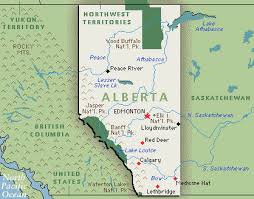
Similar to other Canadian Provinces, in Alberta the number of euthanasia deaths increased substantially in 2019.

An article by Jason Herring published in the Calgary Herald on January 12, reports on the data published by Alberta Health Services that there were 377 assisted deaths in 2019 up from 307 in 2018, and 206 in 2017 in Alberta. Ontario has had similar increasing numbers of euthanasia deaths.


The Alberta data indicates that there was a 23% increase in assisted deaths in 2019.

The Calgary Herald article is oriented to encouraging more euthanasia. The article quotes Dr. Jim Silvius, the Alberta Health Services lead for the program.

Some physicians who choose not to participate are conscientious objectors with moral opposition to death under medical supervision. But some doctors just don’t feel comfortable with the procedure due to a lack of training. 

“You’re ending a life, and that’s not what we were trained to do,” Silvius said, partially because many doctors weren’t exposed to physician-assisted death in medical school.

Media articles are not examining possible abuses of the law but rather they take the position that euthanasia is increasing.

The Euthanasia Prevention Coalition (EPC) is urging its supporters to participate in the Canadian Department of Justice Medical Assistance in Dying (MAiD) consultation. (Link).

France: Champs-sur-Marne Geothermal District Heating Project to Provide 82% of Heat Requirements

La géothermie pour 10 000 logements de Champs-sur-Marne et Noisiel – Geothermal energy for 10,000 homes in Champs-sur-Marne and Noisiel (Le journal du Grand Paris)

Inauguré en décembre 2019 à la Cité Descartes (Champs-sur-Marne), un réseau de chaleur opéré par GéoMarne, filiale d’Engie, doit permettre d’alimenter, avec une énergie renouvelable à 82 %, une dizaine de quartiers de Champs-sur-Marne et de Noisiel (Seine-et-Marne), soit environ 10 000 équivalent logements, et de faire fonctionner le futur centre aquatique de Champs-sur-Marne.
(From Google Translate) Inaugurated in December 2019 at the Cité Descartes (Champs-sur-Marne), a heating network operated by GéoMarne, a subsidiary of Engie, should make it possible to supply, with 82% renewable energy, ten neighborhoods in Champs- sur-Marne and Noisiel (Seine-et-Marne), or around 10,000 equivalent accommodation, and to operate the future aquatic center in Champs-sur-Marne.
Lire la suite………                            Read More………
From the Global Geothermal News archives:

Design a site like this with WordPress.com
Get started