Iceland: Geothermal-Powered Biodome Planned for Reykjavik Suburb

How a ground-breaking biodome being planned in Iceland could change cities around the world (Arctic Today)

An artist’s rendering of the planned ALDIN Biodome Resort at dusk, shown in the Elliðaárdalur Valley and Park in Reykjavik, Iceland. (WilkinsonEyre)

By combining geothermal and vertical farming technologies in a resort-style biodome, a new Reykjavik project could become a model for 21st century sustainable tourism.

The Aldin Biodome Resort secured planning permission late last year to build the world’s first geo-climate biodome, a new type of heated greenhouse resort that grows its own exotic food, hosting dining facilities, yoga classes and other events, and providing comfort, health and nourishment all-year-round, while being entirely naturally carbon-emissions free in operations.

The whole complex will be heated by tapping into the region’s abundant geothermal energy in the form of excess hot spring water from a direct source on site, which is part of Reykjavik’s supply system.

Read More……….

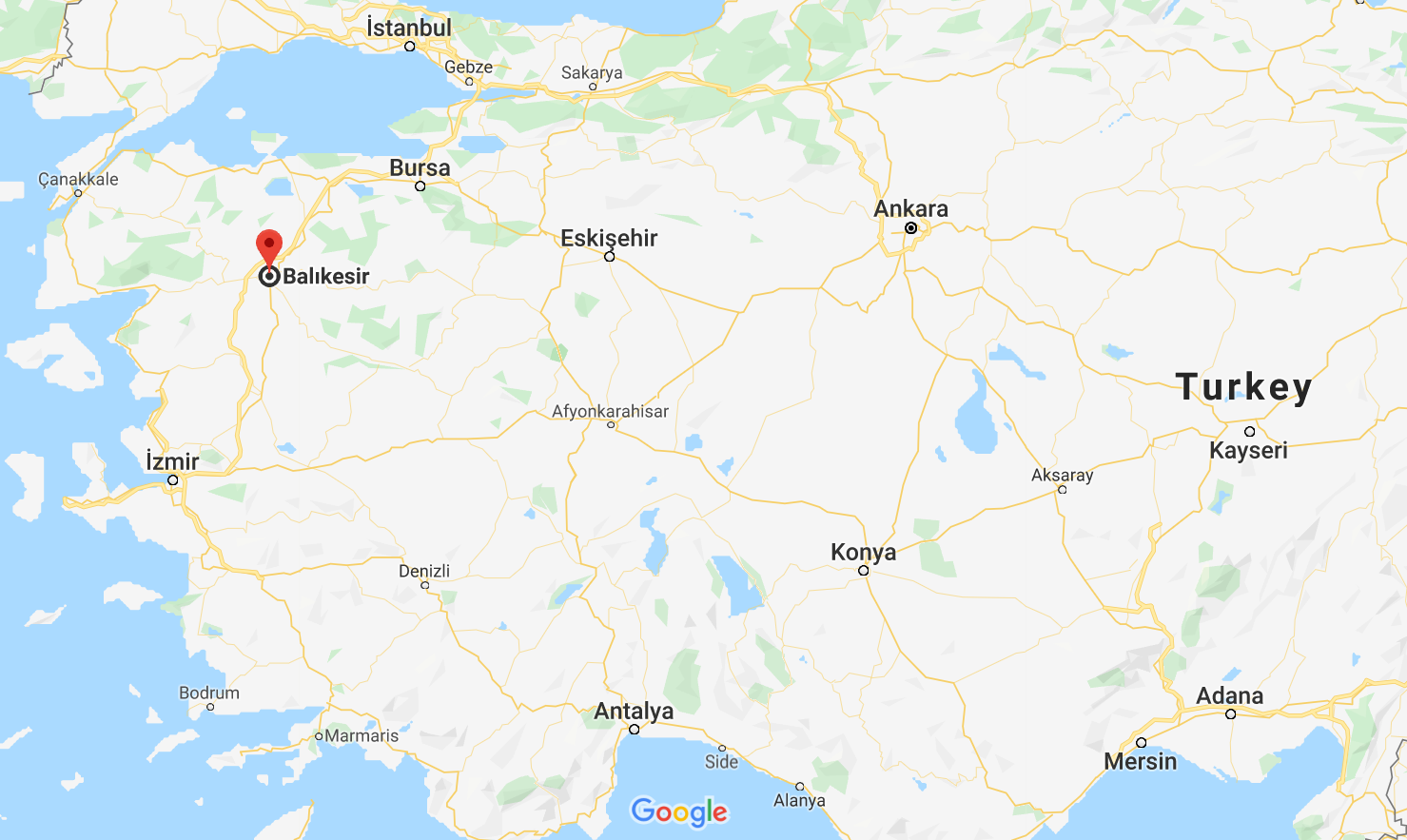
Turkey: Opportunity to Explore for Geothermal Resources in Balıkesir

Balıkesir Valiliği Yatırım İzleme Ve Koordinasyon Başkanlığı Jeotermal Kaynak Arama İhalesi – Balıkesir Governorship Investment Monitoring and Coordination Directorate Geothermal Resource Exploration Tender

11.01.2020 tarihli 31005 sayılı Resmi Gazete’de Balıkesir Valiliği Yatırım İzleme ve Koordinasyon Başkanlığı tarafından jeotermal kaynak arama ihalesi duyuruldu.

Duyurulan ilan ile ilgili ayrıntılı bilgi için tıklayınız.

(From Google Translate) In the Official Gazette dated November 1, 2020 and numbered 31005, the tender for exploration of geothermal resources was announced by Balıkesir Governorship Investment Monitoring and Coordination Department.

Click here for detailed information about the announcement.

Daha fazla oku………                      Read More………

Russia: Geothermal Volcanology Workshop in Kamchatka

Geothermal Volcanology Workshop 2020 (Institute of Volcanology and Seismology)

 5-9 September, Petropavlovsk, Kamchatsky, Russia.

Kamchatka is an active volcanic, seismic and hydrothermal region. Active volcanism is accompanied by magma injections into host structures, magmatic fracturing, and the formation of hydrothermal systems adjacent to volcanoes.

Geo-scientific and engineering studies of productive geothermal reservoirs are a necessary condition for their effective use for heat and power supply, and for balneological use. Geomechanical analysis of the magmatic fracturing regime with seismic data is extremely important for predicting volcanic, magma-hydrothermal activity, and strong earthquakes forecasts, and for understanding producing geothermal reservoirs and hard-to-recover hydrocarbon formation conditions.

The interdisciplinary focus and unique place of this workshop and field trips are stimulating breakthrough ideas, international scientific-technical cooperation, and multiple applications in Earth Science.

More Information……..                Download the Flyer……..

Turkey: Video of Kızıldere 3 Geothermal Power Plant

Kızıldere 3 Geothermal Power Plant (Zorlu Enerji)

(Video 3:36 minutes)

From the Global Geothermal News archives:

Climate Change: Renewable Energy Investment Needs to Double – IRENA

Double the Share of Renewables in the ‘Decade of Action’ to Achieve Energy Transition Objectives (News Release)

The share of renewables in global power should more than double by 2030 to advance the global energy transformation, achieve sustainable development goals and a pathway to climate safety, according to the International Renewable Energy Agency (IRENA). Renewable electricity should supply 57 per cent of global power by the end of the decade, up from 26 per cent today.

A new booklet 10 Years: Progress to Action, published for the 10th annual Assembly of IRENA, charts recent global advances and outlines the measures still needed to scale up renewables. The Agency’s data shows that annual renewable energy investment needs to double from around USD 330 billion today, to close to USD 750 billion to deploy renewable energy at the speed required. Much of the needed investment can be met by redirecting planned fossil fuel investment. Close to USD 10 trillion of non-renewables related energy investments are planned to 2030, risking stranded assets and increasing the likelihood of exceeding the world’s 1.5 degree carbon budget this decade.

USA, California: Ormat Signs 14 MW Geothermal Power PPAs With Community Choice Aggregators

Ormat Signs 10-Year PPAs With Silicon Valley Clean Energy and Monterey Bay Community Power for Its CD4 Geothermal Power Plant in California (News Release)

Ormat Technologies, Inc. today announced the signing of two similar Power Purchase Agreements (PPA) with Silicon Valley Clean Energy (SVCE) and Monterey Bay Community Power (MBCP). Under the PPAs, SVCE and MBCP will each purchase 7 MW (for a total of 14 MW) of power generated by the expected 30 MW Casa Diablo-IV (CD4) geothermal project located in Mammoth Lakes, California. The PPAs are for a term of 10 years and have a fixed MWh price, which includes energy, capacity, environmental attributes, and all other ancillary benefits. The remaining 16 MW of generating capacity will be sold under an additional PPA with Southern California Public Power Authority, which was signed in early 2019.

The CD4 power plant is expected to be on-line by the end of 2021, will be the first geothermal power plant built within the California Independent System Operator (CAISO) balancing authority in the last 30 years and will be the first in Ormat’s portfolio that will sell its output to a Community Choice Aggregator.

Read More………

Massachusetts court explains why assisted suicide should be prohibited.

Alex Schadenberg
Executive Director, Euthanasia Prevention Coalition


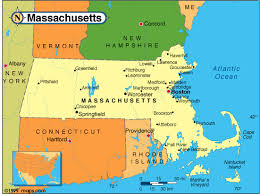
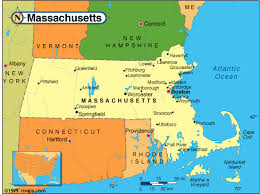
A Massachusetts Superior Court decision that was released on Friday, January 10 concluded that there is no right to assisted suicide in Massachusetts.

This is not the first decision of its type in the United States, in fact there have been several cases that were simply dismissed by the court, while others were heard and also found that there is no right to assisted suicide.

In its decision, the Massachusetts court explained why the Commonwealth prohibition on MAID meets the rational basis for both due process and equal protection. Starting on Page 20 of the decision, the court explains why assisted suicide should not be legalized. The decision states (edited):

First, the Legislature could rationally conclude that difficulty in determining and ensuring that a patient is “mentally competent” warrants the continued prohibition of MAID. There is expert testimony in the record that many patients faced with a diagnosis of terminal illness are depressed, that this depression and accompanying demoralization may interfere with their ability to make a rational choice between MAID and other available alternatives, and that most Massachusetts physicians are unaware of the best practices in responding to requests for MAID given this context… There is also evidence that the problem of competency is particularly acute at the time at which a patient self-administers the medication because patients may be alone or accompanied by those who support his or her end-of-life decision… In such a situation there is a great risk that temporary anger, depression, a misunderstanding of one’s prognosis, ignorance of alternatives, financial considerations, strain on family members or significant others, or improper persuasion may impact the decision. The concern that the decision will be motivated by financial considerations are potentially heightened when MAID is being used by members of disadvantaged socio-economic groups.

Second, the Legislature could rationally conclude that predicting when a patient has six months to live is too difficult and risky for purposes of MAID, given that it involves the irreversible use of a lethal prescription. The Commonwealth put forward expert testimony that while doctors may be able to predict death within two or three weeks of its occurrence, predictions of death beyond that time frame are likely to be inaccurate. 

Third, the Legislature could rationally conclude that a general medical standard of care is not sufficient for those seeking MAID. The Commonwealth put forward expert testimony that MAID “is neither a medical treatment nor a medical procedure and thus there can be no applicable medical standard of care” and that “the legalization of MAID is an attempt to carve out a special case outside of the norms of medical practice”… The Commonwealth also put forward evidence that regulating MAID is difficult even where statutory standards, such as those in Oregon, are in place. Its expert opined that: “Data collected in Oregon paints a picture of patients receiving MAID for whom alternative approaches have not been exhausted. Psychological referrals are scant. The cited basis for requests largely consists of problems that are manageable via palliative care and hospice. What Oregon officials do not do is monitor the actual process for terminating patients yet the data that is available is troubling.

Finally the Commonwealth produced expert testimony that the permissible end-of-life alternatives potentially involve far less risk than MAID because they occur in hospitals or other institutions devoted to medical treatment and involve numerous physicians and staff personnel, which together provide an environment that lends itself to oversight and responsibility… MAID, on the other hand, potentially takes place in an uncontrolled environment, without assurance that the patient will administer the medication when close to death and without physician oversight.

The Massachusetts court decision recognized the difficulty in accurate patient assessment to approve MAID, which is an irreversible decision. The court decision challenged the concept that MAID is a form of medical treatment and pointed out that, even in Oregon the oversight of the law is questionable at best.

Finally, the Massachusetts court found that oversight and control of assisted suicide laws are lacking. The risk related to assisted suicide is great.

The assessment by the Massachusetts court should be taken seriously by legislators who are considering assisted suicide bills. Assisted suicide is neither safe nor effectively controlled.

Massachusetts court rules there is no right to assisted suicide.

Alex Schadenberg
Executive Director, Euthanasia Prevention Coalition

A Massachusetts Superior Court decision that was released on Friday, January 10 concluded that there is no right to assisted suicide in Massachusetts.

This is not the first decision of its type in the United States, in fact there have been several cases that were simply dismissed by the court, while others were heard and also found that there is no right to assisted suicide.

WBUR news in Massachusetts published a report by Martha Bebinger and Carey Goldberg explaining the ruling in the civil case brought by Dr. Roger Kligler, a retired Cape Cod physician who has advanced prostate cancer, and Dr. Alan Steinbach, who treats terminally ill patients.


Bebinger and Goldberg explained:

The new ruling affirms that assisted suicide can be considered manslaughter, even if the patient self-administers the lethal medication without help from the doctor. 

It also rejects the claims that the manslaughter law is too vague as applied to aid in dying, and that it is unfair to treat patients who take drugs to die differently from patients who stop eating and drinking to die. 

The ruling concludes by noting that there’s a strong consensus that the issue of medical aid in dying is best decided by lawmakers, not judges, and that there are strong arguments both for and against it. 

“The legislature, not the court, is ideally positioned to weigh these arguments and determine whether and if so, under what restrictions, [medical aid in dying] should be legally authorized,” Superior Court Justice Mary Ames wrote.

Therefore the court concluded that there is no right to assisted suicide in Massachusetts and acts of assisted suicide will be prosecuted as manslaughter.

Isle of Man to debate assisted suicide motion this month.

Alex Schadenberg
Executive Director, Euthanasia Prevention Coalition


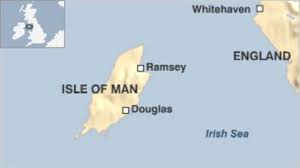
The Isle of Man, which is a self-governing territory in the Irish Sea between England and Ireland, will be debating an assisted suicide motion this month. Politics home published a media release by Dignity in Dying on January 10 which stated:

The Parliament of the Isle of Man, Tynwald, has announced that it will debate assisted dying at its January sitting, which begins on the 21st of January 2020. 

Dr Alex Allinson, Member of the House of Keys (MHK) for Ramsey, brought the following motion, which will be debated at the January sitting of Tynwald: “That Tynwald is of the opinion that legislation to allow for voluntary assisted dying should be introduced”. The debate does not involve specific proposals for legislation at this stage.

Dignity in Dying has failed on many occassions to legalize assisted suicide in the UK and is now attempting to give doctors in the Isle of Man the right to assist the suicide of their patients, as a beachhead into the UK. The Isle of Man needs to recognize how they are being used as pawns in the assisted suicide debate.

Hawaii: 27 people died by assisted suicide in 2019.

Alex Schadenberg
Executive Director, Euthanasia Prevention Coalition

An article by Brittany Lyle that was published in the Honolulu Civil Beat on January 9, 2020 stated that in 2019 Hawaii had 27 assisted suicide deaths.

The article focuses on the assisted suicide lobby wanting to remove restrictions in the assisted suicide law. For instance the article suggests that Hawaii needs to amend the assisted suicide law to allow doctors to waive the waiting period. In 2019, Oregon expanded its assisted suicide law by allowing the waiting period to be waived.

The article also suggests that Hawaii needs to remove the mandatory mental health competency exam in the law.

It is significant that no doctors in Maui are willing to prescribe the assisted suicide drug cocktail. Most doctors oppose assisted suicide.

This media article was overwhelmingly pro-assisted suicide. The assisted suicide lobby is pushing to expand the Hawaii assisted suicide law, even though the law only came into effect one year ago.

Last January the leader of one of the assisted suicide lobby groups stated that it was there goal to eliminate the regulations in the assisted suicide laws in America.


Design a site like this with WordPress.com
Get started