Taiwan: Feed-in Tariff for Geothermal Energy is Unchanged

Taiwan finalizes 2020 feed-in tariff for renewable energy (Digitimes)

Taiwan’s Ministry of Economic Affairs (MOEA) has announced final feed-in tariff rates for renewable energy for 2020, with reductions from 2019 for offshore wind power generation by 7.61-7.71% and PV power generation by 1.47-4.18%.

The feed-in-tariff for geothermal energy is NT$ 5.1956 /kWh for 20 years; 6.1710 for first 10 years and 3.5685 for the following 10 years. This is unchanged from last year.

Read More……..

Belgium euthanasia death linked to loneliness.

Alex Schadenberg
Executive Director, Euthanasia Prevention Coalition


Brecht Paumen, who was paralyzed for 12 years after a swimming pool accident, died by euthanasia in Belgium last Friday.

The Belgian media emphasize his disability and his pain, but a closer read of the story links his death to loneliness and isolation.

An article by Marco Mariotti that was published by HLN quotes Paumen’s mother as saying (google translated):

“For four years he lived alone in As. He hoped that friends would come to visit him that way. But unfortunately that did not happen. The home nurse, all adapted devices, you name it. Only the loneliness can hardly cope when the environment drops out. We suggested coming home again, but he refused. And he felt a burden to his parents. Often humiliating circumstances. Then he cried so often. “

In the past year he was trying to regain his ability to walk with assistance, but the article states that he had a set-back in November and December.

Studies show that people who are depressed, lonely or experiencing feelings of hopelessness are far more likely to ask for euthanasia.

A Netherlands study by Marije L van der Lee, et al, found that people who were depressed or had “feelings of hopelessness” were 4.1 times more likely to request euthanasia. This study was significant since van der Lee supported euthanasia and her hypothesis stated: “their clinical impression was that requests for euthanasia were based on well-considered decisions and not depression in the Netherlands.”

In other words, van der Lee was trying to prove that depression was not connected to requests for euthanasia but instead proved that the opposite is true.


In 2011, the Dutch Medical Association (KNMG) stated that euthanasia for loneliness, depression, disability and dementia were possible

A few years ago the Netherlands euthanasia clinic was reprimanded for lethally injecting a woman because she didn’t want to live in a nursing home.

This sad story brings up two key points.

1. It was normal for Paumen to feel lonely and a loss of purpose. Even if you support euthanasia, loneliness should not be a reason for death by lethal injection.

2. The attitude towards euthanasia of people with disabilities is paternalistic. The article refers to his death as “redeeming” and his mother is quoted as saying that she is “relieved” for her son. I am not suggesting that his mother didn’t love him, but Paumen needed support not pity.

Paumen’s death is tragic, but once killing becomes an acceptable solution to human difficulties then the clear line has been crossed.

Paumen needed human friendship and support not death, but death is what he received.

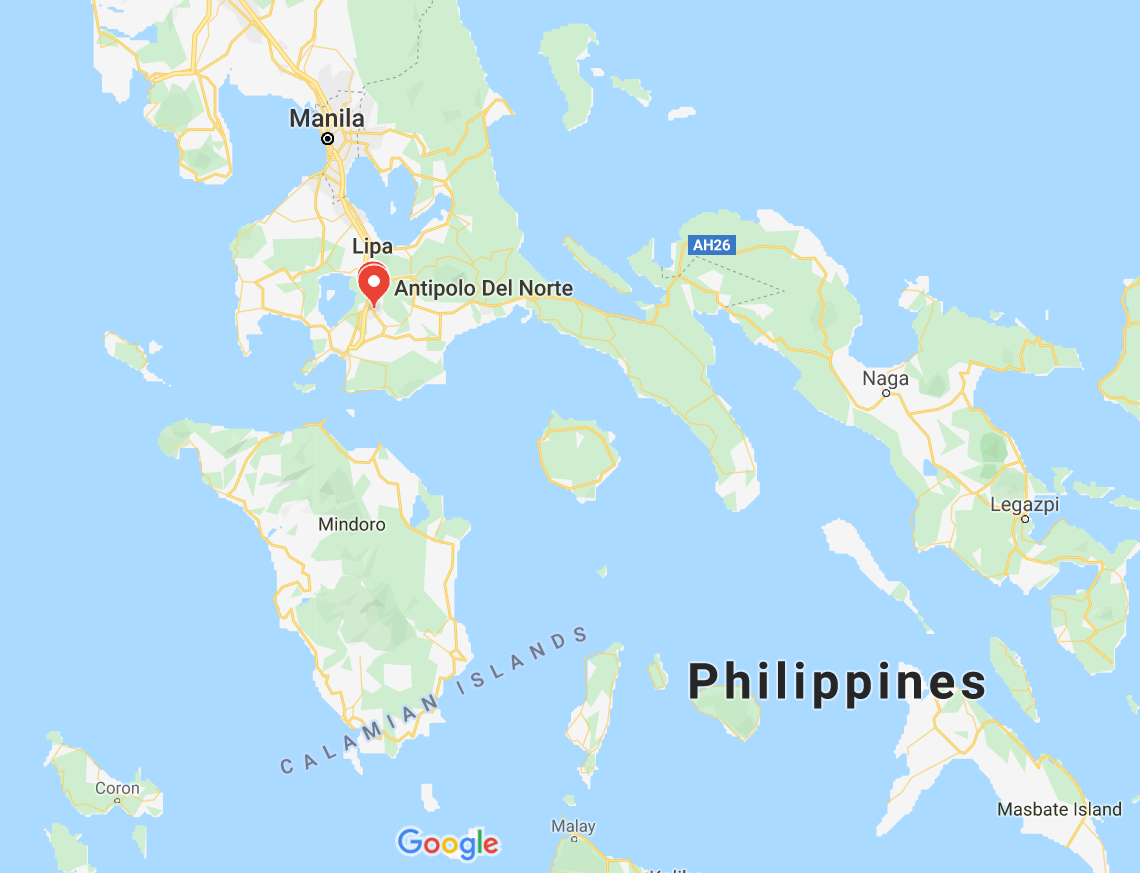
Philippines: Tiwi and MakBan Geothermal Power Plants to Supply Electricity to Batangas Utility

APC to supply power to Batangas coop (Manila Bulletin)

The Batangas II Electric Cooperative, Inc. (BATELEC II), which is touted as the country’s biggest among league of rural power utilities, has signed a deal with Aboitiz Power Corporation (APC) for power supply sourcing from the latter’s “Cleanergy” brand.
The power supply agreement (PSA) inked by the parties entails the procurement of 3.0MW of electric capacity by BATELEC II from the Tiwi and Makiling-Banahaw (MakBan) geothermal plants of the Aboitiz group.
In addition, AP Renewables, Inc. (APRI), a subsidiary of Aboitiz Power that is in-charge of operating the Tiwi and MakBan plants, will also be supplying BATELEC II with a 20-MW emergency power supply for a period of one year or from December 26, 2019 to December 25, 2020.
The Batangas electric cooperative has rated peak demand of 132 megawatts, hence, it is manifest that it will just be sourcing a marginal portion of its supply portfolio from the geothermal facilities of AP

Slovenia: Businesses Urge Government to Designate Geothermal Energy a Renewable Resource

Slovenia Not Exploiting Potential of Geothermal Energy (Total Slovenia News)

(Courtesy CIA.gov)
Geothermal energy was long seen as a promising source of renewable energy, in particular in eastern Slovenia where geothermal potential is highest, but since the introduction of licence fees for geothermal exploitation in 2016, uptake has been stagnating. High licence fees are not the only issue, businesses also complain about onerous rules.
Geothermal energy – essentially water that is heated deep within the Earth’s crust and then pumped to the surface – is not officially designated as a renewable source, even if the EU treats it as such. And licence fees for exploitation are also paid by users who only take the heat and then return the cooler water into nature, businesses say.
Several businesses in eastern Slovenia have urged the government to change the rules to designate geothermal energy a renewable resource, or to subsidise the construction of re-injection wells through which water is pumped back below ground after its heat energy has been harvested.
Analyses conducted by several agencies, including the Geological Survey, in the framework of the cross-border project Darlinge suggest Slovenia’s geothermal potential is significant but poorly exploited. At present only 123 GWh of geothermal energy is harvested, with potential available energy twenty times as high.

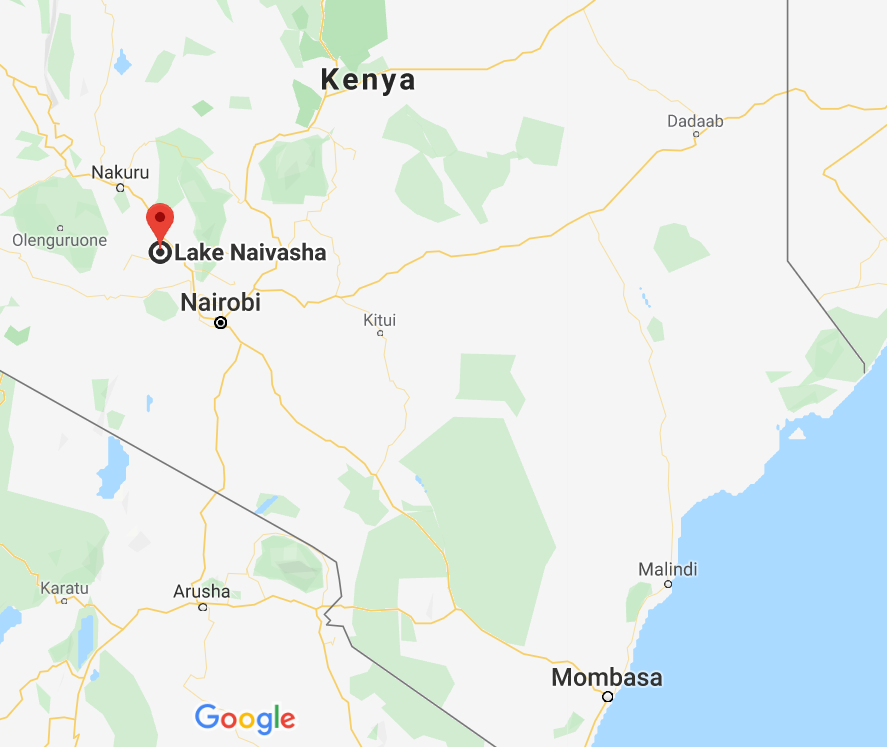
Kenya: Cheaper Electricity from Geothermal Power Helps Economic Development of Naivasha

Naivasha shakes off ugly past to become an investment hub (The Standard)

According to economic expert Washington Ochieng’, the availability of key resources like cheap geothermal power, vast land and accessibility to Nairobi have contributed to the influx of investors in Naivasha.

“Currently the biggest challenge facing manufacturers is the high electricity charges and if they can get it cheaper in Naivasha using the geothermal power, then this is the place to be,” he says, adding that the coming years will see companies relocate from Nairobi, Thika, Mombasa and Eldoret to Naivasha.

Extension of the Standard Gauge Railway line from Nairobi to Mai Mahiu-Naivasha and next to the industrial park has turned out to be a major incentive to the investors.

A few kilometres from the park and within Kedong Ranch, Akiira Geothermal Company has acquired 1,000 acres and are in the process of putting up a Sh9.8 billion geothermal plant.

“This project, apart from producing clean energy, will go a long way in addressing the issue of cheaper electricity and creating more job opportunities,” said the company’s spokesman, Anthony Kahindi.

Read More………

Making it up as they go: Falsifying Vermont death certificates

This article was published by the Australian Care Alliance on January 2, 2020.

As reported in a previous blog on the latest report on deaths by assisted suicide in Vermont, the report states:

100% of the death certificates listed the appropriate cause (the underlying disease) and manner of death (natural), per Act 39 requirements.

This is a curious statement as Act 39 as passed by the Vermont legislature and in force does not include any such requirement.

This matter was raised with the Vermont Department of Health. The reply seems to confirm that when it comes to reporting on assisted suicide officials simply make it up as they go along.

In reply to this query:

Page 2 of your report states:

“All 34 events have a death certificate on file with the Vital Records’ Office. One hundred percent of the death certificates listed the appropriate cause (the underlying disease) and manner of death (natural), per Act 39 (2013) requirements.”

The reference to “Act 39 (2013) requirements” seems to be misleading as while there was a provision to this effect in S77 as introduced into the Senate this provision was deleted and does not form part of Act 39 of 2013 (Chapter 113, Title 18 of the Vermont Statutes).

On the face of it in the absence of such a provision deaths certificates in these circumstances should be handled in accordance with the provisions in 18 V.S.A. § 5205 or elsewhere in Chapter 107, Title 18.

Could you please advise if there is some other legal authorisation for the completion of a Vermont

death certificate in the event of a death following ingestion of a lethal poison, albeit in apparent accordance with the provisions of Chapter 113, Title 18 of the Vermont Statutes, recording the manner of death as natural and the underlying condition as the sole cause of death with no reference to the effect of the lethal poison in causing that death?

The official reply from the Vermont Department of Health reads:

18 V.S.A. § 5293(a) states, “Except as otherwise required by law, information regarding compliance shall be confidential and shall be exempt from public inspection and copying under the Public Records Act.” In addition, decisions made between patient and doctor are protected health information under both state and federal privacy laws. If a death certificate were to make reference to a prescribed dose under Act 39, it would be visible to the public and therefore violate both general and specific provisions of state law. A physician listing the underlying disease and manner of death [as natural] is both appropriate and preserves the confidentiality due the patient.

This reply is extraordinary.

Firstly, 18 V.S.A. § 5293 deals with the information collected and reported on pursuant to the Rule which makes no reference whatsoever to death certificates. It does however refer to the cause of death in requiring the prescribing physician to specify in a follow up form.

Whether the patient died as a result of the ingestion of the prescribed dose; as a result of the underlying disease; or whether the cause is unknown to the physician.

The legislative history of Act 39 indicates that the legislature considered but rejected an explicit provision mandating the falsification of death certificates for deaths following ingestion of a lethal poison prescribed under its provisions:

See the struck out paragraph on p.10 of the Bill as passed by the Senate and House which read:

Notwithstanding any other provision of law to the contrary, the attending physician may sign the patient’s death certificate, which shall list the underlying terminal disease as the cause and manner of death.

An alternative provision was proposed but later withdrawn:

The patient’s death certificate shall list the underlying terminal disease as the cause of the death and shall list the manner of death as natural.

It is alarming that the unelected officials of the Vermont Department of Health are choosing on their own authority to not just act as if this latter proposal was the law in Vermont but to brazenly claim that it is in an official report to the legislature and to praise physicians for their 100% compliance falsifying Vermont death certificates in accordance with unfounded statement of the law.

The general instructions to physicians regarding the accurate completion of death certificates place great emphasis on the importance of a comprehensive recording of ALL the causes contributing to a death.

Certify the cause of death as accurately as possible.

The manner of death describes the circumstances surrounding the death. In Vermont and in most of this country there are only 5 choices:

  • Natural
  • Accident
  • Suicide
  • Homicide
  • Pending Investigation (only available to medical examiners)
  • Could Not Be Determined
  • All cases that are not due exclusively (100%) to natural disease MUST, by law, be reported to the Medical Examiner’s Office (1-888-552-2952). If an injury in any way contributes to the person’s death, no matter how long ago that injury was sustained, the death is not considered natural.

Stated very simply, a cause of death is the disease or injury responsible for starting the lethal sequence of events which ultimately lead to death. A competent cause of death must be as etiologically specific as possible. Etiologically specific causes of death are the disease entities studied in basic pathology courses

The mechanism of death is the altered biochemistry or physiology whereby the cause exerts its lethal effects. Mechanisms are not specific and can NEVER replace or substitute for a cause of death. Mechanisms can never stand alone on a death certificate and always need an underlying cause of death. Always ask yourself what the mechanism is due to in order to find the underlying cause of death.

Medical judgment and common sense are required for certifying the cause of death.

Truthfulness, completeness, and reasonable accuracy should be the goal. Convenience and expedience should not play a role when certifying causes of death.

Unless of course it is under an assisted suicide law when:

medical judgement, commonsense, truthfulness, completeness and reasonable accuracy must all GIVE WAY to the convenience and expedience of falsifying public records to pretend that deaths by the ingestion of a lethal poison are entirely natural.

BC Health Minister orders Delta Hospice to provide euthanasia by February 3.

Alex Schadenberg
Executive Director, Euthanasia Prevention Coalition

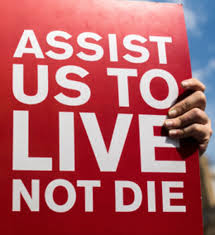
An article by Sandor Gyarmati for the Delta Optimist news reported that the British Columbia Minister of Health, Adrian Dix, ordered the Delta Hospice Society to do euthanasia (MAiD) by February 3 or it may lose its provincial funding.

On December 2, I reported that the Board of the Delta BC Hospice Society that operates the Irene Thomas Hospice in Ladner BC, renewed its position opposing euthanasia (MAiD) while supporting excellent care. The Board stated that:

MAiD is not compatible with the Delta Hospice Society purposes stated in the society’s constitution, and therefore, will not be performed at the Irene Thomas Hospice.

Fraser Health, the government agency that allocates health funding in that region reacted to the Delta Hospice Society by ordering them to provide MAiD (euthanasia).

The position of the Delta Hospice is not new. In February 2018, the Delta Hospice was ordered by Fraser Health to provide euthanasia. The Delta Hospice did not comply with the edict from Fraser Health at that time.

Recently the Canadian Hospice Palliative Care Association (CHPCA) and the Canadian Society of Palliative Care Physicians released a joint statement upholding that hospice palliative care is not compatible with MAiD (euthanasia). They stated:

Healthcare articles and the general media continue to conflate and thus misrepresent these two fundamentally different practices. MAiD is not part of hospice palliative care; it is not an “extension” of palliative care nor is it one of the tools “in the palliative care basket”. National and international hospice palliative care organizations are unified in the position that MAiD is not part of the practice of hospice palliative care. 

Hospice palliative care and MAiD substantially differ in multiple areas including in philosophy, intention and approach. Hospice palliative care focuses on improving quality of life and symptom management through holistic person-centered care for those living with life threatening conditions. Hospice palliative care sees dying as a normal part of life and helps people to live and die well. Hospice palliative care does not seek to hasten death or intentionally end life.

In a letter to the BC Health Minister, the President of the Canadian Society of Palliative Care Physicians (CSPCP), Dr Leonie Herx stated that  euthanasia is not consistent with the philosophy, intent or approach of hospice palliative care. Dr Herx told Dix not to force Hospice and Palliative Care services to do euthanasia.

If the Delta Hospice is forced to do euthanasia, then all Canadian Hospice groups can be forced to do euthanasia.

2019: 25 important articles on euthanasia and assisted suicide.

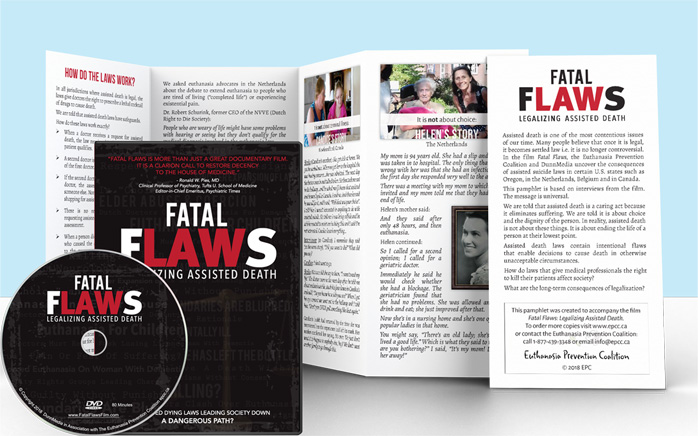
Fatal Flaws film will change the way you view assisted death. (Link)

Donation to the Euthanasia Prevention Coalition. (Link)

● Jan 11: Canadian woman seeks euthanasia from pelvic mesh pain. (Link)

● Jan 14: Why euthanasia is unethical. (Link)

● Jan 22: Canada’s new Justice Minister is radically pro-euthanasia. (Link)

● March 13: New Mexico assisted suicide bill was stopped. (Link)

● March 21: Canada euthanasia deaths increase by more than 50% in 2018. (Link)

● March 27: Terrible decision by Ontario court in food and fluids case. (Link)

● April 13: UN disability rights envoy urges changes to Canada’s euthanasia law. (Link)

● April 29: Health Canada publishes inaccurate & incomplete data on euthanasia in Canada. (Link)

● May 15: Ontario Court of Appeal upholds lower court decision forcing doctors to refer patients to their death. (Link)

● June 10: American Medical Association overwhelmingly upholds its opposition to assisted suicide. (Link)

● June 21: Disabled man felt pressured to “ask” for euthanasia. (Link)

● July 1: Vincent Lambert ordered to die by France’s highest appeal court. (Link)

● Aug 7: Euthanasia doctor cleared of wrong-doing after sneaking into Jewish care home to euthanize resident. (Link)

● Aug 15: Father with ALS Euthanized after being denied care in Canada. (Link)

● Sept 21: Quebec court expands Canada’s euthanasia law by striking the terminal illness requirement. Euthanasia for psychological reasons is next. (Link)

● Sept 24: St. Martha’s Catholic hospital will not provide euthanasia on-site. (Link)

● Sept 25: Physically healthy depressed man (Alan Nichols) died by euthanasia in BC. (Link)

● Oct 14: Physically healthy 23-year-old Belgian woman is being considered for euthanasia. (Link)

● Oct 18: Swiss doctor found guilty in the assisted suicide death of a woman who was not sick. (Link)

● Oct 26: World Medical Association re-affirms its opposition to euthanasia and assisted suicide. (Link)

● Nov 5: Man says that psychologist urged him to kill his wife. (Link)

● Nov 20: Canadian Prime Minister’s First Priority: More Euthanasia. (Link)

● Nov 23: Ontario Doctor experiences abuse with MAiD (euthanasia) law. (Link)

● Dec 12: BC Health Minister says he will force the Delta Hospice to kill. (Link

● Dec 17: Canada’s Justice Minister considers expanding euthanasia to include teenagers and incompetent people. (Link)


New York State must not legalize physician-assisted suicide

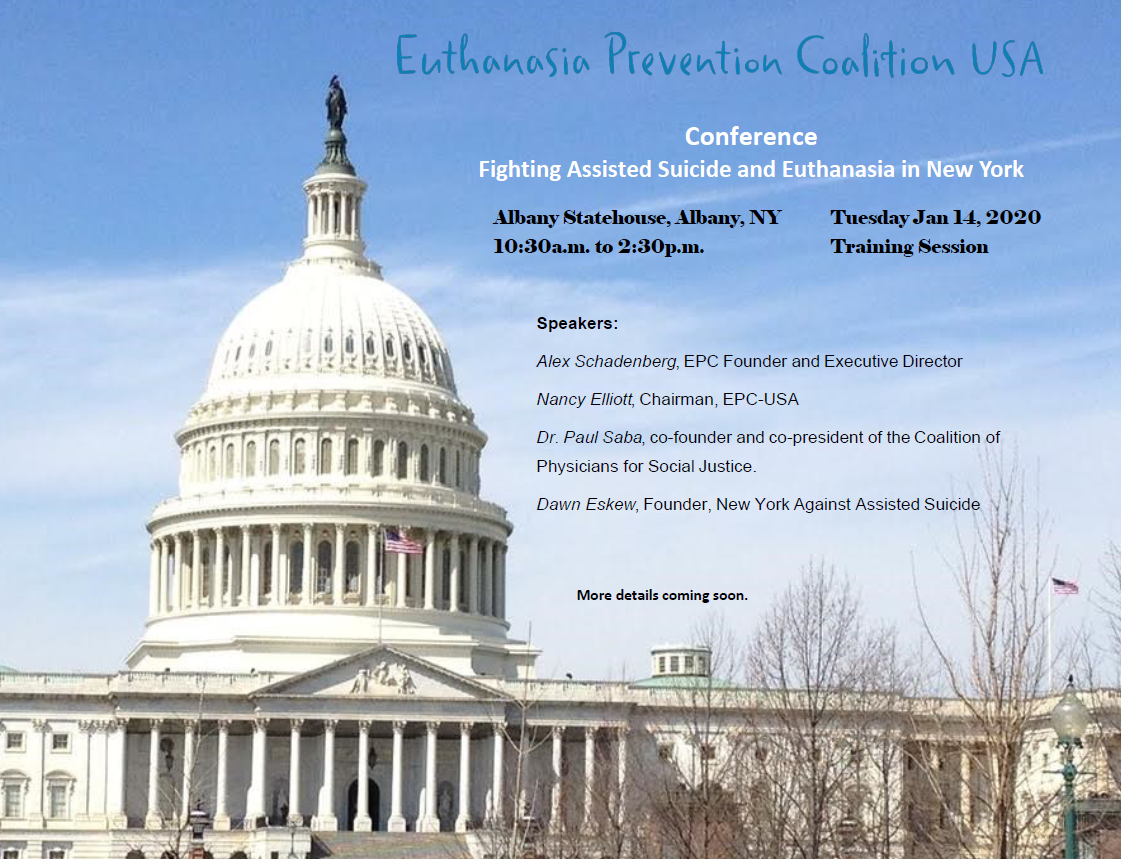
Euthanasia Prevention Coalition (EPC) USA has an event at the Albany State House on Tuesday January 14, 2020 from 10:30 am to 2:30 pm. (Link to the event). There will be a press conference at 9 am.

New York State is debating the legalization of assisted suicide. Dr Stanley Bukowski, from Amherst NY., wrote the following letter that was published by The Buffalo News on December 27, 2019.

Legalization of physician-prescribed lethal medication for terminal patients, even on request, is bad medicine. 

This is eliminating the sufferer, not the suffering. It is both unnecessary and dangerous. 

Twenty years’ experience in Oregon shows that “Inadequate pain control or concern about it” is a distant sixth most-cited reason for patients to choose lethal medication, and even that statistic mixes current pain with anticipation of future pain. 

Palliative medicine has excellent pain control techniques. We need to use them aggressively. At institutions such as Calvary Hospital in New York City, dedicated to care of the dying, there is no pain that is intractable, as testified to me personally by Dr. Michael Brescia, their Executive Medical Director. By day two there, no one is asking for death because, as Brescia notes, the patients get both pain relief and love. Those techniques can and should be available throughout New York State. 

What of the other, more frequent, reasons cited in Oregon for physician-assisted death? They are all based in mental anguish as the patient faces decline and approaching death, and the effect of these on his or her family. 

The doctor’s professional duty and great privilege is to care for, comfort, and accompany both the patient and the family to the patient’s natural death, as part of a team of caregivers. This is authentic compassion. This is what our shared humanity calls for. 

If a dying loved one is suffering, it is time not for suicide, but for a new doctor: a palliative care specialist. Or two. Suicide for any reason does something bad to patients. And to families. And to us all. 

Stanley Bukowski, MD 

Amherst

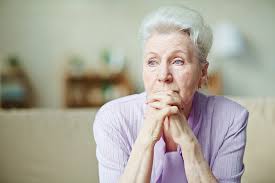
Loneliness is an epidemic among seniors that requires a caring response.

Alex Schadenberg
Executive Director, Euthanasia Prevention Coalition

Loneliness is an important topic because all of us are affected by loneliness while seniors and people with disabilities have greater issues with loneliness because they often have issues with their health mobility.
The Grand Island Independent published an editorial: Loneliness an epidemic among seniors  that provides some practical advice. The editorial states:

According to the U.S. Census Bureau, 12.5 million older adults live in one-person households, representing 28 percent of people age 65 or older. The National Poll on Healthy Aging reported earlier this year that 1 in 3 senior citizens suffer from loneliness. 

“Research shows that chronic loneliness can impact older adults’ memory, physical well-being, mental health and life expectancy,” write the authors of the report sponsored by AARP. “In fact, some research suggests that chronic loneliness may shorten life expectancy even more than being overweight or sedentary, and just as much as smoking.” 

More than a third of seniors in the poll said they felt a lack of companionship at least some of the time. Almost 30 percent said they socialized with friends, family or neighbors once a week or less.

The editorial offers some practical advice:

Those of us who live near elderly people also can help out with tasks such as clearing snow from sidewalks and carrying groceries in from the car. Then, at the same time, we can just stop in to say hi and spend some time talking. 

It’s important that we all look for ways to make connections with the people who have been so important to our communities in the past, but now may be struggling with the effects of aging and becoming more isolated. There is great value in their life experiences and we all can continue to contribute well into our 80s and 90s…

A very practical response is to visit people who are socially isolated due to their health or age related conditions.

The Compassionate Community Care (CCC) program has a Visiting Training Program for visiting people who are lonely and isolated.

CCC also exists to provide advice and direction concerning health issues related to end-of-life and euthanasia prevention as well as train volunteers to visit lonely and isolated people. Contact CCC at: 1-855-675-8749.

More articles on loneliness and depression

Design a site like this with WordPress.com
Get started