Vermont: 28 people reportedly died by assisted suicide in the past two years.

Alex Schadenberg
Executive Director, Euthanasia Prevention Coalition

The media reported that 28 people died by assisted suicide in the past two years (July 1, 2017 – June 30, 2019). Calvin Cutler reported for WCAX3

The report released on Monday shows from July of 2017 to June of 2019, 28 people used the state’s physician-assisted death program to end their lives. 

…Over the past two years, doctors have filled 34 prescriptions under the law. Of those cases, 24 patients had cancer, four had ALS and six had diseases like Parkinson’s or similar conditions.

The state says of the 34 people who passed away, 28 died from a lethal prescription, five died from their underlying diseases and one person’s cause of death is unknown.

Similar to other states, when the cause of death is unknown, the death may have been assisted suicide.

Click here for the full report.

Cutler also stated that the previous report, in 2017, indicated that 29 people had died by assisted suicide. Therefore 57 people have reportedly died by assisted suicide since it was legalized in 2013. The previous report also provided scant information.

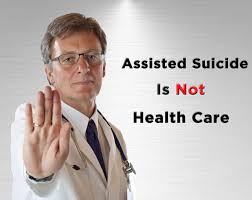
The American Medical Association statement opposing assisted suicide says that legalizing assisted suicide causes more harm than good.

Australian euthanasia lobby want more doctors to kill.

Alex Schadenberg
Executive Director, Euthanasia Prevention Coalition

David Sparkes, reporting for ABC News Australia, said that the euthanasia lobby is looking for more doctors who are willing to kill. According to his report:

Victoria has had assisted dying laws since the middle of the year, but euthanasia advocates say access is still proving difficult.

They argue people trying to use the laws are being held back by a lack of accredited specialists to approve the process.


But the State Government says the number of accredited doctors IS keeping pace with the growing demand.

The Age reported that there has been 140 assisted death applications since legalization. The number who have died is unknown. The Age also reported that, during the debate to legalize assisted death, the government predicted that there would be 12 assisted deaths in the first year and 150 assisted deaths per year in the future.

The Australian Medical Association remains opposed to euthanasia and assisted suicide. This news item is designed to convince more doctors to kill.

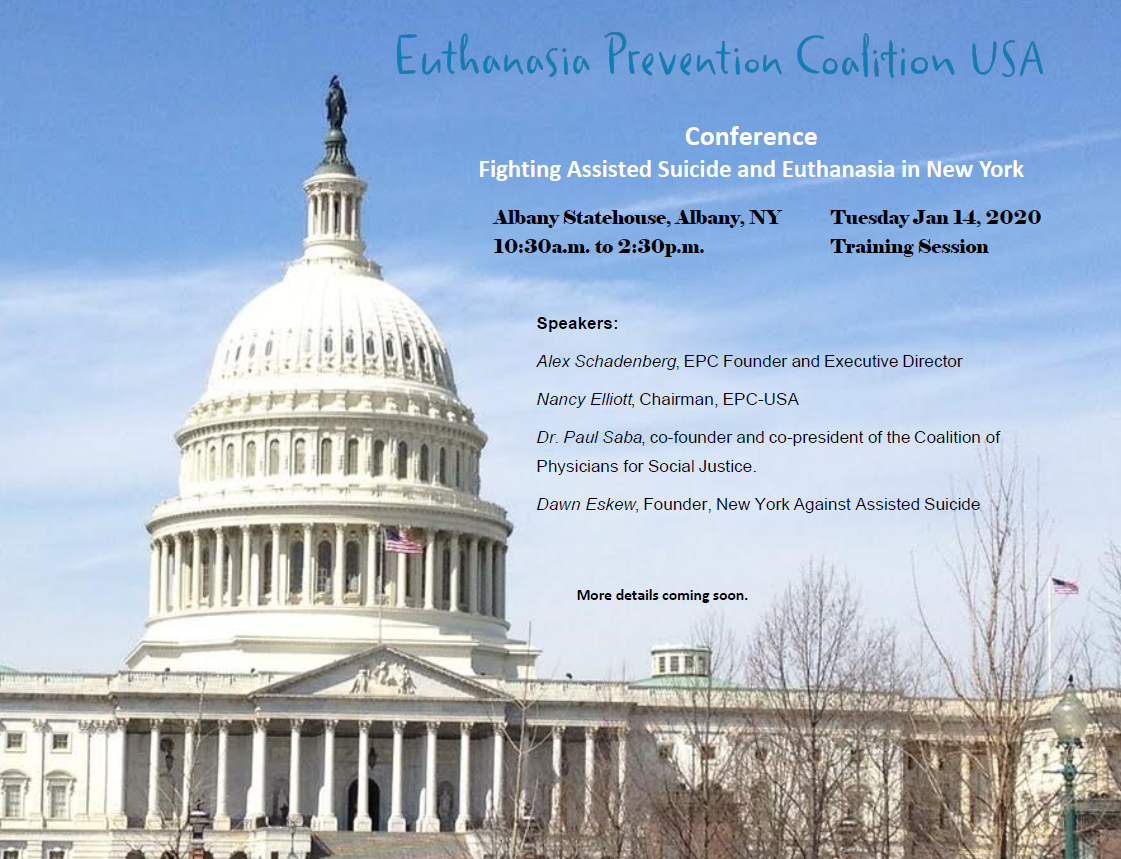
Fighting assisted suicide and euthanasia in New York State. Conference – January 14.

The Euthanasia Prevention Coalition – USA and New York Against Assisted Suicide have a conference/training session at the Albany Statehouse (Albany NY)

Tuesday January 14, 2020 from 10:30 am to 2:30 pm.

There will be a press conference at 9 am.

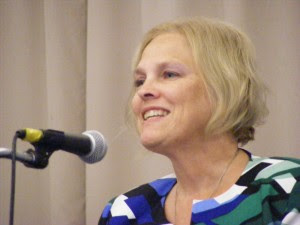
Nancy Elliott

More details coming soon. 
The speakers include:

Alex Schadenberg, Euthanasia Prevention Coalition (EPC) Founder and Executive Director

Nancy Elliott, EPC-USA Chair and former three term New Hampshire State Representative.

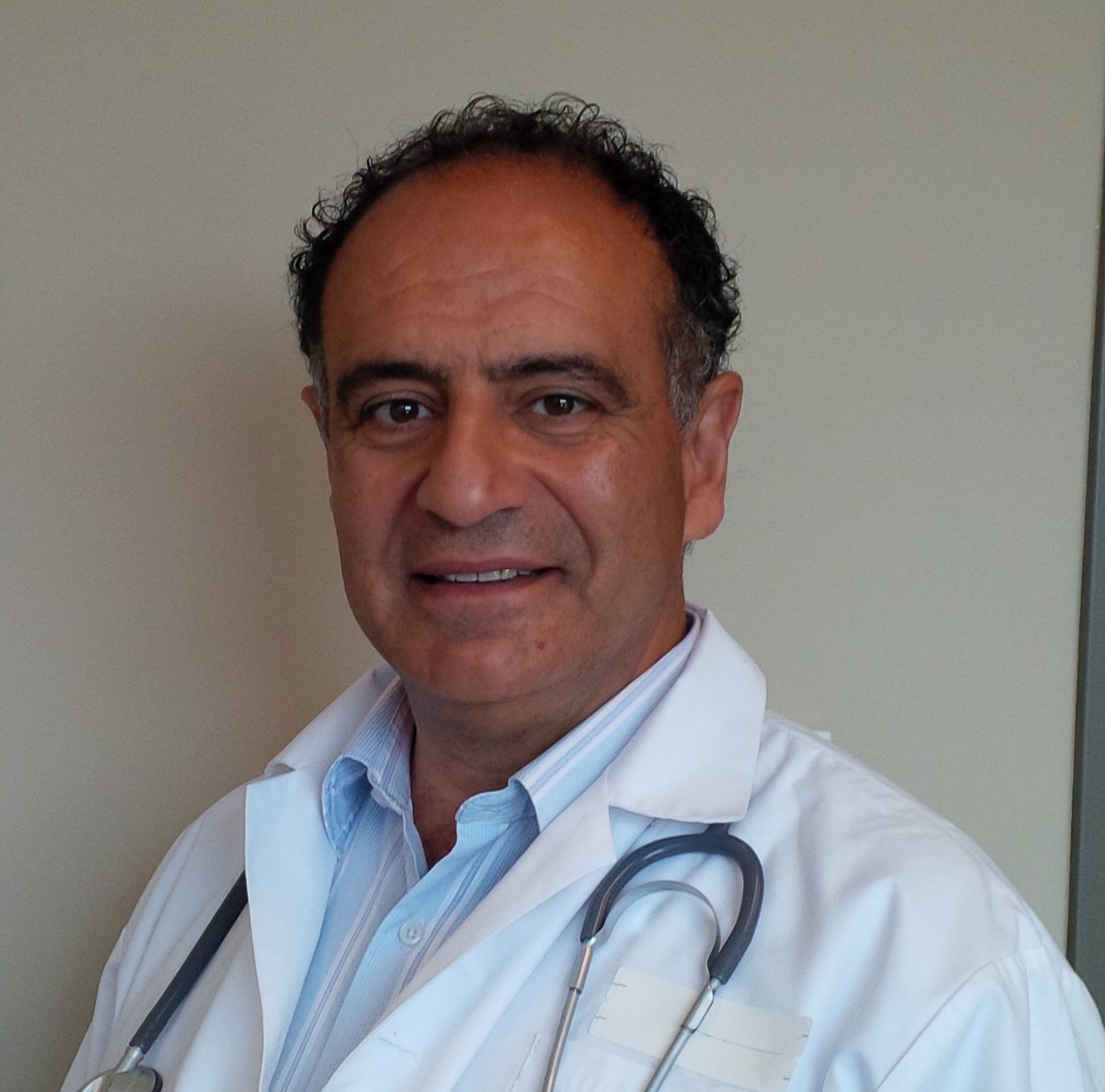
Dr Paul Saba

Dr Paul Saba, co-founder and co-preseident of the Coalition of Physicians for Social Justice

Dawn Eskew, Founder, New York Against Assisted Suicide.

Register by emailing info@epcc.ca

New York Governor Andrew Cuomo has said that he supports assisted suicide.

This event is will inform and activate New York citizens to defeat assisted suicide.

More information about assisted suicide.

USA, Nevada: “We commend the extension of the PTC available for geothermal..” – Ormat CEO

Ormat Commends the Extension of Geothermal Tax Credits (News Release)

Continued Support of Geothermal Industry Creates Jobs and Contributes to Nation’s Energy Independence

Ormat Technologies, Inc. today commended passage of the United States federal appropriations bill that retroactively revived and extended the full Production Tax Credit (PTC) for geothermal facilities. The PTC provides a credit for each kilowatt-hour of energy produced by the taxpayer from qualified renewable energy facilities. The PTC for geothermal facilities that expired at the end of 2017 was retroactively revived and extended through 2020, continuing U.S. support for the geothermal industry. This support contributes to the ongoing creation of new jobs in the geothermal industry as well as the nation’s energy independence.
On December 17, 2019, the United States House of Representatives passed the tax extenders package, allowing geothermal projects that begin construction before the end of 2020 to claim PTCs when the project is later placed in service, or to elect to receive in lieu of such PTCs, an Investment Tax Credit (ITC). On December 19, 2019, the United States Senate passed this bill and it was signed into law by President Donald Trump on December 20, 2019.
“Geothermal energy remains a key element of our country’s energy portfolio, enabling higher renewable penetration and greenhouse gas reductions,” said Isaac Angel, Ormat’s Chief Executive Officer. “We commend the extension of the PTC available for geothermal, which helps level the playing field with other technologies and provides predictable market signals for project development. This, in turn, helps leverage private investment to create new Jobs and drive economic benefits across the country.”
A copy of the law can be found at the following link: https://www.congress.gov/bill/116th-congress/house-bill/1865

USA, Hawaii: Employment as Planner-in-Charge of Departmental Geothermal Resources Management Activities

Vacancy – Mineral Resources Specialist (State of Hawaii Executive Branch)

This position is responsible for serving as planner-in-charge of departmental geothermal resources management activities by conducting studies, performing analyses, preparing plans and coordinating activities related to the proper management of geothermal resources and development of geothermal energy in Hawaii.  Performs other duties as assigned.

Italian Assisted suicide activist acquitted in death of disabled man.

Alex Schadenberg
Executive Director, Euthanasia Prevention Coalition

Reuters news reported that a Milan court acquitted Italian assisted suicide activist, Marco Cappato, today in the assisted suicide death of Fabiano Antoniani (known as DJ Fabo), in February 2017.

This decision is sad but not surprising considering Italy’s constitutional court decision in September 2019, that opened the door to assisted suicide.

The outcome of the constitutional court decision is not clear. According to the Guardian, the court decided that:

Anyone who “facilitates the suicidal intention … of a patient kept alive by life-support treatments and suffering from an irreversible pathology” should not be punished under certain conditions, the top court ruled.

This statement appears to limit the extent of the decision to people being kept alive on life-support. Further reading suggests that the decision is much wider. The Guardian article stated:

The court said that a patient’s condition must be “causing physical and psychological suffering that he or she considers intolerable”.

Following approval of the decision by a local ethical committee, public health authorities should verify all conditions are met.

Since the court used the language “causing physical and psychological suffering that he or she considers intolerable” it may have opened assisted suicide to a much wider group of people.

The statement is completely subjective, hard to define and nearly impossible to regulate.

Based on Antoniani’s injuries and the language of the court decision, the Italian constitutional court seems to have opened the door to assisted suicide based on killing people with disabilities.

I fear that the language of the decision may lead to wide open assisted suicide.

Reuters reported that Cappato faces another trial in February over a similar case to that of Antoniani, in which he assisted a 53-year-old living with motor neurone disease to die in a Swiss clinic.

Lethal drug cocktails experimented on humans.

This article was published by OneNewsNow on December 20, 2019.

An anti-euthanasia group says it isn’t ethical for medical personnel to perform lethal experiments on human beings, especially to expand the practice of assisted suicide.

*Prolonged painful assisted suicide deaths and human experiments with new lethal drug cocktails (Link).

Alex Schadenberg

Washington and Oregon are conducting experiments in an effort to find a lethal cocktail of drugs that is inexpensive yet effective enough to kill a patient who qualifies for assisted suicide.

“What’s important about this issue is twofold,” begins Alex Schadenberg of the Euthanasia Prevention Coalition. “One, of course, is it’s a lie to say that this is a safe, easy death. In fact, it’s not. Assisted suicide is often horrific, quite often painful, and usually it takes a long time.”

Secondly, medical personnel have been doing the experiments on human beings.

“So these are what you call human experiments. I think this is possibly unethical, and if the federal government, the Controlled Substances Act people realized what was going on, they would probably have to shut it down, because you can’t be doing human experiments on someone and having failures like this.”

The first two sets of drug combinations failed, with victims experiencing burning throats and painful deaths, or it takes a lengthy periods of time for the cocktail to do its job. Still, a third lethal cocktail has been developed, and medical personnel are beginning to experiment with it on human beings.

Waiting lists are growing for psychiatric euthanasia in the Netherlands.

Alex Schadenberg
Executive Director, Euthanasia Prevention Coalition

A Trouw news article by Marten van de Wier is reporting that the waiting list for psychiatric euthanasia at the euthanasia clinic in the Netherlands has grown to more than 100 people with an expected waiting time of one year.

The Trouw report indicates that fewer psychiatrists are willing to participate in psychiatric euthanasia and there are seven psychiatrists at the euthanasia clinic who received approximately 800 requests for euthaansia this year. The Trouw reported (google translated):

The waiting time for a euthanasia trajectory for psychiatric patients has increased to more than a year at the Euthanasia Expertise Center. There are now a hundred people on the waiting list. These are people who are likely to be eligible for euthanasia based on an initial assessment.

The expertise center raised the alarm two years ago about the large influx of psychiatric patients. Then the waiting time was six to nine months. This year a total of around 800 psychiatric patients reported, compared to 692 last year. Only a small group actually get euthanasia: last year 56. Doctors outside the Expertise Center provided euthanasia to psychiatric patients eleven times.

The number of psychiatric euthanasia deaths may be lower but the euthanasia clinic continues to lethally inject at least one psychiatric patient per week.

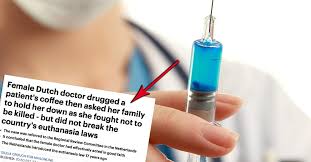
The change in attitude towards psychiatric euthanasia is likely connected to the case of a doctor who completed the death of a woman with dementia, who had requested euthanasia, but at the time of death resisted.

The doctor put a sedative in her coffee, but the woman continued to resist, so the doctor had the family hold her down while she was lethally injected.

A Netherlands court acquitted the doctor but the Dutch prosecutor asked for the case to be reviewed by the Supreme court.

Many physicians in the Netherlands have indicated that they are not sure of the requirements for psychiatric euthanasia and they now refer these patients to the euthanasia clinic.

Canadian Society of Palliative Care Physicians: Euthanasia is not consistent with the philosophy, intent or approach of hospice palliative care.

Alex Schadenberg
Executive Director, Euthanasia Prevention Coalition

*Sign the petition: Hospice Organizations Must NOT be Forced to do Euthanasia (Link).

On December 2, I reported that the Delta Hospice Society that operates the Irene Thomas Hospice in Ladner BC, renewed its opposition to euthanasia (MAiD) while supporting excellent care. The Board stated:

MAiD is not compatible with the Delta Hospice Society purposes stated in the society’s constitution, and therefore, will not be performed at the Irene Thomas Hospice.

Irene Thomas Hospice

The BC Health Minister, Adrian Dix, responded by declaring that the provincial government will take action if the Delta hospice refuses to kill its patients. Dix suggested that they will stop funding the 10 bed hospice if they refuse to do MAiD.

In its recent Call to Action, the Canadian Hospice Palliative Care Association (CHPCA) and the Canadian Society of Palliative Care Physicians (CSPCP) stated that MAiD (euthanasia) is not part of hospice palliative care.


On Tuesday, the President of the CSPCP, Dr Leonie Herx, sent a letter to Minister Dix supporting the refusal by the Delta Hospice Society to do euthanasia (MAiD) and stating that MAiD is not consistent with the philosophy, intent, or approach of hospice palliative care which supports dying as a natural process and does not hasten death: Herx stated:
The Canadian Society of Palliative Care Physicians is concerned that palliative care centres in Fraser Health, such as some hospices, might be mandated to provide Medical Assistance in Dying (MAiD) on site. While we appreciate the requirement for MAiD to be available, requiring it to be provided in hospices and palliative care units poses risk for potential harm. The risks are outlined in in our submission to the Special Joint Committee: (Link).

The Canadian Hospice Palliative Care Association (CHPCA) and Canadian Society of Palliative Care Physicians (CSPCP) recently released a Joint Statement on Hospice Palliative Care and MAiD which further outlines that MAiD is not consistent with the philosophy, intent, or approach of hospice palliative care which supports dying as a natural process and does not hasten death: (Link).

The Canadian Medical Association (CMA) also recognizes the distinct nature of these practices in the unanimously passed General Council Resolution DM 5-63 which states: The Canadian Medical Association recognizes that the practice of assisted death as defined by the Supreme Court of Canada is distinct from the practice of palliative care.

One of the biggest potential harms is to those who do not choose MAiD (more than 98% of those who die as only about 1.5% choose MAiD). Both the public and many health care providers have had a longstanding fear of Hospice Palliative Care because they were afraid it hastened peoples’ deaths. This has led to late referrals and people choosing to not be referred to palliative care services that could have benefited them. For over 40 years we have been trying to educate the public and health care professionals that Hospice Palliative Care neither hastens nor prolongs the natural process of dying.

The core philosophy of hospice care is to provide a culture of caring that enables persons to live fully until they die a natural death and to minimize the symptoms and fears of the dying process, but never to intentionally hasten death.

Insisting that MAiD be provided in all palliative care centres and hospices has the potential to undermine the last 40 years of education about and advocacy for Hospice Palliative Care and goes against the core, foundational principles of hospice care. It also removes choice for those who want to choose a natural death supported by high quality hospice palliative care without fear their lives will be shortened.

Hospices and PC units should be able to make their own local arrangements for patients who request MAiD that allows patients access to this procedure and also maintains the integrity and availability of Hospice Palliative Care.

We kindly ask for you to consider the risk of harm and to help provide good access to high quality hospice palliative care.

Sign the petition: Hospice Organizations Must NOT be Forced to do Euthanasia (Link).


Design a site like this with WordPress.com
Get started