Dark Anniversary: The State of Assisted Suicide 25 Years after Oregon Measure 16

This article was published by National Review online on November 19, 2019
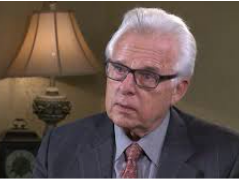
Wesley Smith

By Wesley J Smith

Measure 16 in Oregon did not start the fire, but it added fuel.

Proponents of assisted suicide are celebrating the 25th anniversary of Measure 16, the Oregon referendum that, for the first time in the modern era, formally legalized doctor-prescribed death. To open the door to more suicide in a culture that is now roiled by an acute suicide crisis — about 45,000 Americans kill themselves annually, up from about 30,000 in 1999 — seems a bizarre event to cheer. But nihilism strikes a beat. Suicide to prevent suffering is seen by euthanasia supporters as not only acceptable but optimal, perhaps the best way to die.

After the passage of the Oregon referendum, assisted-suicide enthusiasts predicted that it would lead quickly to widespread public embrace of doctor-hastened death. That hasn’t happened, and resistance remains stiff. Still, Measure 16 did mark the beginning of an avalanche down the slippery slope. The District of Columbia and nine U.S. states, including that culture-driving behemoth California, have legalized assisted suicide for the terminally ill. Belgium, Colombia, Luxembourg, the Netherlands, and our closest cultural cousin, Canada, now permit doctors to give lethal injections to patients who ask to die. Switzerland’s once sleepy law allowing assisted suicide, passed back in the 1940s, came to the fore in the ’90s with the establishment of suicide clinics at which people from around the world pay about $10,000 to be made dead. Victoria, Australia, has also legalized assisted suicide, while the German supreme court conjured a limited legalization, permitting the practice so long as the motive for assisting isn’t venal. Energetic legalization efforts are continuing in countries as disparate as New Zealand, India, the United Kingdom, and Italy.

That’s a lot of radical cultural change — which, I hasten to note, is not a synonym for progress — in a quarter century. But it seems to me that, now that doctors have greater ability than ever before to relieve suffering, the current vitality of the euthanasia movement is more a symptom of growing nihilism than a cause of it. But it is also a reinforcing symptom. This milestone anniversary of Measure 16 seems a reasonable time to assess the cultural consequences that have accrued from redefining suicide as a medical treatment.

It is important to understand that the so-called right to die isn’t about terminal illness. Nor is it a safety valve to be used only to prevent irremediable suffering. Those are just sales pitches to persuade a still-wary public to swallow the hemlock. Even in jurisdictions that (currently) restrict the writing of lethal prescriptions to those deemed to have six months or less to live — a notoriously difficult and imprecise prognosis — there is no requirement that the suicidal patient’s purported suffering be objectively irremediable.

Besides, once a country popularly embraces euthanasia, most limitations are quickly abandoned. Both Belgium and the Netherlands legalized lethal-injection euthanasia commencing in 2002 and proceeded quickly, from allowing doctors to lethally inject terminally people who request it, to allowing chronically ill people who request it, to allowing people with disabilities who request it, to allowing the mentally ill who request it.

The mentally ill? Really?

Alas, yes. There are many sad examples. In Belgium, a transgendered person profoundly depressed by the results of a sex-change surgery asked for, and received, euthanasia. In a truly awful case, a woman suffering from anorexia, who had been sexually abused by her psychiatrist, was euthanized by another psychiatrist because she was in despair that the first doctor had not been subjected to professional discipline. A woman who had struggled with depression her whole life was euthanized by an oncologist. The first her son knew of the plan was when the hospital called him to pick up his mother’s body. Meanwhile, in the Netherlands, psychiatrists are killing more of their mentally ill patients each year. In 2017, Dutch psychiatrists and other doctors lethally injected 83 mentally ill patients, up from 42 in 2013.

Sometimes such homicides are accompanied by organ harvesting. In other words, doctors remove organs from donors who would not be dead but for being killed by other doctors. These ghoulish procedures have even been discussed respectfully in medical journals dedicated to organ-transplant research. One such study discussed the successful transplant of lungs from four euthanized donors who had not been terminally ill. Three had neuromuscular disabilities. One suffered from chronic self-harming.
Pause and think deeply about that for a moment. The “treatment” for self-harming was for a doctor to commit the ultimate harm, killing the patient.

Elderly people are euthanized because they are experiencing the usual afflictions of age, such as macular degeneration. There have even been joint euthanasia killings of married couples in Canada, Belgium, and the Netherlands, and assisted suicides in Switzerland. In one Belgian example, neither spouse was seriously ill. Not only that, but the death doctor was procured by the couple’s son — who told the Daily Mail that this was the best choice, since he would not have the ability to care for his parents if they ever became dependent. There is a word for that, and it isn’t “compassion.”

In Belgium and the Netherlands, euthanasia has spread to incompetent people with dementia if they expressed a desire to be killed in an advance medical directive. One such recent case from the Netherlands illustrates how profoundly euthanasia corrodes societal morality. An elderly woman was diagnosed with dementia. She said that she wanted to die when she became incapacitated — but also that she wanted to decide when that time had come. The woman’s doctor decided for her, drugging her coffee to make her sleep before being lethally injected, but the patient awakened and struggled against being killed. Rather than cease and desist, the doctor instructed attending family members to hold her down so she could finish dispatching the patient.

This would seem to be a clear-cut case of murder. But judges exonerated the doctor, arguing that she had acted in her patient’s best interest. So an elderly woman, struggling to live, was killed, and a judge praised her killer for performing the lethal act.

“But Wesley,” some might be saying, “we would never allow Alzheimer’s patients to be killed in the United States!” Oh no? Nevada just passed a first-of-a-kind law permitting dementia patients to order withdrawal of their food and water withheld when they become incapacitated.
Understand, this new statute does not refer to feeding tubes, which is a medical treatment that can be refused legally by advance directive in all 50 states. Nor is it about preventing forced feeding. Rather, the law requires caregivers to withhold spoon feeding, which is humane care, akin to keeping a patient warm or clean. In other words, Nevada has legalized killing dementia patients by starvation, even if the incompetent person willingly eats, perhaps even if the patient asks for food.

Euthanasia has spread to the treatment children. In the Netherlands, sick kids can be euthanized starting at age twelve. There are no age restrictions in Belgium, where government reports indicate that a nine-year-old was subjected to euthanasia in recent years. Euthanizing children remains illegal in Canada, but the government is currently debating whether to expand euthanasia eligibility, and many in the pediatric medical community support extending the license to children. Indeed, some pediatricians at a children’s hospital in Toronto have already volunteered to do the deed if pediatric euthanasia becomes legal.

Infanticide was, until recently, universally considered a heinous crime. Not any more. Neonatal euthanasia is tolerated by authorities in the Netherlands, where it remains technically illegal. Indeed, in medical journals, doctors have admitted that they have lethally injected babies who were born with terminal conditions or serious disabilities. There is even a published bureaucratic infanticide checklist, known as the Groningen Protocol, to help doctors decide which babies to euthanize. Revealingly, the protocol was written up, with scant criticism, in The New England Journal of Medicine.

Support for infanticide is becoming respectable in the United States as well. Recall that Peter Singer, the world’s foremost apologist for infanticide, was given a prestigious chair in bioethics at Princeton University not despite his views but because of them. Meanwhile, support for post-viability abortion has become de rigueur among Democrats, with almost all the party’s presidential candidates opposing any limitations and rejecting laws that would require babies who survive attempted termination to be treated medically like other infants. Virginia’s governor, Ralph Northam, even strongly suggested that a baby who survived abortion “should be kept comfortable” while doctors and mother decided whether to withhold care and neglect the baby to death.

Advocates for assisted suicide claim that, whatever might be happening in other countries, there have been no “abuses” here. But that isn’t true. In 2008, two terminally ill Medicaid patients in Oregon were refused life-extending chemotherapy by bureaucrats but specifically assured that assisted suicide would be covered. A similar case was reported in Nevada, where in 2017 a doctor complained that a private health-insurance company refused to pay for a patient’s transfer to California for life-saving care and that, adding injury to insult, the company asked the doctor to consider recommending assisted suicide, for which benefits would be paid.

According to the Oregonian, a dementia and cancer patient named Kate Cheney may have been persuaded to die early by her daughter, who a psychologist said appeared to be the primary driving force behind the elderly woman’s request for assisted suicide.
Then there is Martin Freeland, who was dispensed a lethal prescription two years before succumbing naturally to cancer, meaning that surely he was legally ineligible for assisted suicide. Adding to the abuse, after Freeland became psychotic, to the point that he was put under a legal guardianship, his psychiatrist reported that the man’s guns were removed from his home but ensured that the lethal drugs remained available for use. Freeland eventually regained his competence and died naturally, having had the time to reconcile with his daughter — which would not have happened had he taken the prescribed poison when it was dispensed. He told his caregivers he was very glad not to have committed suicide.

Meanwhile, as doctor-prescribed death is promoted far and wide by friendly media, the United States in in the depth of a suicide crisis. Perhaps not coincidentally, Oregon’s suicide rate is 33 percent higher than the national average. Does this mean that there is a connection between assisted-suicide advocacy and increasing suicide rates? At least one study indicates that there may be. There is no dispute that the suicide crisis is worsening. Ohio just announced that suicide deaths there have risen a stunning 45 percent in the past twelve years. Even so, the Ohio Nurses Association recently gave its support for legalizing assisted suicide. One would think that nurses could connect some damn dots!

Enough. Measure 16 did not start this fire. But it clearly quickened what was then merely an incipient cultural trend. The uncertainty 25 years later is not whether killing the sick, disabled, and elderly could happen. It already is happening. No, the real question is whether we are willing, with clear eyes, to accept the toxic cultural consequences that flow directly from eliminating suffering by eliminating sufferers.
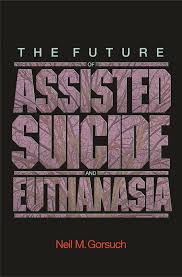

Review of the book by Supreme Court Justice Neil Gorsuch on assisted suicide.

Alex Schadenberg
Executive Director, Euthanasia Prevention Coalition

John Dale Dunn wrote a consice review, for the American Thinker, of the book The Future of Assisted Suicide and Euthanasia by Supreme Court Justice Neil Gorsuch, a book that was published in 2006.

Dunn argues that people who oppose or support assisted suicide should read this book. He states:

Gorsuch’s analysis is a thoughtful and stimulating contribution to the debate about one of the most controversial public policy issues of our day.

Dunn continues:

There is no doubt that Gorsuch provides the most thorough and compelling condemnation of assisted suicide and euthanasia yet. He certainly puts a hole in the side of the ship of the cult of death. His book provides a thorough overview of the ethical and legal issues raised by assisted suicide and euthanasia and a comprehensive argument against the legalization of these heinous acts.

Judge Gorsuch evaluates the ethical arguments for euthanasia and assisted suicide, lays out the evidence on how these projects result in a casual dismissal of the meaning of life in places where the new approach has been adopted like the Netherlands and Oregon, and makes a strong case for the malfeasance and immoral conduct these enabling laws create.

Gorsuch examined the issues from a social and historical basis. Dunn writes:

Judge Gorsuch assesses the ethical and moral arguments of the advocates of a liberated approach to killing the useless eaters and the disabled when contrasted with the principle that intentional killing is always wrong.

Judge Gorsuch is leery of killing depressed and hopeless individuals for the obvious reason: their depressed state is a pathological state in itself, deserving of treatment, not enablement. Judge Gorsuch builds a robust argument against legalization when he confronts the ethical arguments for assisted suicide and euthanasia. He explores evidence and case histories from the Netherlands and Oregon, where the practices have been legalized. He analyzes libertarian and autonomy-based arguments for legalization as well as the impact of key U.S. Supreme Court decisions on the debate. And he examines the history and evolution of laws and attitudes regarding assisted suicide and euthanasia in American society.

Dunn examines the commentary by Gorsuch on Dr Leo Alexander’s essay on the Nazi euthanasia program that was published in 1949. Alexander was an expert at the Nurembourg trial. Dunn states:

I would add to Judge Gorusch’s presentation the essay by Dr. Leo Alexander that was published in the New England Journal of Medicine in 1949, an analysis of the reasons why the Nazi physicians were able to kill and maim individuals considered inferior or not deserving of consideration as human — for political, social, or ideological reasons. Dr. Alexander, an American neurologist/psychiatrist, a Jew, educated in Vienna, investigator for the Nuremberg Tribunal that had Nazi physicians on trial for war crimes, asserts that the moral limits are violated when individuals and the society at large accept the idea that there are sub-humans who are expendable, unacceptable, inferior, or a burden or disabled so they cannot contribute. If the status of those individuals is considered less than human, the easy step is to treat them as subhuman, candidates for abuse and extermination by the will of the state and its officials.

There is an ominous taint to the idea that the law and the government will enable killing people because they are sick or depressed, or disabled, or just old and willing to end it.

Gorsuch provides a legal and social analysis concerning euthanasia and assisted suicide and concludes his book by condemning these practises. John Dale Dunn is right to say that both opponents and supporters of assisted suicide need to read – The Future of Assisted Suicide and Euthanasia by Justice Neil Gorsuch.

New Zealand Euthanasia bill passes. Euthanasia referendum is next.

Alex Schadenberg
Executive Director, Euthanasia Prevention Coalition


I have very bad news. 


The New Zealand parliament passed the euthanasia bill by a vote of 69 to 51 yesterday. 

But the battle is not over. On October 23, the New Zealand First party passed an amendment to the bill requiring a national referendum approve the euthanasia bill, before it becomes legal. New Zealand First stated that a referendum was required to gain the support of their party.

The date of the next election and the euthanasia referendum is not yet determined but it is likely to occur in the fall of 2020.

Similar to the Canadian law, the New Zealand “End of Life Choice Bill” legalizes death by lethal injection (euthanasia) and death by lethal prescription (assisted suicide).

If this law passes in the referendum, the experience with the law will likely be similar to Canada whereby the latest data from Ontario, Canada’s largest jurisdiction, states that there were 3822 assisted deaths from June 17, 2016 – September 30, 2019 with all of the deaths, except one, being euthanasia.

The New Zealand bill passed with several amendments based on political trade-offs were approved. Henry Cooke with Stuff news reported:

The Greens and NZ First both agreed to vote for the bill on-bloc once certain conditions were met. 

For the Greens those conditions were more safeguards to make sure only the terminally ill were covered, and could not be coerced. 

NZ First referendum on the subject, an amendment entered by a tight vote won 63 to 57.

Now that the referendum will occur, we know that its necessary to convince the average voter that legalizing euthanasia is either wrong or a dangerous public policy.

The Euthanasia Prevention Coalition will work with New Zealand organizers to build an effective campaign. Success is necessary and possible.

On November 6, 2012, the Massachusetts citizens defeated the assisted suicide referendum by a vote of 51.1% to 48.9%. The referendum was defeated by a coalition of diverse people in a state which tends to define itself as progressive.

Maggie Barry speaking

Cooke reported in Stuff news that the issue is not over.

National MP Maggie Barry, one of the bill’s fiercest opponents, said her side had lost a battle but the war for the referendum had just begun. 

“The most liberal Parliament in New Zealand’s history has voted through this dangerous and permissive bill. Now the only hope of stopping euthanasia being legalised is through a referendum at the election,” Barry said. 

“We are involved in now, a major war to tell the people of New Zealand what this might mean for the vulnerable, for the disabled, for those who fear for their lives.

A referendum victory is not only necessary but it is possible.

Euthanasia Prevention Coalition USA reprimands WMAL conservative radio for promoting Assisted Suicide group in a “Bait and Switch" scheme


Press Release
November 12, 2019

The Euthanasia Prevention Coalition USA condemns Compassion and Choices (C & C), the pro assisted suicide organization who urge people to use Advance Directives to write down unwanted medical treatment, including food and fluid and spoon-feeding, so their “end of life choices” would be respected. 

According to a promotion on WMAL, a conservative radio station, the pro-assisted suicide (C & C) group is featured in a financial seminar, put on by Ric Edelman’s financial advisory firm. C & C are featured because they don’t want Advance Directives honoring a patient’s choice to be kept alive, based on “devastating” financial results for the family. 

Talk about a “Bait and Switch”! If you write down that you wish to live, they are looking for a way for your heirs to kill you anyway. 

Financial Elder Abuse is rampant. 

Why would we take your choice away and give it to potentially greedy heirs. Being a “financial seminar” this can only be about getting at the money sooner.

EPC-USA would also like to know why conservative talk radio station WMAL is promoting a conference featuring the prominent pro assisted suicide organization, C & C. This group is not consistent with their values.
 

Former Belgian College of Physicians & Surgeons VP warns that euthanasia may be approved for "fear of death."

Alex Schadenberg
Executive Director, Euthanasia Prevention Coalition


Ivo Uyttendaele, the Former Belgian College Physicians & Surgeons VP argues in his new book, De Wetstrijd that abuse cannot be prevented under the current Belgian (& Dutch) euthanasia practice.

An interview with Uyttendaele published in the Knack on November 9 concerned his new book on euthanasia. Uyttendaele states in the Knack interview (google translated):

Initially it was about life termination by the attending physician at the request of the unbearable sufferer in a terminal phase of life but gradually it was accepted that also non-terminal patients could suffer unbearably and then the unbearable sufferer of psychiatric patients and if the unbearable suffering was not yet happening. If the condition itself was present, it could also be due to the prospect of a decaying end due to a creeping illness. The very first clinical signs of a malignant disorder have been accepted for years as the cause of unbearable suffering, so the question arises as to whether the genetic evidence of ever having a serious disorder can also be accepted as the cause of unbearable suffering and the resulting demand for euthanasia. How far are people from the step that euthanasia will be recommended as a remedy for unbearable suffering from fear of agony?

Ivo Uyttendaele

According to the Knack interview, Uyttendaele states that the medical model for euthanasia is not capable of controlling the law. He states (google translated):

It is strange that the protagonists of euthanasia who are eager to adopt the epithet of progressive, continue to swear by an outdated medical model as if they do not know that the intolerability of existence is better understood and resolved when man is not only a biological phenomenon but is also viewed as a being whose health is partly determined by psychological and social factors.

Uyttendaele comments, in the Knack on the concept of unbearable suffering:

Unbearable suffering is the obligatory formula that every applicant must express in order to be eligible for euthanasia. The suicidal balance, who is hopeless and seriously ill and, after rationally considering the pros and cons of further life, who has been stripped of all emotion and opts for a quick end to increase the chance of a successful organ donation, must also explain that he suffers unbearably as if sublimation can only be driven by drives and psychological suffering cannot be suppressed by reason.

Comments in the Healthcare Executive (BE) on Uyttendaele’s book emphasize the further expansion of euthanasia to genetic reasons. The article states (google translated):

In Belgium too, requests for euthanasia are granted at the very first signs of dementia as the prospect of deterioration is accepted as the cause of unbearable and hopeless suffering. On the basis of the same reasoning, a request for euthanasia because of the genetic evidence that chorea will be obtained from Huntington should also be granted since the prospect is just as bad as when the first signs of dementia appear: a longer time interval cannot be the essence be in the reasoning. 

The question is whether euthanasia can, upon suffering caused by a genetically determined prospect of terrible misery, such as breasts, fallopian tubes and ovaries, be removed on request from an unfavorable genetic code. Euthanatophils will say that this should be possible, but euthanatophobes will wonder if fear of what will happen if acceptable grounds for euthanasia mean that fear of death will soon suffice? It has never been investigated whether the prevention of fear of death is not the basic motive for euthanasia in some people: not only regulating the funeral but also the hour of death and also the hour of euthanasia.

The article in Healthcare Executive concludes:

Hopelessness was initially the domain of science but now the phrase from the law “dominates with the patient”, so finding a doctor who finds sensible therapy useless when treatments are fed up is the solution: autonomy of the patient is more decisive than the art of healing. 

The free interpretation of a liberal law with only a symbolic check on implementation has given the doctors unlimited power so that it is now time to protect “the fragile person” * against potential abuse of power.

Uyttendaele is arguing that the medical model of euthanasia has led to euthanasia for people who fear future suffering and which may lead to euthanasia based on genetic evidence. He suggests that genetic evidence opens up the issue of fear of future suffering from one’s genetic code. He then suggests that this step may also lead to extending euthanasia to fear of death.

New Zealand poll shows confusion about euthanasia bill.

This press release was published by Euthanasia-Free NZ on November 11, 2019.

A new nationwide Curia Market Research poll shows the vast majority of New Zealanders are confused about what the End of Life Choice Bill aims to legalise.

“While many of our supporters welcome the opportunity to vote on this Bill, we are concerned that a referendum result at the next election would not reflect the public’s true sentiments,” says Renée Joubert, Executive Officer of Euthanasia-Free NZ.

In the poll, conducted from 31 October to 6 November, responses demonstrated that:

“even though this Bill has been the subject of public debates and media attention for four years, three-quarters of New Zealanders are still confused about which ‘end of life choice’ it seeks to legalise.

The poll found that 74% of New Zealanders think the Bill would make it legal for people to choose to have machines turned off that are keeping them alive, when in fact this is already legal.

Similarly, 70% of respondents thought the Bill would make it legal for people to choose to not be resuscitated, when again, people can already ask for such a request to be added to their medical file.

Ms Joubert says 75% of those polled thought that the Bill made euthanasia available to terminally ill people only as a last resort, after all treatments have been tried to control their pain.

However, the Bill does not require an eligible person to have tried any pain relief or palliative care before requesting a lethal dose, or to have a consultation with a palliative care or pain specialist to find out what options are available to them. [1]

She says the Bill proposes to legalise ‘assisted dying’, one of many euphemisms for voluntary euthanasia and assisted suicide. Eligible New Zealanders as young as 18 would be allowed to request a lethal dose to end their life instead of seeking treatment or palliative care, were this bill to pass.

“Surprisingly, 73% thought that the bill makes euthanasia available to terminally ill people with less than six months to live, provided that they do not also have depression or mental illness. However, the bill does not categorically exclude terminally ill people who are also mentally ill, because mental illness would not necessarily make someone incompetent. [2]

“This poll demonstrates that the public is not yet aware of the content and meaning of the End of Life Choice Bill. Therefore, polls and surveys that do not specify which choices the Bill includes and excludes may not reflect New Zealanders’ true level of support.

“Furthermore, the poll highlights a real risk that the public will still be unaware of the bill’s proposals at the time of the referendum,” Ms Joubert says. “We doubt that another year would be long enough to adequately inform the public, alongside the contentious debates on cannabis and the general election.

Euthanasia-Free NZ calls on MPs to prevent New Zealand having a referendum on this Bill at the next election by rejecting the End of Life Choice Bill at its third reading.

Explanatory Notes:

[1] The End of Life Choice Bill does not require a person to try pain relief or palliative care before requesting an assisted death by lethal dose.

The Bill states that an eligible person is a person who “experiences unbearable suffering that cannot be relieved in a manner that the person considers tolerable”, (among other criteria in section 4). A person can consider an available treatment ” not tolerable” without ever trying it. Once a person has expressed their wish to the first doctor in the process, the “attending medical practitioner”, this doctor needs to “ensure that the person understands their other options for end-of-life care” (among other requirements in section 8 (2)(c)). The person is not required to speak to a palliative care or pain specialist to find out what other options may be available. In fact, the attending medical practitioner does not need any specific training or experience in the field of the person’s medical condition. This doctor needs to be registered with the Medical Council, but the type of registration is not specified. So this doctor could be fresh from medical school (see definitions in section 3).

[2] Depression does not necessarily make a person incompetent
 
In describing the euthanasia of a Canadian woman with a brain tumour and depression, psychiatrist Dr Ralph Lewis writes,

“Depression does bias a person’s outlook, but bias is not the same as mental incompetence. Doctors have to balance the need to protect patients in vulnerable mental states from exercising poor judgment against the need to respect their autonomy.”

“One of the most challenging things in assessing competence is trying to determine whether and to what degree the person’s decision is distorted by depression. It is not abnormal to feel depressed in the face of great suffering and a hopeless prognosis. Assessors must consider carefully whether the depression is biasing the patient to the point that they’re unable to think flexibly about their options and the potential scenarios—in a sense significantly impairing the voluntariness of their decision.”

Doctors’ letter opposing euthanasia gets 1,500th signature

The New Zealand parliament is soon voting on the euthanasia bill and the country may have a referendum on euthanasia

The following Press release from Doctors Say No is essential for defeating euthanasia in New Zealand.

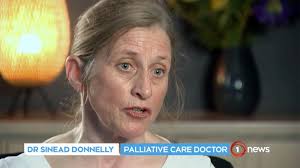
Dr Sinead Donnelly

Sunday, 10 November 2019
Press Release: Doctors Say No

10 November 2019

Doctors’ letter opposing euthanasia gets 1,500th signature

The ‘Doctors Say No’ Open Letter opposing euthanasia has recently received its 1,500th signature, appealing to MPs at this final hour, to vote down the euphemistically titled “End of Life Choice” bill.

Organiser Dr Sinead Donnelly, a Wellington-based Palliative Medicine specialist, says she is humbled by the response. “We started with a very simple one-page website and it has just snowballed, which highlights the significant concerns of doctors with this bill.”

The Open Letter states that ‘Doctors want no part in assisted suicide’, noting the World Medical Association and the New Zealand Medical Association positions that “physician assisted suicide and euthanasia are unethical, even if they were made legal.” The World Medical Association representing physicians in 123 countries last month re-affirmed that euthanasia is not part of medical practice.

Dr Donnelly says that David Seymour’s End of Life Choice Bill “only includes doctors to provide a cloak of medical legitimacy. “Killing is not caring. It does not require any medical skills, it just requires the abandonment of medical ethics.”

She has a simple message to Members of Parliament as they approach the Bill’s 3rd and final Reading next week:

“If you are really determined to legalise euthanasia, find another profession to do it. Please leave doctors out of it so that we can focus on caring for our patients.”

Doctors Say No will present this letter to MP’s this week and will be represented at the people’s gathering outside Parliament midday on Wednesday, November 13th in advance of the final reading of the bill.

ENDS

Euthanasia for hip fractures in Québec

This article was published by the Australia Care Alliance on November 9, 2019.

Three people were euthanased in Quebec between April 2018 and March 2019 for a hip fracture. This is just one of the warnings about where legalisation of euthanasia leads that can be drawn from the latest report on euthanasia in Quebec.


Euthanasia in that Canadian province now accounts for nearly one out of fifty deaths (1.9%) with significantly higher rates in some health regions including the capital (3.38%) and Bas-Saint-Laurent (3.45%).

Although Canadian law requires “at least 10 clear days between the day on which the request was signed by the person and the day on which” euthanasia is provided unless “the person’s death, or the loss of their capacity to provide informed consent, is imminent” and the Quebec law requires the physician to verify “the persistence of suffering and that the wish to obtain” euthanasia “remains unchanged, by talking with the patient at reasonably spaced intervals given the progress of the patient’s condition” in a massive 40% of cases euthanasia was performed less than 10 days after a request was first made.

Only 11% of people euthanased had a prognosis of less than 2 weeks to live.

If the remaining cases involved an imminent loss of capacity this raises real questions about the validity of the original request. If a person is assessed on the verge of losing capacity what degree of certainty can there be that the person currently has full capacity? 

The report notes that there is a tendency is to refer applications for euthanasia to certain family physicians who consent to administer euthanasia to people even if they do not know them. These doctors administer a large number of euthanasia cases each year, with 43 doctors performing euthanasia on 10 or more people each in the reporting period (April 2018 to March 2019).

Read more on euthanasia in Canada here.

Alberta debates conscience rights protection bill 207.

Alex Schadenberg
Executive Director, Euthanasia Prevention Coalition

The Alberta Legislature had first reading on Conscience Rights (Health care Providers) Protection Act, Bill 207 on November 7, a private members bill that is sponsored by MLA Dan Williams, a backbench government member from Peace River.

Sign the petition: I support the Conscience Rights Health Care Protections Act, Bill 207. (Link).

Bill 207 seeks to protect the conscience rights for health care providers and organizations. The bill states:

Conscience-based objection to provision of health care service 

If a health care provider or religious health care organization determines that their conscientious beliefs would be infringed by providing a specific health care service to an individual, the health care provider or religious health care organization is not required to provide that health care service to the individual.

Dan Williams MLA

1. Bill 207 protects health care providers conscience rights in general.
2. Bill 207 protects health care providers from being penalized for being a conscientious objector.
3. In a pluralistic society, conscience rights ensure that everyone has equal protection.

An article by Shaughn Butts for postmedia news quoted Williams as stating that Bill 207 protects health care providers but it does not limit access to legal healthcare services. Butts reported:

“Health care providers should never have to choose between their most deeply held beliefs and their job,” 

“Let me be clear, this bill not only protects freedom of conscience, but it also in no way limits access to health care services in the province”

Butts reported that the bill amends the Alberta Human Rights Act to protect conscientious beliefs as a basis for protection from discrimination or refusal for employment.


Bill 207 passed its first vote, on November 7, along party lines with 36 UCP members voting in favour of the bill while the 15 NDP opposition members voting against the bill. 


The bill was referred to the Standing Committee on Private Bills and Private Members’ Public Bills.

Québec – 1331 reported euthanasia deaths (April 1, 2018 – March 31, 2019) At least 13 deaths did not comply with the law.

Fourth report from Québec’s Commission on end-of-life care

By Amy Hasbrouck and Taylor Hyatt 


On October 2, Québec’s Commission on end-of-life care released its fourth report for the period April 1, 2018 to March 31, 2019. The Commission reported a substantial increase in the number of euthanasia over the previous years. They reported:

Link to the analysis by Amy Hasbrouck and Taylor Hyatt on the previous Third Québec report (Link).

  • There were 1,331 euthanasia were reportedly performed this year April 1, 2018 – March 31, 2019). Added to the 1,630* for the 28 months from December 10, 2015 to March 31, 2018, bringing the total to 2,909 euthanasia in Québec since the program began. We’ll talk in a few minutes about why those numbers don’t add up.
  • Continuous palliative sedation (CPS) was performed on 1,243 people during the reporting period. Added to the 1,704 CPS performed during the 28 months from December 10, 2015 to March 31, 2018, this brings the total to 2,947. 
  • Euthanasia and CPS each accounted for 1.9% of deaths in Québec during the reporting period, for a total of nearly 4% of all deaths in the province. 
  • *As explained in footnote 19 on page 27, 1,630 euthanasia deaths is a corrected total from the Commission’s summary report issued last spring. Apparently “two MAiD reported by an institution as having been administered were not administered.” 

The exact number of euthanasia deaths is hard to pin down from the report.

  • On pages iii, 12, 27 (footnote 19), 37 and 38, the report says “1,279 people received MAiD between April 1, 2018 and March 31, 2019.” This figure, when added to the 1,630 from previous years, gives the reported total of 2,909.
  • But on page 23, the report says “according to reports from institutions, 1,937 requests for MAiD were made between April 1, 2018 and March 31, 2019; of these, 1,271 were administered and 672 were not administered.” 
  • The 1,271 figure, added to the 60 euthanasia performed by doctors outside of institutional settings and reported by the Collège des médecins du Québec (CMQ), gives a total of 1,331 euthanasia. 
  • Maybe you’ve noticed that 1,937 minus 672 does not equal 1,271, but rather 1,265. The six missing people are accounted for in a note in figure 3.17 which does not show the outcome of the six euthanasia requests in region 10. The Commission explains: 
    • “In order to respect the rules of confidentiality, and because of the risk of identification related to the disclosure of a small number of individuals, the exact distribution of the euthanasia administered and not administered could not be provided.” 
  • As for the 1,279 figure used elsewhere in the report, we don’t know where it comes from, or if it includes the 60 euthanasia reported by the CMQ. And if you think we’re being nit-picky, just remember that euthanasia laws are supposed to impose “stringent limits” that are “scrupulously monitored and enforced.” 

This year, the Commission received 1,400 euthanasia reports, some of which document euthanasia performed before the reporting period. 

“The Commission notes that 86 forms were received more than six months after the administration of MAiD and some of them more than one year later.” 

A few things to note about the Commission’s process:

  • The Commission can only evaluate compliance with the law; it has no influence over other aspects of the medical practice, even if they could affect euthanasia. So, for example, if the doctor makes a mistake in diagnosis or the cause of a decline in capacity, that would probably fall outside the Commission’s area of responsibility.
  • Two-thirds of the commissioners must agree that a violation has occurred for a finding of non-compliance to be made. Such cases are referred to the institution’s Council of Physicians, Dentists and Pharmacists (CPDP) and the Collège des médecins du Québec. There is no remedy for the loved ones of ineligible people who are euthanized, or where safeguards are ignored. 
  • This year the Commission introduced a new procedure for evaluating reports, in response to the growing number of euthanasia. Declarations are examined by a sub-group including at least three commissioners; if all group members agree that the eligibility criteria were met and the safeguards complied with, the case is recommended for approval by the whole commission. If there is disagreement in the small group, the case is referred to the full commission for further discussion. 

The commission took a first look at 1,384 reports, and needed more information or had questions on 31%, or 430 of them. The Commission found that 96% of the 1,354 cases it ruled on complied with the law, but it could not reach a decision in 41 cases (3%) because they didn’t get the information they requested from the doctor. The commission found that 13 euthanasia (1%) did not comply with the law.

  • Four people were not eligible: 
    • Three people did not have a serious and incurable illness (they all had broken hips); 
    • One person’s medical insurance card had expired. 

  • In nine cases, safeguards were violated. 
    • The second doctor examined the person before the euthanasia request was signed in five cases. 
    • The doctor did not conduct the interviews to ensure that the request was informed, that the person’s suffering persisted and they still wanted euthanasia. “In two cases, the physician who administered the MAiD met the person only on the day of the [euthanasia].” 
    • One request form was witnessed by a non-qualified person. 
    • “In one case, the second doctor consulted had a family connection with the doctor who asked for the opinion.” 

Of those who asked for MAiD, 65% received it.
The three most common reasons euthanasia was not administered were:

  • The person was not eligible (246 people, or 37%)
  • The person died before the evaluation process was completed or before MAiD could be administered (224 people, or 33%) 
  • The person withdrew their request (127 people, or 19%). 

Forty percent of those approved were euthanized within ten days of making the request.

The Régie d’assurance maladie du Québec (RAMQ) reports that 682 doctors billed for services related to MAiD. According to the CMQ, of 23,478 doctors registered, 480 say they performed euthanasia in 2018.
If there’s a take-away message from this report, it would probably be that the number of euthanasia deaths is increasing rapidly, and procedures are still handled in a slip-shod manner. We still wouldn’t get on an airplane with a 1% chance of crashing, and a 3% uncertainty factor.
Design a site like this with WordPress.com
Get started