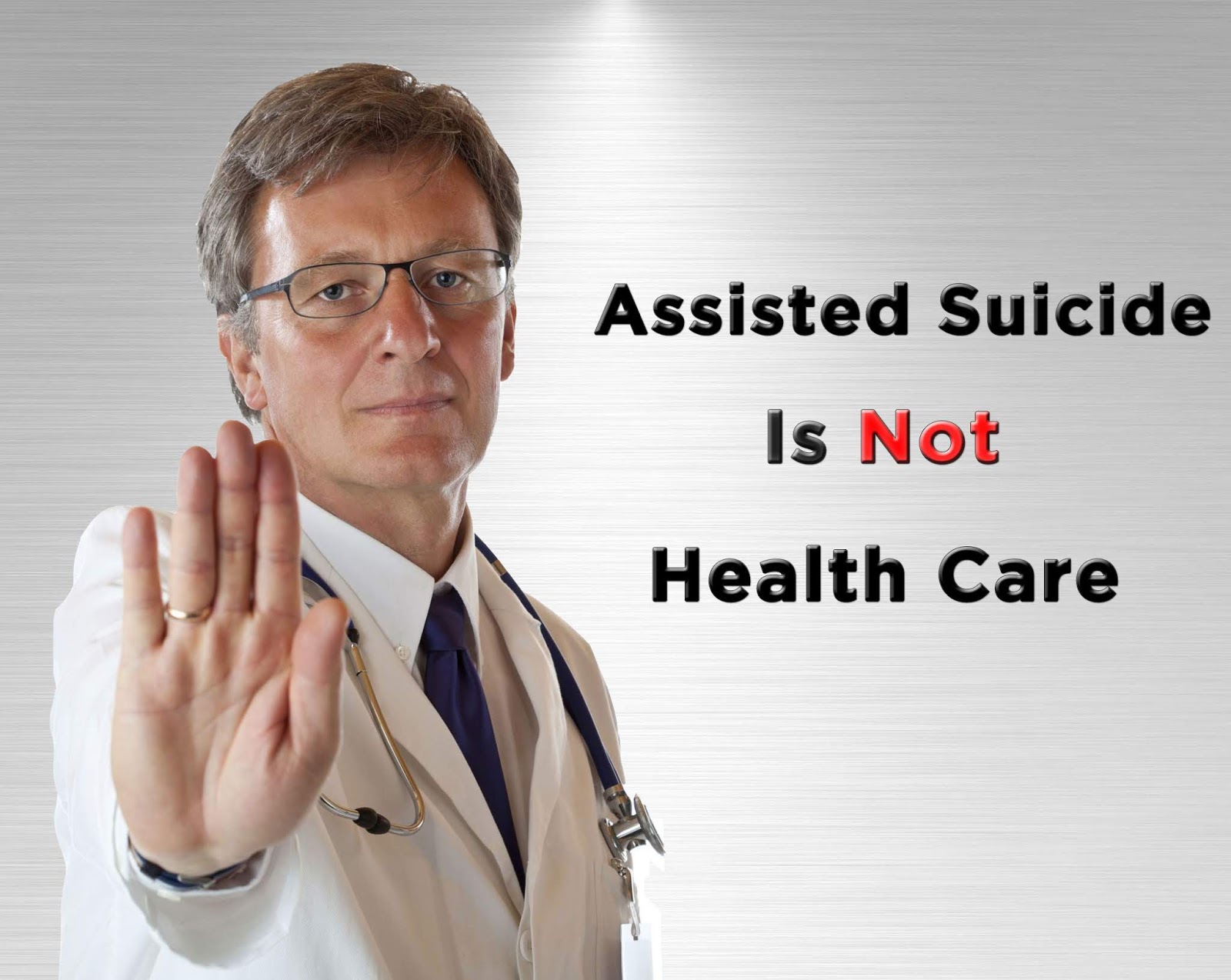
Conscience protection rules struck down by US federal judge.

Alex Schadenberg
Executive Director, Euthanasia Prevention Coalition
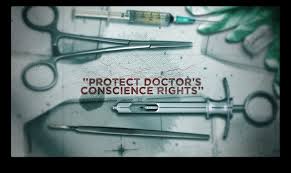

A federal judge in New York  struck down protections in law for medical professionals who conscientiously object to assisted suicide

Doctors may be forced to refer patients for assisted suicide.


When discussing the issues of euthanasia and assisted suicide with medical professionals, the issue of conscience protection is always a concern. 


Physicians who believe that it is wrong to kill patients by lethal injection or prescribing lethal drugs have lost, today, clear conscience protection.

In May 2019, the Trump administration announced an order to protect conscience rights for healthcare workers. CNBC reported:

In a release last week, the Health and Human Services announced the issuance of its final “conscience” rule, which it said follows President Donald Trump’s May 2017 executive order and his pledge “to promote and protect the fundamental and unalienable rights of conscience and religious liberty.”

Today, a federal U.S. District Judge Paul Engelmayer struck down the Trump administrations conscience rule that protected medical professionals from participating in medical procedures that they consider to be immoral or simply wrong.

The Trump conscience rule protected medical professionals from participating in many medical activities including euthanasia and assisted suicide.

According to an article by Stephanie Armour who’s article was published in the Wall Street Journal:

Nineteen states and family planning groups had sued to block the Department of Health and Human Services regulation that sought to expand enforcement of protections for medical workers with moral or faith-based objections to medical procedures such as abortion, assisted suicide or sterilization at hundreds of thousands of health organizations.

Armour reported New York Attorney General, Letitia James as stating:

“The refusal of care rule was an unlawful attempt to allow health-care providers to openly discriminate and refuse to provide necessary health care to patients based on providers’ ‘religious beliefs or moral objections,’

The Trump administration must appeal this decision based on a false understanding of the role of health care providers. Doctors should not be forced to participate in legal healthcare services that many healthcare professionals morally object to, such as assisted suicide.
The courts and government should not have the right to force someone to participate in an act that the person considers morally objectionable. Physicians refuse to participate in capital punishment. In the same manner many physicians refuse to participate in assisted suicide.

Protect Your Life: Life Protecting Power of Attorney.

Alex Schadenberg

Executive Director – Euthanasia Prevention Coalition

Alex Schadenberg

EPC has recently asked our supporters to contact us with personal stories concerning euthanasia or assisted suicide. Among the stories several people have commented on end-of-life medical decisions that were made against the will of the family.

You need to protect your life with the Life Protecting Power of Attorney for Personal Care. (Link).


Most jurisdictions have a basic template that all lawyers use. In most jurisdictions the ‘template’ power of attorney for personal care (living will) document is in fact dangerous and could result in basic care being withheld or withdrawn. 

This is why the Euthanasia Prevention Coalition (EPC) sells the Life Protecting Power of Attorney for Personal Care for $10 + taxes. (Link)


The Life Protecting Power of Attorney requires the person you appoint to make medical decisions that uphold your values. It protects you from euthanasia and assisted suicide and it defines the treatment/care decisions that you would want, in the event that you are unable to make medical decisions for yourself.

The Life Protecting Power of Attorney also gives you the piece of mind that EPC will help you if your expressed wishes are ignored or if a hospital or doctor pressures or attempts to impose medical treatment decisions upon you.


Order the Life Protecting Power of Attorney for Personal Care (Link) or contact EPC at: 1-877-439-3348 or info@epcc.ca

Euthanasia’s never ending expansion.

This article was published by OneNewsNow on Nov 6, 2019.

By Charlie Butts

Proponents of assisted-suicide continue to show that once the practice is legalized, the list of those who qualify never stops expanding.

Alex Schadenberg

Advocates of an assisted end initially claim the practice is meant for people who are suffering serious pain. The laws passed in the U.S. include the restriction that the patient must have the prognosis of six months or less to live.

Alex Schadenberg of the Euthanasia Prevention Coalition tells OneNewsNow a Belgium lawmaker is now suggesting that people who believe they have lived a completed life also ought to qualify – a move that Schadenberg says often victimizes the elderly.

“What these people need more than anything else is not death or lethal injection,” he contends. “They need visitors. They need friends. They need a culture that respects them. They don’t need lethal injection.”

He adds that it also helps when people stay in close touch with their elderly family members to make sure they know they are loved and valued and to ensure that they receive counseling and/or medication when they need it.

“Completed life, though, undercuts the basic euthanasia argument,” the Coalition executive director asserts. 

“Where they’re trying to legalize euthanasia, they talk about suffering, suffering, suffering. And when you look at the consequences of a completed life, it is about suicide, and the state provides the death.”

Canada is currently considering expanding its euthanasia candidates to include children and the mentally ill.

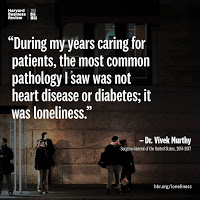
Loneliness is devastating to your physical and mental health

Alex Schadenberg
Executive Director, Euthanasia Prevention Coalition


New research indicates that loneliness and isolation are devastating to your physical and mental health.

An article by Jack Rear that was published in the Telegraph on November 5, 2019 reports on a year-long study at Copenhagen University examining the health outcomes for 13,443 people who had a heart attack. Rear reports that:

The study found that women who described themselves as lonely were three times more likely to die within a year of the attack than those with an active social life; and men in the same position were twice as likely to die within a year.

In addition, patients who were lonely were also three times more likely to be anxious, depressed and reported a lower quality of life.

According to Rear, the Copenhagen study is one in a series of studies showing how loneliness and isolation are a deadly combination for your health:

The Copenhagen study is the latest in a long line of scientific work that substantiates the negative effect loneliness has on human health. For example, one study found that the health effects of loneliness are comparable to smoking or obesity, increasing the risk of death by 26pc. There might be multiple reasons for this, but the cause is thought to be increased inflammation of the body associated with stress, which can damage immune function.

Other studies have linked loneliness with an increased risk of developing coronary heart disease, stroke, high blood pressure, and an increased onset of physical disability.

Loneliness and depression cause some people to request euthanasia, when they are experiencing physical and/or psychological distress.

A British study found that 22% of seniors, over the age of 65 will talk to only three or fewer people per week. A September 7, 2019 article in studyfinds.org reported:

According to the survey of 1,896 seniors over 65 in the United Kingdom, more than one in five (22%) will have a conversation with no more than just three people over the span of an entire week! That translates to nearly 2.6 million elderly folks who don’t enjoy regular human contact on a daily basis. Perhaps most alarming though is researchers say an alarming 225,000 individuals will go a week without talking to anyone face-to-face.

Now that euthanasia is legal in Canada, people who care about others need to recognize the importance of being with people who are lonely and socially isolated.


The Compassionate Community Care  (CCC) program has also developed a training program for visiting people who are lonely and isolated.


CCC also exists to provide advice and direction concerning health issues related to end-of-life and euthanasia prevention as well as train volunteers to visit lonely and isolated people.

Montréal man says that psychologist urged him to kill his wife.

This article was published by Choice is an Illusion on November 4, 2019

That’s Not Assisted Suicide, That’s Murder.
 

Serge Simard & Miranda Edwards

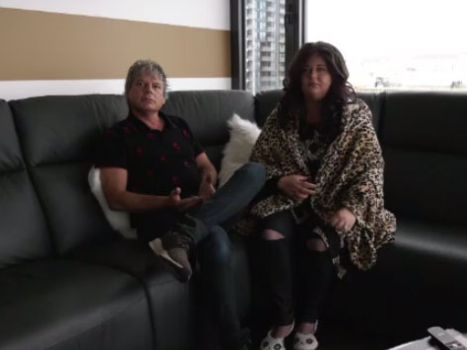
Emily Campbell with CTV news Montreal reported that a Montreal couple is calling for disciplinary measures against a psychologist they say counselled one of them to kill the terminally ill other.

When Miranda Edwards was diagnosed with an aggressive form of cancer she said she was determined to fight it.

“I want to live, I want every medical intervention possible,” she said. “I will fight to the end. I will do every treatment, everything possible to stay alive.”

Her husband, Serge Simard, struggled as his wife’s health declined and eventually sought the services of a psychologist to help manage the stress.

Simard alleges the psychologist told him to overdose his wife with morphine she had been prescribed for her pain. He secretly recorded the session on his phone and on the recording the psychologist can be heard saying: 

“at one point it will be a dose too much and she just won’t wake up. It’s the best thing that could happen, really. She won’t be suffering anymore she’ll be in a better place.”

The psychologist cannot be identified as they haven’t been charged with a crime.

Simard said he was horrified by the advice.

“That’s not assisted suicide, that’s murder,” he said. “I will not murder my wife. If Miranda voices anything I will respect her wishes. Miranda has never voiced that she wanted to pass away.”

Dr Paul Saba

Family physician Paul Saba said he feared incidents like this could occur as a result of the legalization of medically assisted suicide….

The couple said they were disappointed that both Montreal and Gatineau police refused to pursue the case and didn’t rule out a civil court case.

California 2018 assisted suicide report. 337 reported assisted suicide deaths.

Alex Schadenberg
Executive Director, Euthanasia Prevention Coalition


The 2018 California annual assisted suicide report is similar to other US jurisdictions were the report implies that the assisted suicide deaths were voluntary and self administered, but the information in the report does not address that subject.

Order the pamphlet – Shedding light on assisted suicide in America.

The California assisted suicide data is based on the reports from the doctors who carry-out the assisted suicide death. It is not possible, based on the reporting system, to uncover abuse of assisted suicide or uncover under-reported deaths.

According to the 2018 California assisted suicide report:

  • 452 prescriptions for lethal drugs were written resulting in 314 reported assisted suicide deaths. 
  • There were 23 reported assisted suicide deaths from lethal drugs prescribed in 2017.
  • There were 337 reported assisted suicide deaths in 2018.
  • There were 59 deaths from the underlying illness or other causes and 79 people where the death status was unknown.

There may be more assisted suicide deaths. Some of the 79 people who’s status is unknown, may have died by assisted suicide.


Since assisted suicide was legalized on June 9, 2016, there have been 807 reported assisted suicide deaths. There were 374 reported assisted suicide deaths in 2017.

On May 15, 2018, Life Legal Defense successfully challenged California’s assisted suicide law with Judge, Ottolia, overturning the California assisted suicide law by ruling that the legislature acted outside the scope of its authority when it enacted the End of Life Option Act in 2015. 


On Friday, June 15, the Fourth District Court of Appeals in Riverside County California, issued a stay of the assisted suicide law, overturning the decision of Judge Ottolia to once again permit doctors in California to assist the suicide of patients.

Since assisted suicide was prohibited in California for several weeks in 2018, I anticipate that the number of assisted suicide deaths will increase substantially in 2019.

Recently a nurse plead not guilty to murder, in a California court, based on her allegedly injecting her friend with assisted suicide drugs. The case will be heard next year, but this case shows how lethal drugs can be used to kill someone outside of the law.


Washington State Assisted Suicide Act Must Be Overturned

This article was published by Choice is an Illusion on October 29, 2019.

Washington State’s Death with Dignity Act was passed by the voters as Initiative1000. During the election, backers touted it as providing “choice” for individuals. A glossy brochure declared, “Only the patient — and no one else — may administer the [lethal dose].” The Act does not say this anywhere.[1]

  • The Act legalized assisted suicide as that term is traditionally defined. In the fine print, the Act allows euthanasia.
  • The Act applies to adults with a disease expected to produce death within six months. In practice, this includes people with years, even decades, to live. This is because the six months to live is determined without treatment, so that young adults with chronic conditions, such as insulin dependent diabetes, are terminal for the purpose of the Act. This is also because predictions of life expectancy are often wrong, with some people living decades past a terminal diagnosis.[2]
  • Assisting persons can have an agenda: a criminal seeking financial gain; a family member wanting an inheritance; or a doctor who just likes to kill people.[3]
  • The Act is sold as completely voluntary, but someone else is allowed to speak for the patient during the lethal dose request process, even a stranger or the patient’s heir.[4]
  • Administration of the lethal dose is allowed to occur in private without a doctor or witness present.[5] If the patient objected or even struggled, who would know?
  • The death certificate is required to list a terminal disease as the cause of death.[6] This prevents prosecution for murder as a matter of law, no matter what the facts. The Act creates a perfect crime.
  • Assisted suicide, even when voluntary, can be traumatic for patients, friends and families.[7]

Margaret Dore, Esq., MBA, President
Choice is an Illusion, a nonprofit corporation
www.choiceillusion.org
www.margaretdore.org
1001 4th Avenue, Suite 4400
Seattle, WA 98154
206 697-1217

Footnotes:

[1] For more information, see Margaret Dore, “‘Death with Dignity’: What Do We Advise Our Clients?” King County Bar Bulletin, May 2009, available at https://www.kcba.org/newsevents/barbulletin/BView.aspx?Month=05&Year=2009&AID=article5.htm
[2] Cf. Nina Shapiro, “Terminal Uncertainty,” Washington’s new “Death with Dignity” law allows doctors to help people commit suicide – once they’ve determined that the patient has only six months to live. But what if they’re wrong? The Seattle Weekly, January 14, 2009, https://www.seattleweekly.com/news/terminal-uncertainty; Jessica Firger, “12 Million Americans Misdiagnosed Each Year,” CBS NEWS, April 17, 2014, at https://www.cbsnews.com/news/12-million-americans-misdiagnosed-each-year-study-says; and Margaret Dore, “John Norton: A Cautionary Tale,” 09/22/12, https://www.massagainstassistedsuicide.org/2012/09/john-norton-cautionary-tale.html
[3] Consider Tammy Sawyer, trustee for Thomas Middleton in Oregon. Two days after his death by legal assisted suicide, she sold his home and deposited the proceeds into bank accounts for her own benefit. “Sawyer Arraigned on State Fraud Charges,” KTVZ.COM, 08/16/16. Consider also Graham Morant, convicted of counseling his wife to kill herself, to get the life insurance. The Court found: “[Y]ou counselled and aided your wife to kill herself because you wanted … the 1.4 million,” R v Morant [2018] QSC 251, Order, 11/02/18, available at: https://archive.sclqld.org.au/qjudgment/2018/QSC18-251.pdf and Charlie Leduff, “Prosecutors Say Doctor Killed to Feel a Thrill,” The New York Times, 09/07/00, https://choiceisanillusion.files.wordpress.com/2019/03/ny-times-killed-to-feel-a-thrill-1.pdf (“Basically, Dr. Swango liked to kill people. By his own admission in his diary, he killed because it thrilled him.”) See also David Batty, “Q & A: Harold Shipman,” The Guardian, 08/25/05, at https://www.theguardian.com/society/2005/aug/25/health.shipman. (Attached hereto at A-46 to A-48).
[4] The Act, RCW 70.245.010(3), allows another person to speak for the patient during the lethal dose request process. The only requirement is that the speaking person be “familiar with the patient’s manner of communicating.” The speaking person is allowed to be the patient’s heir or otherwise in a position to benefit from the patient’s death.
[5] Dore, at note 1.
[6] https://www.doh.wa.gov/Portals/1/Documents/Pubs/422-148-DWDAInstructionsForMedicalExaminers.pdf
[7] “Death by request in Switzerland: Posttraumatic stress disorder and complicated grief after witnessing assisted suicide,” B. Wagner, J. Muller, A. Maercker; European Psychiatry 27 (2012) 542-546, available at http://choiceisanillusion.files.wordpress.com/2012/10/family-members-traumatized-eur-psych-2012.pdf

Laws against assisted suicide provide equal protection under the law.

Jane Campbell

This letter was published in the Guardian on November 1, 2019.

The law as it stands does not discriminate against vulnerable individuals but affords them the same protection under the law as those who are healthy and able bodied, write Tanni Grey-Thompson, Jane Campbell, Liz Carr and Mik Scarlet

Tanni Grey-Thompson

Campaigners for assisted suicide – or assisted dying as they euphemistically refer to it – argue that “the only way to ensure the law is fit for purpose is to hear from those it affects most” (Letters, 31 October). The law as it stands does not only affect those relatives who have made the difficult decision to assist relatives with their journey to Dignitas but also those people in the UK who would be considered typical candidates for assisted suicide, including those who are seriously ill or disabled.

Actress Liz Csrr

The law as it stands does not discriminate against vulnerable individuals but affords them the same protection under the law as those who are healthy and able bodied. We sincerely hope that any inquiry into section 2 of the 1961 Suicide Act will be hearing from everyone who is affected by it, including those who believe it retains a vital principle concerning equality before the law and protecting their fundamental rights.

Tanni Grey-Thompson, Jane Campbell Crossbench, House of Lords, Liz Carr, Mik Scarlet


Nurse charged with murder in friends death in California.

Alex Schadenberg
Executive Director, Euthanasia Prevention Coalition

Kristie Koepplin

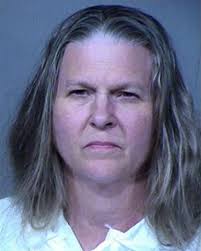
An Arizona nurse has pleaded not guilty of murder, in a California court, based on her allegedly injecting her friend with assisted suicide drugs.

According to an article by Kim Bellware published in the Washington Post:

Kristie Jane Koepplin, 58, of Peoria, Ariz., pleaded not guilty in an Orange County, Calif., court Monday, two weeks after she was arrested in Arizona and extradited to face a felony murder charge in the death of 57-year-old Matthew Peter Sokalski. Koepplin was released from custody Monday after posting $1 million bail but can’t leave California or practice nursing as conditions of her release, according to Kimberly Edds, a spokeswoman for the Orange County District Attorney’s Office. 

In a brief statement Monday, Orange County District Attorney Todd Spitzer alleged that Koepplin helped Sokalski die in April 2018 by injecting him with drugs. The Orange County Sheriff’s Department opened an investigation into Sokalski’s death after his body was discovered by staff at a hotel in Mission Viejo, Calif.

Information is not clear in this case but the lawyer for Koepplin claims that she wasn’t even at the death. The Orange County Prosecution office stated:

“We only file cases if we can prove the facts beyond a reasonable doubt in a court of law.”

It is interesting that Spitzer told the Washington Post that:

It is beyond disturbing that someone who is trained as a nurse to aid the sick and the dying would twist their duty to willingly end the life of another human being.”

Assisted suicide is legal in California but this case does not fit the criteria of the assisted suicide law.

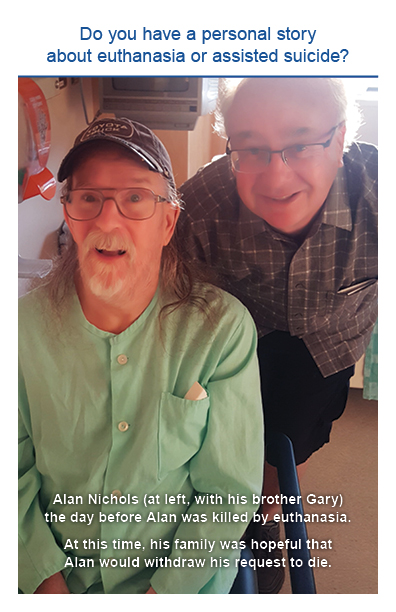
Do you have a personal story about euthanasia or assisted suicide?

Alan Nichols (62) was not sick or dying yet he died by euthanasia on July 26 at Chilliwack General Hospital in BC. His family is shocked that he was approved for and died by euthanasia. They were powerless to stop it.

Alan struggled with chronic depression. He often isolated himself, refusing to take medication or see a doctor. He needed support and encouragement during difficult times, not euthanasia.

Alan’s story has been seen Canada-wide through CTV News coverage and social media (Link to Alan’s story). His story is helping Canadians understand the consequences of legalized euthanasia.

Was Alan pressured or influenced to choose euthanasia?
Was Alan of sound mind to provide informed consent?
Was Alan offered any caring supports?

What could have been done to protect him?

Do you have a story to tell?

Canada’s euthanasia law has opened the door wider to the abuse of people living with vulnerable conditions. The Euthanasia Prevention Coalition is sharing real life stories to show what is happening.

Your voice has the power to influence people, inspire action and affect decisions.

Sharing your experience can help you find closure and justice and honour the memory of a loved one lost to assisted death.

We believe in caring not killing.

If you have a story, email info@epcc.ca or call EPC at: 1-877-439-3348. 

We will not publicize your story without consent.

EPC is distributing the flyer at the top for $30 for 100 flyers or $50 for 200 flyers (tax and shipping included).

Design a site like this with WordPress.com
Get started