Researchers cast spotlight on Dutch euthanasia for dementia

This article was published by Bioedge on October 27, 2019

By Xavier Symons

A group of US-based researchers have published a detailed review of Dutch cases of euthanasia for patients with dementia. Their findings show that euthanasia doctors in many cases ‘read in’ what they think an incapacitated patient would say about receiving assistance in dying.

The study was published in August in the American Journal of Gereatric Psychiatry and reviewed 75 case reports submitted to the Dutch euthanasia review committees between 2011 and 2018. 59 of the cases involved a concurrent request for euthanasia and 16 were based on an advanced care directive.

Concerning the concurrent requests, the study authors state that “in some of these cases, the patient’s past conversations were used to confirm competence to request [euthanasia/assisted suicide]”. That is, the validity of a patient’s decision was determined with reference to past statements rather than standard competency tests.

The authors provide an example from a 2014 case report where the physician stated:

“[the] patient was not competent at [the time of her evaluation] but she had been until recently. Her desire for euthanasia had been so consistent lately that the reduced competence should not be a stumbling block…”.

The Dutch regional euthanasia review committees appear to condone this approach, having stated that patients can be competent even when they are “unable to present supporting arguments” for their request.

The study authors, however, claim that this approach could be problematic as it is based on the “potentially confusing process” of trying to verify and interpret a patient’s past statements about euthanasia. It also runs afoul of the idea of informed consent, as valid consent had not been obtained from many of the patients who were euthanised.

The study authors, furthermore, found significant problems with euthanasia advance care directives. The authors write that “advance euthanasia directives often included trigger criteria that could make their implementation difficult, such as ‘losing her dignity’”.

Furthermore, even when a clearer trigger criterion (e.g., ‘admission to a nursing home’) is met, advance euthanasia directives only speak to the voluntary and well-considered criterion and the physicians must still assess the patient is experiencing unbearable suffering. Indeed, the euthanasia review committees have stated that admission to a nursing home is insufficient to meet the unbearable suffering criterion in Dutch euthanasia law.

Xavier Symons is deputy editor of BioEdge

World Medical Association re-affirms its opposition to euthanasia and assisted suicide.


Declaration on Euthanasia and Physician-Assisted Suicide
(Link to the Declaration)

Adopted by the 70th WMA General Assembly, Tbilisi, Georgia, October 2019

1. The WMA reiterates its strong commitment to the principles of medical ethics and that utmost respect has to be maintained for human life. Therefore, the WMA is firmly opposed to euthanasia and physician-assisted suicide.

2. For the purpose of this declaration, euthanasia is defined as a physician deliberately administering a lethal substance or carrying out an intervention to cause the death of a patient with decision-making capacity at the patient’s own voluntary request. Physician-assisted suicide refers to cases in which, at the voluntary request of a patient with decision-making capacity, a physician deliberately enables a patient to end his or her own life by prescribing or providing medical substances with the intent to bring about death.

3. No physician should be forced to participate in euthanasia or assisted suicide, nor should any physician be obliged to make referral decisions to this end.

4. Separately, the physician who respects the basic right of the patient to decline medical treatment does not act unethically in forgoing or withholding unwanted care, even if respecting such a wish results in the death of the patient.

Further reading:

Canada’s euthanasia philosophy: ‘control, choice and change’

This article was published by Mercatornet on October 25, 2019

After having spent most of your professional life in Canada, you must have a special insight into its cultural tectonics. Why does euthanasia appear to have so much support there amongst doctors and the judiciary?

Margaret Somerville: 
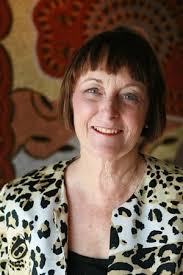
Margaret Somerville

Recently, I read that the beginning of wisdom is to know when one should say “I don’t know”. Certainly, I cannot give you a comprehensive answer to this question.

What we do know is that approval of physician-assisted suicide (PAS) and euthanasia is highest among highly educated, high socioeconomic status persons — sometimes described as “elites” — in a society. Doctors and judges belong in this group, although I hasten to point out that far from all doctors and judges support euthanasia.

Those who do support it often adopt so-called “progressive values” on a range of issues including reproductive technology decision-making, abortion, same-sex marriage, and so on. “Progressive values” adherents are characteristically intensely individualistic – they give almost absolute priority to the value of individual autonomy, which can mean that they fail to take into account what is needed to protect the “common good” and, in particular, vulnerable members of the society. They also focus just on the present – they do not take into account warnings from history (“collective human memory”) or probable future consequences that can be recognized through “collective human imagination”. I call this approach to decision-making of excluding what considering the past and the future can teach us, “presentism”.

I’ve often described the mantra which informs progressives’ worldview as “control, choice and change”: They want control over what happens, especially to them personally; choice that accommodates the outcomes they seek; and the changes, for instance, in the law or cultural norms, that will make such control and choice possible.

Is there widespread popular support as well?

Well, there certainly seems to be in Canada, especially when we look at the statistics on how many people are using MAiD (Medical Aid in Dying the euphemism used for PAS and euthanasia in Canadian law). For example, in the Province of Ontario, as of 30th September 2019, 3,822 people accessed “assisted dying”, 3821 in the form of euthanasia, one assisted suicide. (It’s an interesting question as to why, in jurisdictions where both PAS and euthanasia are legal, PAS is very rarely used.) Accurate overall statistics for Canada are not available, but it’s estimated that 1.12% of all deaths now involve MAiD and is known that there have been over 8000 such deaths since its inception.

Initially, when legalizing euthanasia was being proposed and euthanasia advocates were lobbying for its legalization, I believe that many members of the general public – and even a substantial percentage of healthcare professionals – were confused as to what was and was not euthanasia, which inflated the statistics showing the public’s approval of euthanasia. Rights to refuse all medical treatment, including life-support treatment when this would result in death, and rights to fully adequate pain management, even if it ran the risk of shortening life, but was necessary to relieve pain, are not euthanasia, but many people classified them as such. This confusion was not, however, accidental; it was a strategy used by pro-euthanasia advocates to advance their cause through showing strong public support for legalizing euthanasia.

The idea of an end-of-life slippery slope is ridiculed by many politicians and doctors. But in the case of Canada, it seems relevant. What is the next development, do you think?

Canada is already considering whether to allow access to euthanasia to children, to people with serious mental illness but no physical illness, and to people with dementia through their advance directives. In light of the widespread normalization of euthanasia and the large number of people accessing it, I believe all of these expansions are likely to be allowed.

The reason such expansion is unavoidable is that once one steps over the line that says it is never ethically acceptable to inflict death on another human being, the sole exception being where that is the only reasonable way in which to save innocent human life, as in justified self-defense, there is no logical stopping point.

I have mused about the denial of slippery slopes by euthanasia advocates, such as Andrew Denton here in Australia, when it is so well documented that once introduced access to it expands rapidly. I realized that these deniers take an approach that there is no slippery slope if they regard any given expansion of access to euthanasia as a good decision, but only such a slope if they see the expansion as a bad decision, which seems to be a rare classification.

It merits mentioning that there are also doctors who initially supported the legalization of euthanasia who are now publicly speaking out against it. A prominent example, is Dr Yves Robert the registrar of the College of Physicians and Surgeons of Quebec (the medical licensing authority in the Province) who wrote an open letter under the College banner with the headline “Death a la carte” (that is a menu of choices among the options for how one wants to die) withdrawing his support for euthanasia.

Dr Robert was a major proponent of legalizing euthanasia and in 2009 the College was one of the main instigators of the movement to do so in Quebec. At that time, Dr Robert rejected anti-euthanasia proponents’ claims that effective safeguards could not be put in place to regulate euthanasia. And, as in the current Australian debate, he accepted the usual claim of pro-euthanasia advocates that it would be rarely used. The estimate given by physician proponents, including the Quebec Minister of Health who was a specialist physician, was about 100 cases a year in the province. As can be seen from the Ontario statistics above that is very far from the reality which has emerged, including in Quebec.

Dr Robert changed his mind about euthanasia when calls were made to have “death on demand” declared a constitutional right. A very recent Quebec case that has struck down as unconstitutional the requirement that “natural death must be reasonably foreseeable” as a condition for access to MAiD is a step towards this possibility.

This claim that there is a right to “death on demand” is consistent with the arguments used to legalize euthanasia: that people have a right to autonomy and self-determination concerning their own bodies and lives.

In his letter, Dr Robert notes that opinion leaders and the media have denounced cases where people who do not fulfil the conditions for access to euthanasia in Quebec have been refused it. He also notes the paradoxical discourse that calls for safeguards to avoid abuse of “medical aid in dying” which are meant to limit its availability, while asking doctors to act as if there were no restrictions. He continues that if euthanasia is an unfettered right, then it’s not within the scope of “medical aid to die”, but simply “assisting dying” and he says the society must consider other options than involving the medical profession in that.

Dr Robert says that the law was a “major opening” to euthanasia and expresses surprise at how quickly public opinion seems to have judged the opening insufficient. In short, euthanasia has become normalized with astonishing rapidity and that has caused calls for access to it to be expanded, indeed, calls to have no restrictions at all on access to it.

The question that this development leaves us with is why so many Canadian doctors and lawyers of goodwill and professional integrity, such as Dr Robert, so adamantly disagreed that such expansion would occur.

Some Canadian doctors have suggested that euthanasia organ donation would be a good idea. Could you explain what’s wrong with that if the patient wants both to end his life and to give his organs? It seems like a good way to make the best of a difficult situation.

I have recently written an article dealing with this issue in The Linacre Quarterly, “Does It Matter How We Die? Ethical and Legal Issues Raised by Combining Euthanasia and Organ Transplantation“.

For a variety of reasons I conclude that the ethical dilemmas are such that euthanasia and organ donation should not be connected in any way. These reasons include uncertainty regarding the definition of death which could be more critical in the context of euthanasia. Then there is disagreement about what constitutes conscientiously objecting healthcare professionals’ involvement in euthanasia. Would a transplant surgeon using organs from a euthanized person be complicit in the euthanasia of that person? Similarly, would the recipient of an organ from a euthanized person need to be told that and give informed consent to receiving that organ? And does connecting euthanasia and transplantation makes conflicts of interest for healthcare professionals unavoidable?

The reality is, however, that euthanasia and organ transplantation already are connected in Canada: the Ontario Coroner reported that the organs of 30 of the 3822 people who died by MAiD in the province were donated for transplantation.

Some suggestions are more radical, aren’t they? The patient would be killed by the act of donation, ensuring that the organs are as fresh as possible. Is this ethically worse than other forms of euthanasia?

Yes, there are more radical suggestions. Some people who agree with euthanasia and organ donation after death by euthanasia are arguing that death by donation is ethically acceptable. This would involve giving the person a general anaesthetic and carrying out euthanasia by removing their vital organs, such as the heart, to be used for transplant. Additional ethical issues raised by death by donation include breach of the “dead-donor rule” – that the person must be dead before removal of vital organs and the donation must not be the cause of death. Other considerations include what would constitute informed consent to euthanasia by donation and what impact its acceptance would have on important foundational societal values, especially respect for human dignity and for human life. 

It’s often mentioned that euthanasia patients might feel that their life becomes worthwhile by donating organs. Your thoughts?

That’s a possibility that I discuss in my article referred to above. It’s a sad thought that one is only valuable and has a purpose when one is dead. It’s true, as Ely Wiesel said, that people need a “why” to live, but surely we should not be promoting a “why” to die.

What can put a brake on the rapidly expanding boundaries for euthanasia in Canada?

Once the barn door is open and the horses have escaped shutting the barn door does not confine them, so I’m not at all sure that a brake can be put on the expanding boundaries of euthanasia in Canada. It will take possibly many generations for the full tragedy of the legalization of euthanasia to become obvious, at which time initially small voices will be magnified by others joining them and there could be a ground swell of opposition. Perhaps the reverse of how euthanasia has come to be legalized.
I sometimes think of the outrage of a young woman who made a lasting impression on me. She was born from artificial insemination by an anonymous donor and was searching for her father because she felt that “half of her was missing”. She angrily shouted at a conference panel of which I was a member, “How could society have allowed this? How could they have let this happen to me?” Societies came to see anonymous sperm donation as unethical. The law was changed in many jurisdictions to make anonymous sperm donation illegal. Perhaps the same will happen with euthanasia, except that, unlike that young woman, dead people are no longer able to shout at a society that authorized doctors to intentionally inflict death on them.

Does the Canadian experience hold any lessons for other jurisdictions – like the Australian states – which are debating whether or not to legalise it?

Yes and here are some that I would suggest:

Recognise that we live in a post-truth era, so the first lesson should be get the real facts. Good facts are essential for good ethics and good ethics for good law.

Move beyond making public and social policy decisions — and there is no more important one than whether to legalize euthanasia — only on the basis of respect for individual autonomy and its impact in the present.


I believe that if people have the facts on euthanasia and on its alternatives, and look not only to what individuals want, but also to the protection of vulnerable people and the common good, and take into account what human memory can teach us and human imagination tell us about future consequences, we will decide that legalizing euthanasia is a very bad and dangerous idea.

Professor Margaret Somerville taught medical law and ethics for nearly 40 years at McGill University in Canada. Few people are better qualified to comment on Canada’s embrace of euthanasia.


Assisted suicide: Disability advocates worry about making it easier for physicians to help New Yorkers die

Alex Schadenberg
Executive Director, Euthanasia Prevention Coalition

Many people wonder why disability advocates oppose assisted suicide. 


Meagan Parker, the director of advocacy for the New York association for Independent Living explains in an OP-Ed published yesterday in the New York Daily News that disability advocates worry about making it easier for physicians to cause death. Parker explains:

As someone who is blind with a chronic condition, and who has spent years fighting for the rights of people with a range of disabilities, let me explain. 

Under assisted-suicide laws, doctors play two critical roles. First, they determine if a person is indeed terminal. Then, they prescribe a drug combination that will cause death. 

I am deeply concerned that the fate of thousands of people who struggle with serious health challenges will hinge on medical professionals’ subjective perceptions and the guidance they give. My experience tells me that as a result, we will see patients with the same diagnosis or functional levels who are more or less likely to die based on factors that shouldn’t matter. 

Assisted suicide is typically depicted by proponents as a choice for patients who have tried everything. But the legislation doesn’t ensure that assisted suicide is truly a last resort. And proponents ignore the fact that having access to “everything” is a luxury of the few. 

No one knows this better than disabled people. Complications from chronic conditions can turn deadly when the appropriate treatment or equipment cannot be promptly obtained. Survival rates for cystic fibrosis vary depending on the type of insurance a person has. 

Before we even consider legalizing assisted suicide, we must address healthcare inequities that cause people who want to live with proper care to needlessly become “terminal.” Otherwise, we are effectively relegating people with fewer options to premature death. 

More fundamentally, assisted suicide is based on the assumption that life is so burdensome for some individuals that it is reasonable for them to want to die early. To me, this sounds dangerously close to the “better dead than disabled” attitude that people with disabilities have long struggled against.

Parker then explains how these laws work

Proponents insist any law will come with safeguards, but nothing can prevent an errant prognosis or keep a vulnerable person from being subtly coerced. Official reports state that about half the people who have died by assisted suicide in Oregon felt like a burden on others. 

Terms like “terminal illness” that seem well-defined are open to varying interpretations. Is a person with muscular dystrophy who may not survive if he gets pneumonia again considered terminal? Indeed, there are many disabling conditions like Parkinson’s disease that may shorten life. 

The requirement that two doctors must agree that, in their reasonable medical judgment, a patient will die within six months or less does not mean that their predictions are right. In fact, the data show that some people don’t take their lethal drugs and far outlive their prognosis. 

One provision of the bill touted as specifically protecting disabled folks and the elderly may actually do the opposite. This is the prohibition against a person qualifying for aid in dying “solely because of age or disability.” The word “solely” implies that age or disability can be among several factors to be taken into consideration in determining if a patient can be given a lethal prescription. And the reported reasons people have requested assisted suicide in Oregon — loss of autonomy, less able to engage in activities, etc. — indicate that virtually all who die by lethal prescription have been disabled in some way.

Parker concludes:

Many disability-rights activists oppose passage of New York’s assisted suicide bill because it would put people like us at risk. But our focus is broader than that. We aim for a fair and compassionate community where everyone can get the medical care they need and want, and everyone has enough social support and affirmation that they can live without feeling a duty to die.

More articles on assisted suicide from a disability rights perspective.

New Zealand considers referendum on euthanasia.

Alex Schadenberg
Executive Director, Euthanasia Prevention Coalition

New Zealand Parliament

The New Zealand parliament has been debating a euthanasia bill for many months. Parliament will now be voting on a referendum bill based on the fact that the New Zealand First party decided that they will not support the “End of Life Choice” without a referendum on the issue.

New Zealand Herald article by Boris Jancic and Chris Knox, argues that the euthanasia bill will have a hard time passing without the support of members of the New Zealand First party. The article states:

A crucial vote on whether to hold a referendum on legalising voluntary euthanasia looks set to go down to the wire, according to a poll of all MPs. 

Act Leader David Seymour’s End of Life Choice Bill will return to Parliament on Wednesday and politicians will have to decide whether the final decision should be put to the public if it passes a third reading. 

If the referendum is rejected, the entire bill – which would let terminally-ill adults request assisted dying – will struggle to pass into law at the third vote, with New Zealand First looking like it may pull its support unless there’s a referendum.

The article then states that the Herald has polled every MP and found that 56 MP’s plan to support the referendum, 46 plan to oppose the referendum and 18 wouldn’t say how they planned to vote. 61 votes are needed to pass legislation.

Euthanasia in Belgium. A son’s story

Tom Mortier
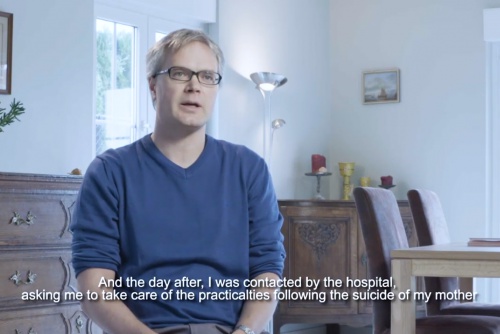
Godelieva De Troyer had been suffering from chronic depression for twenty years. The family was unaware when she was euthanised by a doctor who co-chairs the federal euthanasia regulator and who co-founded a euthanasia organisation that De Troyer had just given money to.’

Tom Mortier hadn’t given much thought to Belgium’s euthanasia laws. He didn’t think they affected him. Tom is a university professor in Belgium, where he has lectured since 2006. For Tom, it seemed that if a person wanted to die, who are we to stop him? Why can’t that person simply make that choice? Besides, it doesn’t affect anyone else.

‘Tom’s perspective changed forever one day when he received a phone call. The caller was from a hospital, letting him know that he needed to take care of his mother’s affairs since she had been euthanized.’

To read more about Tom’s story, visit ADF International’s ‘Affirming Dignity’ campaign.


More articles about Tom and his mother’s death:


UK Doctors challenge Royal College of Physicians’ controversial decision to go neutral on assisted suicide

Link to the press statement.

Press statement issued on behalf Drs Randall, Myers, and Kearney

A group of doctors have today won the legal right to challenge the Royal College of Physicians’ (RCP) controversial decision to go neutral on assisted suicide after overturning a ruling by the Charity Commission.

Donate to the legal challenge by UK doctors (Link).

The doctors launched their legal action against Britain’s oldest medical group after it announced in March that the college was dropping its long-established opposition to assisted suicide, following a poll requiring a 60 per cent supra-majority.

At the time thousands of doctors voiced their concerns at decision to change the College’s position before consulting members, a failure to follow previous procedure and the unprecedented use of a supra-majority invalidated the poll. However, the RCP decided to press on with the change.

Following this decision, three doctors decided to launch legal action to review the decision and processes used by the College. They argued that the RCP had broken charity law. Despite agreement from the Charity Commission that it was a legally sustainable claim, the charities regulator withheld permission to allow the doctors to progress legal action, as they had already raised their concerns with the RCP and warned them not to repeat these mistakes. 

Today, in the High Court, this decision by the Charity Commission has been reversed, giving the doctors a green light to take further action against the RCP.

Dr David Randall, one of the claimants commented:

“Today’s judgement is good news for doctors and for society.

We believe that it is vitally important that doctors’ voices are heard on the issue of assisted dying, which if legalised would represent the single biggest change in the ethics and practice of medicine for a generation. The unsatisfactory way in which the College has approached this matter, ignoring the advice of its own ethics committee, has left it with a position of neutrality on assisted dying that prevents it from engaging in the public debate on this important issue. We expect the College to be active in championing key concerns such as the protection of vulnerable patients, the promotion of palliative care and hospice services, and the defence of conscientious objection for all healthcare practitioners. Doctors are not neutral about assisted dying, and neither should the College be.”

Paul Conrathe, Human rights solicitor from Sinclairslaw commented:

“Today the court expressed its’ concern that the decision of the Royal College of Physicians to change its position to neutrality was unlawful and irrational. It was concerned that the College had adopted as its public position the least favoured option in its recent poll.

The College has suppressed the report of its own ethics committee into the results of the poll and adopted a supra-majority criteria that effectively pre-judged the outcome of that poll. Today the court has paved the way for the College to be brought to account.”

For media inquiries, please contact Alistair Thompson on 07970 162225.

ENDS

The Doctors

  • Dr Dermot Kearney MRCP, Consultant Cardiologist, Gateshead 
  • Dr Kathy Myers FRCP, Retired Consultant in Palliative Medicine, London 
  • Dr David Randall MRCP, Registrar in Renal Medicine, London

Links

End-of-Life Care Europe November 7 – Euthanasia Symposium


Can we do better?

Kunnen wij het beter aanpakken?

About the Dutch euthanasia policy and those that are concerned about protecting vulnerable lives.

Over het Nederlands euthanasie beleid en degenen die zich inzetten voor het beschermen van kwetsbaar leven.

R.S.V.P: ELCENetherlands@protonmail.com

Location: Burg. Verbrughweg 40, 4024HR, Eck en Wiel

Attendance to the Symposium is free of charge though an R.S.V.P. is required before 5/11/2019. Lunch is included. For more information or questions Tel. +31 (0)639781279

Program:

9:30 Welcome and coffee

9:45 Taking stock of the Dutch euthanasia practice so far. What have we gotten ourselves into and where do we go from here? Henk Reitsema.

10:45 Coffee break

11:00 The Politics of Euthanasia and Assisted Suicide in the Medical Community. Gordon McDonald

12:30 Lunch

13:45 Strategy of the promotors of euthanasia and how to counter it. Henk Jochemsen

15:15 Tea break

15:30 Panel discussion with speakers: Where are the opportunities and which strategies can be most fruitful?

Gordon Macdonald

16:45 Closing

Dr Gordon Macdonald is the CEO of the Care Not Killing Alliance. He has been involved with Care Not Killing for a decade, chairing the Scottish Committee with great effect. 

He was instrumental in the 2010 and 2015 defeats of bids to legalize assisted suicide at the Scottish Parliament, and has proved himself an effective media communicator.

Henk Jochemsen

Prof. dr. Henk Jochemsen studied molecular biology and is Professor for Christian Philosophy at the Wageningen University and was lector in medical ethics at the Free Universit MC in Amsterdam. For many years he was the director of the Lindeboom institute which was focussed on bio ethics. His areas of focus have been: philosophy and ethics of new technologies (bioethics, nanotech, synthetic biology, development aid and sustainable agriculture. Jochmsen was also the director of a collective of NGO’s called Prisma.

Henk Reitsma

Henk Reitsema is a member of the staff at Dutch L’Abri and one of the trustees of the international work of L’Abri. He has been active in the Euthanasia Prevention Coalition International for many years and is now member of the ELCE (End of Life Care Europe). His academic background includes Philosophy, Theology and Ethics. Focal themes for him have been the Philosophy of Technology and bioethics. Mentoring, lecturing and engaging in dialogue about the issues that confront us today form an integral part of his work at L’Abri. He has published a variety of articles both scientific and popular in the disciplines of Apologetics, Philosophy of Technology, Ethics.

Western Australian doctor recommends ‘kill clinics.’

This article was published by Hope Australia on October 16, 2019.

While the suggestion that specialized “kill clinics” should be established to implement the government’s proposed euthanasia regime might sound shocking, their creation would be entirely consistent with the Bill currently before the WA Legislative Council, as well as the experience in overseas jurisdictions where euthanasia and assisted suicide have been legalised.

Dr Mal Hodsdon, a long-serving GP based in Kalgoorlie expressed his concerns that euthanasia and assisted suicide “goes against the grain” of the Hippocratic Oath taken by doctors and called putting the onus on a GP to become complicit in killing someone “a step too far.”

His radical solution is to establish a clear distinction between doctors who heal and those who kill by establishing specific death centres within the state. “I wouldn’t be prescribing the medication they need but I would be more than happy to refer them to a kill clinic at the Kalgoorlie Hospital,” he said.

While this solution might sound shocking, the legislative regime that passed through the WA Legislative Assembly and is now before the Legislative Council will pave the way for dedicated kill clinics to pop up around the state.

The doctors within these clinics would not have to have specialist qualifications in any of the terminal illnesses with which their patients may be suffering, because the proposed euthanasia laws do not require a doctor signing off on the eligibility of a patient for euthanasia have any specialised training in the illness of their patient.

A patient could also come to a ‘kill clinic’ as a one-stop shop, because the draft legislation does not require the two physicians required to sign off on a euthanasia request to be independent of each other.

Given that Dr Hodsdon also told media that he had not spoken to a GP who was in favour of euthanasia and assisted suicide, dedicated ‘kill clinics’ could even be quite profitable, given the lack of competition from doctors unwilling to contaminate their practice of healing with the prescription and administration of lethal drugs.

The notion of specialist ‘kill clinics’ or at the very least, specialist death doctors, can be inferred from the statistics in Oregon, which has had an assisted suicide regime in place for two decades.

The latest statistics from Oregon reveal that the median time of the patient-physician relationship in an assisted suicide is 10 weeks, indicating that, for the most part, the doctors who are signing off on assisted suicide are not those who have an existing relationship with the patient, but those who are specially sought out to authorize a patient’s death and prescribe them with lethal drugs. In some cases, the patient-physician relationship lasted only one week and one physician alone wrote 35 prescriptions for death-inducing drugs in a single year!

This is consistent with the most recent report from Washington State, which revealed that in 50 per cent of deaths, the doctor who prescribed the lethal drugs had known the patient for less than six months and that in some cases (the number of which was not reported), the length of the doctor-patient relationship was less than one week.

Kill clinics staffed by specialist death doctors are par for the course in states that legalize euthanasia and assisted suicide. And it will become par for the course in WA if the Legislative Council doesn’t reject this Bill.

Anonymous comments will not be published on this blog.

During the last few days there have been excellent comments posted to this blog. As the moderator I did not publish those comments because they were Anonymous.


I will also not publish comments that attack others.

I will publish comments from people when they publish their name with their comment.

Anonymous comments will not be published on this blog.

You must provide your name with your comment.

Alex Schadenberg

Design a site like this with WordPress.com
Get started