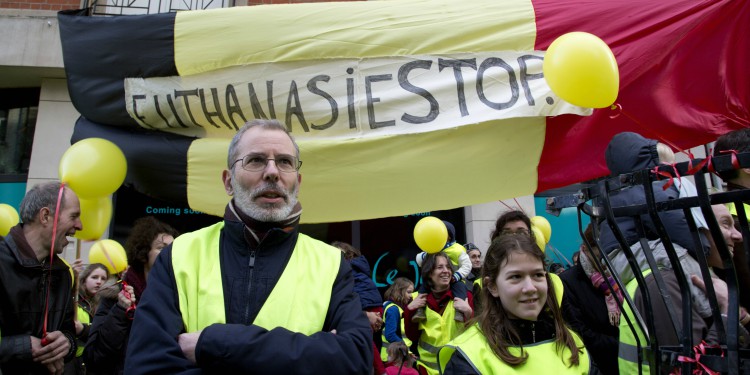
Swiss doctor found guilty in the assisted suicide death of a woman who was not sick.

Alex Schadenberg
Executive Director – Euthanasia Prevention Coalition


Finally a little sanity within the insanity.

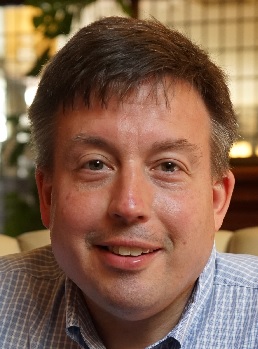
Pierre Beck

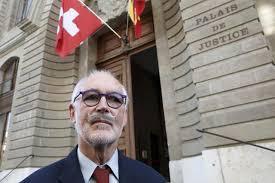
A Swiss doctor was found guilty in the assisted suicide death of a woman who was not sick. 

According to Swissinfo news:

A court in Geneva has given a suspended sentence to the regional vice-president of EXIT, Pierre Beck, for helping an 86-year-old woman to die when she was not sick.

He was found guilty of breaking federal law on therapeutic substances and given a suspended 120-day jail sentence. The court thus confirmed a criminal order issued by the Office of the Attorney General of Switzerland.

Beck, a medical doctor who is vice-president of Exit in francophone Switzerland, provided a lethal dose of pentobarbital in April 2017 for the elderly woman. She wanted to die with her husband, who was very ill.

According to Swissinfo, Beck admitted to acting beyond the criteria, but he said that he didn’t regret his action and faced with a similar situation he would likely do it again, but after seeking advice.

The good news is the judge decided that Swiss law does not permit assisted suicide for existential reasons.

The court dealt with Beck leniently when giving him a suspended sentence. The lenient sentence may be interpreted as a green light to kill because the court did not provide a deterrent.


Recently a physically healthy depressed man died by euthanasia in BC. Alan Nichols (61) died by euthanasia, even though he did not qualify for euthanasia since he was not sick. His family urged the doctor to stop the injection, but to no avail.

Hopefully the Nichols case can prevent other similar cases from occurring in Canada.

Ontario: Euthanasia deaths are rising quickly.

Alex Schadenberg
Executive Director, Euthanasia Prevention Coalition

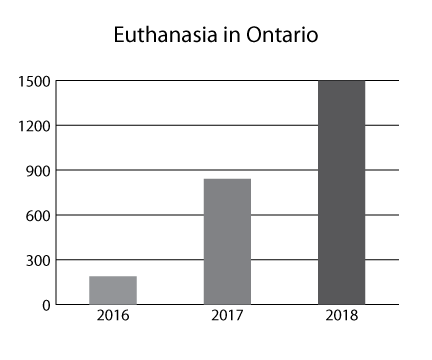
The Ontario Office of the Chief Coroner released the updated data for MAiD (euthanasia and assisted suicide) deaths in Ontario indicating that since legalization (June 17, 2016) there have been (3822) reported assisted deaths up to September 30, 2019.

The number euthanasia deaths is increasing fast. The number of reported assisted deaths were 519 from July 1 – Sept 30, 406 from April 1 and June 30 and 368 in the first three months of 2019.  

Ontario is now on the pace of killing more than 2000 people per year by euthanasia and since the federal government has not appealled the decision by a Québec court that struck down the terminal illness restriction, the numbers of euthanasia deaths will likely increase faster.

Alan Nichols

In August, we learned that Sean Taggert died by euthanasia in British Columbia because the government refused to provide him the necessary home care for him to live with ALS.

In September we reported on the euthanasia death of a man in British Columbia who was not physically ill but living with chronic depression. Alan Nichols death uncovers that the data does not accurately state why people die by euthanasia and whether or not alternatives were tried.

Do you have a personal story concerning euthanasia. Sharing your story may help us prevent euthanasia deaths. Contact us at: 1-877-439-3348 or info@epcc.ca.

According to the Ontario data, there were 1293 reported assisted deaths in the first nine months of 2019, 1499 reported assisted deaths in 2018, 841 reported assisted deaths in 2017 and 189 reported assisted deaths in 2016.

In March I published an article explaining that the number of assisted deaths, in Canada, increased by more than 50% in 2018 from 2704 in 2017 to 4235 in 2018. 

Abandonment – That’s what euthanasia is all about

This article was published by OneNewsNow on October 17, 2019.

Alex Schadenberg

The International chair of a coalition that believes euthanasia and assisted suicide should continue to be treated as murder/homicide says even many mental health professionals are against the practice.

Physically healthy 23-year-old Belgian woman is being considered for euthanasia 

Please sign the Letter of Hope to Kelly  (Link). Share the letter of Hope with your friends.

Alex Schadenberg of the Euthanasia Prevention Coalition tells OneNewsNow a young woman only identified as Kelly of Leuven, Belgium has applied to be euthanized. Kelly reportedly had social anxiety as a youth, experienced self-harm, attempted suicide, and had an eating disorder.

“She’s not the only one in Belgium or Canada or the United States that goes through significant psychological pain and issues,” Schadenberg recognizes. “But now that euthanasia is being applied to these cases in Belgium, they’re now seeking death by lethal injection rather than hope for the future, and this is the great tragedy for such a young person who’s physically healthy in every way.”

Before her request is granted, Kelly, who is only 23 years old, must gain permission from two psychiatrists – professionals who Schadenberg stresses are supposed to be in the business of preventing suicide, not causing it.

“We can’t allow society to abandon these people,” he contends. “This is what euthanasia is about. It’s about an abandonment. We’re abandoning them to their pain rather than helping them find hope in living.”

Many psychiatrists and most citizens of Belgium are against assisting suicide for mental health patients. Within the profession, psychiatrists stress younger patients can usually improve with time, therapy, and medication, if appropriate.

Canadian Alzheimer’s Society Endorses Euthanasia by Advance Directive

This article was published by the National Review online on October 17, 2019

Wesley Smith

By Wesley J. Smith


Canada is debating whether to permit euthanasia by advance directive, meaning, allowing people to sign instructions requiring they be killed by their doctor once they reach a determined level of incompetence. In other words, a former self will be given the power to order their current self dispatched — even, presumably, if the current self is not suffering and may not want to die.

Dementia Advocacy Canada is promoting euthanasia.

We can tell which way that debate is going with the Alzheimer’s Society Canada endorsing such a legal change. From the Society’s press release:

People living with dementia are individuals — first and foremost. They have the same rights as everyone else, including the right to participate in decisions about their life and care. We respect the right of all persons with dementia to advocate for their individual best interests, including advocating for MAID [medical assistance in dying, e.g., lethal injection] through advance requests.

So, in Canada, helpless people with dementia are about to become a killable caste with the cooperation of an organization that supposedly advocates for their welfare.

And if incompetent patients, then why not also allow the killing of sick children? Oh yeah, that’s coming too — perhaps without requiring parental consent.

Targeting people with mental illness and dementia for euthanasia.

This article was published by The American Spectator on October 17, 2019

Several countries may be ahead of us in this area, but the U.S. is fast catching up.
Wesley Smith

By Wesley J Smith

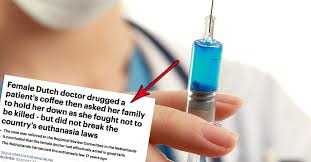
A few years ago, a Dutch doctor attended her elderly Alzheimer’s disease patient at a nursing home. The doctor’s purpose wasn’t to examine the patient or prescribe new medicines. Rather, she was there to kill.

While competent, the patient asked to be euthanized when incapacitated, but she also instructed that she be allowed to say when. But before she did that, the doctor and her family decided that her time had come. The doctor drugged the woman’s coffee and, once she was asleep, began the lethal injection procedure. But the patient awakened unexpectedly and fought against being killed. Rather than stopping, the doctor instructed the family to hold the struggling woman down while she completed the homicide.

This would seem to be a clear-cut case of murder. But a judge recently exonerated and praised the doctor for acting in the “best interests” of the patient by merely executing the woman’s previously stated wishes. In other words, the judge essentially ruled that the struggling patient was no longer competent to want to stay alive.

The only unusual aspect of the “Case of the Struggling Alzheimer’s Patient” was the struggle. Even when incompetent and unable to make their own decisions, the law of Netherlands and Belgium allows dementia patients to be killed by doctors if they so order in written advance directives.

Both countries also allow mentally ill patients who ask to die to be euthanized. Such procedures are not rare. According to government statistics, in 2017, Dutch psychiatrists and doctors euthanized 83 mentally ill patients. Sometimes these legal homicides are accompanied by consensual organ harvesting after death. One case — reported in an international transplant medical journal — involved a self-harmer (or “auto-mutilator”) for whom doctors applied the ultimate harm as a “treatment.” Without criticism — or even a moment’s reflection about the moral questions raised by such an act — the medical journal reported approvingly that the lungs of the deceased psychiatric patient were well accepted by their recipients.

The Supreme Court of Switzerland, a country that permits assisted suicide clinics — ruled several years ago that the mentally ill have a constitutional right to access death. Accordingly, there are many verified cases of the non-physically ill being assisted to kill themselves — including an elderly woman who wanted to die because she had lost her looks.

Canada, which recently legalized lethal injection euthanasia for those whose deaths are “reasonably foreseeable,” now is debating expanding the right to be killed to those whose lives are not in danger. Prime Minister Justin Trudeau is on record as favoring liberalization and has stated his government will not appeal a recent court ruling declaring the foreseeable death limitation to be unconstitutionally restrictive and discriminatory.

How far is the expansion likely to go? Many Canadian euthanasia advocates are pushing for revisions that would allow people with mental illnesses and dementia to be killed by doctors in the same manner as now allowed in the Netherlands and Belgium. And here’s some breaking news: the Alzheimer Society of Canada — which is supposed to advocate for the welfare of such patients — has officially endorsed allowing euthanasia by advance directive. This means that even if the incompetent patient is not suffering — perhaps even if he or she expresses no desire to die — their former self’s decision trumps the current self’s needs and desires.

Alan Nichols with his brother.

Meanwhile, there has already been at least one depressed Canadian apparently euthanized at his request even though his death was not foreseeable. The man’s family even begged doctors not to kill him, but to no avail.

What about the U.S.? Would we ever follow such a course? As of now, the nine states and the District of Columbia that have legalized assisted suicide limit access to patients who are terminally ill. But that’s more a political expediency than a principled limitation. Indeed, restricting assisted suicide to the dying is philosophically unsustainable.

Think about it. If the point of allowing suicide by doctor is to eliminate suffering — and if eliminating suffering can include eliminating the sufferer — how can facilitated death be forbidden to patients, such as those with dementia and mental illness, who may suffer far more extremely and for a much longer time than the already dying? It makes no sense.

Despite continuing disapproval of euthanasia for mental illness by the American Psychiatric Association, that point is increasingly being made in the media and professional journals. For example, an article just published in the American Journal of Bioethics argues that since “the suffering associated with mental illness can be as severe, intractable, and prolonged as the suffering due to physical illness,” as a matter of “parity,” in “severe” cases, “PAD” (physician-assisted death) should be made available to mentally ill patients with “decisional capacity” — even when they have “a relatively long expected natural lifespan.” The authors, University of Utah psychiatry professor Brent M. Kious and noted assisted suicide advocate and bioethicist Margaret (Peggy) Battin, go so far as to suggest that “psychiatrists and other mental health professionals” could one day become “gatekeepers for PAD” once “a metric for suffering in both mental and physical illness” is established.

Ponder this for a moment. Instead of being duty-bound to save the lives of all their suicidal patients, mental health professionals would become approvers for and facilitators of self-destruction. That should be unthinkable.

Alas, the first small legal steps toward permitting the demented and mentally ill to access suicide by doctor have already been taken. After California legalized assisted suicide for the terminally ill, the Department of State Hospitals promulgated a regulation requiring that patients who have been involuntarily committed — and who have become terminally ill — be provided access to assisted suicide despite their mental illness. By definition such people are not legally competent, or else why would they be involuntary hospitalized?

Meanwhile, Nevada just enacted a law that allows dementia patients to instruct caregivers to withhold “food and water” once they reach incapacity toward the end that they starve to death. Please note that this first-of-a-kind law isn’t about refusing a feeding tube or preventing force-feeding. Rather, the law (SB 121) permits patients to order their future selves to be refused “food and water” — even if they willingly eat, perhaps even if they ask caregivers for sustenance. That’s homicide by neglect.

Don’t take my word for it. The influential bioethicist Thaddeus Mason Pope wrote about the law:

Even after we stop offering food and fluids, other problems may arise. Most problematically, the patient may make gestures or utterances that seem to contradict her prior instructions [to be starved]. Does such communication revoke the advance directive? A recent court case from the Netherlands suggests the answer is “no.” Once the patient reaches late-stage dementia, she is unable to knowingly and voluntarily revoke decisions she made with capacity. But the answer remains uncertain in the United States.

In other words, Pope believes that a court could one day rule that an advanced dementia patient isn’t “competent” to want to eat.

Of course, the point of such advocacy isn’t really starvation but convincing people to allow intentional overdosing of these vulnerable patients by doctors. After all, if we are going to end their lives, the reasoning goes, we should at least do it humanely. If we accept the propriety of intentionally ending dementia patients’ lives based on their prior instructions, that argument certainly has emotional appeal.

Accelerating advocacy for legalizing euthanasia is pushing us toward making a stark choice. We can decide that assisted suicide is an acceptable response to human suffering, allowing people to die — but also unleashing gravitational forces of logic that will lead inexorably (over time) to a broader killing license, including of the killing of dementia and mentally ill patients as advocated by Kious and Battin. Or, we can focus instead on suicide prevention in all cases. Such caring takes more time, commitment, and resources, but better exemplifies true “compassion,” the root meaning of which, after all, is to “suffer with.”

Kious and Battin are on the mirror opposite side from me in the euthanasia debate, but we agree that there is no such thing as a “little” euthanasia: In for a penny is in for a dollar. Those with eyes to see, let them see.

Award-winning author Wesley J. Smith is a senior fellow at the Discovery Institute’s Center on Human Exceptionalism and a consultant to the Patients Rights Council.
Being with others cures the epidemic of loneliness.

This article was published by OneNewsNow on Oct 15, 2019.

Studies now provide a reason for siblings to stay in touch with one another and their parents as they grow older.

Loneliness is an epidemic that is detrimental to your health.

Alex Schadenberg

Alex Schadenberg of the Euthanasia Prevention Coalition cites a recent study from London to say research on loneliness shows it leads to potentially serious problems.

“22 percent of people in the U.K., in England, Scotland, and Wales, who are over the age of 65 do not speak to more than three people in a week,” he relays. “And many of those people never speak to anybody in a week, so you have this situation of an epidemic of loneliness.”

The data also shows the link between health problems and loneliness and isolation. In fact, it is even worse than obesity as it affects health.

Further, a meta-analysis of 148 studies released in the past 

“concluded that a person who is experiencing social isolation, that their risk of death, an early death, is 60 percent higher,”

Schadenberg explains. 

“As for euthanasia and assisted suicide, we know by the data that quite a few people ask for euthanasia and assisted suicide because they’re lonely and they feel they have no purpose for living.”

With today’s mobility, children as grown-ups often move elsewhere for the sake of jobs, which unfortunately makes it easier for them to become detached from family members. So Schadenberg says it is incumbent on society and on people who care about others to recognize the importance of being with others because it encourages the opposite of loneliness.

Nick Goiran Makes The Case: No Safe Euthanasia Law

This article was published by the Care Alliance on October 16, 2019.

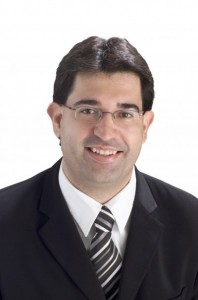
Hon Nick Goiran

In the lead speech opposing the Voluntary Assisted Dying Bill 2019 which would legalise euthanasia and assisted suicide in Western Australia, the Hon Nick Goiran powerfully enunciated the case that it was impossible to create a scheme which could guarantee that there would be no wrongful deaths due to medical errors, elder abuse and patient steering and a lack of equitable access to palliative care.

In his conclusion summing up the argument he made five statements:

  • Firstly, the desire of a significant proportion of confident people for ready access to lethal injections ought never to override the rights of the quiet vulnerable to safety and protection.
  • Secondly, if we are intellectually honest and reason through the theory of a euthanasia regime, we should conclude that it is inherently unsafe. The insufficiency of the criminal justice safeguards informs us of this. The prevalence of medical negligence informs us of this. The ease of doctor shopping informs us of this. The existence of elder abuse informs us of this, and the reality of doctor bias informs us of this.
  • Thirdly, when we engage with the lived experience of the few jurisdictions that have legalised euthanasia or assisted suicide, we know that the theory of an inherently unsafe regime has resulted in casualties of wrongful deaths. In other words, the theory has translated into practice and wrongful deaths have ensued, and there have been casualties.
  • Fourthly, there is another way; there is a better way. There is a safe approach to end-of-life choices; however, it will require all of us to persistently insist that quality palliative care is made available to every Western Australian and until we, the 36 of us, have exhausted ourselves in fulfilling this duty, we should not contemplate a euthanasia regime, let alone this bill, which is more dangerous than the Victorian legislation and more dangerous than the now inoperative Northern Territory legislation.
  • Finally, I oppose this bill because the risks in legalised assisted suicide are simply too great, not the least of which is because the consequences are final.

Read the whole of the Hon Nick Goiran’s speech here

Debate on the Bill continues with further second reading speeches.

EPC – USA is co-sponsoring a conference on November 2 in Bristol CT.


Euthanasia Prevention Coalition – USA is co-sponsoring a conference to be held on Saturday, November 2, 2019 in Bristol, CT. 

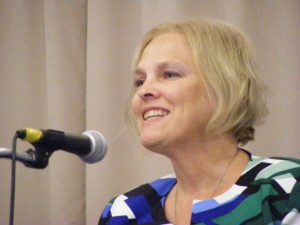
Nancy Elliott

Among other topics, this conference will include a keynote speech by Nancy Elliott, President of the EPC-USA and other national and local speakers on assisted suicide and euthanasia. 


There will also be workshops on how to contact your local legislators, how to write a letter-to-the-editor, a showing of Fatal Flaws film and more. If you want to learn more about the importance of fighting assisted suicide on the local level, this conference will provide an excellent foundation. 

Tickets for this day-long conference are only $15 and include lunch. More details and registration is available at: (Registration link).

Affirm Dignity – End Euthanasia

Adf International, an organization that takes legal cases to defend human freedom and dignity has launched the affirm dignity, end euthanasia website (Link). Below is the Affirm Dignity Charter that you can sign on their website.

Affirm Dignity | End Euthanasia
Charter

The right to life is a fundamental and inherent human right, recognized by the Universal Declaration of Human Rights and guaranteed by all human rights treaties. People at all stages of life and in all regions of the world are increasingly vulnerable to assaults on this foundational right. Without respect for human life, there can be no respect for human dignity. The most vulnerable deserve our compassionate love and support. There is nothing progressive about a society that refuses to care for them.

Therefore, we:

affirm that the right to life cannot include a right to die;

deplore the promotion of practices like euthanasia or assisted suicide;

consider every suicide a tragedy, and we recall the international obligation on States to take measures to prevent suicide;

denounce the slippery slope of legalized euthanasia which results in pressure on the vulnerable to die;

condemn the application of euthanasia to children, vulnerable adults, and those who have not given their consent;

believe society owes those suffering better options than euthanasia, such as palliative care;

affirm that palliative care is prevention and relief of suffering, which does not hasten nor postpone death (as defined by the World Health Organization);

call for the prohibition of euthanasia and assisted suicide and further investment in compassionate alternatives which Affirm Dignity.

Physically healthy 23-year-old Belgian woman is being considered for euthanasia.

Alex Schadenberg
Executive Director, Euthanasia Prevention Coalition


Tragic news.

Just as you thought you heard it all, Kelly, a 23-year-old physically healthy woman who lives in Leuven Belgium who is being considered for death by euthanasia (lethal injection) for psychiatric reasons.

Please sign the Letter of Hope to Kelly (Link). Share the letter of Hope with your friends.

In an interview with Ian Birrell, for the Daily Mail, Kelly speaks about seeking euthanasia for psychological pain, even though experts agree that young people will often get better with treatment. Birrell reports:

Many psychiatrists and most Belgians oppose extension of euthanasia to mental health cases. Some experts argue diagnosis is subjective, unlike severe physical illness, and insist the lives of distressed younger patients can improve with time, therapy and medication. 

Yet Kelly, whose birthday is this week, plans to die as soon as legally possible so has no time for such arguments. ‘It feels like discrimination,’ she said. ‘It makes me angry. It’s just not fair. They don’t understand the pain. 

‘People look at me and see someone so young but I feel bad inside all the time. It is not the age that is important but the suffering of the person.’

Kelly has an identical twin sister who will suffer greatly if Kelly dies by euthanasia. Birrell explains that Kelly had not yet told her family her plan to die by euthanasia. 

Kelly lives with her family near Leuven – yet incredibly had not told her parents, identical twin sister or younger sibling of her plan. She was due to break the news to them four days after our discussion, something she admitted she was dreading. 

‘It is not going to be easy to tell them. I think my sisters will understand more than my parents. But it will obviously be very difficult, especially for my twin sister.’ 

The reason for her failure to tell her family soon becomes clear. She is fond of her father, a salesman, but said her relationship with her mother, a former cleaning lady, was very difficult, leaving her feeling unloved and insecure at home.

Joris Vandenberghe

Kelly, who met her boyfriend Bregt while attending group sessions, is living with psychological pain. She has attempted suicide, been hospitalized, has eating disorders and self-harms, but many people live with similar psychological pain. Birrell reports:

She decided to apply for euthanasia after learning it was lawful and possible from a psychologist in the hospital. 

‘I felt ‘yes’,’ she said, pumping her fist as she recalled the moment. ‘I immediately went and looked up all the information I could find.’ 

To win the right to die, Kelly – who has been unable to work since leaving school beyond a bit of babysitting – needs backing from two psychiatrists and one other doctor. They must agree her mental pain is unbearable and untreatable. 

She applied seven months ago and is being assessed by Joris Vandenberghe, a local professor who has helped draft stricter rules for psychiatrists amid concerns that some patients died despite treatment options being available.

Birrell then tells us about Dr Joris Vandenberghe:

…he recently wrote an academic article admitting that Belgium’s policy was ‘highly controversial and raises difficult ethical and clinical issues’. 

He argued its laws had failed to ensure ‘sufficient checks and balances to promote reluctance to act on a patient’s death-wish’, concluding that more investment in mental healthcare could prevent some, but not all, of the demand for euthanasia from distressed patients. 

Last year it emerged that three Flemish doctors, including a high-profile psychiatrist accused of being behind almost half the cases of euthanasia for mental health disorders, were being investigated on suspicion of ‘poisoning’ a woman who had autism.

Kelly needs support in living, not euthanasia. Sadly, many people experience psychological suffering but its not a reason to kill. Euthanasia is an abandonment of people at a low time of their life, but euthanasia for psychological reasons is an abandonment of hope.

It is my hope that Kelly finds hope and a purpose to live.
Important resource articles
Design a site like this with WordPress.com
Get started