Leaders debate: Andrew Scheer is the only leader who questions euthanasia.

Alex Schadenberg
Executive Director, Euthanasia Prevention Coalition

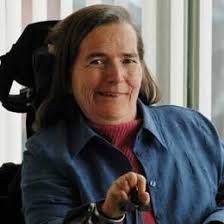
During the leaders debate, last night, the leaders of Canada’s political parties were set-up by a MAiD (euthanasia) question from a woman with multiple sclerosis, who wears adult diapers, has bed sores, and has had rheumatoid arthritis since childhood. The woman asked if they would respect the Québec euthanasia court decision?

Typical of the media to set-up the question to make euthanasia appear “compassionate” and the questioner better off dead than disabled.

The question is based on the September 11 decision by a Québec Superior court to strike down the provision in Canada’s euthanasia law requiring that a person be terminally ill to qualify for death by lethal injection.

* Québec court expands euthanasia law by striking down the terminal illness requirement.


Last night, Prime Minister Trudeau re-iterated that he would expand the law within the next six months. Trudeau isn’t concerned that his own government established a five-year review to begin in June 2020 that would have enabled Canadians to provide democratic input.

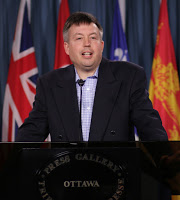
The other leaders, Elizabeth May (Green), Jagmeet Singh (NDP), Yves-Francois Blanchet (Bloc) and Maxime Bernier (PPLC) all supported an expansion of the euthanasia law, except for Andrew Scheer.

Andrew Scheer

Scheer stated that the Conservative party opposed the euthanasia law and he stated that we need to protect vulnerable people.

He added that his party will “always respect” the decisions of the court. “At the same time, we will evaluate the decision.” He said he agreed with Blanchet and that “we need to try to find [a] path forward.”

At the previous french language debate Scheer was the only one to oppose euthanasia. He said “he would appeal the decision and would convene the Parliament to craft a revised MAiD regime.”


It appears that Andrew Scheer and the Conservatives are the only major political party who will refuse to expand the euthanasia law.

Why the Québec euthanasia decision needs to be appealed.

Alex Schadenberg
Executive Director, Euthanasia Prevention Coalition

On September 11, the Quebec Superior Court, in the Truchon decision, struck down the requirement that a person be terminally ill before qualifying for euthanasia in Canada. The Canadian Press (CP) reported:

Quebec Superior Court has invalidated parts of the federal and Quebec laws on medically assisted dying laws, declaring them too restrictive and therefore unconstitutional. 

A judge today found the “reasonably foreseeable natural death” requirement of the Criminal Code, which prevents some people from accessing medical assistance in dying, invalid.

* Advocates call for disability rights based appeal in the Québec Truchon & Gladu decision
 
* Physicians call on the Attorney General to appeal the Québec Medical Assistance in Dying Decision.

Trudo Lemmens

Trudo Lemmens, professor of health, law and policy at the University of Toronto and Laverne Jacobs an associate professor, faculty of law at the University of Windsor were published in the Conversation, yesterday, explaining why the Quebec Truchon euthanasia decision should be appealed. They wrote:

The federal and Québec governments appear reluctant to appeal what’s known as the Truchon decision, which invalidated Canada’s “reasonable foreseeable death” and “end of life” access criteria for medical assistance in dying. …

Justice Christine Baudouin ruled that the law violated the right to life, liberty and security of the person, and discriminated against people with disabilities who aren’t near death.

Some health professional organizations in Québec have urged the federal and provincial government not to appeal the decision. We disagree. We feel strongly that they should appeal.

And here is why: The ruling raises important questions about the application of the Canadian Charter of Rights and Freedoms that require clarification. The court’s ruling undermines Parliament’s power to issue broad legislation aimed at protecting the rights and interests of people who are elderly, ill or disabled, and at preventing suicide. We also believe the use of some of the evidence in the decision raises concerns about its reasonableness.
Laverne Jacobs

The article then examines how the Truchon decision affects the value and quality of life.

First, Justice Baudouin rejected two explicitly stated goals of the federal medically assisted dying law: the confirmation of the inherent and equal value of every person’s life, combined with the prevention of negative perceptions of the quality of life of persons who are elderly, ill or disabled; and the prevention of suicide.

As a result, she failed to evaluate whether the broader societal impact of an expansive MAID regime could justify the current restriction to end-of-life. Parliament explicitly introduced this restriction to balance the autonomy of people requesting physician-assisted deaths with the need to protect the interests of vulnerable people, as well as the broader societal interests of avoiding negative perceptions and preventing suicide.

Baudouin only ruled on whether the restriction is necessary to protect vulnerable people from being induced to end their lives. She concluded that as not all people with disabilities are vulnerable, existing medically assisted death practices will suffice to offer that protection.

By focusing only on the need to protect vulnerable people, she did not sufficiently consider the more complex evidence related to negative perceptions of the quality of life of people who are elderly, ill or disabled, or the challenges related to suicide prevention.

The article asks the question – are disabled lives worth living?

The disability community has long expressed concern about how laws and policies reflect views that disabled lives as not worth living. These laws can result in practices that undermine the rights and well-being of people with disabilities and may influence how people think about disabled lives and what health-care choices they should have.

There are historical precedents for this concern: policies portraying disabled lives as not worth living were prevalent during the eugenics movement in the 20th century. In Canada, manifestations of the eugenics movement can be seen in the sexual sterilization laws designed to prevent people with disabilities from reproducing.

There are also concerns, fuelled by developments in the few countries that provide access to MAID outside the end-of-life context, that being elderly and fragile is increasingly accepted as a reason for a physician-assisted death and that this may create subtle pressure. A recent analysis of Dutch assisted dying cases of patients with intellectual disabilities and autism suggested that physicians’ value judgments and prejudices may have influenced how they evaluated their requests. …

These longer term and broader concerns, as well as the impact on suicide prevention, were not taken seriously enough by the Québec Superior Court in its proportionality assessment under Section 1 of the Charter. They should have been.

The article continues by analysing the Truchon decision based on the fact that MAiD is an irreversible life-ending act.

… Baudouin invoked two reasons why the restriction to end-of-life is discriminatory: one is that it makes a distinction based on whether or not people’s health or disability brings them on a trajectory towards the end of their life. The second is that it distinguishes between people with disabilities who are at the end of their lives and those who are not. Both may be incapable of ending their own lives when they are suffering unbearably, yet only those at the end of life are being offered medically assisted deaths.

Baudouin is not the first to look at the law from the perspective of discrimination. But no majority of the Supreme Court has ever done so before, and perhaps for a reason.

We’re dealing with a criminal law-based limit on when health professionals can perform a radical life-ending procedure. To conclude that a policy limiting it to the end-of-life is discriminatory, it seems essential to look at all the evidence and arguments in support of this restriction.

By limiting the goals of the legislation, Baudouin failed to look at the delicate balance between providing access to medically assisted dying, protecting people against premature death and preventing stereotypes about the value of a life with disabilities, and in the context of a practice that raises unique challenges.

Unlike other claims of discrimination, this is not about claims of access to an unconditional good such as essential medicines, or high-quality supportive care, or accommodation to empower people with disabilities. We are dealing with an irreversible, life-ending act.

While death may seem desirable in some circumstances, there are unique concerns about the impact of MAID, precisely on those who are already disadvantaged.

The article then examines the issue of treatment in long-term care and MAiD.

More explicitly, while the MAID law indeed requires consent, these irreversible choices about ending a life are made in a complex social, cultural and health-care context, where lack of access to adequate care, lack of social support and overall ableist stigma have an impact on the choices people with disabilities may have.

Under the existing regime, we already see troubling examples of how a lack of good health care and support may push people towards a medically assisted death. For example, in British Columbia, Sean Tagert struggled to pay for 24-hour care at home until he eventually gave up in frustration and chose a medically assisted death.

Similarly, in Montréal, Archie Rolland, a landscape architect, decided to end his life instead of continuing to suffer at a long-term care facility that he said was treating him inhumanely.

The law’s end-of-life criterion should create the necessary space to prioritize substantive support for people with disabilities. We need more complex discussions around support for the rights to life of people with disabilities, including those in palliative care, not a reduction of the opportunities for this support by expanding access to physician-assisted deaths.

The article ends with an assessment of the Judge’s analysis of the evidence. They stated:

There are also reasons why an appeal court should review the reasonableness of the court’s use of evidence.

The relevance of much of the evidence (for example from suicide experts and disability studies experts) was already undermined by the court’s restriction of the goals of the law. But even in the assessment of directly relevant evidence — for example in determining capacity and distinguishing MAID from suicide in the context of mental illness — Baudouin too easily brushed aside the government’s experts as having only theoretical knowledge and being prejudiced.

They included leading psychiatric experts, including one with unique expertise on capacity assessments in the few jurisdictions that allow medically assisted death for mental health reasons, who had published several analyses on the topic in peer-reviewed literature.

In contrast, Baudouin appeared to take at face value two experts for the plaintiffs who currently conduct medically assisted death assessments in Canada’s system, but who have not done so in relation to mental illness.

It would send a terrible signal if both the federal and Québec governments concede that one judge can curtail Parliament’s power to promote broader societal interests in protecting people who are elderly, ill or disabled.

Given that we are currently in an election period, and that it will take time before a new government is put in place, it seems particularly important to create the time and space for careful assessment of our options in this complex area of policy-making.

In the interests of society, the attorneys general in both Québec and in Ottawa need to appeal this case.

Lemmens and Jacobs have provided an excellent assessment of the Truchon decision. Similar to their assessment, I have stated that the decision needs to be appealed based on the language of the decision and the precedent that the decision sets.

The government should not assess the Truchon decision based on political outcomes, even though we are in an election, but based on legal principles. If the Truchon decision is examined based on legal principles, the language of the decision, and the long-term effect of the precedents set by this decision clearly the decision would be appealed.

Our government needs to stop politicizing the judiciary and appeal the decision.

McKitty case: Ontario Court of Appeal decides that religious beliefs are important in brain death determination.

Alex Schadenberg

Executive Director, Euthanasia Prevention Coalition

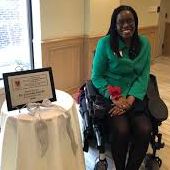
Taquisha with her daughter.

Taquisha McKitty, of Brampton was declared brain dead on September 20, 2017, after a cardiac arrest on September 14. McKitty died of natural causes on December 31, 2018.

Taquisha’s family challenged the declaration of death at the Ontario Superior Court. On June 26, 2018 Ontario Superior Court Justice, Lucille Shaw, decided that McKitty was legally dead and ordered her life-support withdrawn in 30 days.

McKitty’s family appealed the decision to the Ontario Court of Appeal.

Justice Shaw stated that McKitty was dead and that the Charter of Rights and Freedoms did not apply to McKitty, because it only protects “persons,” and because McKitty was clinically brain dead, she was not legally a “person.”

Hugh Scher

At the Court of Appeal, Hugh Scher, the lawyer for the family, argued that McKitty’s Charter rights were breached in order to pronounce her dead. Scher stated:

“To say that she doesn’t have Charter rights because she is dead is putting the cart before the horse.”

“The Court’s predetermination of Taquisha’s death to justify non-application of the Charter of Rights and Freedoms … dehumanizes Taquisha as a non-person from the outset,”

“Taquisha is an individual under the law deserving of Charter protection.”


Yesterday, the Ontario Court of Appeal issued a decision, in McKitty, even though the case was technically moot after Taquisha died of natural causes. According to the family of Taquisha Mckitty:

The Ontario Court of Appeal ruled that religious values and beliefs are essential to who we are as human beings and to the manner by which we chose to live our lives. The court has put off however the question of whether or not religious beliefs can be relied on to alter the common law definition of death. 

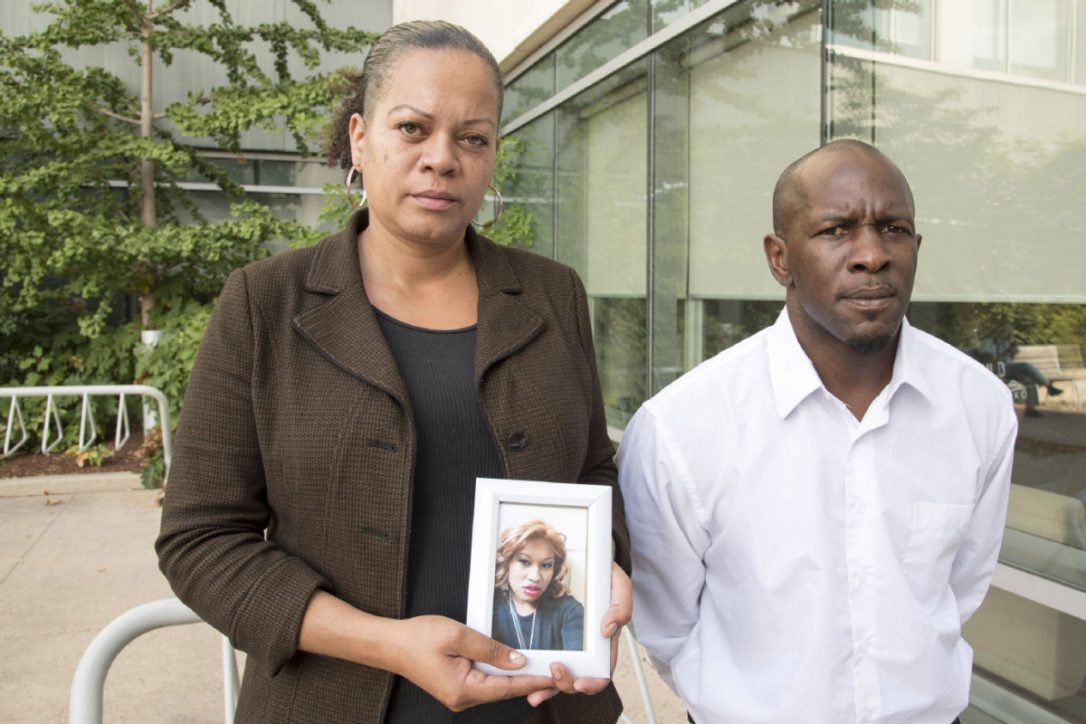
Taquisha’s parents

Today’s court decision overturns the reasons given in the lower court and emphasized the importance of religious freedom, diversity and equality in Canada. Taquisha McKitty’s father Stanley Stewart brought this court challenge on his daughter’s behalf. He states as follows:

If a person can’t re​ly on their most sacred religious values and beliefs at the very moment of their death when they would most expect to derive comfort from them, one is left to wonder what is the value of a constitutional protection of religious liberty and equality. Courts and legislatures will need to address this mischief of the law in the future.

Death is legally and medically determined by employing one of two sets of criteria. Cardio-respiratory death is determined by the complete cessation of cardio-respiratory function. Neurological death is determined by the complete cessation of all neurological function. Both are legally and medically acceptable means to determine death throughout Canada. 

What we were asking is for the court to apply basic constitutional protections of life, equality and religious freedom that are enshrined in laws in jurisdictions like New York state, New Jersey, California, and Illinois states Taquisha’s father Stanley Stewart. 

The notion tha​t Taquisha McKitty would be considered alive in New Jersey where her religious freedoms are respected but would be considered legally and medically dead in Toronto, Ontario, only a hundred miles away is extremely troubling and must be corrected by lawmakers, states Stewart. 

The law mu​st change to respect and accommodate religious difference in the definition and determination of death if basic Canadian values of pluralism, diversity and religious liberty are to flourish, states Toronto lawyer Hugh Scher who represented the McKitty family in court as well as other families across Canada.

May Warren, reporting for the Toronto Star interviewed ethicist, Trudo Lemmens, a professor and Scholl chair in health law and policy at the University of Toronto who called the ruling “a sophisticated judgement in the discussion of what the definition of death means.” He stated:

It’s important, he added, that the appeal “court recognizes that the definition of legal death is not just a medical fact,” but involves “value judgments about the determination of when somebody is no longer declared to be a person.”

This gets to an “ongoing debate” about “who counts as a human being,” he added.

Decisions related to ones personal beliefs must be respected, and yet science should be the determiner of medical truth. The problem arises when someone, who is not dead, is declared legally dead.

Link to the article in the Law Times.

Federal study finds assisted suicide laws rife with dangers to people with disabilities

This article was published by Not Dead Yet on October 9, 2019

The National Council on Disability (NCD) has issued the second in a series of reports on Bioethics and Disability. NCD’s release on the report today focuses on “a federal examination of the country’s assisted suicide laws and their effect on people with disabilities, finding the laws’ safeguards are ineffective and oversight of abuses and mistakes is absent.”

The Disability Rights Education & Defense Fund (DREDF), which worked in partnership with NCD on the series of reports, summarizes this groundbreaking work:

Despite the growing consensus that disability is a normal part of the human experience, the lives of people with disabilities are routinely devalued in medical decision-making. Negative biases and inaccurate assumptions about disabled people persist. In medical situations, these biases can have serious and even deadly consequences.

Beginning on September 25, the National Council on Disability (NCD) is releasing a series of reports on bioethics and disability. The five reports were developed through a cooperative agreement with the Disability Rights Education & Defense Fund (DREDF), which appreciates and acknowledges the valued work of our partners, the Autistic Self Advocacy Network, the Bazelon Center for Mental Health Law and Not Dead Yet, in creating the series.

Each report examines the status and future of how a variety of key issue areas – including organ donation, assisted suicide laws, genetic testing, systems such as Quality Adjusted Life Years, and assumptions about medical futility – are developing due to technological and scientific advances as well as legal changes and healthcare delivery. A combination of original research, stakeholder and scholar interviews, literature reviews, reviews of media reports, and legal analysis is used to examine each topic. Each report includes findings and makes recommendations to lawmakers and policymakers that we hope will ensure that the lives of people with disabilities are valued on an equal and nondiscriminatory basis with all others.

Not Dead Yet specifically consulted on the topics of organ donation, assisted suicide and medical futility.

NCD’s release on today’s assisted suicide report includes the following details, and an example of a seriously mistaken cancer prognosis personally experienced by the NCD Chairman, Neil Romano:

Despite the belief that pain relief is the primary motivation for seeking assisted suicide, in Assisted Suicide Laws and their Danger to People with Disabilities, NCD found that the most prevalent reasons offered by someone requesting assisted suicide are directly related to unmet service and support needs, which NCD urges policy makers respond to through legislative changes and funding.

“Assisted suicide laws are premised on the notion of additional choice for people at the end of their lives, however in practice, they often remove choices when the low-cost option is ending one’s life versus providing treatments to lengthen it or services and supports to improve it,” said NCD Chairman Neil Romano.

Closely examining the experience in Oregon, where the practice has been legal for 20 years, NCD found that the list of conditions eligible for assisted suicide has expanded considerably over time, including many disabilities that, when properly treated, do not result in death, including arthritis, diabetes, and kidney failure.

Assisted Suicide Laws and their Danger to People with Disabilities also notes suicide contagion in states where assisted suicide is legal; as well as a loosening of existing safeguards both in states with legalized assisted suicide and states considering bills to legalize.

In the report, NCD details limitations of purported safeguards of assisted suicide laws, finding:

  • Insurers have denied expensive, life-sustaining medical treatment, but offered to subsidize lethal drugs, potentially leading patients to hasten their own deaths; 
  • Misdiagnoses of terminal disease can cause frightened patients to hasten their deaths; 
  • Though fear and depression often drive requests for assisted suicide, referral for psychological evaluation is extremely rare prior to doctors writing lethal prescriptions; 
  • Financial and emotional pressures can distort patient choice; 
  • Patients may “doctor shop” limitlessly to find a physician who will obtain a colleague’s concurrence and prescribe a lethal dose


“As someone who has battled cancer and been given weeks to live and am still thriving years later, I know firsthand that well-intending doctors are often wrong,” said Mr. Romano. “If assisted suicide is legal, lives will be lost due to mistakes, abuse, lack of information, or a lack of better options; no current or proposed safeguards can change that.”

NCD concludes its research with recommendations, including highlighting the need for:

  • Federal research on disability-related risk factors in suicide prevention, as well as on people with disabilities who request assisted suicide and euthanasia; 
  • Federal regulation requiring non-discrimination in suicide prevention services; and 
  • Greater federal investment in long-term services and supports.

The NCD report is online at The Danger of Assisted Suicide Laws. The release dates for the other reports in the series are here, with links to the full reports as they become available.

Where do the Canada’s political party leaders stand on MAiD?

Alex Schadenberg

Executive Director
Euthanasia Prevention Coalition

On September 11, a Québec Superior court struck down the provision in Canada’s euthanasia (MAiD) law requiring that a person be terminally ill to be approved for death by lethal injection. The court decided that requiring that a person’s “natural death must be reasonably foreseeable” was unconstitutional.

During the french language debate on TVA, between political party leaders Prime Minister Justin Trudeau (Lib), Andrew Scheer (CPC), Jagmeet Singh (NDP) and Yves-François Blanchet (BQ), Trudeau stated that he would not appeal the Québec Truchon court decision that struck down the “terminal illness” requirement. Trudeau also said that he would craft a more permissive MAiD regime in the 6 months period ordered by the Court.

Other than Andrew Scheer, the other party leaders supported a more permissive euthanasia (MAiD) regime. Scheer said that he would appeal the decision and revise the MAiD regime. 


Maxime Bernier (PPC) and Elizabeth May did not participate in that debate.

Elizabeth May is on record as supporting MAiD while Bernier supports MAiD but he supports requiring a psychological evaluation before approval.


The recent euthanasia death of Alan Nichols, a physically healthy man who was living with chronic depression, has led one family to ask how could their brother have died by euthanasia? Clearly the law is not protecting depressed people with questionable mental competency.

The language of the Quebec court decision expands euthanasia to people with psychiatric issues alone

In March I published an article showing that, as of December 31, 2018, there had been 7949 assisted deaths in Canada, since legalization. There were 2704 reported assisted deaths in 2017 and 4235 reported assisted deaths in 2018.

Physicians Urge Protection of Vulnerable Persons Standard: Call on Attorney General of Canada to Appeal Quebec Medical Assistance in Dying Decision

TORONTO, ON – More than 250 doctors from across Canada have signed an urgent open letter to the Attorney General, David Lametti, asking him to appeal a Quebec Superior Court decision that would expand access to medical assistance in dying to those who are not nearing natural death. The decision on the appeal must be made by October 18.

The signatories agree that medical assistance in dying must have limits, and that individual rights must be balanced with protections for vulnerable citizens and greater society. The letter calls for Parliament to address equality gaps that cause suffering and poor health for patients with life left to live rather than provide them medical assistance in dying.

The letter (La lettre ouverte est disponsible en français ici) was penned by Dr. Margaret Cottle and her colleagues who act as advisors to the Vulnerable Persons Standard (VPS).

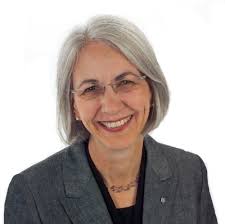
Catherine Frazee, Professor Emerita, Ryerson University School of Disability Studies, is a founding advisor on the Vulnerable Persons Standard. Frazee commented:

“In the robust debates that gave shape in 2016 to our present law, Canadians with disabilities were fully engaged and our contributions earned the respect of our legislators and fellow citizens. We raised the alarm that discrimination, stigma and social and economic deprivation could make people vulnerable to seeking a premature death.

When Bill C-14 became law, it carefully balanced the needs of persons whose suffering at the end-of-life was intolerable, and persons who would be vulnerable to suicide when denied the supports and conditions for a dignified life. The foundational requirement that MAiD be reserved for persons already nearing the end of life was a bulwark against this grave danger, and an affirmation of the inherent value and dignity of our lives. The same Prime Minister who heard us in 2016 is now arbitrarily refusing to appeal the Truchon and Gladu decision and has betrayed the commitments of a carefully considered law.”

Dr. Cottle recognized this vulnerability in her patients,

“As physicians, we have extensive, first-hand experience in journeying with our fellow citizens, including those who are living with illnesses and disabilities. We understand–and mourn–the many challenges we encounter together due to inadequate supports of every kind. Each member of our Canadian family deserves to be equally valued, equally supported, and equally protected. This is why we call upon the government of Canada to appeal the Truchon and Gladu court decision, and to affirm every Canadian’s right to live with dignity.”

The letter expands upon the concerns raised by 65+ community organizations – including members of the disability rights community, and health-focused organizations like the Canadian Association for Mental Health and the Canadian Society of Palliative Care Physicians – in an open letter released late last week.

– 30 – 


For media inquiries, please contact Natalia Hicks, Vulnerable Persons Standard Secretariat at info@vps-npv.ca 1-855-661-9611 ext 221

Euthanasia in Canada: What has happened to democracy?

Alex Schadenberg

Alex Schadenberg
Executive Director, 

Euthanasia Prevention Coalition

Last January, Prime Minister Trudeau replaced Hon. Jody Wilson-Raybould and appointed Hon. David Lametti as Justice Minister and Attorney General of Canada. Wilson-Raybould was replaced because she refused to change her mind when pressured by Trudeau in the SNC Lavalin affair.

I was very concerned by Lametti’s appointment because Lametti had voted against Canada’s euthanasia bill because he thought that it was too restrictive.

Hon David Lametti

Soon after, Lametti, in an interview with Tonda MacCharles from the Toronto Star, stated that the government would not expand Canada’s euthanasia law before the five-year review that was to begin in June 2020. MacCharles reported:

Any changes would have to wait until the conclusion of a five-year parliamentary review about how the new regime is working. 

“the parliamentary process struck “an important balance” that he respects, and a five-year review would be able to assess “data” and “evidence” about the impact the law is having.

On September 11, a Quebec Superior court judge struck down the requirement, in Canada’s euthanasia law, that a person’s “natural death must be reasonably foreseeable.” This section of the law was not defined but it did prevent people from being lethally injected based on psychological reasons alone. 


The Quebec court gave the Quebec and Federal governments 30 days, or until October 11 to appeal the decision. But alas, Canada was in the middle of a federal election.

During the French language leaders debate Prime Minister Trudeau decided to ignore democracy and the promise by his government to uphold the current euthanasia law until after the completion of a five-year review (June 2021). Trudeau stated that the government will not appeal the Quebec court decision and the Liberals would amend the current euthanasia law soon after the election.

Jody Wilson-Raybould – David Lametti

Remember that Wilson-Raybould was removed as the Justice Minister and Attorney General of Canada because she refused to be influenced by Trudeau in the SNC Lavalin affair. Wilson-Raybould stated that it was not a political decision but a decision based on the independent role as the Attorney General.

Similarly it is undue influence for Trudeau to announce that the government will not appeal the Quebec court decision? Trudeau had no right to politically interfere in a legal decision. 


Even if Trudeau agreed with the court decision, the decision should still have been appealed based on the language of the decision and the precedent that it establishes. Political interference should not have been allowed in this case either.

Finally, what is the point of a five-year review if the law is amended before the review? 

What has happened to democracy in Canada?

Assisted Suicide: What can seem like dignity can turn out to be anything but

This letter was published by the Minneapolis Star Tribune on October 7, 2019.

John Kelly

I sympathize with Bobbi Jacobsen (“I have ALS, and I hope for a dignified death,” Opinion Exchange, Sept. 24). Like her, I became severely disabled as an adult. But I oppose assisted suicide: It’s too dangerous.

Assisted suicide can look appealing from an individual’s perspective, but at the state level, it inevitably leads to the premature deaths of non-dying people. At least 12% to 15% of people judged terminal outlive their six-month prognosis, according to the Journal of Palliative Medicine, sometimes by years and decades. Actress Valerie Harper, who died last month, lived six years longer than predicted. Tragically, there are people who would be alive today but for their misplaced trust in a doctor’s prediction.

Jacobsen cites the absence of disability abuse reports from state protection and advocacy agencies, but abuse gets easily buried. For example, Oregonian Wendy Melcher’s death in 2007 at the hands of two nurses was suppressed by the state nursing board.

Elder abuse is rampant. Safeguards end after drugs get dispensed and, because no witness is required, heirs and abusers can engineer deaths without worry.

As the cheapest “treatment” for serious illness, assisted suicide fattens insurers’ profits and crowds out traditional, more expensive treatment.

Palliative care doctors know how to let people die gently, so it’s inexcusable that anyone die in uncontrolled pain. Everyone has the right to reject any treatment, including food and water, and palliative sedation is available as a last resort.

The Minnesota Legislature should demand excellent palliative care, not put everyone in danger of premature death due to mistakes, abuse and insurers’ bottom lines.

John B. Kelly, Boston

The writer works for Not Dead Yet, an organization opposed to assisted suicide.

EPC letter to the Attorney General of Canada to appeal the Truchon Québec assisted suicide decision.

Hon David Lametti,
Minister of Justice and Attorney General of Canada
284 Wellington St.
Ottawa ON K1A 0H8

mcu@justice.gc.ca

Dear Minister Lametti:

We are writing on behalf of the Euthanasia Prevention Coalition to urge you to appeal the Québec Superior Court’s ruling in Truchon c. Canada (Procureur general) 500-17-099119-177 (2019-09-11). We believe the court made substantial errors in rulings of fact and law, and failing to appeal this judgment by the deadline would foreclose access to justice for elderly, physically and psychologically ill and disabled Canadians.

We understand that this decision was handed down during an election campaign, putting the government in the awkward position of having to make the decision whether to appeal in a highly-charged political atmosphere.  Regardless of the political stakes, however, failing to appeal would mean that all options of redress for Canadians represented by the Attorney General would be cut off.  This must not be allowed to happen.

In our opinion, the Québec Superior Court made serious errors of law and fact in arriving at its conclusion that the reasonably foreseeable natural death criterion in Canada’s Medical Assistance in Dying statute violated plaintiffs’ constitutional rights. For example, the court found that plaintiffs were “incapable” of living independently, which is simply not true. It is access to self-directed in-home personal assistance services, rather than a person’s physical abilities that dictate whether a person can live independently. Yet the court repeatedly confuses the lack of choice with an inability to make a choice. The court also adopted the narrowest possible definition of “external pressures” that can impair a person’s ability to make a free and informed request for Medical Assistance in Dying (MAiD). In doing so, the court excludes the effects of discrimination and social policies that force people into institutional care against their will and in violation of article 19 of the U.N. Convention on the Rights of Persons with Disabilities. The court rejects any reference to a group of “vulnerable persons,” requiring an “individual assessment of vulnerability,” which cannot account for the effects of systemic discrimination.

The court disapproves of the Government’s legislative goals of preventing suicides and “affirming the value of disabled lives,” as “too broad,” and uses stereotypes to conjure negative images about the quality of the plaintiffs’ lives, referring to them as “prisoners” of their bodies. Further, the court invokes the “medical model” of disability by declaring that only physicians who administer MAiD are qualified to evaluate the program’s operation.  In ruling that the Québec and Canadian data show “no slippage or drift,” the court disregards the findings of Québec’s Commission on End-of-Life Care which indicates a 4% “non-compliance” rate, including the euthanasia of 11 ineligible people, 55 violations of safeguards, and a backlog of 134 unevaluated cases.

Even if you personally agree with the decision, based on the legal and social issues related to the decision, we urge you to appeal the decision to ensure that the issues are properly settled.

The Euthanasia Prevention Coalition has worked closely with disability rights organizations for 20 years to represent the interests of Canadians with disabilities in the debate on ending-of-life issues.  We understand that the choice to die cannot be free while elderly, physically and psychologically ill and disabled Canadians do not have a free choice in where and how they live.

We call on the government to re-commit to preventing all suicides, to ensure effective palliative care for all, to affirm the value of the lives of all Canadians, and to ensure that everyone has the services and supports they need to live in their own communities and avoid institutionalization. 

But first, the Attorney General must take the most immediate step of appealing the Truchon decision before the 30 day deadline.

Amy Hasbrouck
President, Euthanasia Prevention Coalition

Alex Schadenberg
Executive Director, Euthanasia Prevention Coalition

Fatal Flaws film continues receiving awards. New reduced price.

Alex Schadenberg
Executive Director – Euthanasia Prevention Coalition


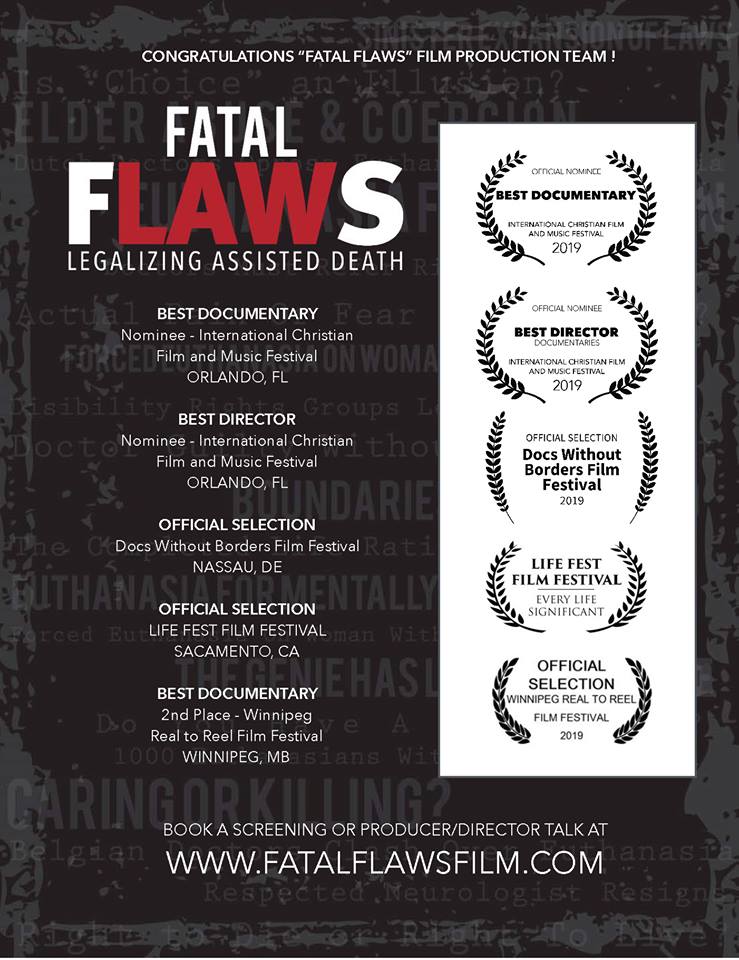
We are pleased to announce two more International film festival awards for the Fatal Flaws film – “Outstanding Social Issue Doc: Docs Without Borders Film Festival 2019” and “Official Selection: Great Lakes International Film Festival 2019.”

The Fatal Flaws film has won awards at the Life Fest Film Festival, the Reel to Reel Film Festival, the International Christian Film Festival, the Great Lakes International Film Festival and the Docs Without Borders Film Festival.


Fatal Flaws continues to be screened and it continues to change the way people view assisted death.

Fatal Flaws features personal stories from people who oppose assisted suicide and interviews with euthanasia proponents in the Netherlands and the United States.

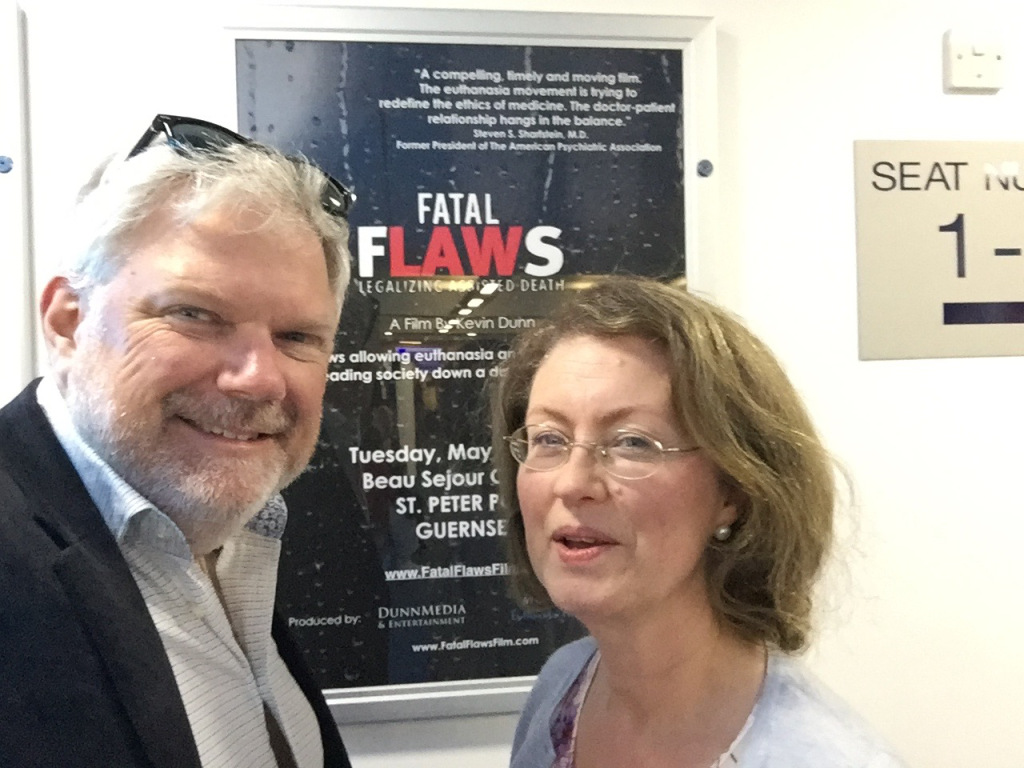
Fatal Flaws was screened in Guernsey (UK) while their legislature was debating an assisted suicide bill. One of the sponsors of the bill attended the Fatal Flaws screening. The next day he stated in the legislature that he changed his mind after watching Fatal Flaws. The Guernsey assisted suicide bill was defeated by a 24 to 14 vote.


The Fatal Flaws pamphlet is based on the main stories in the film. The pamphlet is excellent for distribution at a screening. (Inside of the pamphlet) (outside of the pamphlet).

Purchase the DVD or pamphlets (includes taxes and shipping): All orders can be made online (Link).

  • DVD: $30 each, 2 for $50, or 10 for $200.
  • DVD: online download $30 US (Link).
  • Pamphlets: $30 for 100, 200 for $50.

Further Discounts: All orders can be made online (Link).

  • With any Fatal Flaws order, order The Euthanasia Deception  documentary for $20.

Further bulk orders are available upon request.


Fatal Flaws is available for purchase on VIMEO ON DEMAND for $30 US. (Link)

Order the Fatal Flaws DVD with pamphlets online, or email: info@epcc.ca or call EPC toll free at: 1-877-439-3348 or mail your check to:

Euthanasia Prevention Coalition – Box 25033 London, Ontario N6C 6A8 or

Euthanasia Prevention Coalition – Box 611309 Port Huron, MI 48061

The Fatal Flaws Film will change the way the culture views assisted death.

Design a site like this with WordPress.com
Get started