Nevada Legalizes Starving and Dehydrating Incapacitated Patients

This article was published by National Review online on October 7, 2019
Wesley J Smith

By Wesley J Smith

This is stunning. Nevada has passed a law allowing competent persons to sign an advance directive instructing that all food and water be withheld if they become incapacitated by dementia. In other words, the law allows people to order their future care givers to starve and dehydrate them to death.

From the “End of Life Decisions Addendum Statement of Desires” portion of the advance directive form established in law by SB 121 (my emphasis).

(Insert name of agent) might have to decide, if you get very sick, whether to continue with your medicine or to stop your medicine, even if it means you might not live, (Insert name of agent) will talk to you to find out what you want to do, and will follow your wishes.

If you are not able to talk to (insert name of agent), you can help him or her make these decisions for you by letting your agent know what you want.

Here are your choices. Please circle yes or no to each of the following statements and sign your name below:

1. I want to take all the medicine and receive any treatment I can to keep me alive regardless of how the medicine or treatment makes me feel.
YES
NO

4. I want to get food and water even if I do not want to take medicine or receive treatment.
YES
NO

The highlighted question does not involve feeding tubes, which is a medical treatment. It isn’t about not providing nourishment when someone stops eating and drinking naturally as part of the dying process. Nor does it involve force feeding the patient. No, this provision requires withholding oral or spoon feeding.

Realize that this form could force caregivers to starve patients even when they willingly eat and drink — perhaps even if they ask for food or water. (This has happened before in a feeding tube case in Florida.) Don’t take my word for it. From an article on the Nevada law by bioethicist Thaddeus Mason Pope:

Even after we stop offering food and fluids, other problems may arise. Most problematically, the patient may make gestures or utterances that seem to contradict her prior instructions [to be starved].

Does such communication revoke the advance directive? A recent court case from the Netherlands suggests the answer is “no.” Once the patient reaches late-stage dementia, she is unable to knowingly and voluntarily revoke decisions she made with capacity. But the answer remains uncertain in the United States.

We certainly know the answer that bioethicists like Pope would urge on the courts. Besides, there is nothing in the law requiring that the provision quoted above only apply to “late stage” dementia.
 
Note also that the law does not require the signer to receive detailed information about the agony that starving and dehydrating entails. Symptoms can include extreme drying, seizures, mottling, and intense pain.

This law doesn’t just impact helpless patients, but also the emotional wellbeing of their caregivers. What kind of a person would presume to force anyone to do such a thing? Imagine the emotional impact! No one should have that right.

And what if doctors or nurses object? Could they be forced at the threat of being sued or professionally disciplined to starve a patient to death?

The Nevada law is silent, but medical professionals have been sued frequently for refusing to comply with advance directives. Besides, bioethicists and the medical establishment are hell-bent on destroying medical conscience by forcing healthcare professionals to engage in actions that violate their religious and/or moral beliefs as the price of licensure. Talk about a prescription for a brain drain!

One last point: The ultimate purpose behind laws such as this isn’t starvation, but rather, to gull us into allowing the aged, disabled, mentally incapacitated, and dying to be killed by lethal injection. After all, the ghouls will say, if we are going to end people’s lives, at least let’s do it humanely. 

No! Let’s not do it.

Our cultural death obsession is really getting out of hand. Those with eyes to see, let them see.

Funeral products study indicates that euthanasia and assisted suicide increases demand for funeral services

Alex Schadenberg
Executive Director, Euthanasia Prevention Coalition

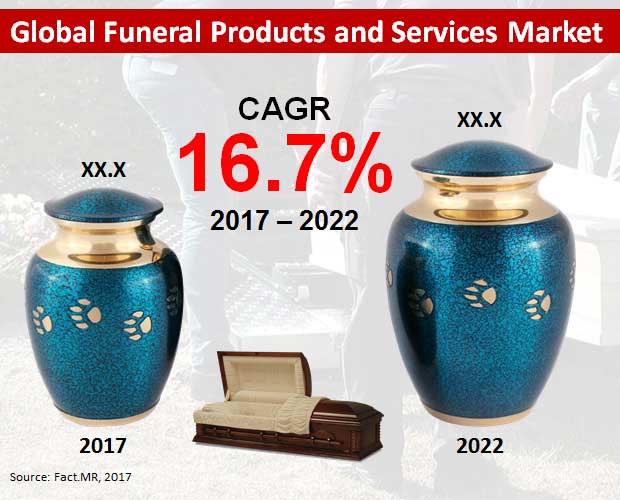
A report for the funeral products industry indicates that there is an increased demand for funeral products for several reasons, including the legalization of euthanasia and assisted suicide.

The report states that between 2017 and 2022, there will be a 16.7% increase in demand for funeral products and services primarily based on an aging population, increased world-wide wealth and the legalization of euthanasia and assisted suicide.

According to the report, the aging population will increase the number of deaths while the increased world-wide wealth enables people to afford to spend more on funeral services. But the report also comments on how euthanasia will increase demand for funeral products and services. The report states:

Increasing demand for performing euthanasia in the hospitals has significantly contributed towards the mortality rate globally. … Lethal vaccinations such as potassium chloride, sodium thiopental and pancuronium bromide are injected in the patients suffering from various terminal illness such as neurological conditions, last stage of Alzheimer’s, chronic lung problem and heart failures. Bound to these factors, the funeral products & services are likely to witness significant demand in the global market.

I assume this means that the drug companies that produce potassium chloride, sodium thiopental and pancuronium bromide are also experiencing an increase in sales.

Advocates call for Disability-Rights Based Appeal of the Québec Superior Court’s MAiD Decision in Truchon & Gladu.

 
October 4, 2019

Hon. David Lametti, MP. Attorney General

Dear Minister Lametti,

Re: Advocates Call for Disability-Rights Based Appeal of the Quebec Superior Court’s Decision in Truchon & Gladu

We, the undersigned members and supporters of the Canadian disability community, are deeply troubled by the Quebec Superior Court’s decision of Truchon c. Procureur général du Canada. As you are aware, the decision has struck down the “reasonable foreseeability of natural death” criterion of Canada’s medical assistance in dying legislation. As Attorney General of Canada, we urge you to file an appeal of the decision immediately.

We find this decision to be concerning for the following three reasons:

1) It fails to respect Parliament’s authority to balance the interests of individuals with the interests of society[1], effectively limiting Parliament’s capacity to pursue social targets such as substantive equality and inclusion.

Justice Christine Baudoin arrives at the conclusion that the end-of-life criterion violates section 7 and section 15 of the Charter by rejecting a key objective of Parliament, erasing any need for a section 1 analysis of reasonable limits. Parliament outlined the following societal objective in the preamble of the legislation:

It is important to affirm the inherent and equal value of every person’s life and to avoid encouraging negative perceptions of the quality of life of persons who are elderly, ill or disabled.

In fully rejecting this objective, the court has limited the authority of Parliament to govern toward an inclusive and equitable Canada. This is a dangerous precedent. Parliament intentionally included the end of life criterion in the legislation as a way of achieving the above objective. Is it reasonable for Parliament to limit the individual interests of Truchon and Gladu (autonomy) in order to promote the interests of society (equality and inclusion)? Without an appeal, we may never know. The Supreme Court must weigh in on this flawed analysis.

2) The decision will entrench stereotypes and exacerbate stigma for Canadians with disabilities, contributing to the adversity and oppression experienced by this vulnerable group.

Without the equalizing effect of the end-of-life criterion, which guarantees that the common thread between all persons who access an assisted death in Canada is that they are all dying, persons with disabilities will be able to gain access ultimately because they have a disability. A worse stereotype couldn’t be institutionalized in law – that disability-related suffering, largely caused by lack of support and inequality, justifies the termination of a person’s life.

Canada must avoid sending a message that having a disability is a fate worse than death. Canadians with disabilities are already bombarded daily with reminders that they are unwelcome and under-valued. We must not compound this harm by entrenching in law the message that others who share their condition will receive our full support if they choose to die prematurely. This message fits too neatly into the stereotype that a life featuring disability is a bad life, full only of suffering and pity. Such a narrative already exists. Canada must appeal the decision to prevent additional stereotyping and stigma, and to substantively protect the section 15 Charter rights of persons with disabilities.

3) Without the end-of-life criterion in place, Canada’s medical assistance in dying legislation will further violate article 10 of the United Nations’ Convention on the Rights of Persons with Disabilities (CRPD).

Article 10 of the CRPD reads as follows:

States Parties reaffirm that every human being has the inherent right to life and shall take all necessary measures to ensure its effective enjoyment by persons with disabilities on an equal basis with others.

By offering medical assistance in dying to persons with disabilities on the basis of disability, Canada would be further violating international law. If every Canadian who suffers cannot access a medically assisted death, and yet a Canadian who suffers and has a degenerative disability can, it is precisely their disability status that sets them apart.

Canada is already not taking necessary measures to ensure the effective enjoyment of life by persons with disabilities on an equal basis with others. There is case after case of Canadians whose medical and support needs are not being met, causing them to consider, if not seek out, death. [2]

Canada’s medical assistance in dying regime already concerns the UN’s Special Rapporteur on the rights of persons with disabilities, Catalina Devandas-Aguilar, who shared at the conclusion of her study visit to Canada that she is “extremely concerned about the implementation of the legislation on medical assistance in dying from a disability perspective” and this is before the end of life criterion was struck down.

Minister Lametti, as Attorney General of Canada, we urge you to appeal this decision up through to the Supreme Court. Not to do so, we believe would be a failure on the part of your government to defend persons with disabilities from significant and tangible harm. After extensive consultation by Parliamentary Committees and public debate, your government crafted this legislation intentionally and purposefully. We trust that as Attorney General you will take the steps needed for its vigorous defence. Canadians’ human rights are at stake.


Judges decides: Tafida Raqeeb can go to Italy for treatment.

Alex Schadenberg
Executive Director, Euthanasia Prevention Coalition


Great news.

Last July I wrote about Tafida Raqeeb, a five-year-old who had a brain bleed on February 9 that left her in coma at the Royal London Hospital where the doctors claimed that she had no hope. Tafida was diagnosed with arteriovenous malformation, a rare condition which causes the blood vessels to have abnormal connections between the arteries and veins.

Doctors in Genoa, Italy stated that they had an expertise in this condition and were willing to treat Tafida. But the Royal London Hospital is refusing to let the parents take Tafida to Genoa.

Tafida’s parents have won the legal battle enabling them to bring Tafida to Genoa for treatment. According to the article by Jamie Johnson in The Telegraph:

Mr Justice MacDonald, who had analysed evidence at a recent High Court trial in London, approved a move to Italy in a ruling delivered on Thursday.

Tafida’s mother, Shalina Begum, was reported by The Telegraph to state:

“We have always had Tafida’s best interests at heart and we have never wanted to come to court to have to argue for our rights to seek continued care in a world-class hospital willing to give her the treatment she needs,” she said. 

“The entire experience of having to fight for our daughter’s life over the last three months has been exhausting and traumatic for all of her family.” 

She added: “It is vital for Tafida that she is removed from the Royal London Hospital and transferred to the Gaslini … at the earliest opportunity. This is our priority for Tafida.”

Similar cases in the UK did not end with the transfer but rather the death of the children involved. Hopefully this case will open the door to other families having the opportunity to receive treatment in other jurisdictions even when British medical experts consider the child to be futile.

* Tafida Raqeeb is the latest case of a UK child being denied treatment abroad. 

* British Doctors refuse Tafida Raqeeb, a chance at life.

Trudeau promises further expansions of Canada’s euthanasia law.

Alex Schadenberg
Executive Director, Euthanasia Prevention Coalition


On September 11, a Québec court struck down the provision in Canada’s euthanasia (MAiD) law requiring that a person be terminally ill to qualify for death by lethal injection.

Québec court expands euthanasia law by striking down the terminal illness requirement.

The court decided that requiring that a person’s “natural death must be reasonably foreseeable” was unconstitutional and they gave the government 30 days to appeal the decision, knowing that Canada was in the middle of a federal election.

I have stated that this court decision may also extend euthanasia to people for psychological reasons alone. Canada’s euthanasia law states that a person qualifies for death by lethal drugs if their:

illness, disease or disability or that state of decline causes them enduring physical or psychological suffering that is intolerable to them and that cannot be relieved under conditions that they consider acceptable.

Therefore the requirement that the person’s “natural death be reasonably foreseeable” limited euthanasia for psychological reasons to terminally ill people. Since the court struck down this poorly worded safeguard, will this expand euthanasia to people with psychological issues alone?

Trudeau, Scheer, Singh, Blanchet.

In a televised debate on French TV network TVA, between political party leaders Prime Minister Justin Trudeau (Lib), Andrew Scheer (CPC), Jagmeet Singh (NDP) and Yves-François Blanchet (BQ), Trudeau stated that he would not appeal the Québec court decision that struck down the “terminal illness” requirement and that he would craft a more permissive MAiD regime in the 6 months period ordered by the Court.

Similarly, the other party leaders except Scheer stated they were in favour of a more permissive MAiD regime.

Scheer stated he would appeal the decision and would convene the Parliament to craft a revised MAiD regime.

Althia Roj reporting for the Huffington post, confirms my report and also confirms my belief that the Liberals designed the law for expansion:

The law had been purposefully designed initially as restrictive, he (Trudeau) suggested, as said he expected it would keep expanding as time and norms shifted. “We understand that society evolves.”

The recent euthanasia death of Alan Nichols, a physically healthy man who was living with chronic depression, has led one family to ask how he could have died by euthanasia? As the family seeks to find justice in the death of Alan, will this become the new norm in Canada?

Since the deadline to appeal is during the federal election, only Justice Minister David Lametti (Lib) (who voted against C-14 because it was not permissive enough) can appeal the decision.

By not appealing the Québec court decision they are in fact deciding to expand the scope of Canada’s euthanasia law.

The Liberal government goes back on a promise.

The government announced that a five-year review of the euthanasia law will begin in June 2020. Trudeau announced, in the French debate, that he will ignore the input of Canadians and impose a more permissive euthanasia regime, soon after the election. So much for democracy.

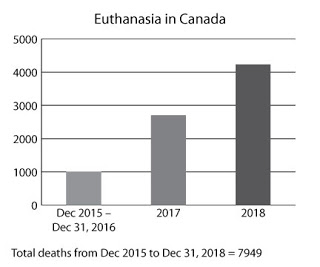
In March I published an article explaining that, as of December 31, 2018, there had been 7949 assisted deaths in Canada, since legalization. The number of assisted deaths increased by more than 50% in 2018 from 2704 reported assisted deaths in 2017 to 4235 reported assisted deaths in 2018.

I will not tell you how to vote, but the leaders debate in French established a clear indication for Canadian voters.

Assisted suicide: There are no best practices, it is unethical for physicians to participate.

Alex Schadenberg
Executive Director, Euthanasia Prevention Coalition


On October 1, 2019, the Psychiatric Times published an interview with Dr Madelyn Hicks, a psychiatrist affiliated with the University of Massachusetts. 

Hicks is asked about “best practises” in states where assisted suicide has been legalized. Her response is insightful. Here is how she responds:

I understand and appreciate your wish to institute best medical practices in the context of the very serious and complex ethical and legal issue of PAS.  

At one point in my 14 years of examining and writing about PAS and euthanasia, I thought that, even though I found PAS to be unethical, in situations where it became legal, perhaps the best that psychiatrists and other physicians could do would be to provide thorough assessments and treatment options for individuals requesting PAS. 

However, as I continued to weigh and evaluate the ethics of PAS, analyzing the logic, sociocultural context, and history of medical ethics has led me to this opinion: To facilitate an unethical practice—even with the best of intentions, even if legal, and even if one does a little good in the process—is to be unethical. Here are the logical arguments that point me to this conclusion: 

Does making something legal make it ethical?

Medical ethics is not based on legality. The death penalty is legal in some states, yet it is recognized as unethical for doctors to participate in executing prisoners, even if the prisoner requests a doctor to assist by administering a drug.  

Some forms of torture are legal, or have been legalized, yet it is recognized that it is unethical for physicians to participate in the process of torture, even indirectly. If doctors are required by law to do something unethical, that does not make it ethical.

Doing some good

With the death penalty, doctors could make prisoners more comfortable and administer a more peaceful death, but they would still be participating in execution, and so this is recognized as unethical. Doctors have been used in torture in attempts to extract information for “the greater good,” and to treat and assess victims so as to prevent the individuals from dying during the torture process. In these circumstances, it is still considered unethical for physicians to take part in the torture process.

In PAS, the data from multiple nations and states show that doctors being part of a PAS/euthanasia process (including safeguards), does not prevent the act from being administered to individuals who lack capacity, who are treatable, or who otherwise do not meet criteria for PAS.

Autonomy

This is a relatively recent sociocultural imperative in public discourse. Proponents of PAS apply it with bias, selectively ignoring that:

• A value or preference is not a right.

• Autonomy is control over one’s own body, choices, and life (eg, suicide or living; accepting or declining treatment).

• Autonomy is not making or coercing others to do what one wants (ie, taking away another person’s autonomy by requiring them to provide you with lethal substances to die or requiring them to kill you if you choose).

• Physicians also have a right to autonomy as individuals and to practice according to the basic, long-standing ethics of their profession.

Let’s turn autonomy on its head to make this social variable clearer: What if “Solidarity” or “Utility” became the sociocultural imperative, as has also happened in societies? Would it then become ethical for physicians to provide or to administer lethal means with the goal of death to individuals who disrupt the social fabric or who are a burden to their families or to society? The fact that PAS/euthanasia is currently being considered an “exception” to the ethical principle that doctors should not kill patients should be a warning sign of its incompatibility with ethical practice.

Are physicians necessary for assisted suicide or assisted death?

The answer is no. There is very little physical or intellectual skill needed in the act of providing a standardized prescription of a lethal dose or in pushing a plunger for an injection. The great and complex skills of medicine are in preventing death and in maximizing health as individuals pass through manifold illnesses in their lives.

The fact that assisted suicide is being channeled through physicians shows that there is societal ambivalence with the act, as with death itself. We enable society to avoid ambivalence by normalizing and participating in assisted suicide.

Best practice must be ethical practice

We lead by example. When there are ethical dilemmas and conflicting pressures on physicians’ choices, younger and more junior physicians generally follow the examples set by leaders in their field. Leaders not only set the norm, but they set the aspirational standard.

Perhaps we simply disagree on whether or not it is ethical for physicians to participate in PAS. However, if you believe that PAS is unethical or against the interests of patients’ health, then I hope your example to early-career or uncertain physicians will be to behave ideally as a physician faced with a professional, ethical conflict, even in the face of a complex legal situation.

Conclusion

I am sure that you have also wrestled with these very difficult issues. For my part, I must decline your invitation because I think that if I provided CME education on how to comply with the End-of-Life Options Act, I would become complicit in the PAS process and in normalizing something that is unethical for us all.

Dr Hicks response requires that conscience rights for medical professionals remain protected. Hicks points out that it is unethical for a physician to participate in capital punishment and in the same way it is unethical for physicians to participate in assisted suicide.

It is unethical for a physician to participate in assisted suicide or euthanasia (assisted death) and it is also unethical for a physician to provide assessments that are part of the assisted death approval process. An intentional act of killing is directly connected to the act of approving the killing.

Canada Goes Softly Authoritarian

Alex Schadenberg
Executive Director – Euthanasia Prevention Coalition

Wesley J Smith

Wesley Smith wrote a thought provoking article that was published in the The American Spectator on October 3, 2019.

The article concerns issues of freedom of speech, religion, thought and action. The article has a wider focus than euthanasia, but I will only publish his comments on euthanasia, which were well said, especially considering the pressure on St. Martha’s hospital in Antigonish to provide euthanasia and the negation of physicians conscience rights in Ontario. Smith states:

Canada has become quietly authoritarian, its government and courts increasingly persecuting a cadre of its minority citizens. No, victims aren’t subject to arrest, nor are concentration camps being opened. Rather, this is a soft despotism — authorized by law — that compels victims to choose between their consciences and full participation in Canadian society.

Who are these wronged Canadians, you ask? Not racial minorities. Not refugees. Not sexual subgroups. Those vulnerable populations are amply protected and embraced in society. No, the victims of Canada’s soft authoritarianism are religious people who are being systematically and officially discriminated against because they refuse to violate their faith principles that conflict with reigning secularist dogmas.

Smith then writes about the imposing of euthanasia in Canada. He states:

The most explicit assaults on religious freedom have been mounted in the medical fields against Catholic (and other) religious professionals and institutions. The locus of the persecution has been the legalization of euthanasia. In 2015, the Canadian Supreme Court conjured a broadly defined right to be killed by doctors when diagnosed with a serious medical condition that causes “irremediable suffering.” Parliament soon passed a national law legalizing this form of homicide, subject to weak limitations. Since health care is administered at the provincial level, each of Canada’s provinces also passed euthanasia-enabling statutes.

That presented a significant problem for faithful medical professionals and church-affiliated institutions. Most notably, the Catholic Church forbids euthanasia. Thus, national legalization raised a crucial question of whether or not religiously dissenting doctors and Catholic medical facilities should be granted conscience exemptions from participation in doctor-administered death. The Supreme Court’s ruling left that issue for another day — as did the federal statute. Not so at the provincial level. After concentrated political pressure from religious organizations and citizens, most provinces crafted conscience exemptions allowing dissenting medical professionals to escape participation in euthanasia, while also publishing lists of M.D.s willing to administer “medical aid in dying” (MAID), the official euphemism for euthanasia in Canada.

… the province’s medical regulatory body, the College of Physicians and Surgeons of Ontario. This ethics rule requires all doctors approached by a legally qualified patient for euthanasia to either kill the patient (pursuant to the law’s procedures) or provide an “effective referral,” meaning to personally procure a doctor or certified nurse practitioner that the dissenting physician knows to be willing to do the deed. 

Perceiving such participation to be a grievous sin with eternal implications, some Catholic doctors sued, arguing that requiring them to be complicit in euthanasia violated the fundamental Charter right to “freedom of conscience and religion” — a protection more robust than the U.S. Constitution’s First Amendment’s guarantee of the “free exercise” of religion.

Considering the explicit guarantee in the Charter — and given the unoppressive “list” alternative crafted in other provinces — the case appeared strong. But with Canada secularizing at Mach speed, the Ontario courts were far more interested in forcing faithful doctors to yield to contemporary secular values than in protecting their Charter right to religious freedom. Accordingly, a trial court and court of appeals both ruled that the right to “equal and equitable access” to all legal health care paid for by Canada’s socialized medical system, including euthanasia, abortion, and interventions for gender dysphoria — a right not protected in the Charter — trumps doctors’ enumerated “freedom of conscience and religion.”

Think about what this means. Unless the national Supreme Court intervenes, Ontario doctors face legal compulsion to be complicit in the taking of innocent human life. The only alternatives are restricting their practice of medicine to fields like podiatry in which such requests are unlikely or leaving the profession altogether. If that isn’t oppression, I don’t know what else to call it.

Smith is correct. Slowly but methodically, the government is imposing secular demands upon the culture and abrogating the rights of those who disagree. A pluralistic society is one where everyone has a respected and equal voice, whereas the Canadian governments are imposing a common belief system upon a country and thus reducing pluralism to authoritarianism.

Italian Prime Minister expresses doubts over legalizing assisted suicide.

Alex Schadenberg
Executive Director, Euthanasia Prevention Coalition

A few days ago I reported on the Italian court decision, that may open a wide door to assisted suicide. The case concerned Fabiano Antoniani, known as DJ Fabo, experienced a spinal cord injury in a serious car accident in June 2014.

Prime Minister Giuseppe Conte

Italian Prime Minister Giuseppe Conte expressed doubts about legalizing assisted suicide. The Corriere della Sera newspaper reported Conte saying:

as a lawyer by training and a Catholic, while he had no doubt about the right to life, he was not so sure about the right to die.

I am concerned that since the language within the court decision is similar to the Carter decision in Canada, it will open a wide door to assisted suicide. The Guardian reported the court decision as stating:

Anyone who “facilitates the suicidal intention … of a patient kept alive by life-support treatments and suffering from an irreversible pathology” should not be punished under certain conditions, the top court ruled.

The court said that a patient’s condition must be “causing physical and psychological suffering that he or she considers intolerable”.

The statement “causing physical and psychological suffering that he or she considers intolerable” is completely subjective, and similar to the Canadian Carter court decision.

Conte needs to oppose the legalization of assisted suicide and challenge the court decision.

Letter to Future Prime Minister of Canada from Canadians with disabilities.

Assistance in Living: not Assisted Suicide

(Link to the Press Release)
Two Canadians demand the future Prime Minister of Canada to appeal the recent Quebec ruling that allows people with years to live to prematurely end their lives.


MONTREAL, QUEBEC, CANADA, September 30, 2019 /EINPresswire.com/ — Two Canadians living with disabilities are appealing to the future Prime Minister of Canada during the upcoming elections to appeal the recent Quebec Superior Court judgement which allows people with disabilities who have many years to live to prematurely end their lives. This judgement highlights the dangerous expansion of euthanasia and assisted suicide that currently has killed more than 8000 Canadians from 2016-2019.


Lisa D’Amico

Lisa D’Amico now in her 50s was born with cerebral palsy. She is President of Victims of Medical Errors which defends the rights of people with disabilities.
 
She lives in extreme poverty with an annual income of about $12,000 CDN yearly from the government’s social programme. Often she cannot afford more than one meal a day. She cannot afford, physical and hydrotherapy that would help improve her physical condition. Moreover she is unable to significantly supplement her income by part-time work ($2400 CDN yearly) or accept donations of more than $200 CDN to improve her quality of life. She is not even allowed to accept an airplane ticket to go South in the winter. Even when given an opportunity, the government forbids her from leaving the province for more than 7 consecutive days to travel within Canada or abroad, even in winter.

 
According to Lisa “you have a situation of perfect distress for wanting to choose euthanasia.”

 
Jonathan Marchand is President of Coop ASSIST (Quebec Cooperative for Independent Living).

 
Jonathan is in his 40s and has lived with a form of muscular dystrophy since the age of 15. After a bout of severe pneumonia, he was hospitalized in the intensive care unit and required an emergency tracheotomy to help him breathe. He is now ventilator dependent and needs assistance. Previously Jonathan worked as a senior computer network engineer in Quebec and overseas in Australia.

 
Jonathan has been forced to live in a government run institution against his will since 2012.
 

Nearly 70% of people with disabilities who need help like Jonathan are institutionalized in Quebec due to the lack of adequate support services in the community. This numbers around 15,000 people in Quebec and 60,000 people in Canada.
 

According to Jonathan “Many doctors offered me euthanasia, which they call “comfort care” to end my life.

Because there is no support services to live outside hospitals for people like me in Quebec, I have to choose between death or live in a hospital or a nursing home for the rest of my life.”

 
According to Jonathan this situation exists despite the fact that governments can save millions of dollars to deinstitutionalize people with disabilities.

 
“I have never been offered the possibility of being able to continue my life at home with the help I need. In institutions, you lose autonomy and control over your life.

 
I never asked for help to die, I was getting better.

 
They were ready to help me commit suicide and not provide assistance for me to live. It’s not a real choice. “
 

Despite this, he refuses to give up his life, his wife, family and friends.
 
According to Lisa and Jonathan, how can we talk about “assisted suicide and euthanasia” for people with disabilities when they do not even have help to live.

 
What they are asking for is not to die, but rather the support to live in the community to participate and contribute actively to society.


Dr Paul Saba

In the end, Dr. Paul Saba who has been a leading advocate for patients’ rights to live, states that Canada’s assisted suicide and euthanasia laws have created an open door for abuse and harm for all Canadians, who will one day in their lives face health challenges that will require health and life assistance. “Our Canadian and provincial governments are more interested in legislating death than in promoting better health care and life assistance for all its people. This is extremely unfair.”
 
Information:
Lisa D’Amico T: (514) 593-2927 E: lisadamico2@gmail.com
Jonathan Marchand T: (418)-627-3757 E: jmarchand@coopassist.ca
Dr. Paul Saba T: (514)-886-3447 E: pauljsaba@gmail.com

Dr. Paul Saba
Coalition of Physicians for Social Justice
+1 514-886-3447

Two Canadians Living with Disabilities Want Assistance in Living, Not Assisted Suicide

Canada: Euthanasia under fire after euthanasia death of depressed patient.

This article was published by Bioedge on September 29, 2019.


By Xavier Symons

Alan Nichols with his brother.

Serious concerns have been raised about the implementation of Canada’s Medical Assistance in Dying (MAiD) legislation after a 61-year-old depressed but otherwise healthy man was euthanised in the province of British Columbia.

Alan Nichols, a former school janitor who lived alone and struggled with depression, was admitted to Chilliwack General Hospital, BC, in June after he was found dehydrated and malnourished. He was assessed for MAiD eligibility and in late July received a lethal injection.

His family said that he was not eligible for MAiD and that they begged him not to go through with the procedure.

“I didn’t think he had a sound mind at all”, Gary Nichols, the man’s brother, told CTV News.

“He didn’t have a life-threatening disease. He was capable of getting around. He was capable of doing almost anything that you had to do to survive”.

Nichols’ family said they were told about his plan to receive MAiD just four days before he was euthanised.

“I was appalled by all of it and I said we want this stopped, this can’t happen. Our family doesn’t agree with this,” Nichols’ sister-in-law, Trish Nichols, told reporters.

“(The doctor) said, ‘Well, you can’t stop this. Alan is the only person who can stop this.”

The family has asked Canadian police to investigate the case.

MAiD rates in BC are significantly higher than the rest of Canada. 773 people were euthanised in the province in the period January 1st to October 31st 2018.

The controversy surrounding the Nichols’ case come in the wake of a decision by a Quebec judge earlier this month to strike down a provision in the federal MAiD legislation which restricts euthanasia to terminally ill patients.

Superior Court Justice Christine Baudouin ruled that denying suffering patients access to assisted dying is “forcing them to endure harsh physical and psychological suffering.”

“The court has no hesitation in concluding that the requirement that their death has to be reasonably foreseeable is violating the rights to liberty and security of [the plaintiffs]”, Justice Baudouin wrote.

Xavier Symons is deputy editor of BioEdge

Design a site like this with WordPress.com
Get started