Care Not Killing responds to latest call for assisted suicide and euthanasia inquiry

Last week the UK parliament debated a motion to hold an assisted death inquiry. Care Not Killing sent out this media release concerning the call for an inquiry.


Sunday, January 26, 2020

Care Not Killing has responded to the latest call for an inquiry into assisted suicide and euthanasia made in today’s Sunday Express by saying it not necessary or wanted.

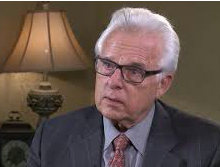
Dr Gordon Macdonald, Chief Executive of Care Not Killing, commented: “The inquiry being called for is not necessary, or wanted as MPs, MSPs, Peers, Judges and other elected officials have reviewed, voted on and reviewed the laws more than 30 times since 2003.

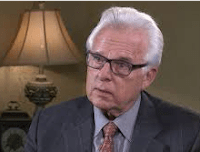
Dr. Gordon Macdonald

On every occasion, they have rejected ripping up long held universal protections, that prevents the terminally ill and disabled people being treated in law because of their physical condition.

“Indeed this was recognised by Chris Philip MP, the Parliamentary Under Secretary of State for Justice who told the House of Commons last week: ‘A number of members have raised the question of a review or a call for evidence. The Government does not have any plans at the moment to initiate any review or any call for evidence because the view being that it is for Parliament to act in this space…it is the position of the Government that it is for Parliament to decide this great issue of conscience. It is not for the Government to lead in this area’.

“Members of Parliament and elected officials on the Isle of Man who debated this issue just last week acknowledged evidence from around the world shows that removing these protections puts vulnerable people at risk of abuse and of coming under pressure, real or perceived, to end their lives prematurely.

“This evidence includes a report from the US National Council on Disability, which made for chill reading. It concluded in were small number of US states that have legalised assisted suicide safeguards were ineffective and oversight of abuse and mistakes was absent

“They also noted the problems in Canada which changed their law in 2016 to allow terminally ill people to request assisted suicide and euthanasia. Since then an estimated 13,000 people have been euthanised or helped to take their own life.

“Parliamentarians saw how laws can quickly be changed by the Courts. In September, the Quebec Superior Court struck down the requirement that a person be terminally ill before they qualify for euthanasia in Canada. It is unclear how far this extension goes, however we have already seen a depressed but otherwise healthy 61-year-old man, given a lethal injection. Alan Nichols, a former school caretaker, who had struggled with mental health problems for many years was admitted to Chilliwack General Hospital and euthanised despite not being terminally ill.

“No wonder not a single doctors group or major disability rights organisation in the UK supports changing the law, including the British Medical Association, the Royal College of General Practitioners, the Royal College of Physicians, the British Geriatric Society and the Association for Palliative Medicine.

“The current laws prohibiting assisted suicide and euthanasia provide a safeguard against abuse and exploitation and do not need changing. They do not need changing.”

For media inquiries, please contact Alistair Thompson on 07970 162225.

Ends

Editors Notes

Care Not Killing is a UK-based alliance bringing together over 40 organisations – human rights and disability rights organisations, health care and palliative care groups, faith-based organisations groups – and thousands of concerned individuals.

We have three key aims:

  • to promote more and better palliative care;
  • to ensure that existing laws against euthanasia and assisted suicide are not weakened or repealed; 
  • to inform public opinion further against any weakening of the law. 

We seek to attract the broadest support among health care professionals, allied health services and others opposed to euthanasia by campaigning on the basis of powerful arguments underpinned by the latest, well-researched and credible evidence.

*As this story is dealing with suicide, please could we ask that you include details about organisations that offer help and support to vulnerable people who might be feeling suicidal such as the Samaritans, CALM or similar organizations.

Pressuring a Hospice to Kill

This article was published by National Review online on January 24, 2020
Wesley Smith

By Wesley J Smith

In Canada, the government threatens to withdraw all funding from a facility that refuses to euthanize dying patients.

*Sign the petition: Hospice Organizations Must NOT be Forced to do Euthanasia (Link).

Should hospice professionals be forced to assist the suicides of their patients who want to die? Not too long ago, the answer to that question would have been an emphatic “Of course not!” Hospice is not about making people dead. Rather, it seeks to help terminally ill patients live well through intensive medical, spiritual, psychological, and social treatments to alleviate the pain and emotional suffering that dying people and their families may experience.

Don’t tell that to the provincial government of British Columbia. After the Supreme Court of Canada conjured a right for anyone diagnosed with a serious medical condition that causes “irremediable suffering” to receive lethal-injection euthanasia, British Columbia decided to require all medical facilities that receive at least 50 percent of their funding from the government to participate in what north of the 49th parallel is known euphemistically as “medical assistance in dying” (MAiD). When Delta Hospice Society, in Delta, British Columbia, announced that it would adhere to the hospice movement’s founding philosophy by banning euthanasia in its facility, the province’s minister of health threatened to cut off all provincial funding. Delta has until February 3 to yield to the euthanasia imperative or face a catastrophic financial crisis.

Delta Hospice

The power of the purse can be very persuasive, but Delta has not surrendered. Instead, searching for a compromise, it has offered to cut from its annual budget, of $3 million (Canadian dollars), $750,000 of the $1.4 million that it currently receives from the province. That would reduce the portion of its budget that comes from public funding to a point below the 50 percent threshold, allowing Delta to continue serving dying patients while maintaining its philosophical integrity. As of this writing, the authorities have not responded to Delta’s offer.

And what if all efforts at obtaining relief fail? While Ireland didn’t say it, one presumes that Delta would close the hospice rather than yield to the government’s orders to kill. Notably, the minister of health seems fine with that prospect.

Of course, this controversy isn’t really about Delta. British Columbia is sending a clarion message to all health-care providers: resistance to the euthanasia imperative is futile. Ireland understands the stakes. “We believe the nation is looking at our situation and [that it] will have a profound impact on other hospices. If the government can coerce us into killing our patients, they can force any hospice into doing it.”

The Delta coercion has ramifications far beyond the hospice sector. Canada is in the process of expanding health categories that qualify for doctor-administered death. Quebec just opened the door to allowing those with mental illness that is deemed “incurable” to receive euthanasia. The country also seems on the verge of requiring that a person diagnosed with progressive dementia be able to sign a legally binding written directive that she be killed when she becomes incapacitated. Also being seriously debated is the legalization of pediatric euthanasia, perhaps without parental permission in the case of “mature children.” Meanwhile, euthanasia and organ-harvesting have already been conjoined in the country — a utilitarian plum to society, celebrated and promoted in the media. If Delta can be compelled to board the euthanasia train, so too can psychiatric institutions, pediatric hospitals, nursing homes, memory-support facilities, and organ-transplant centers.

And it isn’t just medical facilities that are feeling the heat. In Ontario, an ethics rule of the provincial medical association requires doctors to participate in euthanasia, by either doing the deed or finding a doctor who will. A court of appeals has ruled that the requirement is binding, even if it violates a doctor’s religious beliefs. If doctors don’t want to be complicit in euthanasia, the court sniffed, they should either find another career or restrict their practices to such fields as podiatry, in which they won’t be asked to administer death.
What can the United States learn from all this? First, single-payer health care — socialized medicine — allows the government to control the medical profession with an iron fist and harness the sector into advancing controversial social policies. Second, euthanasia is an aggressive social pathogen that brooks no dissent. Once a society widely accepts the underlying premise that killing is an acceptable answer to suffering, access to euthanasia eventually becomes a right that the government must guarantee at the expense of the freedom of conscience of medical practitioners. Finally, access to euthanasia comes to matter more than the ability to assure quality treatment, with the authorities willing to accept a brain drain from the health-care sector rather than allow conscientious objection.

Canada is our closest cultural cousin: We had better be careful, or the same thing could happen here. If we don’t want that, we should reject assisted suicide and focus our national energies on caring instead of killing.


On the face of it, the government’s heavy-handedness makes no logical sense. Everyone acknowledges that Delta provides a very valuable service to the community. And it’s not as if the small hospice, with a mere ten beds, has the power to materially impede access to euthanasia in British Columbia, a province of nearly 5 million people. Indeed, since euthanasia was legalized in 2016, only three Delta patients have asked to be killed — and they were able to obtain their desired end by simply returning home or transferring to a hospital directly next door to the hospice. So, what gives?

Angeline Ireland, president of Delta, perceives a direct connection to socialism. When I asked her in an email interview why she thought the government was trying to force the hospice’s participation, she replied, “I would only be speculating,” but “primarily, I think it is ideological and agenda driven. Our provincial government is currently run by socialists. The Left has never valued human life. In socialized medicine the state controls and is all powerful.” She also believes there is a connection to the costs of health care. “I also wonder how much of it is driven by economics. HPC [hospice palliative care] is far more expensive than euthanasia.”

Delta is a secular facility, so what are its bases for refusing to kill? The administrators merely want the freedom to operate the facility according to the precepts of hospice moral philosophy. “HPC and Euthanasia are diametrically opposed,” Ireland tells me. “Our health-care discipline has been practiced for 40 years in Canada and in that time has excelled in providing pain and symptom-management to people. A patient can be stabilized to live out their life the best way possible. We have seen that people offered Hospice Palliative Care tend not to want euthanasia.”

I asked how Delta’s patients would be affected if the province agreed to cut its support of the hospice by $750,000. She told me that “other programs,” such as “bereavement services” for survivors and “a layer of administration,” would have to be cut until new sources of private or philanthropic funding could be found. But she was adamant that dying patients would not be affected, as Delta will “focus exclusively on our hospice.”

And if the government refuses Delta’s compromise and terminates all financial support? Ireland identified a bitter irony. “Over the last 20 years, we have subsidized the government healthcare system by raising $30 million and giving 750,000 voluntary labor hours directly into community healthcare,” she notes. But she remains adamant: “We will not provide euthanasia. If the government withdraws all its funding, we will try to operate on a privately funded downsized version. We will look for other partners to help us carry on our work.”

Will Delta go to court in that circumstance? Yes. “We have not done anything wrong,” Ireland says. “We have not defaulted on our contract. There is nothing in our contract which obliges us to perform euthanasia or have it provided on our premises.” However, seeking justice is expensive. “We could be on the right side of the law and the right side of history, but it will take $400 an hour to hire a lawyer to seek our remedy. Most not-for-profit organizations don’t have the luxury of standing up against Big Government, who have at their disposal seemingly unlimited legal resources.”


USA, California: High-Temperature Well Cementing Workshop – Exploring Geothermal and Oil & Gas Synergies

Joint GRC-SPE Workshop: High-Temperature Well Cementing

“Exploring Geothermal and Oil & Gas Synergies”

March 30 – April 1, 2020,
San Diego, California, USA

Geothermal wells experience high temperatures at very shallow depths and are required to cement casing across the entire length of each casing string set in the well. Our joint workshop will enable both industries to share their experiences, technologies, technical procedures and best practices on this important aspect of well completion.

Silver Sponsor:

The Geothermal Resources Council (GRC) together with the Society of Petroleum Engineers (SPE) invite you to a special joint High-Temperature Well Cementing workshop.

The draft agenda, hotel reservations, registration and more, can be found on our new website………

For more information contact Estela Smith at grc@geothermal.org or call 530.758.2360 ext 102.

USA, California: Symposium on Lithium Recovery from Geothermal Brine in the Golden State

California’s Lithium Recovery Initiative – Symposium (California Energy Commission)

Wednesday, February 12, 1-5 pm. 
Stanford University, California, USA

The California Energy Commission (CEC) and the Governor’s Office of Business and Economic Development (GO-Biz), will jointly host a symposium facilitating presentations and panel discussions on lithium recovery from geothermal brine in California.

The theme for this symposium is introducing California’s “Lithium Valley” vision of establishing a world-class lithium industry in the state. A focus is advancing California’s unique opportunity to recover lithium from geothermal brine in support of California’s clean energy future. The symposium will feature developers, policymakers, stakeholders, and customers involved from all aspects of the lithium supply chain.

More Information and Register……….

Iceland: Registration Now Open for Battle of the Bands at WGC 2020

WING WGC2020 Battle of the Bands

Thursday 30 April 2020
Ægisgarður Brewery, Reykjavik (evening event)

Registration is Open

Now is the time to register your group for Women in Geothermal (WING)’s first-ever Battle of the (Geothermal) Bands. Please remember:

  1. We can support you in Iceland with musicians, instruments and sound gear (thanks to Atli and Black Box). This registration process will help us provide what you need for a fantastic performance!  
  2. You have the opportunity to offer your skills to other groups that might need certain instrumental or vocal support.  

To enable this international musical mash-up, we may need to share your contact information with other musicians. Registrants seeking support from or offering support to other musicians hereby agree that the Battle of the Bands organizers may share your contact details and information about the music you will play with other musicians.

Wondering how many songs or instrumental pieces to play? Good question!  Answer:  obviously at least one! But think about 2 or 3, and possibly more (probably no more than 6, depending on their length and how many people participate in this momentous event).

The flyer below includes the link to the WING WGC2020 Battle of the Bands registration page. Let’s make some music and have some fun!

Battle of the Bands Flyer………                         Register………..

Switzerland: Employment Opportunity for PhD Fellowship Focusing on Understanding Supercritical Geothermal Resources Above Magma Reservoirs in New Zealand

Vacancy – PhD position on understanding supercritical geothermal resources above magma reservoirs in New Zealand (ETH Zurich)

Location: Zurich, Switzerland
The length of the appointment will be for 4 years, starting in summer 2020.

The Institute for Geochemistry and Petrology at ETH Zurich invites applications for a PhD fellowship focusing on on understanding supercritical geothermal resources above magma reservoirs in New Zealand.

We are looking for a highly motivated PhD student interested in studying the physical and chemical interactions between magmas and fluids above active magma reservoirs (in this case, in the Taupo Volcanic Zone, North island of New Zealand), in order to better understand supercritical geothermal resources.

The project will dominantly revolve around modeling fluid flow and heat transfer in and above shallow magma reservoirs, but will also be using field and geochemical data to constrain the models.

More Information and Apply………

Iceland: Injection of CO2 from a Second Geothermal Plant will Begin Next Year

Carbon dioxide storage through mineral carbonation (Nature.com)

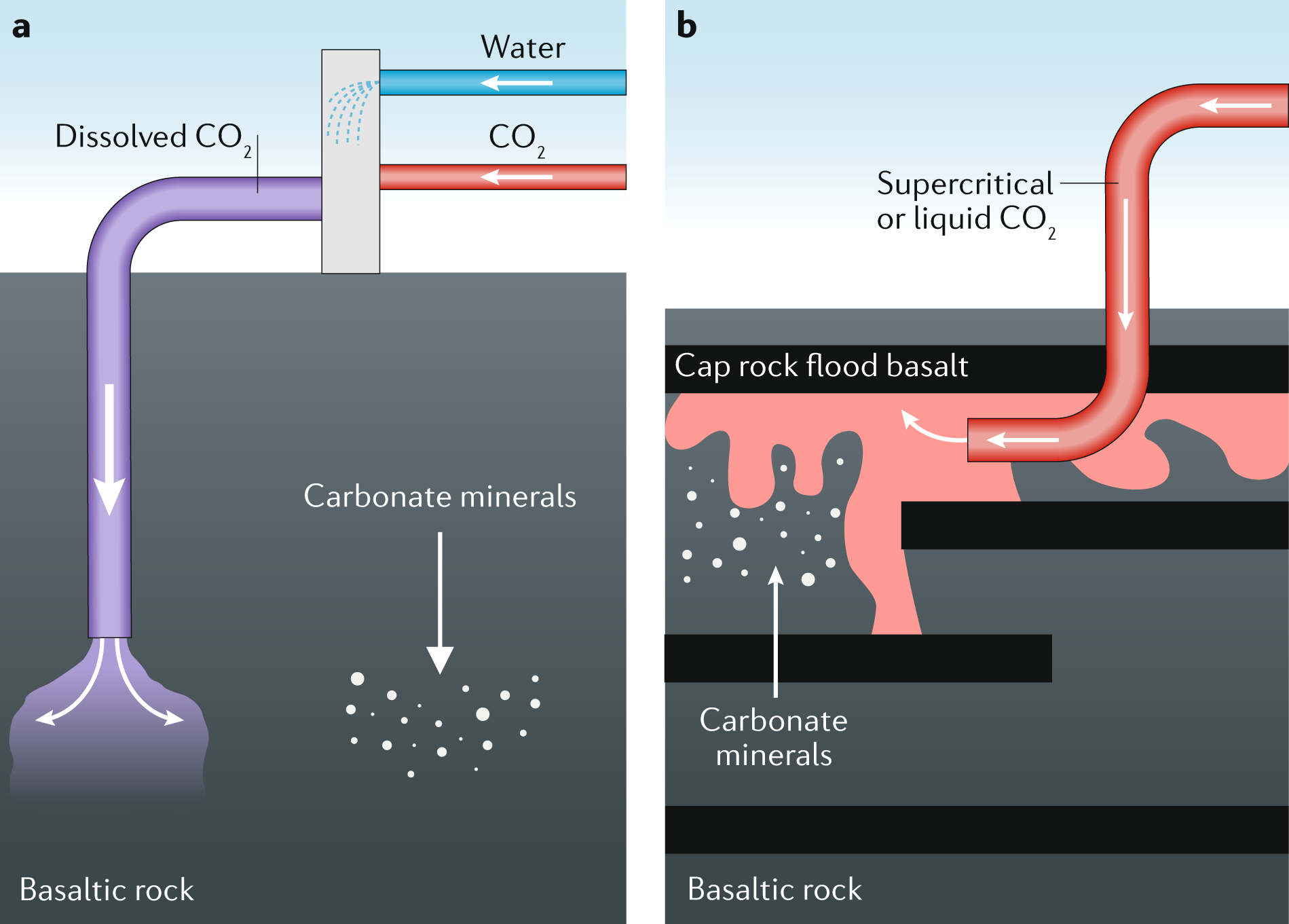
a | The CarbFix method involves the dissolution of CO2 in water during injection into a basaltic reservoir. b | During the Wallula basalt pilot project, pressurized liquid CO2 was injected into basalts. 

Carbon capture and storage (CCS) has a fundamental role in achieving the goals of the Paris Agreement to limit anthropogenic warming to 1.5–2 °C.

The pilot phase of the CarbFix project, funded by the European Union, was undertaken in 2012 near the Hellisheiði geothermal power plant in southwest Iceland. A total of 230 tonnes of pure CO2 and a CO2–H2S gas mixture from the geothermal plant were fully dissolved in locally sourced groundwater during their injection to a depth of ~500 m into basaltic rocks.

The CarbFix project currently captures and stores ~33% of the CO2 emissions from the Hellisheiði power plant, or ~12,000 tonnes annually, with the aim to increase injection to ~90% of the CO2 from the plant before 2030. Moreover, injection of CO2 from a second geothermal plant operated in the area will begin in 2021.

Read More……….

Snæbjörnsdóttir, S.Ó., Sigfússon, B., Marieni, C. et al. Carbon dioxide storage through mineral carbonation. Nat Rev Earth Environ (2020). https://doi.org/10.1038/s43017-019-0011-8

Belgium: Janssen Pharmaceutica Geothermal Project Officially Launches

Janssen Pharmaceutica zet volop in op diepe geothermie – Janssen Pharmaceutica is fully committed to deep geothermal energy (dVO)

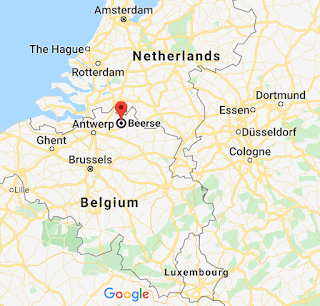
Vlaams minister president Jan Jambon heeft op de campus van Janssen Pharmaceutica in Beerse het officiële startschot gegeven voor de eerste diepe geothermieboringen. De boringen gaan 2,4 kilometer diep en pompen water van minstens 85°C op, dat via een warmtenet de gebouwen en bedrijfsprocessen op de campus van warmte en koeling zal voorzien. Janssen Pharmaceutica is het eerste bedrijf in Vlaanderen dat volop op diepe geothermie inzet. Dankzij het diepe geothermieproject kan het bedrijven zijn CO2-uitstoot met 30% terugdringen.

(From Google translate) Flemish Prime Minister Jan Jambon has officially launched the first deep geothermal drilling on the Janssen Pharmaceutica campus in Beerse. The wells will be 2.4 km deep and will pump water of at least 85°C, which will provide the buildings and business processes on the campus with heat and cooling via a heat network. Janssen Pharmaceutica is the first company in Flanders that fully focuses on deep geothermal energy. Thanks to the deep geothermal project, companies can reduce their CO2 emissions by 30%.

Lees verder………                 Read More……… 

From the Global Geothermal News archives:

Design a site like this with WordPress.com
Get started