Loneliness is an epidemic that can be detrimental to your health

Alex Schadenberg
Executive Director, Euthanasia Prevention Coalition

Loneliness and depression causes some people to request euthanasia, when they are experiencing physical and/or psychological distress.
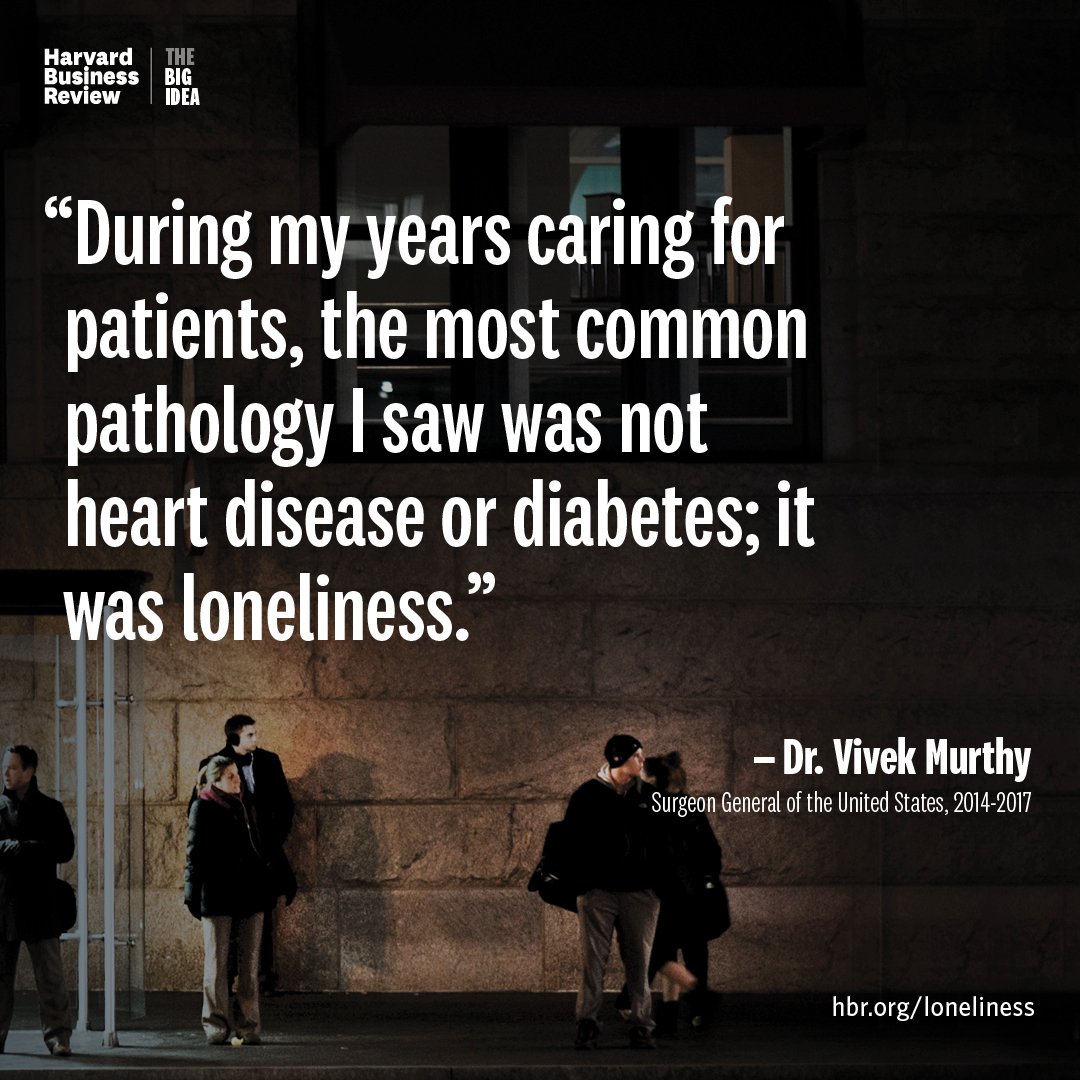
A recent British study found that 22% of seniors, over the age of 65 will talk to only three or fewer people per week. According to a September 7, 2019 article in studyfinds.org:

According to the survey of 1,896 seniors over 65 in the United Kingdom, more than one in five (22%) will have a conversation with no more than just three people over the span of an entire week! That translates to nearly 2.6 million elderly folks who don’t enjoy regular human contact on a daily basis. Perhaps most alarming though is researchers say an alarming 225,000 individuals will go a week without talking to anyone face-to-face.

The study indicates that a kind greeting or sharing time with others makes a difference in their lives:

About 40% of seniors say they’d feel more confident to head out each day if they knew their neighbors. Just the thought of someone stopping to chat with them brightens their outlook: 54% of respondents agree that even a short conversation with a neighbor or acquaintance would greatly improve their day overall. And a quarter of older adults say it makes them feel good when someone smiles or acknowledges them while waiting in line at places like the bank or grocery store. One in five would be thrilled if someone stopped to ask them how their day had gone.

Studyfinds.org published a commentary on August 6, 2017 on two meta-analysis studies by Dr. Julianne Holt-Lunstad, a professor of psychology at Brigham Young University that examined health issues related to loneliness and social isolation. Studyfinds.org stated about the first study:

In an analysis of 148 studies that included more than 300,000 people total, her research team found that “a greater social connection” cuts a person’s risk of early death by 50 percent. 

“Being connected to others socially is widely considered a fundamental human need — crucial to both well-being and survival. Extreme examples show infants in custodial care who lack human contact fail to thrive and often die,… “Yet an increasing portion of the U.S. population now experiences isolation regularly.”

The comment by Studyfinds.org about the second meta-analysis study states:

In her second analysis, she looked at the role that loneliness, social isolation, and living alone played in a person’s lifespan. Using 70 studies that included more than 3.4 million participants (mostly from North America, but some studies did look at people in Europe, Asia, and Australia), the research team concluded that all three were as much of — and in some cases more — a threat to a person’s health as obesity and other risk factors. 

All three conditions were found to be equally hazardous and significantly raised the risk of premature death. 

“There is robust evidence that social isolation and loneliness significantly increase risk for premature mortality, and the magnitude of the risk exceeds that of many leading health indicators,”
Now that euthanasia is legal in Canada, people who care about others need to recognize the importance of being with people who are lonely and socially isolated.


The Compassionate Community Care (CCC) program exists to provide advice and direction concerning health issues related to end-of-life and euthanasia prevention and to train volunteers to visit those who are isolated and lonely. 

Contact CCC at: 1-855-675-8749.

Western Australian Parliament has marathon debate on euthanasia bill.

Alex Schadenberg
Executive Director – Euthanasia Prevention Coalition

The rally against the euthanasia bill

ABC News Australia reported that after a 20-hour marathon debate, the Western Australia euthanasia bill only achieved debate on 50 of the 184 clauses in the euthanasia bill.

Jacob Kagi, writing for ABC News reported:

The all-night sitting wrapped up after 5:00 am on Friday, having started at 9:00 am on Thursday, but the McGowan Government is still an enormous distance from getting its bill through State Parliament’s Lower House. 

The Government had hoped the marathon session would get them through debate of at least 100 out of the 184 clauses in the contentious bill… 

But the Government conceded defeat at 5:21 am, having got through just 50 clauses and angry at what it labelled filibustering from opponents of the bill. 

That means more all-night sittings loom as all but inevitable when Parliament returns after a one-week break.

If euthanasia was a good idea, then why are “safeguards” necessary? Possibly because doctors gaining the right in law to kill their patients will always be problematic and often abused.

Several weeks ago the Western Australia government announced its intention to fast-track the euthanasia bill.

Opposition to euthanasia, usually grows, as the issue is debated. More information leads to less support for euthanasia. Hopefully these marathon sessions will lead to the defeat of the bill.

Doctor Fired after Suing Catholic Hospital over Assisted Suicide.

This article was published by the National Review online on September 5, 2019.

Wesley J Smith

By Wesley J Smith


Colorado doctor Barbara Morris wants to assist her patient’s suicide. She works at Centura Health, a Catholic / Seventh Day Adventist-owned hospital that prohibits its employees from participating in assisted suicide, which is legal in Colorado.

Morris sued to be allowed to participate in her patient’s suicide by doctor — which would not happen in the hospital. The hospital responded by firing Morris for violating the terms of her contract by seeking to engage in acts in the context of her employment that violate the hospital’s religiously based moral beliefs.

Morris contends she can’t be prohibited from assisting her patient’s suicide because the Colorado law only allows health care facilities to opt-out if the suicide will occur on-site. The hospital is seeking shelter in the Trump administration’s medical conscience protection policies.

Expect more of these kinds of disputes as many U.S. hospitals are Catholic or otherwise religiously affiliated with churches that reject abortion and assisted suicide doctrinally. From the Kaiser Health News story:

More doctors and patients in the country are providing and receiving health care subject to religious restrictions. About 1 in 6 acute care beds nationally is in a hospital that is Catholic-owned or -affiliated, said Lois Uttley, a program director for the consumer advocacy group Community Catalyst. In Colorado, one-third of the state’s hospitals operate under Catholic guidelines.

The ACLU has already sued several Catholic hospitals over the last few years seeking to force them to violate Church doctrine on issues ranging from sterilization, to abortion, to sex-change surgeries.

Medical conscience disputes are going to become far more common as health care becomes immersed in our accelerating cultural conflicts and vexing questions of federalism. Bottom line: The ultimate goal of those who seek to force medical professionals and institutions to violate their religious beliefs, I believe, is to drive pro-lifers and Hippocratic Oath-adherents out of medicine.


Dutch doctors told to lie on euthanasia reports.

Alex Schadenberg
Executive Director, Euthanasia Prevention Coalition

My suspicions have been confirmed by the latest promotion campaign by the Dutch euthanasia clinic who are proudly reporting that requests for euthanasia, at the clinic, have increased by 15%. The euthanasia clinic claims that, doctors across the Netherlands are referring patients to the clinic rather than kill the patient themselves.

An article by Janene Pieters that was published in the NL Times states:

The unrest among doctors began in 2017 when the Public Prosecution Service launched a criminal investigation into a doctor who performed euthanasia on a 74-year-old woman with advanced dementia. When she was still lucid, the woman indicated that she wanted euthanasia when the time was “right”, but after her admittance to a nursing home she made contrary statements. The doctor eventually performed the euthanasia, in consultation with the woman’s family. He was charged with murder and had to appear in court last week.

This confirms what I stated in my article about the Netherlands 2018 euthanasia statistics:

I am convinced that the lower number of reported euthanasia deaths is primarily related to the euthanasia cases that are being prosecuted in the Netherlands and Belgium. Doctors don’t want to be brought before a tribunal or court to justify why they lethally injected a patient.

Further to that, Dutch physicians are also being told to lie on euthanasia reports. Pieters reports:

A doctor who was subject to a judicial investigation recently warned his colleagues about the judiciary in a article published in Medisch Contact. “Be careful with what you provide in reports”, he wrote. “In your honesty and sincerity you give everything you have. In a criminal case, that is immediately ‘evidence’.” The case against him was dismissed, but it affected me deeply. “As a doctor, you have no idea what can happen to you.”

The Dutch euthanasia data suggests that some doctors lie on their euthanasia reports. This is the first time it has been reported that Dutch doctors are being told to lie on euthanasia reports.

Sulmasy responds to a pro-assisted suicide study.

Alex Schadenberg
Executive Director, Euthanasia Prevention Coalition

A study normalizing the assisted suicide practices in Oregon and Washington State, was recently published in the Journal of the American Medical Association. The purpose of the study – Trends in Medical Aid in Dying in Oregon and Washington is to encourage other states to legalize assisted suicide in a similar.manner as Oregon and Washington State.

In his response to the study, titled: Physician-assisted suicide and the perils of empirical ethical research, Dr Daniel Sulmasy, from the Kennedy Institute of ethics, outlines the bias and the intention of normalizing assisted suicide and how the language of the article infers that there is nothing wrong with assisted suicide. Sulmasy points out that one of the study authors wrote 15% of the Oregon assisted suicide prescriptions in 2018.

Sulmasy states:

There is also much that we do not know. We have few direct, valid studies of the patients and practitioners. We do not know how many cases are unreported to the databanks. We do not know how many patients are pressured into obtaining prescriptions. We do not know how many patients engage in “doctor shopping,” finding someone who will agree to their request if turned down by a given physician. We do not really know how often the process goes awry. We know little about the after-effects on practitioners and family, although there are reports of post traumatic stress disorder.6 We also need more data on suicide contagion, because preliminary reports7 suggest increased rates of suicide in the general population of states that have legalized PAS.

Sulmasy continues by commenting on the Slippery Slope arguments:

Safeguards built into the law are coming to be seen as barriers. As already noted, few patients are ever referred to psychiatrists. A new law in Oregon (Oregon Senate Bill 579) now allows a patient to bypass the waiting period and take the pills within 2 days, and legislation has been passed by the Oregon House (Oregon House Bill 2217) to allow injection of lethal drugs, a hair’s breadth away from euthanasia.5 There are increasing calls for permitting patients with dementia to be able to authorize their deaths through advance directives. In Belgium and the Netherlands, 5% of all deaths are by euthanasia and the indications have expanded to include psychiatric illness and life completion.8,9 Euthanized patients are now regular sources for organ donation.10 Although there is no empirical proof that the United States will follow these trends if PAS is more widely adopted, the logic that justifies PAS inexorably points in this direction. Studying these trends empirically will not prevent them from occurring. Are we willing to entertain a serious ethical debate, based on reasoned argument, or will we be content merely to file empirical reports on whatever fate befalls us?

Taking the opposing view on assisted suicide will not make Sulmasy popular, but his comments are correct. The assisted suicide lobby is working overtime to normalize the abandonment of people to lethal drugs. 

Further to the comments by Sulmasy, no studies have been done to uncover what happened to the 43 people in Oregon or the 19 people in Washington State who received lethal drugs and whose ingestion status is unknown. The Netherlands and Belgium have done wider, death studies, that have uncovered abuse of the law in those countries. Oregon and Washington State have never done similar studies. We simply don’t know how many times assisted suicide was actually euthanasia, in those states because no research has been done.

Western Australians want palliative care improved before considering euthanasia.

Alex Schadenberg
Executive Director – Euthanasia Prevention Coalition

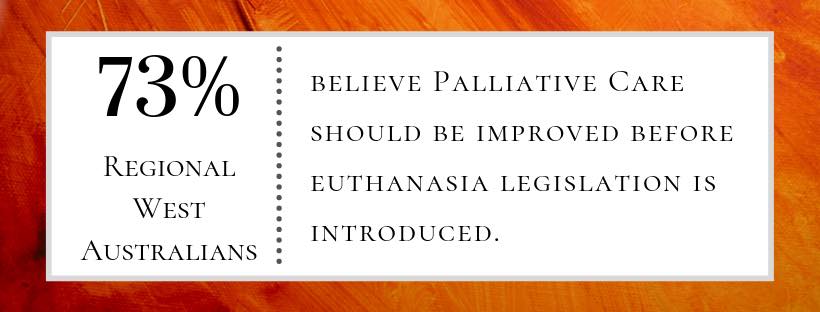
A poll of Western Australian country voters indicated that 73% of those surveyed said that they believe that palliative care should be improved before euthanasia legalislation is introduced.

An article by Nathan Hondros published in the Sydney Morning Herald today reported:

Regional Western Australians want palliative care fixed before the introduction of euthanasia, a poll of almost 2000 voters in the North West and Wheatbelt has revealed.

The research, which was commissioned by a group of doctors, lawyers and health professionals called the End of Life Choices Working Group, has found only one person out of every four believe euthanasia should be legalised before palliative care is improved across the state.

Out of all pro-euthanasia voters, 73 per cent believe palliative care ought to be improved before euthanasia becomes legal.

The polling also revealed 64 per cent of people did not support allowing euthanasia if a person’s loved ones had not been notified, a safeguard the WA Palliative Medicine Specialists Group said was missing in the legislation before WA’s Parliament.

Dr Anil Tandon

Hondras reported that Dr Anil Tandon, chairman of the WA Palliative Specialists Group stated that good palliative care means that no person needs to suffer as they approached the end of life. Hondras reported:

“Regional Western Australians should be incredibly concerned by the current level of funding directed to palliative care, especially in the context of the debate around assisted suicide,” he said.

“WA has the fewest number of palliative care specialists per capita, the lowest number of publicly-funded palliative care beds, and only one-in-three people who could benefit from specialist palliative care has access to the services they need.

“Once people know this, and once they understand how quality palliative care helps people truly make of the most of their remaining time, we begin to see a big shift in attitudes towards euthanasia.”

The Western Australian State government recently stated their intention to fast-track the legalization of euthanasia

Netherlands politician pushes to expand euthanasia to people who are "tired of living."

Alex Schadenberg

Executive Director, Euthanasia Prevention Coalition

In October 2016 I reported that the Dutch government were considering expanding the euthanasia law to include people who are not physically or psychologically suffering but who believe that their “life is complete.”

The issue of the “completed life” was not legislated at that time, but now the Dutch media reported that Pia Dijkstra, a D66 parliamentarian, stated that she is planning to introduce “completed life” legislation, next year. The DutchNews.NL reported:

The Liberal democratic party is drawing up its own legislation which would make it possible for the elderly who consider their life is at an end to be helped to die. D66 parliamentarian Pia Dijkstra told the AD in an interview that she plans to introduce a draft bill early next year. 

Ministers are currently looking into the options for assisted suicide for people who are ‘tired of life’ but, says Dijkstra, health minister Hugo de Jonge is not working quickly enough. 

‘The minister obviously senses the urgency less than I do,’

In March 2017, the DutchNews.NL reported that the Dutch doctors association (KNMG) opposed expanding the euthanasia law to prescribe lethal drugs for “completed life.” The KNMG stated that expanding the euthanasia law for reasons of a “completed life” would undermine the current euthanasia law. The DutchNews.NL stated:

However, separate legislation for people with ‘no medical grounds’ for the wish to die could have an undesirable social effect, by stigmatising the elderly, the KNMG said. Instead, the government should invest in measures to make sure the elderly do not feel their lives are pointless.

The Netherlands euthanasia lobby began the push to expand euthanasia to the “completed life” in 2010 when they ran a signature campaign promoting what they then called, the “last will pill.”

The 2018 Netherlands euthanasia data indicates that euthanasia based on a “completed life” is already happening. In 2018, 205 people died by euthanasia, who had multiple problems derived from the aging process. This was a new category based on the “completed life.”

Once killing becomes an acceptable solution to social problems, the only remaining question is what problem will killing become the solution for?

Dutch doctor on trial for euthanasia without effective consent. Punishment is not being proposed.

Alex Schadenberg
Executive Director, Euthanasia Prevention Coalition

The trial of the doctor who lethally injected (euthanasia) an incompetent woman without effective consent is happening this week in the Hague Netherlands.


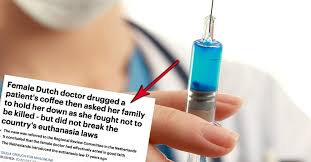
The case concerns the euthanasia of a woman with dementia who resisted so the doctor sedated the woman by secretly putting drugs in her coffee. The woman continued resisting so the doctor had the family hold her down as she was being lethally injected.

In January 2017, a Netherlands Regional Euthanasia Review Committee decided that the doctor had contravened the rule of law but that she had done it in “good faith.”

*Dutch doctor reprimanded for euthanasia without consent of woman with dementia.

The Associated Press (AP) reported:

The court case centers on a 74-year-old woman who was given fatal doses of drugs three years ago despite some indications she might have changed her mind… 

She is charged with breaching the euthanasia law and, if the judge rules the request of the patient was insufficient, that charge could in theory become murder. 

But the prosecution is not seeking any penal sentence against the doctor and does not question her good faith. Instead, the prosecution centers its case on setting out a better legal framework for the future. 

“We think the doctor has not acted carefully enough and thus passed a threshold. But at the same time, we also say that this threshold is not very clear,” said public prosecution spokeswoman Marilyn Fikenscher…

It is common for the Netherlands court to hear a case, not with the intention of punishment but rather to establish a precedent to determine what the court considers acceptable or unacceptable, based on the application of the law.

The doctor, who has now retired, argued that since the woman was mentally incompetent that she could not invalidate her previous request. AP reported:

The doctor testified that because the patient was not mentally competent, nothing the woman said around the time of her death was enough to invalidate the written statement. She said the patient could no longer fathom the meaning of such concepts as euthanasia and dementia.

Normally this statement by the doctor would be considered a reason to oppose euthanasia for incompetent people, but in this case the doctor considers it a defense.

The Dutchnews.nl stated that the woman having dementia did not change the requirement that a doctor must verify the request for euthanasia. The Dutchnews.nl reported:

Nienke Nieuwenhuizen, chairwoman of the association of geriatric specialists, said that when euthanasia was legalised in 2002 no one had thought of dementia. ‘We could do with more clarity but the question is whether this case is going to bring it.

So lets, examine the facts of this euthanasia death:

  • The woman had dementia and was incapable of asking for euthanasia,
  • The declaration in her will was not clear, 
  • She stated several times that she did not want to die, 
  • She was not informed that a sedative was put in her coffee,
  • Her family was required to hold her down so the doctor could lethally inject her.
  • The Regional Review Committee found that the doctor contravened the law but that it was done in “good faith.”
  • The court is not hearing the case to punish the doctor but to establish a precedent.

The outcome of this case may influence Canadian euthanasia policies. The Canadian government is debating the extension of euthanasia to incompetent people who previously requested euthanasia while competent.

Canadian euthanasia party propaganda story.

Alex Schadenberg
Executive Director – Euthanasia Prevention Coalition

The other day I published an article about a Seattle assisted suicide party propaganda story. One of our supporters sent me the link to a Canadian euthanasia party propaganda story, a story that I did not write about when it was first published.

Similar to the Seattle story, the Canadian story is designed to promote MAiD (euthanasia) and break-down social barriers towards euthanasia.

The story by Susie Adelson was published by Toronto Life features Adelson’s grand mother, Sonia Goodman (88). 


Goodman visits Sunnybrook hospital in pain and with sepsis and tells the medical team that she wants them to end her life. Adelson writes:

At first, the doctors suggested palliative care, but she was adamant: no more surgeries, no more drugs, not even antibiotics. She had watched her friends pass away and my mother suffer, and she didn’t want to go through that. Neither did I: seeing my mom languish in a hospital bed for months left me anxious and terrified of death.

Adelson is concerned that her grandmother would languish in a hospital bed for months. Clearly this statement is designed to cause fear but it indicates that she is not terminally ill.
 

There is more to the story. The woman does not appear to be terminally ill – “natural death is not reasonably forseeable” but demands and receives death by lethal injection.

The article raises a concern with the social approval of elder suicide. When the doctors decided that she was qualified to die, the decision seems based on her age (88). The fact that she demands to die seems very similar to suicide. When did approving suicide based on age become acceptable?

Adelson then builds the propaganda by emphasizing how they all shared a celebration drink and spoke about their memories of Goodman. Adelson writes:

Relishing the spotlight, she encouraged us to go around the room and share our memories of her. She was delighted when person after person remarked on her glamour. When it was my turn, I thanked her for giving me my mother—and for her advice to never leave the house without a coat of lipstick. She laughed, and I held her hand. When it was time, we raised our Dixie cups: “To Yaya!”

We all want the focus to be on us in our final days, but it doesn’t require a lethal injection to make it happen.

The euthanasia lobby is promoting death. As I stated in my response to the Seattle article – assisted suicide was once an avant garde concept, now normalizing assisted suicide is really another propaganda tool.

Its time for real journalism with real life, juxtaposing stories, complicated reality, and not propaganda.

Pallium Canada Welcomes Health Canada’s Action Plan on Palliative Care

 
OTTAWA, Aug. 28, 2019 /CNW/ – (Link to the french media release) Pallium Canada welcomes the release of Health Canada’s Action Plan on Palliative Care: Building on the Framework on Palliative Care in Canada. The Action Plan lays out Health Canada’s five-year plan to tackle issues uncovered through the development of the Framework on Palliative Care in Canada. It includes specific activities to enhance access, quality of care, and health care system performance, within the federal government’s mandate and levers for action.

“The Action Plan outlines best practices that Pallium has championed for many years such as a focus on supporting both the health care system and the communities in which we live in order to provide better palliative care to Canadians” said Pallium’s Chief Executive Officer, Jeffrey Moat. “Pallium is a critical partner to bringing the Action Plan to life in a number of ways, including building the capacity of health care professionals to be able to provide a palliative care approach, especially for underserved populations and accelerating the uptake of the Compassionate Communities model across Canada,” Moat added.

Throughout the development of the Framework, Pallium took an active leadership role from appearing before the House of Commons and Senate Health Committees when Bill C277 An Act to Establish a Palliative Care Framework was before Parliament, to on-going consultations with Health Canada identifying the essential features needed in a successful framework.

Health Canada will oversee and coordinate the implementation of the Action Plan, connecting governments and stakeholders and serving as a knowledge centre to share best practices. “The Action Plan is certainly a step in the right direction, but like any blueprint, the implementation—with measurable outcomes for Canadians—is the bottom line,” said Moat. He added that “Funding the Action Plan is key going forward, and we want to help ensure that the government succeeds in playing a strong leadership role promoting palliative care innovation across the country through its stakeholder groups.”

Pallium applauds Health Canada for the public awareness components of the Action Plan as “Public education will help deepen a national understanding of what a palliative care approach has to offer Canadians,” said Moat. “We look forward to the government’s next steps which recognize the value of implementing a Compassionate Community approach. Pallium takes pride in being among the first to adopt and promote the Compassionate Community theory of practice here in Canada. It is a powerful model and one we hope to continue to formalize with community partners across the country moving forward,” Moat stated.

About Pallium Canada
Pallium is a national, evidence-based organization focused on building professional and community capacity to help improve the quality and accessibility of palliative care in Canada.

SOURCE Pallium Canada

For further information: Robyn Levy, Manager, Marketing and Communications, Pallium Canada, rlevy@pallium.ca or 613-562-6262 ext. 1747

Design a site like this with WordPress.com
Get started