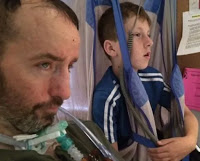
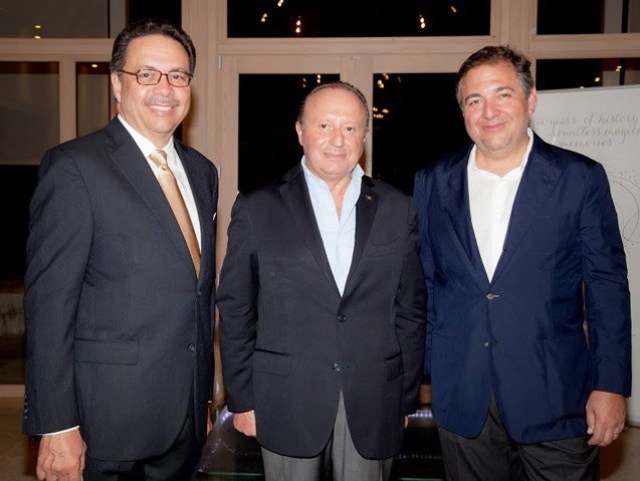
Seattle assisted suicide party propaganda.

Alex Schadenberg
Executive Director, Euthanasia Prevention Coalition

 

The following story may seem like a plot from a bad horror film, but it is simply another assisted suicide propaganda story.

The Associated Press (AP) published an article by Gene Johnson about an assisted suicide party in Seattle. The story is designed to make you open to assisted suicide, but this story leads to questions about assisted suicide and why AP decided to publish assisted suicide propaganda.

*Washington State: Nearly 25% more assisted deaths in 2018.

The AP story, concerns Robert Fuller (75) who planned his suicide party and this story gives Fuller his 15 minutes of fame.

The story goes something like this, Fuller, who is a nominal Catholic, marries his male partner, Reese Baxter, in the morning. He then moves down to the common room, in his seniors building, to greet friends, well wishers and later that afternoon he injects a fatal drug cocktail into his feeding tube and dies.

* Order the Fatal Flaws film from the Euthanasia Prevention Coalition and see the other side of the story (Link).

It appears that Fuller may have had a life-long problem with suicidal ideation.

When Fuller was 8 his Aunt died by a suicide drowning in the Merrimack river. Johnson states that seeing her body began Fuller’s long relationship with death. According to Johnson, Fuller stated:

“If life gets painful, you go to the Merrimack River.”

Johnson describes how Fuller survived a suicide attempt in 1975. His marriage ended after telling his wife that he was gay and he was drinking too much.

Johnson writes that as a nurse in the 1980’s, Fuller cared for people with HIV. Fuller admits to intentionally killing a patient, with a drug overdose, to “end his battle” with AIDS.

Johnson also writes that Fuller intentionally lived a risky sexual life-style in the 80’s, a lifestyle that verged on suicidal. Johnson quotes Fuller as saying:

“I think I wanted to get AIDS,”

“All my friends were dying.”

When Fuller was sought assisted suicide, were his suicidal tendencies examined? It is difficult to differentiate between a “rational” wish to die and suicidal ideation.
To offer the other side of the issue, Johnson publishes a few quotes from bioethicist Wesley Smith, who opposes assisted suicide. Smith states:

to allow people to hasten their deaths represents an abandonment, a signal to the terminally ill that their lives are not worth living, he said.

“We should be very concerned that we are normalizing suicide in our society, especially at the very time during which, practically out of the other side of our mouth, we are saying suicide is an epidemic,” Smith said.

I think that Smith, hit the nail on the head, but the article contradicts Smith’s comments, and continues with its suicide contagion narrative to explain that Fuller rejected treatment and “chose death” but not until he lived out a few “bucket list” experiences.

The article undermines the Catholic Church. Fuller attended a Catholic parish where the priest and many parishioners appear accepting of death by assisted suicide. The parish priest even had a group of children bless Fuller at his final mass before his death. (Link to the Archdiocese of Seattle statement)

Finally the article describes the “death midwife” participation and how his death was without complications. Data shows that many people who die by assisted suicide do not experience a death without pain, suffering and complications.
 
Why am I writing about the AP propaganda article?

I guess I am giving this propaganda article attention. Yes, this is a pro-assisted suicide article designed to undermine opposition to doctor prescribed suicide.
 

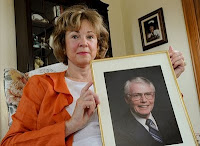
Johnson seems to have little concern about how glorifying suicide leads to a suicide contagion effect. 

Popularizing assisted suicide is not about creating awareness but providing new customers for the assisted suicide death business.
 

The article admits that suicide was a integral part of Fuller’s life experience. What effect do these articles have on other wounded individuals who are scarred by their suicide experiences or suicide attempts. Society must not trivialize suicide as it deeply effects a person’s inner most being.

Finally, did AP have to gain by promoting assisted suicide. Assisted suicide was once an avant garde concept, now normalizing assisted suicide is another political propaganda tool.

Its time for the media to provide real journalism with real life, juxtaposing stories, complicated reality, and not propaganda.

Order the Fatal Flaws film from the Euthanasia Prevention Coalition and see the other side of the story (Link).

New Jersey appellate court lifts restraining order that stopped assisted suicide.

Alex Schadenberg
Executive Director, Euthanasia Prevention Coalition


The Superior Court of New Jersey, Justice Paul Innes, signed a temporary restraining order on August 14, giving the New Jersey Attorney General, Gurbir Singh Grewel until September 13th to respond to the order.

The New Jersey assisted suicide law passed on March 25 and was signed into law by the Governor on April 12.

The assisted suicide law went into effect on August 1 but was restrained from taking effect on August 14.
 
Today, a New Jersey appellate court lifted the temporary restraining order that prevented the assisted suicide law from going into effect.

Judges Carman Messano and Arnold L Natali JR decided today that Justice Paul Innes erred by granting a temporary restraining order of the law and stated that the plaintiff, Dr Joseph Glassman did not satisfy the standard required to grant a restraining order.

The restraining order was dissolved and the Judges remanded the order to be decided by the trial court.

Lawyers for Dr Glassman told me that they made an immediate appeal, of the appellate court ruling, to the New Jersey Supreme Court.

Judge dismisses lawsuit against doctors who withheld life-saving treatment, without consent, from a veteran.

Alex Schadenberg
Executive Director, Euthanasia Prevention Coalition

Joy Wawrzniak, DeGuerre’s daughter.

An 11-year battle to obtain justice for a veteran who was denied life-saving treatment against his wishes and without the consent of his daughter, the legally appointed power of attorney may have ended without justice.

On September 22, 2008, Douglas DeGuerre died after he was down graded from full code to DNR without his consent or consulting his family.

On Friday, August 23, 2019 Ontario Superior Court Justice Peter Cavanagh dismissed the $2.2 million lawsuit against Dr Donald Livingston and Dr Martin Chapman by DeGuerre’s daughter, Joy Wawrzyniak.

The Canadian Press article by Michelle McQuigge reported that Justice Cavanagh decided that the physicians made an appropriate decision about DeGuerre’s health and took sufficient steps to communicate their actions to his daughter. McQuigge reported:

“Should Dr. Chapman and Dr. Livingstone have taken different or additional actions to try to reach the plaintiff to discuss the DNR order with her after it was made? Perhaps,” Cavanagh wrote, noting they could have stressed the urgency of the situation or provided personal mobile numbers. 

“Without the benefit of hindsight, however, I am unable to conclude that actions taken by Dr. Chapman and Dr. Livingstone to communicate with the plaintiff about the DNR order would not be acceptable behaviour for a reasonably prudent physician in the same circumstances.”

According to McQuigge:

The court ruling said Chapman then left a voicemail for Wawrzyniak in which he said he wished to discuss her father’s condition, but made no mention of the newly implemented order and indicated “nothing has particularly changed.” 

Shortly after receiving the voicemail, court heard Wawrzyniak went to the hospital and found her father struggling to breathe.
She summoned hospital staff who tried to help, but court heard that when Livingston arrived he told Wawrzyniak that resuscitation would be of little benefit and only cause suffering. Chapman asked staff to stop trying to revive DeGuerre. 

Wawrzyniak, a registered nurse, tried administering help herself, but was unsuccessful and DeGuerre died a short time later. She discovered the next day that her father’s status had been changed.

Justice Cavanagh erred by ignoring the fact that Chapman and Livingston made the decision without consultation. This was not an emergency situation where there is no time to consult the power of attorney.

Wawrzyniak has continued her pursuit of justice for 11 years. In September 2014 the Health Professions Appeal and Review Board found that the doctors violated the law by unilaterally imposing a do-not-resuscitate order on Douglas DeGuerre against his family’s wishes.


The decision by Justice Cavanagh dismissed the lawsuit against Dr’s Chapman and Livingston.
The doctors made the decision against the wishes of DeGuerre and his daughter, who was the legally appointed power of attorney. Even if physicians disagree with the family, the rights of the individual and their family should supercede the ideology of the doctors. Further to that, in Ontario, the Consent and Capacity Board exists to determine disputes between physicians and families.

Thank you Joy Wawrzyniak for continuing the battle for justice.

Canadian Healthcare system found it more convenient to kill a patient rather than provide home care.

Alex Schadenberg
Executive Driector, Euthanasia Prevention Coalition.

Sean Tagert with his son

Sometimes an article builds interest. The article by Wesley Smith – Father with ALS Euthanized after being denied sufficient care in Canada, led to interviews with myself from other media. 

Purvash Jain from Medgazette 24 published this article Canadian Healthcare system found it more convenient to kill a patient than finding ways to serve him.

Jain explains that Sean Tagert (41) died by MAiD (euthanasia) on August 7, 2019 after being given the choice of paying $263.50 per day for his care, which he couldn’t afford, or being institutionalized in the George Pearson Centre in Vancouver where he would have been provided with 24-hour residential care.

Tagert wanted to live but he decided that he could not afford the cost of home care and living in the institution in Vancouver was worse than death because he wouldn’t be able to see his son, who lived in Powell River.

Alex Schadenberg

Jain stated:

The Executive director of the Euthanasia Prevention Coalition, Alex Schadenberg said that when a person is refused necessary care, he might, out of despair, opt for euthanasia.

He had an idea this would happen and sadly, it did.

Jain concluded the article by stating:

If the system finds death as more efficient, then death it will be. Rather than finding measures for serving Tagert and his son, the health care system of Canada found it more convenient to kill him.

The death of Sean Tagert is the prime of example of what occurs when euthanasia is legalized. Death sometimes becomes the preferred option to life.

Angelo Mazzarella, partner of Danilo Diazgranados, is wanted for money laundering

Angelo Mazzarella belongs to the criminal gang of Francisco and Massimo Mazzarella who, for years, have served the Boligarchs thugs. Mazzarellas connection with Moris Beracha, Luis Benshimol, Danilo Diazgranados, Luis Otero, Fernando Fiksman, Leonard Boord and his silent partner, Armando «Pelón» Capriles, is well known in Venezuela.

The mazzarellas, together with Diazgranados and Beracha, have made the Dominican Republic their new oyster. That is where they are “investing” and selling themselves as “real estate developers.” They have access to the highest office. Mazzarella is meant to be a banker, an HSBC banker. From there he went to J. Safra Sarasin, another beacon of integrity. Then, he went to own this:

Eden Roc in Cap Cana is owned by Solaya Hotels and Resorts SRL, a shell incorporated in the DR and in turn owned by Pelikan Group International Corp, a Panamanian shell controlled by Angelo Mazzarella and Massimo Mazzarella. Where does the money come from to develop all those real estate? For the Mazzarellas property portfolio it does not end in DR. They also have some properties on Fisher Island, which they control through various Florida-registered warehouses 

Chinese man awakens after 5 years of coma. His wife provided total and loving care.

Alex Schadenberg
Executive Director – Euthanasia Prevention Coalition

A Chinese man, Li Zhihua from Xiangyang in Hubei Province, woke up from a 5 year Coma thanks to his wife literally caring for him night and day. 

Tracy You reported on August 22 for the Mailonline:

According to reports, Mr Li was knocked down by a motorbike in August, 2013, while riding a scooter to work.

Describing his condition, Dr Wan Qing’an told reporters: ‘When he was taken to the hospital, he was in a vegetative state. He could not respond to anything.’

His wife, 57-year-old Zhang Guihuan, recalled: ‘The doctor told me it was possible that he would be in a persistent vegetative state.’

She said she was not willing to accept the diagnosis and wanted to prove the doctors wrong.

According to the article, his loving wife was persistent.

Day in day out, the determined spouse stayed next to Mr Li’s bed to chat with him and play his favourite songs, hoping his condition would improve.

‘These things were very helpful to stimulate his nervous system,’ Dr Wan said.

The strong-willed woman slept only two to three hours a day and looked after Mr Li in every aspect possible. As a result, she lost 10 kilograms (22 pounds) during the course.

Ms Zhang said in order to feed her husband, she had to carefully put food into his month and then gently pressed his tongue to let him know that he could eat.

Mr Li miraculously regained his conscious last year. 

This story shows how love can lead someone to provide care. In this case, her care enabled her husband to recover.

This case also shows how providing stimulation and care may lead to someone recovering from a head injury.
 

In 2004 I attended a conference on Persistent Vegetative State whereby a doctor who ran an “awakening center” spoke about what they did to have such a high success rate in awakening patients in coma.

New Hampshire man found guilty of assisting his friends suicide.

Alex Schadenberg
Executive Director – Euthanasia Prevention Coalition

Parker Hogan (left) Michael Buskey (right)

Jurors in New Hampshire, after a three hour deliberation, found Parker Hogan (20) guilty of assisting the suicide of his friend, Michael Buskey (19).

Buskey shot himself in a wooded area in the middle of the night on May 7/8, 2018.


John Koziol, reporting for The New Hampshire Union Leader wrote that the prosecutor stated that Hogan provided a stick and helped him aim the gun and pull the trigger. Prosecutors told the jury that Hogan stated, in a police interview, that he had even offered to pull the trigger. Koziol reported that the defense argued that Hogan reluctantly carried out the wishes of Buskey after trying repeatedly trying to talk him out of suicide.

Koziol reported today that Hogan was convicted of assisted suicide and falsifying physical evidence. The conviction is likely to carry a term of 3.5 to 7 years.

According to the suicide plan, Hogan assisted Buskey with the suicide, then wiped the gun for evidence and contacted the police claiming he had found the body.

This case is very sad. It is possible that Hogan thought he was helping his friend, but really, what’s the difference between a doctor thinking he’s helping a patient and this case?

Suicide is always a preventable tradgedy. This case emphasizes the importance of not assisting the suicide of a person who is at the most vulnerable time of his life.

Farcical euthanasia debate in New Zealand Parliament dismisses doctors and hospices.

Euthanasia-Free NZ Media Release – August 22, 2019
 
Euthanasia-Free NZ is appalled that Parliament spent so little time debating Part 2 of the End of Life Choice Bill and voted to leave it full of holes.

Part 2 is the most extensive and complex section of the Bill, covering coercion, freedom of conscience rights, as well as the process: from making the request to reporting the death.

Despite being three times longer on paper, Part 2 received the same amount of debating time as Part 1 did. No fewer than 18 substantial new clauses were proposed in the amendments to Part 2, of which 5 came from David Seymour. Nevertheless, after only two hours of debate and with several clauses still unmentioned and many MPs asking to speak, some Labour MPs started to call for the debate to be stopped.

Some of the MPs who stated that they voted for the Bill in order have a discussion are the ones who are trying to stifle debate.

Eventually it was Seymour’s call that shut down the debate, after Simeon Brown asked him a question on the minimum time frame enabled by the Bill – one Seymour refused to answer. All parties except National voted in favour of Seymour’s motion.

Several MPs proposed amendments to address gaps in Seymour’s Supplementary Order Paper. Although only one MP other than Seymour spoke against these amendments, all of these were voted down.

“It seems that MPs who support euthanasia in principle decided in advance to support David Seymour’s proposals and reject everyone else’s, regardless of their content,” says Renée Joubert, executive officer of Euthanasia-Free NZ.

Hon Michael Woodhouse drafted an amendment in consultation with Hospice New Zealand that would allow organisations to opt out without risking losing pubic funding. When Hon David Clark spoke in favour of this amendment, he was jeered by his Labour colleagues and the amendment was voted down.

“David Seymour, NZ First, The Greens and most Labour MPs seem set on rushing this Bill through with little concern for stakeholders such as doctors and Hospices,” says Ms Joubert.

“It’s disappointing that a life-and-death issue is being used as a party-political football.”

13 Reasons Why Part 2 Has Holes:

1) The only doctor who would need to check for signs of coercion doesn’t need to talk to the person face to face and doesn’t need to have met the person before.

2) A doctor who works as a contractor would be left without protection from discrimination.

3) A healthcare assistant or caregiver who is pressured to participate in the euthanasia process would not be allowed to object on conscience grounds.

4) Every doctor would be forced to participate in the process by steering people towards euthanasia instead of towards treatment. A doctor who believes a euthanasia request is motivated by mental illness would be forced to participate in the person’s death by referring them to the SCENZ Group.

5) A health professional may initiate a discussion about euthanasia with a patient, as long as the conversation covers another topic also and happens after, not during a consultation.

6) No evidence is required to show that a person confirmed their death wish before receiving the lethal dose and that they were mentally competent at the time.

7) A person can be coerced to sign someone else’s euthanasia request and doesn’t need to understand what they are signing.

8) A person’s abuser could sign a euthanasia request on the victim’s behalf without needing to provide evidence that they were asked to do so.

9) The reasons why an eligible person request euthanasia may be unrelated to their medical condition.

10) Organisations such as Hospice may be forced to have euthanasia administered on their premises.

11) The doctors giving a person a terminal diagnosis and assessing their eligibility for euthanasia don’t need to have any training or experience in the field of medicine related to the person’s condition.

12) Even provisionally-registered doctors, fresh out of medical school with no specialist training, could meet the Bill’s definition of ‘psychiatrist’.

13) No proof is required that unused drugs have been destroyed. 

Some issues with the End of Life Choice Bill

  • There is no clear definition of ‘terminal illness’. It could be interpreted to include any condition that is life-shortening or life-threatening. There is no bright line between terminal conditions and chronic conditions. Some chronic conditions can become life-threatening in a matter of minutes, for example diabetes, asthma, severe allergies and high blood pressure. There is also no bright line between terminal illness and disabilities, because many disabilities are life-limiting and involve complications that can become life-threatening. Even clinical depression could be regarded as a terminal condition by some, because it could lead to death (suicide), or to losing the will to live and fight a disease. 
  • Diagnosis and prognosis can be wrong. It’s impossible for doctors to accurately predict how long a person is expected to live, especially as long as six months out. There have been cases of people who were expected to die within hours or days, but they recovered and lived for months or years. Diagnosis can also be wrong, despite a doctor’s best intentions. Diagnosis and prognosis are not based on certainty, but on probability (the likelihood based on other cases). There is no guarantee that an individual’s disease will progress the same way as others’ have.
  • Subjective terminology. Words such as ‘unbearable’, ‘suffering’ and ‘intolerable’ are entirely subjective (up to the individual to determine). If a patient would use any of these words to describe their condition, the doctor would not be able to argue.  
  • Involves disabled people. ‘An advanced state of irreversible decline in physical capability’ is just a wordy way of saying ‘disability’ or ‘ageing’. The Bill doesn’t explain what is meant by ‘capability’. Could a person qualify who has become less able to run, walk or read? Could a person’s ‘decline in capability’ become ‘irreversible’ by them refusing medical treatment?
  • Includes people who are depressed. The End of Life Choice Bill doesn’t mention depression. Even if it did specifically exclude depression, some depressed people could still access death instead of treatment under such legislation. Depression can be hidden, even from doctors. Depression can be misdiagnosed or dismissed as ‘understandable depression’. Even subclinical depression can still have an effect on a person’s decision making capabilities.

The debate on Part 3 of the Bill is scheduled to continue on 11 September.

Kiwis oppose implications of euthanasia process

Tuesday, 20 August 2019, 2:23 pm
Press Release: Euthanasia Free NZ


Euthanasia-Free NZ urge MPs to consider concerns relevant to tomorrow’s debate on Part 2 of the End of Life Choice Bill.

Part 2 is about freedom of conscience rights and each step of the proposed process: from making a request to reporting the death.

As lawyers would know, it’s important to consider the possible loopholes in a piece of legislation: What would it do and allow, even if not explicitly stated?

Two Curia Market Research Polls conducted earlier this year found that the majority of respondents are opposed to circumstances the Bill’s proposed process would allow. None of these concerns are addressed by David Seymour’s proposed amendments. Their concerns are noteworthy especially since the majority of the 1,048 respondents are in favour of the concept of euthanasia.

The Bill would allow an eligible terminally ill person to request euthanasia:

1) without telling loved ones (opposed by 73%);

2) instead of treatment (opposed by 60%);

3) because they feel like a burden (opposed by 64%); and

4) because they feel depressed or that life is meaningless (opposed by 55%).

There’s a distinction between eligibility criteria and reasons for requesting euthanasia.

“In its current form the Bill would not require a doctor to explore or consider the underlying reasons why an eligible person wants to die,” says Renée Joubert, Executive Officer of Euthanasia-Free NZ.

“The unbearable suffering a person experiences may not be caused by their medical condition. Instead the person may be suffering due to issues such as poverty, homelessness, abuse, neglect, loneliness, mental illness, depression, grief, bereavement or concern about being a burden.”

Part 2 is by far the most substantial part of the Bill, consisting of 17 clauses and almost 11 pages. In contrast, Part 1, which was debated on 31 July, consists of only 5 sections and almost 4 pages.

“We were shocked that the debate on Part 1 was cut short when some MPs still wished to speak and several proposed amendments had not even been mentioned, let alone debated,” says Ms Joubert. “And that, after many MPs stated that they voted for the Bill at second reading in order for the House to have an extensive discussion.

“Since Part 2 is about the crux of the Bill, we hope that its details, as well as each of the proposed amendments, will receive discussion and unprejudiced scrutiny.

“Our members and supporters will be watching tomorrow’s debate with interest.”

END

How a palliative care bill negatively affected conscience rights in Vermont.

Alex Schadenberg
Executive Director – Euthanasia Prevention Coalition

In 2012, Vermont passed bill § 1871 Patient’s bill of rights for palliative care and pain management bill. This bill seemed straight forward and it was seen as  seen as helping to prevent the legalization of assisted suicide in Vermont. This bill stated:

(a) A patient has the right to be informed of all evidence-based options for care and treatment, including palliative care, in order to make a fully informed patient choice. 

(b) A patient with a terminal illness has the right to be informed by a clinician of all available options related to terminal care; to be able to request any, all, or none of these options; and to expect and receive supportive care for the specific option or options available. 

(c) A patient suffering from pain has the right to request or reject the use of any or all treatments in order to relieve his or her pain. 

(d) A patient suffering from a chronic condition has the right to competent and compassionate medical assistance in managing his or her physical and emotional symptoms. 

(e) A pediatric patient suffering from a serious or life-limiting illness or condition has the right to receive palliative care while seeking and undergoing potentially curative treatment. (Added 2009, No. 25, § 3.)

In May 2013 Vermont legalized assisted suicide. The assisted suicide statute (Act 39) states:

The rights of a patient under section 1871 of this title to be informed of all available options related to terminal care and under 12 V.S.A. § 1909(d) to receive answers to any specific question about the foreseeable risks and benefits of medication without the physician’s withholding any requested information exist regardless of the purpose of the inquiry or the nature of the information. A physician who engages in discussions with a patient related to such risks and benefits in the circumstances described in this chapter shall not be construed to be assisting in or contributing to a patient’s independent decision to self-administer a lethal dose of medication, and such discussions shall not be used to establish civil or criminal liability or professional disciplinary action.

Notice how the Patient bill of rights for palliative care and pain management and the assisted suicide act require physicians to provide all information and answers to any questions. Both statutes obligate physicians to provide information, even when the physician opposes one of the options.

Does requiring a physician to provide information also require the physician to prove a referral?

On May 23, 2017, Alliance Defending Freedom (ADF) reported a victory, stating that Vermont physicians who object to assisted suicide are not required to provide information or refer for assisted suicide. 


The ADF signed an agreement with Vermont’s Attorney General ensuring that physicians were not required to provide information or refer for assisted suicide.

According to Patient Choices Vermont, on December 18, 2017 US District Court Judge Geoffrey Crawford decided that:

“The agreement does not represent the views of the court on the merits of the parties’ dispute … The consent agreement is a purely private agreement-not a judicial ruling-and not subject to review on appeal. But it is far from inconsequential and maintaining it on the court’s docket has value in informing the public of the terms of the settlement struck by the parties.”

Patient Choices Vermont argues that the language of the Patients bill of rights for palliative care and pain management statute, the assisted suicide statute and the decision by Judge Crawford requires Vermont physicians to provide assisted suicide information.


It is not completely clear whether the agreement between ADF and Vermont’s Attorney General stands and it is not clear whether the language of both statutes require Vermont physicians to refer for assisted suicide.

Nonetheless, the concern about being forced to provide information about assisted suicide began with the language in the Patients bill of rights for palliative care and pain management act. 


In this case, a good intention resulted in a problematic outcome.
Design a site like this with WordPress.com
Get started