Euthanasia doctor cleared of wrong-doing for sneaking into Jewish care home to euthanize resident.

Alex Schadenberg
Executive Director – Euthanasia Prevention Coalition


Louis Brier Care Home

In January 2018, an Orthodox Jewish Care Home filed a complaint against euthanasia doctor, Ellen Wiebe, for sneaking into the Home and killing a resident which was against the policy of the Louis Brier Home in Vancouver.

Kelly Grant, the Globe and Mail health reporter, in writing about Ellen Wiebe being cleared of wrong doing stated:

In a letter dated July 5, 2019, the College of Physicians and Surgeons of British Columbia (CPSBC) dismissed an official complaint against Ellen Wiebe, saying the Vancouver doctor did not break any of the regulator’s rules when she helped Barry Hyman, 83, die inside the Louis Brier Home and Hospital. 

“The committee determined… that the patient had consented and that Dr. Wiebe had met all requirements for provision of MAiD,”

Grant wondered if this decision may affect other religious hospitals and nursing homes. She wrote:

The CPSBC decision is believed to mark the first time that a medical regulator has weighed in on the thorny question of whether doctors could be professionally punished for defying the wishes of a faith-based health-care facility in order to fulfill those of a patient eligible for a medically assisted death. 

However, the self-regulating colleges in each province – all of which have the power to grant and revoke medical licences – generally keep their decisions secret unless they send a case to a formal disciplinary hearing.

Grant reported that the Louis Brier home criticized the decision and changed their rules to prevent similar situations:

David Keselman, the chief executive officer of Louis Brier, criticized the college’s decision and said his organization has tightened its credentialing and privileging process to prevent others from following Dr. Wiebe’s example. 

“I think [the college] disregarded many of the elements that were in the complaint,” Mr. Keselman said, stressing how upsetting it was to learn afterward that a doctor had managed to sneak into the home without staff’s permission. 

“We have quite a number of Holocaust survivors in the building. This is a huge concern … as this came out, it created a very significant level of anxiety and chaos, specifically for those individuals,” Mr. Keselman said.

One goal of the euthanasia lobby is to force religiously affiliated health care institutions to allow MAiD (euthanasia) on their premises. 


Euthanasia activist and academic, Jocelyn Downie, has been pressuring St Martha’s hospital in Antigonish Nova Scotia to permit euthanasia on their premises because they are the only hospital in the region.

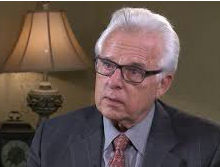
Dr Mark Komrad: Why psychiatrists should oppose euthanasia.

Dr Mark Komrad, MD is a psychiatrist at Johns Hopkins, who speaks to the Anscombe Bioethics Centre about why psychiatrists should oppose euthanasia.

The following text is a paraphrase, of the video interview produced by the Anscombe Bioethics Centre. (Alex Schadenberg)

The situation concerning euthanasia or assisted suicide for psychiatric reasons.

Since 2002, the Netherlands and Belgium (Luxembourg in 2009) legalized euthanasia without a distinction between terminal and non-terminal conditions. These laws allowed for euthanasia for physical and psychiatric reasons.

This has led to some patients receiving suicide assistance rather than suicide prevention.

As a psychiatrist, I disagree with these developments based on my Hippocratic tradition of medical ethics which is based on the value of not killing. The mighty tree of medicine grew from the Hippocratic tradition.

My concerns as a psychiatrist relate to the core values of psychiatry which focus on helping people in despair, helping people who are demoralized, helping people who cannot see their way cognitively and emotionally to a better future, helping to mitigate suffering, taking the journey of suffering with them, listening to them intently, to help find meaning in suffering and to fundamentally prevent suicide.

Preventing suicide is core to the individual and social mission of a psychiatrist.

Euthanasia takes this mission of ours and stands it on its head. To be involved with causing death is an anathema and inversion of the fundamental ethos of psychiatry.

Euthanasia affects mental health care since our patients generally experience a lack of access to resources. Once you begin to make euthanasia an alternate path my fear is that the advocacy to treatment may disappear.

All of the work we are doing to open access to mental health care is threatened when short circuited by euthanasia and assisted suicide.

Euthanasia affects attitudes towards life because once the concept takes hold the lives of people with disabilities or certain mental or medical conditions are seen as somehow not as worth living.

I have a colleague in Belgium, whose father has a chronic condition and has chosen not to have euthanasia. I am told, when his father complains about his symptoms that some of his friends will say – you chose not to have euthanasia.

The sympathy that normally people would have had, now they are explicit that he doesn’t deserve their sympathy.

The subtle changes to the collective psyche as we begin to open to these things leads us to accelerate down the slippery slope to the point where the train ends up going off the rails.

Propaganda promoting "assisted death" euthanasia.

Alex Schadenberg
Executive Director, Euthanasia Prevention Coalition


Australia is experiencing the promotion of euthanasia in a similar manner that Canada experienced death promotion before and after death by lethal injection (euthanasia) was legalized.

The first “assisted death” in Victoria Australia is being promoted. The death of Kerry Robertson (61) who was living with metastatic breast cancer is being promoted as the “perfect death” and Victoria’s Health Minister called it an “historic moment.”

The UK is also experiencing a steady stream of stories promoting the legalization of assisted suicide and the Dignitas assisted suicide clinic business in Switzerland. 

Janet Hughes, with Gloucestershirelive published a story  about a 72 year-old British man who died by assisted suicide in Switzerland. Hughes story is raw propaganda designed to promote assisted suicide and undermine the opposing arguments.

Another UK story is of a man who received a £10,000 donation to enable him to go to the Dignitas death clinic in Switzerland. Now he has time to enjoy his family and his hobbies before his scheduled death on September 6.

Canada was inundated with stories before and after the legalization of euthanasia, of people who “should” die by euthanasia. These stories were designed to promote and normalize death by lethal injection.

Promoting “assisted death” has two effects:

The first effect is to break down the resistance to the concept of killing people by euthanasia, which leads to the second part of the first effect, social acceptance.

The second effect is the increase in requests. This effect is not based on social acceptance, per se, but more so the fact that the euthanasia promotion stories emphasize avoiding the “inevitable” suffering that the person will experience, if they didn’t die by euthanasia and the supposed “perfect death” as referenced in the Australian article.


Many people are asking why the number of Canadians who die by euthanasia has grown so fast? My response is that Canada was inundated with stories promoting euthanasia which caused a quick social acceptance of legal medical killing and it resulted many people to requesting death.
 

Euthanasia propaganda stories are also designed to create a fear of suffering. Nobody wants to suffer and these stories suggest that legalizing euthanasia is the only way to prevent suffering.
 

Pro-euthanasia people like to attack people, like myself, who oppose medical killing, as somehow wanting others to suffer. These accusations couldn’t be further from reality but this is an effective propaganda ploy to promote the idea that euthanasia prevents suffering.

A society that upholds dignity, equality and caring does not evolve from a culture that promotes killing but rather it comes from a culture of caring. 


Caring not killing is not a slogan but a societal necessity to ensure true dignity and equality for every human person.

Once society accepts medical killing, the only questions that remains is who should be killed and for what reason?

Euthanasia bill to be fast tracked in Western Australia.

Alex Schadenberg
Executive Director – Euthanasia Prevention Coalition.


I would like to comment on the language of the Western Australia (WA) euthanasia bill. 

The WA government has indicated that it will fast track the euthanasia bill through parliament, yet no one outside of the government, has seen the bill. It appears that the WA Labor government is intending to push the euthanasia bill through parliament without a free and full debate.

Hon Nick Goiran

Nick Goiran, the long standing Liberal MP, who opposes euthanasia and promotes palliative care, commented in an interview with Nathan Hondras, for WA Today. Goiran stated:

“the information about when the government ordered the bill to be written should be non-controversial.”

“When did Cabinet agree to drafting instructions?” 

“Why would that possibly be controversial and not able to be disclosed, unless, the cynic in me says well, actually, that’s because it was done before the ministerial expert panel handed down its report.

Hondras interviewed opposition Health Critic, Zak Kirkup who stated:

the draft euthanasia laws deserve as much scrutiny as possible from supporters, opponents and MPs who had yet to decide on the issue. 

“Regardless of whether a member does or doesn’t support VAD [voluntary assisted dying], this is a significant piece of legislation and deserves an according level of scrutiny,”

“It’s obviously something that matters to a great deal to many Western Australians and you’d want to make sure that we all have as much opportunity to have a look at it, which is why I find it interesting that the government hasn’t come out with a draft bill or or hasn’t gone through the process of a green bill or an exposure bill.”

The WA Labor government are urging the Liberals not to filibuster the euthanasia bill. For the sake of democracy I hope that they filibuster the bill to ensure a full debate.

Euthanasia bills concern life and death and they always contain problematic language designed to protect physicians who are willing to kill their patients. People have a right to examine the legislation and lobby their elected representatives.

Washington State: Nearly 25% more assisted suicide deaths in 2018.

Alex Schadenberg
Executive Director – Euthanasia Prevention Coalition

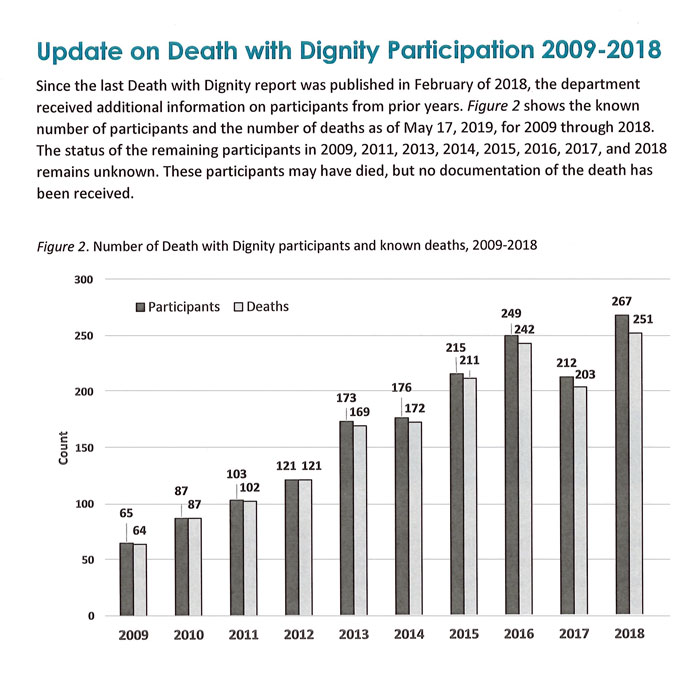
The 2018 Washington State assisted suicide report indicates that there was nearly 25% more assisted suicide deaths in 2018. The data in the report indicates that there were:

  • 203 reported assisted suicide deaths, up from 164 in 2017, 
  • 267 lethal prescriptions dispensed, up from 212 in 2017,
  • 29 known natural deaths, 
  • 19 unknown deaths and 
  • 16 where the death status was pending. 

The 19 unknown deaths may have been unreported assisted suicide deaths.

I use the term “reported” since Washington State has a self-reporting system, meaning the doctor who prescribes the lethal drugs is also the doctor who submits the report. There is no way to know if the doctor reported accurate data.

Link to the: Washington State 2017 assisted suicide report.

There were more complications in 2018, likely related to the new lethal drug cocktails. The report states that 8 people reportedly experienced complications, which was up from 4 in 2017. Also, 62 people died more than 90 minutes after taking the lethal drugs and the range of time to die ranged from 7 minutes to 30 hours.

The lethal drug cocktails that were developed to lower cost are known to cause side-effects. The Seattle Times reported:

The first Seconal alternative turned out to be too harsh, burning patients’ mouths and throats, causing some to scream in pain. The second drug mix, … has led to deaths that stretched out hours in some patients — and up to 31 hours in one case.

People who are approved for assisted suicide are not always terminally ill. According to the data 27 people lived for 25 weeks or more, after requesting assisted suicide and at least one person lived 115 weeks (more than two years).

The main reasons people requested assisted suicide in Washington State was:

  • 85% Loss of Autonomy,
  • 84% Less able to engage in activities making life enjoyable,
  • 69% Loss of Dignity,
  • 51% Burden on family.

Pain is the least reason people ask for assisted suicide. 

The new lethal drug cocktails should make people fear a painful assisted suicide death.

Report into Wettlaufer deaths will not protect people from suspicious euthanasia deaths.

Alex Schadenberg
Executive Director – Euthanasia Prevention Coalition

Elizabeth Wettlaufer

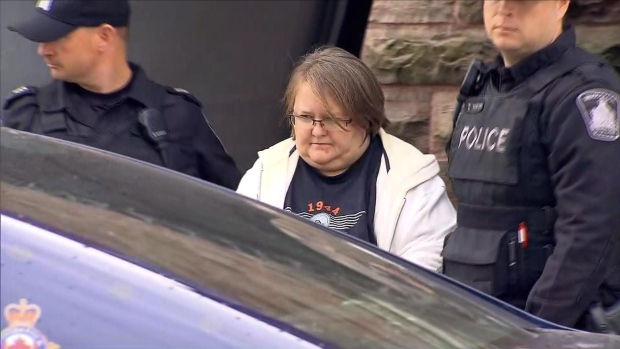
In June 2017, Elizabeth Wettlaufer, a former nurse who confessed to killing 8 people in Woodstock and London Ontario, was sentenced to 25 years without eligibility for parole. Justice Thomas stated, during the sentencing:

“It is a complete betrayal of trust when a caregiver does not prolong life, but terminates it,” 

“She was the shadow of death that passed over them on the night shift where she supervised.”

I agreed with Justice Thomas, but I wondered how to interpret this statement now that”MAiD” euthanasia was legal in Canada?

Justice Eileen Gillese

Yesterday, Justice Eileen Gillese made 91 recommendations in her 4 volume 1441 page report concluding the Public Inquiry into the Safety and Security of Residents in the Long-term Care Homes System. The report made some good statements. 

Under the heading that these deaths were not “mercy killings” the report stated:

No one has the right to define the value and meaning of someone else’s life and decide when it is time for that life to be over. This statement is particularly true for healthcare providers, who have been given the privilege and power of caring for us. The vulnerable members of our communities who rely on the long-term care system have lives with value and meaning for them and their loved ones. It is their right – and our collective obligation – to ensure that they live out their lives in safety and security, and with dignity.

The report recognizes that the threat to patients exist. Under the heading, the threat has not passed, the report comments on healthcare serial killers:

The murders Elizabeth Wettlaufer committed while working as a nurse are shocking and tragic. However, they are not unprecedented. A growing body of research and literature shows that healthcare serial killing is a phenomenon which, while rare, is long-standing and universal in its reach, with documented cases dating back to the 1800s. Expert evidence presented in this Inquiry shows that since 1970, 90 healthcare serial killers have been convicted throughout the world, including in Canada, the United States, and Western Europe. Even during this Inquiry, the media reported the arrests of two more alleged healthcare serial killers. In July 2018, a British healthcare worker was arrested on the suspicion that she had murdered eight babies and tried to kill six others while she worked at the Countess of Chester Hospital in northwestern England. Days later, there were reports that a Japanese nurse had been arrested on the suspicion that she injected disinfectant into intravenous bags, killing approximately 20 elderly patients in her care at a Yokohama hospital.

The report stated that healthcare serial killers are rare but the number of deaths attributed to these killers is significant. The report states:

Professor Crofts Yorker acknowledges that the number of healthcare serial killers is quite small, as is the number of serial killers generally. However, while the known number of healthcare serial killers is small, the number of victims is not. The 90 healthcare serial killers convicted since 1970 have been found guilty of murdering at least 450 patients. They have also been convicted of assault or grave bodily injury involving at least 150 other patients. But, according to Professor Crofts Yorker, those figures significantly understate the actual number of victims: the total number of suspicious deaths attributed to the 90 convicted healthcare serial killers exceeds 2,600. 

Furthermore, after the prosecution of a healthcare serial killer is complete, it is not unusual for the number of deaths linked to a particular HCSK to be revised upward. For example, German nurse Niels Högel was sentenced in 2008 for attempted murder… In November 2017, the total number of victims attributed to Högel was revised to 106, with further suspicious deaths still under investigation. In January 2018, German prosecutors charged Högel with the murder of 97 additional patients. Högel subsequently admitted to killing these patients. Investigators and prosecutors ultimately indicated he may have killed more than 200 people. Dr. Harold Shipman, a British physician, is another such example. Shipman was convicted of murdering 15 patients in 2000. A public inquiry concluded that he had in fact killed 215 of his patients over the course of his career, and it identified a further 45 deaths associated with Dr. Shipman as suspicious.

There are more healthcare serial killers:


In December 2016, an Italian emergency room anaesthetist Leonardo Cazzaniga, 60, and nurse Laura Taroni, 40, were arrested for the deaths of at least five patients but prosecutors were examining the medical files of more than 50.

Charles Cullen

Charles Cullen, a nurse who was also a medical serial killer in the United States. known as the ‘Angel of Death’ murdered at least 40 patients to become one of America’s worst serial killers. He spoke from prison to chillingly claim: ‘I thought I was helping.’


Dr Michael Swango is believed to have killed 35 – 60 patients, and similar to Cullen, he was simply asked to resign, or moved to another medical center. Aino Nykopp-Koski is a nurse who was convicted of killing 5 patients in Finland. In March, 2013 Dr Virginia Soares de Souza was arrested in Brazil and was suspected of killing 300 patients. Then there is the case of William Melchert-Dinkel, the Minnesota nurse who was convicted of 2 counts of assisted suicide for counselling depressed people to commit suicide.

The three principal findings in the report were:
  • if Wettlaufer had not confessed, the Offences would not have been discovered; 
  • the Offences were the result of systemic vulnerabilities, and, therefore, no findings of individual misconduct are warranted; and 
  • the long-term care system is strained but not broken.

Will the recommendations prevent further abuse?

Wettlaufer was not caught until she confessed to a counselor that she had killed and attempted to kill patients. She killed 8 people without being caught.


Several of the recommendations concern the need for accurate information on the death certificate to uncover signs of abuse within a care home, etc.

It is interesting that Canada’s euthanasia law requires the doctor/nurse practitioner who carries out the euthanasia death to lie on the death certificate. The law requires the death certificate to state that the cause of death was the “medical condition” that the person was living with rather than death by MAiD (euthanasia).


Based on the recommendations in the Public Inquiry into the Safety and Security of Residents in the Long-term Care Homes System report, a person will be required to have accurate and complete information on the death certificate, unless they die from euthanasia (lethal injection).

Canada’s euthanasia law requires that the doctor or nurse practitioner who cause death by euthanasia (MAiD) to also report the death. There is no independent authority reporting that the euthanasia death fulfilled the criteria of the law. This self-reporting system enables doctors or nurse practitioners to hide the facts when the euthanasia death was outside of the law/questionable or it enables them to not report every MAiD death.


For instance, the third report from Québec’s euthanasia commission indicates that doctors did not report 142 of the euthanasia deaths.

A NEJM study on the practice of euthanasia in the Flanders region of Belgium found that in 2013 1.7% of all deaths (more than 1000 deaths) were assisted deaths without explicit request and more than 40% of the assisted deaths were not reported.

A NEJM study analyzing the Netherlands euthanasia experience found that there were 431 assisted deaths without explicit request in 2015 in the Netherlands and 23% of the assisted deaths were not reported.

I agree with the report that Wettlaufer’s killings were not motivated by “mercy” but I also recognize that many Canadian doctors are now legally lethally injecting their patients, which will lead to more abuse based on the nature of the act and the health conditions of the patients.


It is not safe to give physicians/nurse practitioners, or others, the right in law to cause death.

Canada’s euthanasia law gives medical professionals, who are willing to kill their patients the legal right to proceed.

Canadians must go past their fear of dying a bad death and realize that Canada’s euthanasia law is fatally flawed. 


The law provides no effective oversight of the law while giving physicians and nurse practitioners the right in law to kill you.

Assisted Suicide: A white privilege policy

This article was published by the National Review online on July 29, 2019

Wesley J Smith

By Wesley J Smith


Assisted suicide has always been an issue of white privilege (to borrow a term I generally disfavor), promoted most actively by liberal, highly educated, and very well-off, Marin County types who are already so empowered in society that they need never fear being pushed out of the lifeboat or deprived from receiving proper medical care.

Thus, it is no surprise that in California, 88 percent of those killing themselves through assisted suicide have been white. People of color, on the other hand, are not exactly standing in line for lethal prescriptions, which has the “experts” searching for reasons. From the Capitol Public Radio story:

She [geriatrician Vyjeyanthi Periyakoil] said distrust keeps many people of color from speaking with their physicians about death. These patients also tend to get diagnosed with cancer and other terminal illnesses at more advanced stages, which gives them less time to think about options… 

The skewed numbers are likely due to issues of medical access and philosophical differences. Geriatrician Elana Shpall works at a mostly-Latino senior center called On Lok in San Francisco. She says most of her patients wouldn’t be interested in using the law. “We talk a lot about their end of life choices and planning for the future, and most of them say something like ‘when God wills it, it will be my time’,” she said. “Based on my population, I would say it’s a big cultural barrier.”

Legalizing lethal prescriptions has been opposed by some civil rights organizations (such as LULAC) and disability rights organizers, and has certainly not been high on the agenda list for advocates for the poor — who worry much more about guaranteeing that poor people and patients of color receive ready access to proper care than they do about dying people hastening their deaths via barbiturate overdose.

Of course, Compassion and Choices — whose leader recently said she wants to eliminate waiting periods between asking for and receiving lethal drugs — wants to increase assisted suicide among people of color:

The group has a Latino council and a Hispanic council working on raising awareness about these laws in diverse communities. 

“The information that’s written right now is written primarily for a white audience,” said executive director Kim Callinan. “We need to have messages and materials that will resonate given the culture and the community we’re trying to reach, from credible messengers in that community.”

Let’s hope those communities continue to reject the assisted suicide siren song. All of our attention should be focused on improving access to hospice and palliative care for patients of every race and socioeconomic group — medical programs that are about adding quality to living — than making sure more terminally ill patients obtain poison pills with which to make themselves dead.

Once Again, British Doctors Refuse a Child, Tafida Raqeeb, a Chance at Life.

By Mark Hodges (EPC Researcher)

In a culture of death, British doctors destroy chance for life.
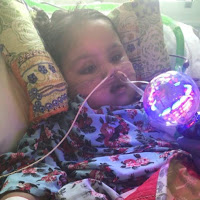
Tafida Raqeeb

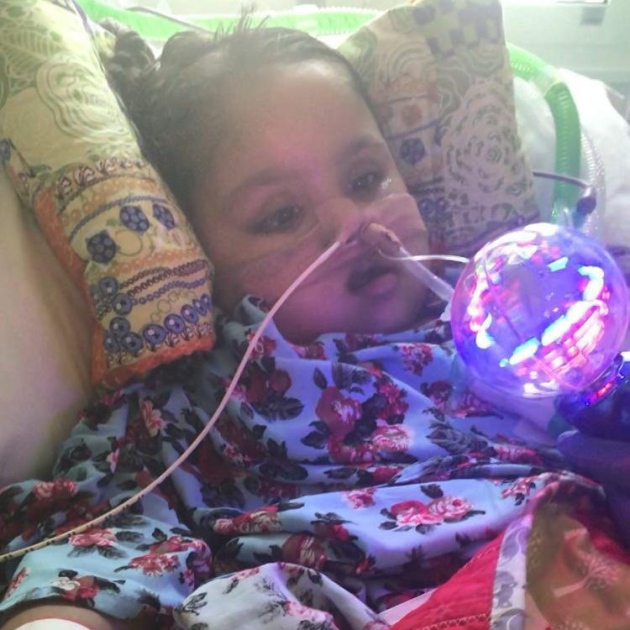
Such is the case right now for Tafida Raqeeb, who is dying in a London hospital because her doctors refuse to release her to where she could be cured.

The little five year-old has a rare and fatal blood vessel condition called “arteriovenous malformation.” Specialists in Italy have expertise in treating that very condition, but the Royal London Hospital is keeping Tafida literally imprisoned in their facility.

Sign the citizengo petition to let Tafida go and get the care that she needs. (Link).

The Giannina Gaslini Institute in Genoa has assembled a medical team for Tafida, and is in contact with her doctors in London. The Sun quotes the Institute’s Italian doctors as predicting, “There is a good chance she will emerge from the coma she is in.”

Yogi Amin, a human rights lawyer representing Tafida, assured decision-makers that:

“there is no evidence that Tafida will be harmed during transit or abroad, and her loving parents should have a legal right to elect to transfer their daughter to another hospital for private medical care.”

Still, the UK hospital refuses to even let Tafida’s parents take her for a potential healing in Italy at their own expense.

In fact, the Sun reports that the British doctors are suing to pull the plug on Tafida, saying, “It would be better for her to be left to die.”

And a totally separate lawsuit by Barts NHS Trust seeks to give hospitals the legal right to cut off all medical care if a patient in Tafida’s condition gets worse.

But Tafida’s parents, Shelina and Mohammed, have taken their fight for their daughter’s life to the High Court.

European Union law and Human Rights attorney Jason Coppel QC charged that Tafida’s “confinement is against her will.” He emphasized the key point, that “Her parents are the sole people who currently have the legal right to make decisions for her.”

Despite Tafida’s life or death condition, Justice MacDonald delayed making any decision until the Fall. He only said he will hear both the parents’ and the hospital’s sides in September.

But time is of the essence. Ron Liddle of the Sun opined

“I can understand doctors telling Mohammed and Shelina there is nothing more that they can do for their little girl. What is beyond belief — beyond imagination — is that they would insist on keeping the child there to die when there is genuine hope she might be cured.”

Little stated,

“I am not a medical expert, …but I do know that if there is hope for Tafida, the longer they wait to treat her, the less likely there will be a good outcome.”

Tafida’s case is similar to the case of two-year-old Alfie Evans. Alfie had a GABA-transaminase deficiency, and his mom and dad wanted to take him to Vatican-owned Bambino Gesù hospital for experimental treatment. That facility in Rome was ready and waiting to care for Alfie.

But Liverpool’s Alder Hey hospital refused to release Alfie.

Attorney Coppel (who now represents Tafida) argued in Alfie’s last chance attempt –after his doctors had his ventilator unplugged for two days– to get Alfie to specialists at Bambino Gesù. At the time, Alfie was breathing on his own and could have made the trip to Rome.

But the judge ruled against parental rights, and little Alfie languished three more days in Liverpool’s Alder Hey hospital until he died.

Similarly, nearly one-year-old Charlie Gard was diagnosed with Mitochondrial DNA depletion syndrome, and his mom and dad sought to get him to the United States for experimental treatment.

British doctors sued to unplug Charlie’s breathing machine so he would die, instead of releasing Charlie to his parents in the hopes that he might be helped by American specialists.

New York’s Presbyterian Hospital was ready for Charlie (as was Bambino Gesù in Rome), but British judges blocked Charlie’s parents, and he quickly died after his air was cut off.

It seemed to many that the Brits –both physicians and judges– had stepped over the line from “doing no harm” to denying potentially beneficial treatment based on futile care theory.

Another child, eight-year-old Ashya King, was in Southampton suffering from a brain tumor. His parents were concerned about his treatment, and wanted to take him for proton therapy elsewhere.

When the hospital refused to acknowledge parental rights and release Ashya, Brett and Naghemeh King snuck their son out of the hospital –making them fugitives for the sake of their son’s life.

A European continent-wide manhunt was launched against Ashya’s parents. They were finally apprehended in Spain.

But their little Ashya was given treatment –which is what the now “criminal” parents were seeking all along.

The illegally-sought treatment cured Ashya. Today Ashya is cancer-free, with no brain damage from his now non-existent tumor.

The Sun’s Ron Little reported.

“The parents were right. The doctors were horribly wrong,” “Our medical professionals are, by and large, brilliant. But there is sometimes a grotesque arrogance and pigheadedness about them.”

The Anglican church also hasn’t helped. Bishop John Sherrington of Westminster said he would pray for Tafida, but he offered no support for Tafida’s life or for her parents’ heartbreaking plight.

Sherrington even equated the hospital’s lawsuit for Tafida’s death with her parents’ fight for her life. “I hope that all due weight will be given to the wishes of her parents, while also respecting the clinical judgment of the doctors caring for her,” he hopelessly and irreconcilably stated. “Those of us not in possession of all the relevant information might best be reserved in our judgment.”

In Italy, life-support is not withdrawn from children unless they are declared “brain-dead.” Tafida is not “brain-dead,” and may be able to make it –as long as doctors do not unplug her ventilator– until her preliminary hearing in September.

Oregon removes 15 day waiting period for assisted suicide.

Alex Schadenberg
Executive Director, Euthanasia Prevention Coalition

Oregon Governor Kate Brown agreed to expand the assisted suicide law by signing Bill SB 0579 into law. This bill, essentially, eliminates the 15 day waiting period to die by assisted suicide, a safeguard that was designed to assure that the person has an opportunity to change their mind.

Proponents of the bill argued that the bill only applies to people with less than 15 days to live, and yet, it is difficult to know whether someone has less than 15 days to live.

The assisted suicide lobby argued that assisted suicide laws have not expanded in Oregon, therefore there is no fear of expansion in other jurisdictions. But previous to this bill, Oregon Health Authority had expanded assisted suicide by changing the meaning of terminal illness


As Fabian Stahle wrote: 

“So under Oregon’s assisted death law one can achieve the status of being ‘incurably’ sick even if the disease can be treated!”.

The Netherlands euthanasia law has also expanded by changing the interpretation of the law. The latest Netherlands euthanasia statistics suggest that the euthanasia law has been re-interpreted to include euthanasia for “completed life.”

This bill waves the 15 day waiting period, meaning, a person who is approved for assisted suicide can die within days, and if depressed, loses the opportunity to change their mind.

Massachusetts to debate suicide coercion bill "Conrad’s law"

Alex Schadenberg
Executive Director, Euthanasia Prevention Coalition

Conrad Roy

Massachusetts State Senator Barry Finegold and Representative Natalie Higgins are introducing Conrad’s Law, a bill to deter suicide coercion.

Lauren Fox reporting for The Boston Globe stated that the bill is named for Conrad Roy who died in July 2014 after his girlfriend, Michelle Carter, pressured him through text messages and phone calls to carry out his suicide.


Conrad’s law punishes those who coerce others into committing or attempting to commit suicide, with punishment of up to five years in prison. This bill does not apply to assisted suicide, which is illegal in Massachusetts.

Lauren Fox reported Lynn Roy, Conrad’s mother as saying: 

she was honored to support the legislation, called “Conrad’s Law.” 

“Before my son passed, I was excited about so much,” she said. Still, she had never said “I’m friggin’ excited” about anything until she learned the anti-suicide measure was moving forward. 

“My heart is so full,” she said. “And I’m so proud of my son.”

CBS Boston reported Lynn Roy as saying that this is the first time she has felt joy since the death of her son. Roy stated:

“My son was the most kind, warm, compassionate person,” she said. “By passing Conrad’s Law, I truly believe this is the perfect way to honor him.”

Conrad’s father told The Boston Globe that he hopes that:

“this bill helps saves some lives and just puts some more awareness out there about suicide and about bullying.”

Fox reported that Carter was convicted, in 2017, of involuntary manslaughter in Roy’s death. Earlier this month, Carter’s lawyers petitioned the US Supreme Court to review the case. 

Design a site like this with WordPress.com
Get started