‘The last frontier in prison reform’: assisted suicide?

This article was published by Bioedge on July 21, 2019

Michael Cook

By Michael Cook

Activist Philip Nitschke once described euthanasia as the “last frontier in prison reform”. His idea has still not caught on. A Belgian prisoner was allowed to take advantage of euthanasia, but it never happened. But the idea refuses to die.

The author of an article in latest issue of the Journal of Criminal Law and Criminology argues that assisted suicide should be allowed in American prisons.

Kathleen S. Messinger observes that assisted suicide is becoming increasingly acceptable in the US. “The autonomy, self-determination, and pain that a terminally ill patient may feel justifies the decision to die with dignity.” Why shouldn’t terminally-ill prisoners be given the same opportunity?

This is a violation of the Constitution’s prohibition on cruel and unusual punishment because it is unnecessarily punitive and exacerbates the pain of individuals already suffering. When the state strips individuals of their freedom and denies them their ability to “provide for their own needs,” the government has an affirmative duty to provide for the inmate. Regardless of how we morally feel about aid in dying as an option, and perhaps believe that those incarcerated deserve to suffer, the state must fulfill its obligation to provide for aid in dying because anything less is “incompatible with the concept of human dignity . . . .”

The question is particularly relevant now as prisons are filling up with more and more elderly inmates. By 2030, over 55s will make up a third of American inmates. Some have dementia and no longer even remember why they were incarcerated. A 2017 report warned that the US was moving towards an “Elder Incarceration Crisis.” 

Messinger says that “prisons are overcrowded, underfunded, and ill-equipped to support terminally ill and aging inmates”. Perhaps assisted suicide and/or euthanasia would help governments to reduce costs and improve conditions.

CARP, Wettlaufer and Euthanasia.

By Adrian Rhodes

CARP’s magazine Zoomer published an article in January 2019, on Elizabeth Wettlaufer, the nurse who murdered her patients while working in long-term care homes in Ontario. The article by Alex Roslin is titled: Looking at the Complete System Failure that led to the Wetlauffer Murders. Wettlaufer cited psychological reasons, in part – she was stressed because of poor working conditions. This does not excuse the murders, but it also does not allow for the use of those murders to justify better care.

Elizabeth Wettlaufer

In this political climate, to argue that better care is needed because otherwise patients will be at risk from the Wettlaufers of the world is disingenuous. Patients are already at risk in “…an environment where patients are disrespected, abused – even sometimes murdered.” This environment came about with the legal permission being given by the Canadian government for medical representatives to kill their patients.

The permission to kill is further permission to neglect. One allegation has been made that if one is approved for death, that after approval one’s pain medication is curtailed to ensure that they are competent at the time of injection. The argument has not been made, but I am sure it is in the back of many people’s minds on reading the CARP article – ‘well, at least the patient isn’t suffering’. These statements above are probably shocking, but they are also normalized in our social lives. This is because we are normalizing the act of killing.

It is expected that suffering people will demand death instead of better care. When someone demands care, this is incomprehensible. Consider the Roger Foley case: he was demanding better care and control over his care at home, and he was offered euthanasia instead. In his case, hr publicized the offer and this caused him to become a dubious celebrity as a result. In the meantime, he had doctors and nurses using presence coercion to convince him to die. This was probably because it was good for the organization: he was apparently costing the hospital $1500 per day. So it was all about the money, not the right to care as enshrined in the Charter of Rights. So it is expected that death is preferred over treatment, care or protection of other rights.

So for CARP to be lobbying for changes to care when they are the same organization that sings the virtues of euthanasia comes across as a little precious. Remember, the push is on to save money and to allow those who have dementia – as many of Wettlaufer’s victims did – to get euthanasia. There is a push to kill incompetent people and to kill children by euthanasia. And people have said that this is a virtue, particularly when we consider the responses to Sick Kids Hospital saying they would be willing to euthanize children under 18 without parental consent. The implication is that this organization will kill children in their care – and they argued that killing and letting die are the same act.

The article reported that Wettlaufer’s victim, Maureen Pickering, was given a high dose of insulin – twice. She subsequently died. The coroner’s office representative opined that her death wasn’t investigated because “Her death was foreseeable, and it was expected.” Remember, MAiD can be done if “…death is reasonably foreseeable”. So we can argue that Wettlaufer was a euthanasia enthusiast by other means.

Wettlaufer slipped through the safeguards, time and again. She even talked to her friends about the killings. They did nothing. That alone should have triggered charges. The organizations involved did nothing. The care home never told the College of Nurses about Wettlaufer’s shortcomings. They said themselves that nurses were hard to come by and this is why Wettlaufer was kept on. The deaths of elderly people are expected, after all…

The article stated that one relative of a victim said, “It seems to me that all the parties are accessories.” Another family member said, “Nobody is taking any of this seriously.” This is true, but what is also significant about this CARP article is this: CARP is a pro-euthanasia organization. CARP has advocates on staff who decried what happened to those residents while establishing a glaring contradiction with their pro-euthanasia stance.

Wettlaufer got away with these deaths because no one believed that this would happen in such an active way. This is the same reason medical organizations have attempted to impose death on patients such as Candice Lewis and Roger Foley. No one believes professionals would act against the interest of patients, even when they are acting to convince those patients to die.

People aren’t that evil, they just don’t go around killing patients. Except that in Canada, we do. There is one doctor on the West Coast who has already killed over 140 people, skirting the law to do so and without sanction.

To quote the article: “It remains to be seen if the horror of Wettlaufer’s deeds will make a difference.” Yes: people who euthanize will continue, and organizations will become even more monolithic when they attempt to kill. And then the number of deaths will continue to rise.

It is interesting that CARP would deplore the actions of someone who was neglecting patients to the point of euthanizing them. CARP’s advocates: Moses Znaimer and Wanda Morris have stumped for euthanasia, so the two situations – the magazine and its political position and Wettlaufer’s actions – are related. The article says that what Wettlaufer did was ‘shocking’. Canada’s euthanasia law and Carp’s pro-euthanasia position is also shocking.

Abandoning hope: Euthanasia for mental disorders.

This article was published by the Australian Care Alliance on July 24, 2019.

Guidelines issued for assessing and executing requests for euthanasia and assisted suicide from people with mental disorders, including addictions such as alcoholism, by the Netherlands Federation of Medical Specialists and the National Council of the Order of Physicians of Belgium essentially authorise doctors to agree with a patient that abandoning all hope – as if they were at the gates of hell in Dante’s Divine Comedy – is the only proper response to their mental illness or addiction.

This plaque could appropriately be put on the office door of Dutch and Belgian doctors who give effect to the guidelines.

The Belgian “Guidelines for the application of euthanasia to patients suffering from mental illness as a result of a psychiatric disorder” were issued by the National Council of the Order of Physicians on 27 April 2019.

While these new guidelines show some recognition that there is a problem with the normalisation of euthanasia as a response to persons with psychiatric disorders at the heart of the guidelines there is an abandonment of the patient by formalising a process in which a doctor agrees that his or her life is hopeless, not worth living and that suicide by doctor is the only appropriate response.

The guidelines state that “A determination that the psychiatric condition is incurable and hopeless should not be made unless all ‘all possible evidence-based treatment’ has been tried. If a patient refuses ‘certain evidence-based treatments, the doctor cannot apply euthanasia’. However, ‘the doctor must show a certain reasonableness. He must not fall into a therapeutic obstinacy. The reasonable number of treatments to be followed is limited’.

In other words the doctor is authorised to, along with the person struggling with a mental illness or addiction to agree with the person’s sense of despair and hopelessness.

Read further on the Belgian guidelines here.

The directive “Termination of life on request in patients with a mental disorder” was issued by the Netherlands Federation of Medical Specialists on 28 September 2018.

The directive states that:

The granting of life termination on request for patients with mental illness is an ultimate and extraordinary medical treatment to eliminate suffering, or an ultimate refuge.

Interestingly the 73 page directive includes information on a survey of psychiatrists in the Netherlands which summarises the views of those opposed to euthanasia for mental illness:

  • Considering a euthanasia request conflicts with the goal of ongoing treatment; 
  • There is a real danger of counter-transference which makes objective assessment of a request for the termination of life doubtful; 
  • There is no ultimate distinction between a desire for euthanasia or assisted suicide and chronic suicidal ideation; 
  • Hopelessness and unbearable suffering for persons with a mental disorder are elastic, subjective concepts; 
  • There is a contradiction between “hopelessness” and the relatively long life expectancy of persons with mental disorders; and 
  • There are many uncertainties in the accurate diagnosis of mental disorders and the assessment of reasonable treatment options.

The directive dismisses this perspective and attempts to maintain that there is a real distinction between “a lonely suicide” and a “dignified” termination of life arranged by the doctor.

However, this distinction unravels as the directive goes on to observe:

the distinction between suicidality and a request for termination of life can fade over time or completely disappear. This situation can occur if:

  • suicidality is chronically present against the background of a long-standing mental disorder; 
  • the patient can form a reasoned opinion about his disorder; and 
  • seeks professional help with the execution of his death wish.

Suicidality can then be the expression of a long-standing and autonomous desire not to live anymore, after many episodes of severe suffering. It can be a rational reflection on the lack of future prospects, lack of treatable suicidality and mental disorder and an inability to endure suffering.

Patients can suffer greatly from their own suicidality, for example when there are endless images imposed of their own future suicide on them. Suffering from one’s own suicidality can also be a component form of a considered request for termination of life.

Thus in the Netherlands suicidality can in itself be seen as a reason for a doctor to collaborate with the patient’s mentally disordered desire to commit suicide by providing “professional help with the execution of the patient’s death wish”.

The directive even notes that “suicidal behavior is increasingly expressed by the patient as a request for euthanasia or assistance with suicide. After all, the term ‘euthanasia’ is becoming more and more common in the media and patients are increasingly adopting this language in a completely different context.” This observation is consonant with the danger of suicide contagion – in this case from the context of societal approval of euthanasia and assisted suicide to the thinking of persons with a metal disorder.

Read further on the Netherlands directive here.

Assisted suicide doctors to train more doctors to kill.

Alex Schadenberg
Executive Director, Euthanasia Prevention Coalition

A new organization has been formed to promote assisted suicide within the medical community and provide training for physicians, and others, who are willing to kill.

According to the NCCMAID website, California assisted suicide doctor Lonny Shavelson, is the board chair with advisors and board members from across America.
 

Wesley Smith

In his article, The worst doctors can become death doctors, Wesley Smith stated about Shavelson:

When assisted suicide was legalized, he started “practicing medicine” again–as a death doctor, willing to help make people dead for $2000. 

Moreover, he has a deep ideological commitment to assisted suicide. How deep is it? He once watched a Hemlock Society leader murder a stroke victim who had asked to die but changed his mind. Instead, she holds a plastic bag over his head. From page 92 of Shavelson’s book: A Chosen Death:

The number of assisted suicide physicians, on the NCCMAID organization who list palliative care as their specialty, is concerning. The assisted suicide lobby is committed to normalizing assisted suicide as part of palliative care. It appears that NCCMAID is working on that goal.

EPC will continue to work with physicians to oppose assisted suicide. We are proud to have played a role in upholding the American Medical Association opposition to assisted suicide.

Vincent Lambert: Death by discrimination

This article was published by Toujours Vivant – Not Dead Yet on July 16, 2019.
Taylor Hyatt

By Taylor Hyatt – Policy Analyst & Outreach Coordinator, Toujours Vivant-Not Dead Yet

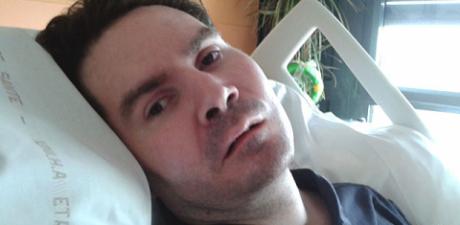
Vincent Lambert died recently.

For the past few weeks, all eyes have been on the French courts as they determined his fate. Mr. Lambert was severely injured in a car accident in 2008. Various news reports described him as “quadriplegic” with a brain injury, in a “vegetative state,” in a minimally conscious state, or used multiple terms to describe his condition. The phrase used most consistently throughout the media coverage, “right to die,” does not capture what the case was really about: disability rights.

Vincent Lambert

After the accident, Mr. Lambert used a feeding tube, but could still breathe without assistance. He could not speak, nor did he appear to respond to questions or commands. He had cycles of sleeping and waking, where he opened his eyes, moved his limbs and sometimes smiled or cried. In 2011 he was evaluated by the Coma Science Group at the Liège University Hospital in Belgium, which determined that he was in a “minimally conscious, plus” state and recommended that attempts be made to find a way to communicate with him. He subsequently received physiotherapy for one year, and 87 sessions with a speech/language therapist, which were deemed “unsuccessful.” Evaluations done in 2014 and 2018 by a team of doctors affiliated with the hospital in Rehms where Mr. Lambert was treated described his condition as “vegetative,” a view that was still contested at the time of his death.

Mr. Lambert had no directive in place expressing what he wished to happen if he ever became incapacitated. A bitter family feud arose as a result. Mr. Lambert’s wife Rachel, and six of his eight siblings, maintained that he would not want to live with a severe cognitive disability. The two remaining siblings joined their Catholic parents, Pierre and Viviane Lambert, in fighting to continue the tube feeding. Since 2013, Mr. Lambert’s parents have appealed to various authorities on multiple occasions using different legal arguments, including the European Court of Human Rights (under Article 2 of its convention, the Right to Life) and the United Nations Committee on the Rights of Persons with Disabilities. Article 25 of the Convention on the Rights of Persons with Disabilities calls on states to “prevent discriminatory denial of…food and fluids on the basis of disability.”

The Court of Cassation – the highest applicable appeals court in France – finally ordered that his feeding tube be removed on July 2 of this year. Anyone familiar with Terri Schiavo’s story will see multiple parallels between the two cases, and the questions raised therein.

The campaign to withdraw food and fluids was prompted by Mr. Lambert’s supposed “resistance” to care he was receiving. As Kevin Yuill pointed out, this points to an inconsistency in the position of those advocating the withdrawal of food and fluids; was Mr. Lambert capable of having and expressing an opinion about his care through his behaviour, and therefore possessing the right to refuse care? Or was he in a vegetative state, in which case his movements should be interpreted as reflexive and meaningless?

Another crucial issue raised by the Lambert case is the idea that disabled people must meet a certain threshold of functioning, or potential for improvement, in order to justify their existence and to receive the necessities of life (food and fluids). The view that death is preferable to severe disability led to a modification of France’s Public Health Code in February of 2016 to allow for the passive euthanasia of people like Mr. Lambert who were receiving “artificial life support” (tube feeding). The law allows treatments that are “unnecessary” or “disproportionate” to be stopped; in Mr. Lambert’s case food and fluids were deemed to be “unnecessary” and “disproportionate” because he was unlikely to achieve a certain level of functioning.

As well, the record is unclear as to what kind of ongoing rehabilitative care Mr. Lambert received, aside from the physiotherapy and speech/language sessions recommended by the Coma Science group three years after his injury. The team who evaluated Mr. Lambert in 2014 and 2018 noted that his condition had deteriorated; can that be linked to the kind of care he was (or was not) receiving?

Finally, the question of whether a feeding tube constitutes “artificial” life support was not sufficiently addressed. Not Dead Yet raised this question in the California Supreme Court in the Wendland case in 2000; if a person receives nutrition through a tube taken by mouth, that is not medical treatment; why should that same tube be considered “medical treatment” because it goes into the person’s stomach?

If nothing else, courts should have given more weight to the fact that death is permanent. Mr. Lambert’s life changed drastically after the accident. Requiring the support of family and professionals does not make a person’s life “pointless” or “a waste of resources.” When Mr. Lambert’s wife no longer wished to care for him, calling for his death was not a humane response – especially when his parents were willing to take over. We only get one chance at life.

Another disabled person starved and dehydrated to death while the world watched. I take some solace in the fact that he was sedated when his feeding tube came out, though this does not make his fate right or less unnerving. May Vincent Lambert rest in peace.


Tafida Raqeeb is the latest case of a UK child being denied treatment abroad.

By Alex Schadenberg
Executive Director, Euthanasia Prevention Coalition

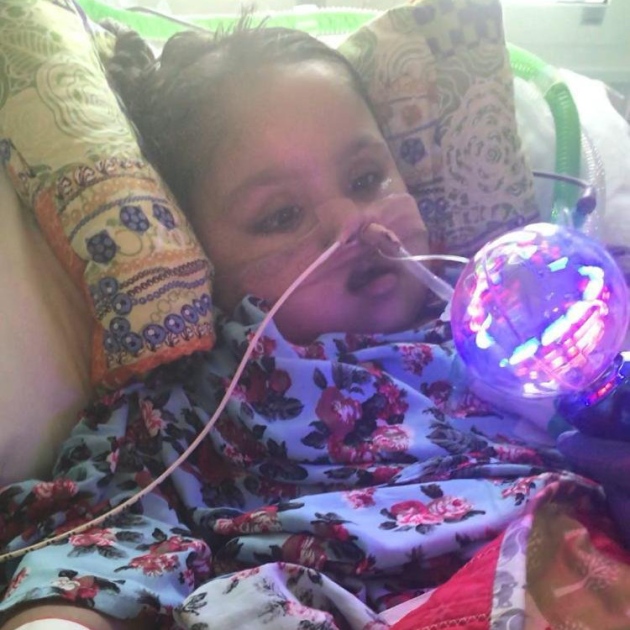
Tafida Raqeeb has been diagnosed with arteriovenous malformation, a rare condition which causes the blood vessels to have abnormal connections between the arteries and veins.

Tafida Raqeeb

Tafida had a brain bleed on February 9 that has left her in coma in the Royal London Hospital where the doctors claim that there is no hope.

Doctors in Genoa, Italy state that they have an expertise in this condition, they are willing to treat Tafida, and “they suggest there is a good chance she will emerge from the coma she is in,” according to Ron Liddle of The Sun (a UK newspaper). But the Royal London Hospital is refusing to let the parents take Tafida to Genoa.

“The view of the doctors there is that they can do nothing more for her and that it would be better for her to be ­left to die,” Liddle writes.

Sign the citizengo petition to let Tafida go and get the care that she needs. (Link).

Some people have compared this case to Charlie Gard whose parents founght unsuccessfully to move him to an American hospital for experimental treatment.

Liddle argues that the decision by the Royal London Hospital is grotesque, arrogant and pig-headed. He states:

I can understand doctors telling Mohammed and Shelina [the parents] there is nothing more that they can do for their little girl. What is beyond belief — beyond ­imagination — is that they would insist on keeping the child there to die when there is genuine hope she might be cured.

It is all terribly similar to the case of Ashya King, an eight-year-old lad who had a brain tumour and was being treated at a hospital in Southampton.

The treatment he was receiving, his parents feared, threatened to cause grave brain damage and they instead wanted him to be treated via proton therapy in Prague.

The hospital said: “No, he stays here.” And so the parents, Brett and Naghemeh King, were forced to abduct the lad, sparking a Europe-wide manhunt. They were arrested in Spain . . . where Ashya also received treatment.

Five years later, he is cured. Free from cancer. No brain damage. The parents were right. The doctors were horribly wrong. Our medical professionals are, by and large, brilliant. But there is sometimes a grotesque arrogance and pigheadedness about them.

I am not a medical expert, but I do know that if there is hope for Tafida, that the longer they wait to treat her, the less likely there will be a good outcome.

Sign the citizengo petition to let Tafida go and get the care that she needs. (Link).

Woman pressured to approve death by sedation / dehydration for her Aunt.

Alex Schadenberg

Executive Director – Euthanasia Prevention Coalition

Alex Schadenberg

Today I spoke with a woman who is the Power of Attorney for her 89 year-old aunt, who is currently in a Toronto hospital. The niece called EPC because she is upset about the lack of care that her Aunt is receiving.

Her Aunt went to the hospital a few weeks ago with pneumonia. Her doctor decided to do nothing for her. The doctor said:

“she’s not going to get better”

The doctor pressured the niece to have her Aunt sedated and dehydrated to death. 


Her niece demanded another doctor and insisted on treatment. Her Aunt is now clear from the pneumonia.

Her Aunt is recovering but the hospital continues to pressure her  niece to have her Aunt sedated and dehydrated to death. The only reason her niece could think of why they are doing this is that her Aunt is 89. Her niece said:

“she doesn’t have cancer, she doesn’t have any life-threatening condition.”

I urged the niece to keep defending her Aunt’s right to receive treatment and care.

I consider this to be elder abuse and discrimination. What makes it worse is that the abuse and discrimination seems to be institutionalized.

The Euthanasia Prevention Coalition (EPC) sells the Life Protecting Power of Attorney to protect you.

The Life Protecting Power of Attorney states your wishes and enables your power of attorney to make medical decisions on your behalf. It protects you from euthanasia and assisted suicide and it defines the treatment/care decisions that you want in the event that you are unable to make medical decisions yourself.

The Life Protecting Power of Attorney gives you the piece of mind that EPC will help you if your expressed wishes are ignored or if a hospital or doctor pressures or attempts to impose medical treatment or care decisions upon you.

Purchase the Life Protecting Power of Attorney for Personal Care (Link) by contacting EPC at: 1-877-439-3348 or info@epcc.ca


If you have concerns contact the Euthanasia Prevention Coalition at: 1-877-439-3348 or Compassionate Community Care at: 1-855-675-8749.

"Do or Refer" Doctors Are Not Allowed to Use Their Best Judgment for Individual Patients (No More Jeanette Halls)

This article was published by Choice is an Illusion on July 16, 2019

Margaret Dore

Margaret Dore Esq., MBA*

Yesterday, a doctor asked me about “do or refer” provisions in some of the newer bills seeking to legalize assisted suicide in the United States. For this reason, I now address the subject in the context of a 2018 Wisconsin bill, which did not pass.

The bill, AB 216, required the patient’s attending physician to “fulfill the request for medication or refer,” i.e. to write a lethal prescription for the purpose of killing the patient, or to make an effective referral to another physician, who would do it.

The bill also said that the attending physician’s failure to comply would be “unprofessional conduct” such that the physician would be subject to discipline. The bill states:

[F]ailure of an attending physician to fulfill a request for medication [the lethal dose] constitutes unprofessional conduct if the attending physician refuses or fails to make a good faith attempt to transfer the requester’s care and treatment to another physician who will act as attending physician under this chapter and fulfill the request for medication. (Emphasis added).[1]

The significance of do or refer is that it’s anti-patient, by not allowing doctors to use their best judgment in individual cases.

Jeanette Hall with her son.

Consider Oregonian Jeanette Hall. In 2000, she made a settled decision to use Oregon’s assisted suicide law in lieu of being treated for cancer. Her doctor, Kenneth Stevens, who opposed assisted suicide, thought that her chances with treatment were good. Over several weeks, he stalled her request for assisted suicide and finally convinced her to be treated for cancer.

Yes, Dr Stevens was against assisted suicide generally, but he also thought that Jeanette was a good candidate for treatment and indeed she was. She has been cancer free for 19 years. In a recent article, Jeanette states:

I wanted to do our law and I wanted Dr. Stevens to help me. Instead, he encouraged me to not give up and ultimately I decided to fight the cancer. I had both chemotherapy and radiation. I am so happy to be alive!

If “do or refer,” as proposed in the Wisconsin bill, had been in effect in Oregon, Dr. Stevens would have been risking a finding of unprofessional conduct, and therefore his license, to help Jeanette understand what her true options were.

Is this what we want for our doctors, to have them be afraid of giving us their best judgment, for fear of sanction or having their licenses restricted or even revoked?

With proposed mandatory “do or refer,” assisted suicide proponents show us their true nature. They don’t want to enhance our choices, they want to limit our access to information to railroad us to death.
______

[1] AB 216 states:

156.21 Duties and immunities. (1) No health care facility or health care provider may be charged with a crime, held civilly liable, or charged with unprofessional conduct for any of the following: 

(a) Failing to fulfill a request for medication, except that failure of an attending physician to fulfill a request for medication constitutes unprofessional conduct if the attending physician refuses or fails to make a good faith attempt to transfer the requester’s care and treatment to another physician who will act as attending physician under this chapter and fulfill the request for medication. (Emphasis added).

* Margaret Dore is an attorney in Washington State where assisted suicide is legal. She is also president of Choice is an Illusion, a nonprofit corporation opposed to assisted suicide and euthanasia worldwide.

774 Ontario euthanasia deaths in the first 6 months of 2019.

Alex Schadenberg
Executive Director, Euthanasia Prevention Coalition.


The Ontario Office of the Chief Coroner released the updated data for MAiD (euthanasia and assisted suicide) deaths in Ontario indicating that since legalization (June 17, 2016) there have been (3303) 3302 euthanasia deaths and 1 assisted suicide death, as of June 30, 2019.

According to the Ontario data, there were 774 reported assisted deaths in the first six months of 2019, 1499 reported assisted deaths in 2018, 841 reported assisted deaths in 2017 and 189 reported assisted deaths in 2016.


The number euthanasia deaths are increasing. There were 406 reported assisted deaths between April 1 and June 30 and 368 reported assisted deaths in the first three months of the year.

In March I published an article explaining that the assisted deaths, in Canada, increased by more than 50% in 2018 from 2704 reported assisted deaths in 2017 to 4235 reported assisted deaths in 2018.

The Euthanasia Prevention Coalition urges its supporters to show the Fatal Flaws Film in their communities.

Last week I received a call from an Ontario nurse who was feeling pressured to participate in euthanasia. Today I received another call from an Ontario nurse, in another community, who was concerned about pressure being placed on nurses to participate in euthanasia.

In May, the Ontario Court of Appeal upheld a lower court decision that Ontario doctors did not have do euthanasia but they had to do an “effective referral” meaning referral for the purpose of the act.

Conscience rights for medical professionals in Ontario need to be protected.

The Euthanasia Prevention Coalition works with Compassionate Community Care (CCC) to offer advice and support for family members and friends who are concerned about an assisted death or end-of-life medical treatment decision. Contact CCC at: 1-855-675-8749.

Contact the Euthanasia Prevention Coalition if you have concerns with the circumstances related to a euthanasia death at: 1-877-439-3348.

Suicide promotion websites linked to euthanasia activist.

Alex Schadenberg
Executive Director, Euthanasia Prevention Coalition

Euthanasia activist, Philip Nitschke, has been selling suicide information, devices and drugs, online, for years.

A recent article published by The Sun newspaper concerns school kids buying, online, lethal death row drugs to die by suicide. This is not only a phenomenon in the UK but it is a world-wide tragedy and it is not new. I have written about this problem on several occasions. Exit International may also have set-up a suicide promotion website in Canada.

Isobel Narayan

The Sun reported:

An inquest in 2013 heard how Isobel Narayan, 16, killed herself with the Death Row execution drug she had researched online on suicide forums and acquired by post. 

She was said to have suffered a “crisis of confidence” a month before her death and even typed up a list of reasons why she should kill herself. She later drank a lethal concoction of the drug – mixed with a mouthwash before going to bed. 

The A-level student, from Didsbury, Manchester, was found dead the next day by her devastated parents. 

Manchester Coroner Nigel Meadows said it was a “matter of public concern” she was able to obtain the drug.

It concerns me that the Sun article also promotes Nitschke. Nitschke is referring to websites that take money from people without sending the lethal drugs, the article misconstrues his comment as condemning websites, like his, who will sell suicide to anyone.

This is a difficult topic knowing that this article may lead to depressed people obtaining suicide drugs online. 

Nitschke makes money by selling suicide. He calls it freedom, when in fact he is ending the freedom to live for depressed people, including teens.

Design a site like this with WordPress.com
Get started