German court acquits doctors who did not intervene in suicide.

Alex Schadenberg
Executive Director – Euthanasia Prevention Coalition


The status of the assisted suicide law in Germany has become more complicated as the German High Court upheld the acquitals of two physicians who did not intervene as patients committed suicide.

According to The Local DE:

Prosecutors had asked the federal court of justice to clear the two defendants, both doctors who did not intervene when their patients deliberately took fatal doses of medication.

Their actions “did not constitute a homicide”, presiding judge Norbert Mutzbauer in Leipzig said.

“If the patient kills themselves, even with help from someone else, that person’s actions are not punishable under the law.”

On July 2, 2018; Germany’s health minister decided to stop providing lethal euthanasia drugs.

Both doctors had been charged with homicide, by not intervening in the suicide. Clearly the court is correct to say that the act did not constitute homicide. 

In Germany doctors are forbidden to assist a suicide but they are not required to intervene as someone causes their own death.

Liver transplants after euthanasia

Alex Schadenberg
Executive Director – Euthanasia Prevention Coalition

study published July 2 in the Journal of the American Medical Association (JAMA) outlines the advantages of organ donation after euthanasia.
The study examined 409 Liver Transplants in Belgium whereby 320 livers (78%) were obtained after brain death, 78 livers (19%) after circulatory death and 11 livers (2.7%) (after euthanasia). The results were:

Liver transplantation after donor brain death, circulatory death, or euthanasia resulted in 3-year graft survival of 80.2% (95% CI, 75.4%-84.2%), 82% (95% CI, 71.6%-89%), and 90.9% (95% CI, 50.8%-98.7%) (P = .67) and 3-year patient survival of 86.1% (95% CI, 81.9%-89.5%), 84.6% (95% CI, 74.5%-91%), and 90.9% (95% CI, 50.8%-98.7%) (P = .84), respectively.

According to this study the 3 year graft survival rate was 80.2% (brain death), 82% (circulatory death) and 90.9% (euthanasia). The three year patient survival rate was 86.1% (brain death), 84.6% (circulatory death ) and 90.9% (euthanasia).

The study then concludes:

These data support the notion that within a very strict ethicolegal and logistic framework, donation after euthanasia may represent a valuable source of donor organs. The small sample size, limited follow-up, and monocentric nature of the study preclude definitive conclusions but provide a rationale for larger, longer-term studies on efficacy and safety of donation after euthanasia.

The study admits that there were only a few transplants after euthanasia, leading to inconclusive data nonetheless I predict that there will be more studies like this one. Organ donation after euthanasia turns euthanasia into a social “good” and creates new pressure for people to die by euthanasia. 

Euthanasia by organ donation is also being promoted since heart transplants are not possible when organ donation follows euthanasia, whereas heart transplants are possible when euthanasia is done by organ donation.


Euthanasia by organ donation refers to the act of causing death by retrieving the organs rather than retrieving the organs after death.

Bill Peace: A Professor Who Professed Disability Activism

Published by Not Dead Yet on July 2, 2019

By Diane Coleman


By now, many who read this message will know that Bill Peace died not long after midnight this morning. In the hours since, the outpouring of both grief over our loss and celebration of his life is nothing short of incredible. He has been one of an increasingly rare breed of academics who embrace disability activism. The countless lives he touched – his students, his colleagues, his friends, his family (his personal family and very extended disability family) – are a testament to his amazing ability to communicate and advocate for our fundamental civil rights.

Bill’s Facebook page is full of memories and tributes today, including stories and articles, like this wonderful profile in New Mobility Magazine. Here’s an excerpt concerning his work on bioethics issues:

The Underlying Problem: Devalued Lives 

In 2006, Peace’s career took a sharp turn after he read about the Ashley treatment. The treatment was a series of procedures performed, at the request of her parents, on a Seattle child with developmental disabilities named “Ashley X.” The surgeries were intended to stunt her growth, eliminate menstruation and prevent her from developing large breasts. 

It was a wake up call for Peace. “It wasn’t what they did that was horrible, it was that there was a 38-person bioethics meeting at one of the leading children’s hospitals in the nation, and they gave it the go-ahead,” he says. “They illegally sterilized a profoundly disabled child.” Soon after, he began work in bioethics and disability studies, while becoming a harsh critic of the cure industry. 

Little did Peace know, but his work in bioethics would hit very close to home. In 2010, he was hospitalized with a stage IV pressure sore. After an especially difficult debridement, a hospitalist encouraged him to discontinue the aggressive treatment and pursue end-of-life care. Peace refused the offer but the experience shattered him. “Somebody I had never met determined my life wasn’t worth living,” he says. 

It took almost two years to heal the wound, but Peace vowed to advocate against assisted suicide. The reason for doing so was simple. “People are needlessly dying, and there’s no nuanced view of disability within the medical community,” he says. He joined the board of directors of the advocacy group Not Dead Yet, and since then has become a leading national critic of the practice of assisted suicide.

Bill joined the NDY board in 2013. The year before, NDY reported on his groundbreaking article in a leading bioethics journal about that middle-of-the-night visit from a hospital physician recommending that he consider dying rather than receiving antibiotics for his pressure wound. The journal article is now behind a pay wall, but excerpts remain available in the NDY blogs and Bill told the story in his Bad Cripple Blog.

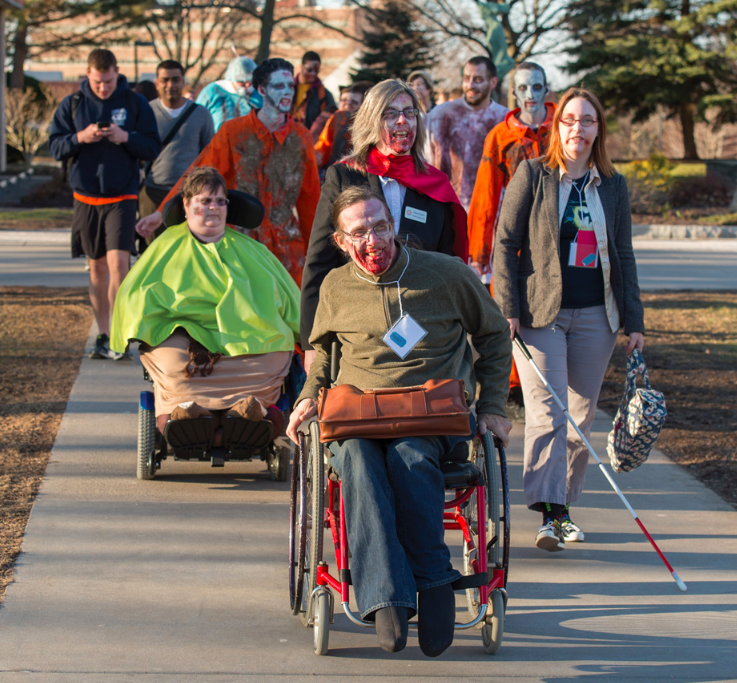
Bill Peace in the front.

The New Mobility article also included a great example of Bill’s activism following a workshop he did entitled “The Walking Dead and Assisted Suicide”, when he “led a procession of fellow scholars dressed as zombies across the Syracuse University campus.” (Photo by Stephen Sartori.)

Recently, complications developed from new pressure wounds, but the hospital that cared for him in these last several days was described by his family as respectful, showing the utmost kindness and trying very hard to save him from the infection that has taken him from us.

Months ago, if insurance had been willing to cover the type of therapeutic bed he needed to help heal the wounds, he might have made it through. I suspect it would have cost insurance much less than a week in an intensive care unit. Outrageous insurance decisions like this are killing people with disabilities. We lost Carrie Lucas in February this year, and now Bill. We’ll never know how many others, but this can never be acceptable and must stop!

Bill repeatedly challenged society’s “better dead than disabled” message. Stephen Drake, NDY’s research analyst, covered examples like these (note: some of the embedded links may not work anymore):

For more of NDY’s blogs featuring Bill’s work, go here.

And for links to some of Bill’s Bad Cripple Blogs on NDY issues, many are listed on our articles page.

One of our favorite pieces is this great video satire:
YouTube: EZ Breezy Assisted Suicide w/ Bill Peace (and Tipsy Tullivan)

Bill Peace has left all of us a rich legacy spanning decades during this critical time for the disability rights movement. He will be deeply missed, and he won’t be forgotten.

Diane Coleman

Conscience rights of physicians and the decision of the Ontario Court of Appeal

This article was published on June 30, 2019 by the Physicians Alliance Against Euthanasia.

By Dr Catherine Ferrier
President: Physicians Alliance Against Euthanasia

All Doctors are Needed

On May 15, 2019, the Court of Appeal for Ontario confirmed a lower court ruling defending the requirement of the College of Physicians and Surgeons of Ontario (CPSO) that dissenting physicians make “effective referrals” for euthanasia (“MAiD”).

We consider this decision to be not only wrong, but founded upon non-factual assumptions, contrary to the needs of patients, and contrary to the opinion of those doctors most aware of the needs of terminally ill patients. The Canadian Society of Palliative Care Physicians (CSPCP) in a recent messaging update states, notably: that MAID referral should not be the responsibility of the individual physician, but requires a separate, publicly accessible information service, and, of course, that dissenting physicians should be respected in their choice.

In its judgement the Court described CPSO policy in these terms:

“[The policies] strike a reasonable balance between patients’ interests and physicians’ Charter-protected religious freedom.”

Underlying this assessment lies the false assumption that the “rights” of objecting doctors are a threat to the “interests” of patients. Needless to say, in our view, the reason these doctors exercise their charter rights is to protect the interests of their patients.

In response to the judgement Dr. Nancy Whitmore, registrar and CEO of the CPSO, spoke of “ensuring patients get access to the care they need”. Again, we believe that euthanasia is not medical care, and that if patients were getting the care they needed, the demand for euthanasia would approach zero.

Above all, there is one key fact that has been insufficiently considered in this debate: that the vast majority of patients do not want to die, that they do not ask for euthanasia, and that they refuse it when offered.

In other words, the perception that objecting doctors, with their narrow personal prejudices, are somehow in conflict with the “interests” of their own patients is plainly false with regard to the majority. On the contrary, at great personal cost, these doctors are publicly defending the sort of care that is desired by the majority of patients.

It is evident that we are facing two distinct clienteles requiring two distinct services, and that there is a large discrepancy in the numerical importance of the two. In the Netherlands, for example, where euthanasia has been aggressively marketed to patients for nearly twenty years, only 13 % of cancer patients consent to die in this manner. We must ask ourselves, therefore: what acceptance of negative consequences are we prepared to require of the 87% who do not?

In this regard, The Canadian Society of Palliative Care Physicians (as above) maintains that providing euthanasia is a service “distinct from palliative care”; and that “The Canadian public must be able to continue to trust that the principles of palliative care remain… to help people live as well as they can until their natural death.” A particular criticism is made of the so-called “duty to inform” being promoted by some euthanasia activists, which would require doctors to systematically inform seriously ill patients of their “right to die”. The CSPCP rightly observes that this “… could exert undue pressure or cause subtle/overt coercion of patients.” i.e. it is nothing less than universal suicidal suggestion imposed upon this vulnerable group.

Euthanasia enthusiasts often make their case in these terms: “It is legal; we pay for it with our taxes; and we have the right to enjoy it”. We would respond however, that the very same can be said of the life-centered care desired by the majority. This majority should be able to access medical care with the confident expectation that those doctors randomly assigned to them would never “give a lethal drug to anyone… nor… advise such a plan” (Hippocrates) , i.e. that they will be allowed to feel safe.

That is the root problem with the evolving forms of euthanasia implementation in Canada: The entire industry is being retooled to optimize the satisfaction of a small minority, to the serious detriment of that much larger share of patients who are non-suicidal. Or, as has been remarked (Le Devoir, July 2016): 

“Every citizen has the right to a smoke-free environment, but not to one that is free of euthanasia…”

Let us remember that the court cases leading to the legalization of euthanasia were only concerned with the decriminalization of such an act. It was decreed that a consenting doctor might euthanize a patient, under certain circumstances, without going to jail. That is all. It was never stated that society at large, or the medical profession (much less the individual doctor) would ever be responsible for providing such a “service”.

More generally, health care services, being accessed by different clienteles having different desired outcomes, must adjust to these competing demands. There may be specialized delivery systems, and there may be general facilities where the default procedure will logically favor the expected majority, ensuring reasonable minority access without reducing the quality and availability of majority service.

In this case, we believe that minority access should be perfectly satisfied with the simple legality of euthanasia, coupled with the free dissemination of information regarding service availability. Public funding for such information (not to mention funding for the procedure itself) would be a further, non-obligatory, gesture of goodwill.

On the other hand, consider the new standard of care required by the College of Physicians and Surgeons of Ontario and upheld by the Court of Appeal, which will lead to patients justifiably living in fear of being treated by doctors who would be happy to euthanize them; who patiently (and even insistently) inform them of their “right to die”; and who await only the required consent to proceed. Is this not a paradigm hugely unfair to the non-suicidal majority?

But even that is not all, for onerous regulations requiring some physicians to do that to which they cannot in good conscience consent will necessarily force them out of practice or out of the country. How, we ask, can the satisfaction of a minority demand possibly justify the purging of doctors who are urgently required to serve the majority? There are not even enough doctors as things are now! And yet some of our best are to be drummed out under accusations of ideological impurity? The very idea surpasses the notion of “absurd”.

Let us be clear:

  • The exercise of conscience rights by individual doctors does not threaten the interests of patients (Overall, doctor conscience has historically provided the long-term guarantee of those interests).
  • The refusal of individual doctors to collaborate in euthanasia does not significantly affect access to that service (Supply is organically dynamic and grows with demand).
  • It is not rational to reconfigure the entire health care system for optimal minority satisfaction when that transformation destroys the infrastructure designed to serve a different (and quantitatively greater) purpose.
  • If there are two distinct clienteles with two distinct treatment models, then two parallel streams must be allowed to evolve independently.

And most importantly, the very last thing we need is to lose professionals who are ideally suited to serve.

Make euthanasia unimaginable.

Sincerely,
Catherine Ferrier
President

Kevin Dunn: A Tale of Two Films

By Kevin Dunn

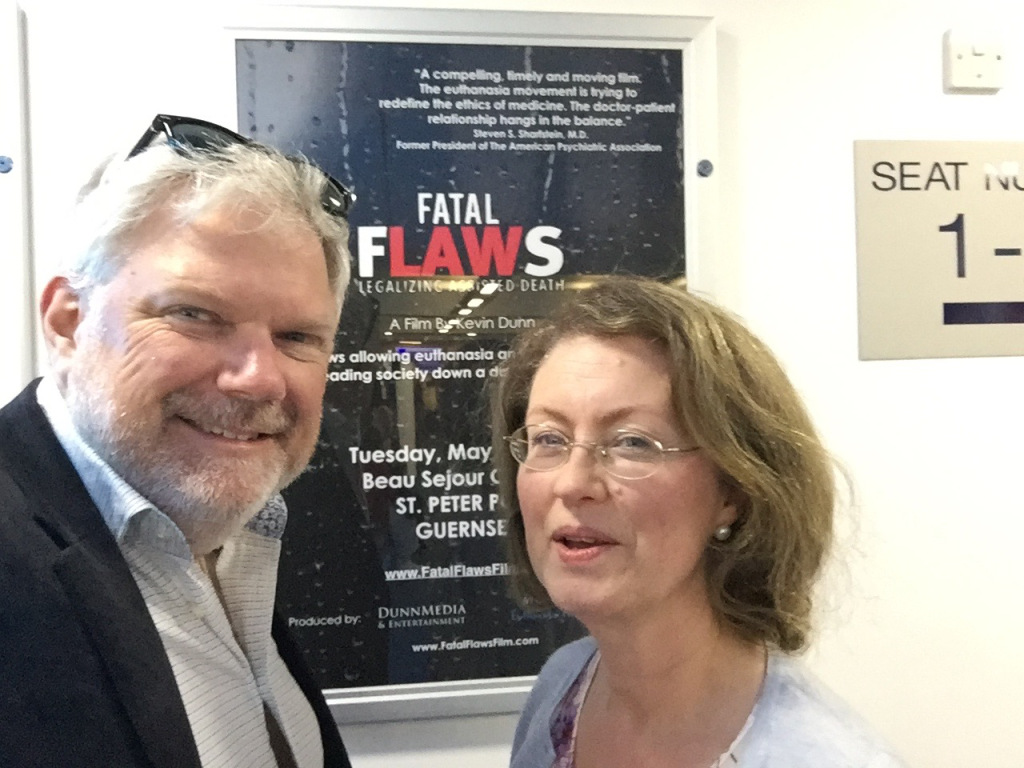
Kevin Dunn in Guernsey

If someone told me that one day I would be travelling around the world to speak on euthanasia and assisted suicide I would have been hard pressed to believe them. I mean, who in their right mind would want to talk about death as a calling?
 
For most of my career, I was either in front of the camera entertaining —or behind it, producing films on things like dinosaurs, spies, entrepreneurs or modern history. However, as I began inching towards the age of 50 (I’m a young 54 as I write this) the subject matter for my films took a seismic shift towards social justice issues – and in particular, laws that imply that some lives are not worth living.

As I write this, I’m flying home from my 20th talk of 2019 – this time in Minnesota and Wisconsin. I call it my “Prophets of Hope” tour because I honestly believe that is where the solution lies. Each of us has to become a prophet of hope – a reason for someone’s tomorrow – especially in light of laws that tell others to give up on hope. For some reason, despite dire warnings from jurisdictions experienced with the cultural effects of euthanasia and assisted suicide, countries and states continue to enact laws that allow doctors to provide lethal injections or drugs to citizens who ‘qualify’ under certain criteria. What was once deemed unthinkable is now an option — and in many ways has become a subtle obligation —as fear of future suffering, losing autonomy or becoming a burden are among the top reasons why people request it.

In my recent film Fatal Flaws: Legalizing Assisted Death, I asked Dutch journalist Gerbert Van Loenen if there was anyone covering the other side of the euthanasia debate. He emphatically responded – ‘I’m afraid no one’. I found this especially alarming because the boundaries of the euthanasia law in the Netherlands are expanding to the point where even people who are ‘tired of life’ might get access to a lethal dose – legally – in the near future. I mean how could things have gone off the rails so badly that a civilized country would actually consider legalizing suicide for what would otherwise be diagnosed as depression and despair? Is it not bad enough that people are now asking for euthanasia at the first diagnosis of terminal illnesses? Where was the media in all of this? Journalists have not been doing their job. This is what inspired me to do more.
 

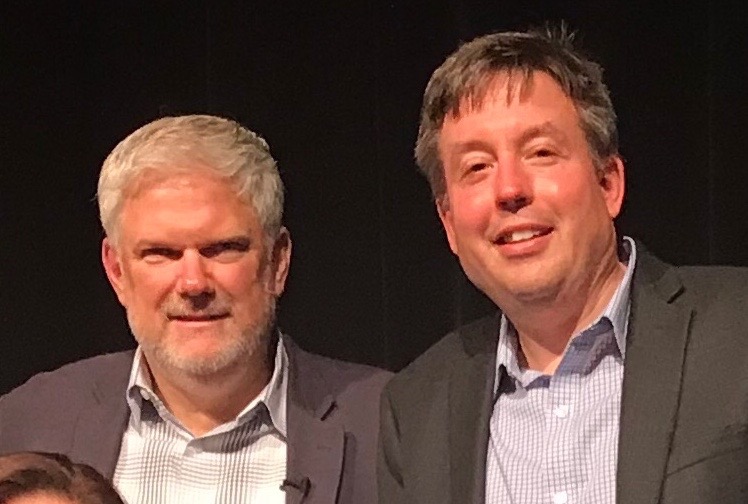
Alex Schadenberg & Kevin Dunn

Thankfully there are a handful of people who have been doing this issue justice – and one in particular for the past two decades: my friend Alex Schadenberg, Executive Director of the Euthanasia Prevention Coalition — a position he’s held for the past 20 years. Everywhere I speak, anytime I mention his name, Alex is known and respected. Even those who disagree with him have good things to say about his candour.

In November of 2015, I received an email from Alex asking me to create an information video which would educate people on these issues. He wanted to expose the risks associated with turning these previously criminal acts into some form of health care. Alex has been ringing the alarm bells since 1999, aware that the Kevorkian ideology was slowly trickling across the US border into Canada – and of the subtle but deadly introduction of language that was changing the act of murder into mercy killing; and assisted suicide into something called death with dignity.

With funding from the EPC, the information video quickly grew into a major documentary called The Euthanasia Deception produced by EPC and DunnMedia. The film took my crew and I through Belgium and various places in Canada where we found a plethora of underrepresented people who were waiting to tell their story on how these laws had deceived them. Patients, family members, medical professionals and ethicists all weighed in to paint a very grim picture of assisted dying laws.

Purchase the Fatal Flaws film (Link).
Purchase the Euthanasia Deception documentary (Link).

Just months after releasing The Euthanasia Deception, Alex and I heard about a strange phenomenon in the Netherlands called “Euthanasia Week”: an annual event of conferences, films and media interviews all geared at extolling the ‘virtue’ of Holland’s euthanasia law. This became one of the focal points for our next film, Fatal Flaws . It is now being screened and distributed internationally and won numerous awards.

Both films speak with authority because we hear stories from victims directly. As a filmmaker I know how important this is. I’ve seen first hand how the assisted death philosophy defines the person by their illness. This is absurd. We should never be defined by what malady assails us. We are defined by our worth as a created human being, deserving of the best care, the best pain management, the kind of dignity that says “I will walk with you and fight for you to the end – I will never abandon you by ending your life prematurely. As Mark Davis Pickup aptly noted in The Euthanasia Deception, “We should never judge tomorrow based on the fears of today.” Mark has lived with Multiple Sclerosis for over 30 years.

Margreet Van der Valk’s mother

I am formalizing plans for a speaking tour in Australia in August. It would seem the land down under is quickly falling prey to the culture of abandonment which we have sadly embraced here in North America and in parts of Europe. I share the stories of those who bravely came forward on camera to tell me how these laws have taken them or their loved ones to the brink of death. Sadly, some are not living anymore – like 29 year old Aurelia Brouwers whose life was cut short by euthanasia for psychiatric reasons; Tom Mortier’s mother who was euthanized for depression; and Margreet Van der Valk’s mother who was euthanized without request . I carry these heartbreaking stories with me everywhere I speak.

At the end of my talks, people always ask me for one practical thing they can do to stem the tide. Yes, we must step up to inform our politicians and medical professionals of what these laws imply. Sharing these films are a great start. However we must do more. We must challenge ourselves daily to become a prophet of hope: the reason for someone’s tomorrow. It could be as simple as visiting elderly parents, volunteering to drive someone to the hospital or playing Scrabble for an hour with a senior in a nursing home. These are ways we inspire hope in others so they don’t reach for these laws.

It’s been quite a journey creating these films along with with Alex Schadenberg – a true Prophet of Hope for our times. Thanks, too for inspiring me to take this ‘show on the road’ and inspire others. You can be sure I’ll be toasting your 20th – perhaps from some Irish pub in the land down under!

Kevin Dunn can be reached through his Website: http://www.KevinDunn.info

Vincent Lambert ordered to die by France’s highest appeal court.

Alex Schadenberg
Executive Director – Euthanasia Prevention Coalition


Sign the petition: Protect Vincent Lambert’s Life.

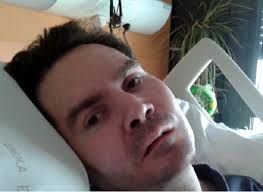
Vincent Lambert

On Friday, June 28, France’s highest appeal court ordered that treatment and care, including food and fluid, be withdrawn from Vincent Lambert, a man who was cognitively disabled in a motorcycle accident injury in 2008.

On May 20, Euro news reported that doctors, at a hospital in Reims France, were sedating Lambert as part of the process to withdraw fluids and food to cause him to die by dehydration, as approved by a court order.

Later, that day, Euro news reported that the Court of Appeal in Paris ordered that Lambert be fed and hydrated. The decision was in response to the UN Disability Rights Commission appeal. BBC news reported Lambert’s mother as saying:

“They are going to restore nutrition and give him drink. For once I am proud of the courts,” she said.

According to France 24, on Friday the Cour de Cassation reversed the decision of the Paris Court of Appeal. The article stated:

The ruling reverses a decision by another Paris court which last month ordered that Lambert’s feeding tubes be reinserted, just hours after doctors began switching off life support.

The Cour de Cassation did not consider the arguments for or against keeping Lambert alive, but only the question of whether the lower court was competent to rule on the case. 

In Friday’s decision, it found that the appeal court was not competent in a ruling that is final.

The news article misrepresents Lambert’s condition by stating the court approved turning off life support mechanisms. Lambert is not on “life support” he only needs to eat and drink.

In early May, 2019, the United Nations Committee on the Rights of People with Disabilities intervened in the Lambert case stating that causing Lambert’s death by dehydration contravened his rights as a person with disabilities. Section 25f of the United Nations Convention on the Rights of Persons with Disabilities requires nations to:

25(f) Prevent discriminatory denial of health care or health services or food and fluids on the basis of disability.

Therefore the decision of the highest court of appeal actually denies Lambert human rights.

Lambert is a cognitively disabled man who is not otherwise dying or nearing death. To directly and intentionally cause his death by withholding fluids is euthanasia by dehydration. If his fluids are withheld his death would not be from his medical condition but rather, he would die by dehydration, a terrible death.

Psychiatric euthanasia is a death sentence for depressed people.

By Mark Hodges (EPC Researcher)

This is for all the lonely people, thinking that life has passed them by: Don’t Give Up…” sang the pop group America in their 1974 number five hit song. Today, however, more and more doctors say to lonely people, “If you think life has passed you by, we’ll help kill you.” 

As we get older, it is normal to have regrets, or miss the exuberance of youth. The elderly can often experience reflective, sometimes melancholy moods. With age come various physical limitations and pains.

It often takes a loss of our youthful self-reliance to foster introspection necessary to recognize the most important things in life. “Teach me to number my days,” says the ancient proverb, “that I may gain a heart of wisdom.”

But today, instead of addressing the stages of life and its challenges, more and more doctors, where euthanasia is legal, are willing to end life –for no physical reason.

Alex Schadenberg of the Euthanasia Prevention Coalition explained.

“I have significant experience with people as they approach death, and it is natural to become unsure, or to feel your life has lost purpose, or to be depressed, or have feelings of loneliness. These are normal feelings,”  

“The sad reality with euthanasia and assisted suicide is that these normal feelings, once killing is legal, can become a death request, rather than a normal process of being human.”

Charles Bentz

Oregon Dr. Charles Bentz is just one example among many. His patient, an avid outdoorsman, was diagnosed with cancer, and became depressed. Dr. Bentz’ was asked to approve the assisted suicide death of his patient.

I said, ‘Wait a minute… What’s going on? Let’s talk about this,” Dr. Bentz recounted. But his colleague “must have found someone else, because two weeks later his patient was dead from an overdose of a medication.”

“So my colleague saw a patient with depression, but instead of addressing his depression, she gave him the means to kill himself.”

Dr. Bentz’ experience is not unique.

In the Netherlands, a woman in her twenties suffering from post-traumatic stress was given a lethal injection –despite her documented improvement after therapy. Doctors even admitted that a request for death could be really a cry for help. The woman’s therapy “was temporarily partially successful,” yet she was killed anyway.

Another healthy woman was euthanized because she and her deceased husband had agreed not to go on living after one of them died. She was granted a lethal injection, even though she “did not feel depressed at all. She ate, drank and slept well. She followed the news and undertook activities.”

In 2014, a healthy Italian woman was killed at a Swiss suicide clinic because she was depressed over how she looked.

Rosie DiManno

The Toronto Star’s Rosie DiManno explains what happens when someone falls into dark despair. 

“The ‘black dog’ clinical depression…locks on with pit bull jaws. And you forget that it will pass or at least abate. In the moment, it feels unendurable. Sometimes, you want to die.”

DiManno reasons that clinical depression clouds one’s thinking, and therefore depressed patients should not be candidates for assisted suicide. She says:

“Descending into that dark place where hopelessness – and psychical fatigue, really, just so damn tired of misery – renders rational thought impossible”

Enabling suicide is the opposite of medical treatment. All the more so for depressed patients. DiManno criticizes Belgium and the Netherlands –which now kill non-terminal people suffering from “incurable distress”— as “knocking off the depressed, because that’s what they want, as if the deeply disconsolate can possibly make an informed decision.”

“Among those “approved’’ for death have been people with autism, anorexia, borderline personality disorder, chronic fatigue syndrome, partial paralysis, manic depression, Alzheimer’s and a 24-year-old transgender man devastated by the failure of a sex-change surgery. None of these patients was dying. They just feel real bad… They were morbidly disconsolate and frail of mind. Which is a far sight from terminally ill and dying.”

Senator Denise Batters

Canada also legalized euthanasia for “psychological suffering.” Canadian Senator Denise Batters, whose husband died by suicide, spoke against assisted suicide for depression. 

“The committee did not require that illness be terminal or life-threatening. It included psychological suffering as grounds for physician-assisted death — without any requirement to consult a psychiatrist. It even recommended extending physician-assisted suicide to…those under 18.”

The New York Times ran an article pointing out that, 

“According to psychiatric experts, the vast majority of people requesting suicide are suffering from treatable depression, and no longer want to kill themselves once their underlying depression is resolved.”

“Once the depression lifts and people can think more clearly, the therapists say, those who were determined to kill themselves are thankful to be alive, despite their pain or grim prognosis.”

Senator Batters argued.

“The preservation of hope for mentally ill people is absolutely paramount,” 

“Those who endure psychological suffering need our support, our resources and our promise that we will never give up on them, even when they can see no other option but to give up on themselves.”

An analysis of Maine’s new so-called “Death With Dignity” law noted that 

“severely depressed or mentally ill patients can receive assisted suicide without having any form of counseling.”

Indeed, there is nothing in existing Maine law (or Oregon, Washington, or Vermont law) that requires doctors to refer patients to a therapist in order to screen for treatable depression or mental illness before enabling their suicide.

Society’s response to depression in the elderly or in youth or for people with disabilities must not be to enable their death, but to reach out to them on a personal level, and connect them to people and activities that restore a sense of being loved and wanted.

Instead, the number of suicides keeps growing, along with the rising rates of depression. Our Western culture canonizing individualism only exacerbates the depression epidemic.

The Center for Disease Control documented that between 1999 and 2016, the suicide rate in America increased in every state (except Nevada, which remained in the top ten states for suicide).

Judith Shulevitz in The New Republic reports that one in three Americans over 45 identifies as chronically lonely. One survey found:

“One in four Americans (27 percent) rarely or never feels as though there are people who really understand them. Two in five Americans…feel that they are isolated from others (43 percent). One in five people report they rarely or never feel close to people (20 percent) or feel like there are people they can talk to (18 percent).”

Signs of depression include feelings of helplessness or hopelessness, a loss of interest in daily activities, and a loss of energy. A severely depressed person my also idealize suicide by talking about self-harm, becoming pre-occupied with death, or saying things like “everyone would be better off without me.”


Schadenberg reveals 

“Society can reduce the scourge of suicide and the cultural abandonment associated with assisted suicide by caring for and being with others at their time of need,” 

“It is essential that people who feel their life lacks value or purpose, or feel no one cares, are offered purpose, support and genuine hope from their significant community.”

Schadenberg concludes

“Suicide is a symptom of mental illness, not a cure for it,”  

“The answer is not only talking about it, the answer is inclusion, caring and being with others as they journey through the difficult times of their lives.” 

Tom Mortier

Tom Mortier, who wasn’t informed of his mother’s death until the day after a doctor killed her for being depressed commented 

“The big problem in our society is that we have apparently lost the meaning of taking care of each other,” 

Professor Gregory Crawford of the Australasian Chapter of Palliative Medicine for the Royal Australian College of Physicians emphasized that people asking to die often need to be diagnosed and treated for depression. He relayed an example of one of his terminal patients who wanted to die. He treated her for severe depression by changing her medication, and

“She made a miraculous improvement, both physically and psychologically. She improved and lived for another 12 months. She had serious, progressive disease but her physical function and her ability to interact and live improved. She went off on a holiday, achieved some other things on her wish list and made lots of other nice memories for her family. She died at home, supported by our palliative care.”

Crawford concluded. 

“It showed me that sometimes the symptoms of impending death and the symptoms of advanced depression can look very much the same,” 

Andrew Lawton

Another example is Canadian media personality Andrew Lawton. He shared.   

“Nearly seven years ago I overdosed on dozens of pills — causing multiple cardiac arrests and weeks in hospital on life support,” 

“Everything from the method to the date and time was meticulously thought out… I’m sure I could have sold my own suicide given how convinced I was that it was the right call. That wouldn’t have made it any less flawed a conclusion.”

Lawton continued

“Suicidal people are irrational… This is true even when decisions appear to be made through logic and reason.”

“I appeared normal, despite not thinking normally. I saw suicide as the answer to pain I was convinced wouldn’t abate. I had tried myriad therapies, medications, and treatment throughout my years-long battle with depression. By the time I tried to pull the plug on my own existence, none had made an impact.”

After Lawton’s nearly successful suicide attempt, his attitude changed. Healing didn’t happen overnight, he says, and his circumstances didn’t change — “but my outlook did.”

“In 2010, no one could have told me happiness was possible. Today, I am married to the love of my life, working in a successful career, and able to look forward each day — all just a few years after I signed my own death warrant.”

People who are depressed are in the middle of, as Alcoholics Anonymous puts it, “stinking thinking.” They need help out of their depression, not the enabling and furthering of their mental darkness by assisted death.

Senator Batters points out the fallacy in suicide as a treatment for depression. She argues

“Physical and psychological illnesses are (not) the same,”“Psychological suffering on its own is not terminal. It is usually treatable.”

 Lawton agrees

“Mental and physical illness can’t be lumped into one category,” 

“When illness is in the mind, rather than the body, it calls any decision into question — an irreversible one all the more so.”

Batters adds

“Delivering the means to suicide straight into the hands of mentally ill individuals directly contradicts the suicide prevention standard in the mental health field.”

Lawton concludes.

“The role of health-care practitioners is…not to enable one’s disordered thinking by killing them,”  

“State-sanctioned death doesn’t help the mentally ill — it robs them of a chance for healing.”

Another problem with legalizing suicide for depressed people is there is no legal standard for “unbearable suffering” or “incurable depression.”

A major study published in the Journal of the American Medical Association Psychiatry concluded, “There is no evidence base to operationalize ‘unbearable suffering,’ there are no prospective studies of decision-making capacity in persons seeking EAS for psychiatric reasons, and the prognosis of patients labeled as ‘treatment-resistant depression’ varies considerably, depending on the population and the kind of treatments they receive.”

The British Medical Journal also published a study which concluded, “‘Unbearable suffering’ has not yet been defined adequately.” 


Schadenberg explains.

“People ask for euthanasia because they have lost hope. They may be in depression or experiencing distress, darkened by their reality, and feel that life has lost its purpose or value,”  

“In the past, doctors took this request to die as a cry for help, and they tried to find out what their patient needs to weather his or her overwhelming difficulty… I want a physician who will protect my life when I’m going through my deepest darkest times. When I’m going through that physical, psychological, emotional, or existential distress and I’m so darkened that I can’t see beyond my own difficulty, I need a physician who will say ‘no’ to me and will care for me, not kill me.”

Assisted suicide and euthanasia are not about freedom for the sufferer; it’s about abandoning the patient –particularly patients in despair. 

Dutch doctors blackmailed and pressured in euthanasia requests.

Alex Schadenberg
Executive Director – Euthanasia Prevention Coalition


This week I wrote an article titled: Dutch doctors pressured in euthanasia requests based on the abstract of a study and and an article in the Medical Bag

This follow-up article reports on the full study – Pressure in dealing with requests for euthanasia or assisted suicide. Experience of general practitioners.

The study interviewed 22 General Practitioners (GPs) and did indepth interviews with 15 GPs. The indepth interviews concerned 36 euthanasia deaths whereby the GP felt pressured. The study concluded that:

GPs experienced in dealing with EAS requests were revealed: (1) emotional blackmail, (2) control and direction by others, (3) doubts about fulfilling the criteria, (4) counterpressure by patient’s relatives, (5) time pressure around referred patients and (6) organisational pressure.

According to the study 11 of the 15 GP’s had done euthanasia many times, while the other four had done it once. The study described incidences of emotional blackmail:

GPs experienced pressure in cases where they felt emotionally blackmailed to perform EAS as if it were the patients’ right. This may be patient’s threatening to commit suicide: ‘If you do not help me this week I will have to jump’ (Case 2.3); family members threatening to murder the patient: ‘Well, will I have to do it myself then, will I have to put a pillow over her head? And then you will be the guilty one’ (Case 9.1); or jointly by patient and family: The patients says: ‘I want it [euthanasia] now, or else I will hang myself from the bridge,’ to which the partner of the patient reacts by saying: ‘he will do it for real’ (Case 6.2). 

These examples show how euthanasia can be a form of suicide by doctor, whereby the doctor reacts to suicide ideation with lethal injection. 

Under the heading, control and direction by others, the study states:

For example, in the case where the GP was still in the process of willingness to discuss euthanasia in due time and the patient suddenly said: ‘I have made up my mind, I want it [euthanasia] after my birthday, because I still want to celebrate my birthday.’ At this point, this GP started ‘feeling pressure, because she [the patient] very much took over control’ (Case 5.1). … Another GP described his unpleasant feeling when the patient who was about to receive euthanasia opened the door himself and led the GP into the living room which was full of people as if it was a birthday party: ‘Everybody had a glass of wine in his hands, while I was preparing the euthanatica’ (Case 13.3).

Case 13.3 shows a person who was not dying, opened the door to let the doctor into a room full of people who were having a “euthanasia party.”

The study comments on circumstances when the GP had doubts about the death fulfilling the criteria.

GPs reported also to experience pressure, in case they had doubts about fulfilling the legal criteria for EAS. One GP provided the example of a patient who was suffering from increasing dependency and loss of control: ‘I needed multiple meetings and time for myself to feel this [type of suffering] was enough for euthanasia.’ Looking back she felt forced to make a decision in a situation which to her felt as ‘too soon’ (Case 11.2). Another GP told about how she questioned herself whether the request for euthanasia of a patient with metastatic colon cancer was perhaps grounded in fear and ‘Can unbearable fear be a ground for euthanasia?’ She sighed: ‘In the acute moment you are actually on your own [to decide]’ (Case 6.3). 

These instances show how decisions are made to approve euthanasia in questionable circumstances.

The study then comments on counterpressure by patient’s relatives.

One GP counteracted this pressure by encouraging the patient to explicitly state to her partner: ‘I am dying, not you, and I am the one making this decision’ (Case 4.1). Another GP decided ultimately to not grant the EAS request because she did not want to ‘give your [the patients] wife a unacceptable problem and huge grief to [his] children,’ but was left with the feeling ‘we could have saved him [the patient] from dreadful weeks’ (Case 5.3).

Physicians should never euthanize a patient when the spouse is opposed. The death tranfers the pain from the person who is dying to the person who survives and the survivor is forced to live with the emotional and psychological pain, related to the euthanasia death. Last year I published this article: Grief and Suffering associated with death by euthanasia

Under the title: time pressure and referred patients, the study states:

There are cases where the GP feels pressured by the circumstances of a referred patient, with whom he/she lacks time to develop a trusting relationship. … While the patient felt ‘I have already talked this through and I want it [euthanasia] now,’ the GP found herself at the beginning of the decision-making process because this patient was just referred to her. Another GP described a patient who had ‘moved’ to one of his colleagues because they did not bond very well. Unfortunately, this colleague was not able to work around the moment the euthanasia was planned to be performed. The GP told: ‘Then I took back the euthanasia case of this patient, and I experienced it as a very annoying euthanasia.…I rather had not performed this euthanasia’ (Case 4.3). The GP felt he had no other option than to continue the euthanasia process his colleague already started

The last area, the study examines, is organisational pressure. The study reports:

Many GPs made reference in general terms to the difficulty of combining a euthanasia case with the daily work in their GP practice. All the arrangements to be made with regard to the pharmacy and the planning of consultations with other patients are referred to as ‘organizational hassle.’ … Euthanasia may also interfere with a GP’s family life, as explained by a GP who became very introvert and not very nice around the time cases took place, even to the extent that his wife had told him, ‘I do not want you to do that anymore.’

The concern that this study uncovers is that some euthanasia deaths are done based on pressure by the patient or by the family. In other words, these doctors are agreeing to kill a patient because they feel pressured to do the act.

This study purports to be the first study to explore the content of the pressure experienced by GP’s concerning euthanasia requests, but a much larger Netherlands study interviewed 800 GP’s in 2011 


I was recently contacted by a man living with quadriplegia who felt pressured by medical staff to “ask” for euthanasia. Candice Lewis and Roger Foley were also pressured to “request” euthanasia. The common denominator is that the person who is being pressured to death is living with a significant disability.
 
The studies concerning doctors being pressured to do euthanasia, likely share the same common denominator, that being the patient is significantly disabled and in this case, the family wants euthanasia.

 
This survey helps explains the incidence of euthanasia without request in the Netherlands. According to a study published in the New England Journal of Medicine in 2017, there were 431 terminations of life without request in the Netherlands in 2015.

 
It is natural that once euthanasia is legal, promoted, and normalized, that physicians will be pressured to do the act. It is also normal that once euthanasia is legal, that those physicians who do euthanasia will start to view certain life experiences as being “better off dead.”


Euthanasia is the killing of patients, usually on request. Society should always care for people and not kill.

Psychiatric euthanasia examined in the Netherlands.

Alex Schadenberg
Executive Director – Euthanasia Prevention Coalition

Dr Scott Kim

While researching the issue of psychiatric euthanasia I came across an article by Psychiatrist Scott Kim published in the Atlantic on June 6, 2019. The article explains how psychiatric euthanasia is approved in the Netherlands. The article: How Dutch Law Got a Little Too Comfortable with Euthanasia is based on the death of Noa Pothaven, who the english language media originally claimed had died by euthanasia. Kim explains that even though she didn’t die by euthanasia, that it was legally possible. Kim states:

I have researched the Netherlands’ experience in detail and written a number of peer-reviewed papers about it. In Dutch usage, the term euthanasia legally covers cases in which medical professionals administer lethal injection and those in which doctors provide drugs that patients ingest to end their life. The Dutch system gives deference to doctors’ expertise; it respects the relationship between an individual doctor and a patient; and it recognizes that mental illness can be painful and debilitating. Yet this system illustrates how priorities that appear logical on their own terms combine, in some cases, to produce disturbing results. A respected Dutch-language medical journal recently reported that an 18-year-old had died via medically assisted suicide for psychiatric problems.

Kim continues:

Until about 2010, the controversial practice of psychiatric euthanasia was rare, despite being permitted since the mid-1990s. Most Dutch psychiatrists—like most other doctors and the Dutch public—disapprove of psychiatric euthanasia. Still, there has been a steady increase, with 83 cases in 2017; the per-capita equivalent in the United States would be about 1,600 cases a year. Unlike euthanasia in general, psychiatric euthanasia is predominantly given to women. Most of these cases involve the End of Life Clinic, a network of facilities affiliated with the largest Dutch euthanasia-advocacy organization. These clinics routinely handle euthanasia requests refused by other doctors. (Noa Pothoven sought euthanasia there but was refused.)

Kim distinguishes between euthanasia for physical reasons compared to psychiatric reasons:

Compared with cases involving cancer or other terminal illnesses, the application of the eligibility criteria in psychiatric euthanasia depends much more on doctors’ opinions. Psychiatric diagnosis is not based on an objective laboratory or imaging test; generally, it is a more subjective assessment based on standard criteria agreed on by professionals in the field. Some doctors reach conclusions with which other doctors might reasonably disagree. Indeed, an otherwise healthy Dutch woman was euthanized 12 months after her husband’s death for “prolonged grief disorder”—a diagnosis listed in the International Classification of Diseases but not in the Diagnostic and Statistical Manual of Mental Disorders used by psychiatrists and psychologists around the world. 

Psychiatric disorders can indeed be chronic, but their prognosis is difficult to predict for a variety of reasons. There is a paucity of relevant, large longitudinal studies. Patients may get better or worse due to psychosocial factors beyond the control of mental-health providers. Also affecting prognoses is the varying quality and availability of mental-health care—which, even in wealthy countries, patients with significant symptoms may not receive. Noa Pothoven and her family had criticized the dearth of care options available in their country for patients like her. Indeed, more than one in five Dutch patients receiving psychiatric euthanasia have not previously been hospitalized; a significant minority with personality disorders did not receive psychotherapy, the staple of treatment for such conditions. When treatments are available, doctors in the Netherlands have the discretion to judge that there are “no alternatives” if patients refuse treatment.

Kim then explains the difficulty with psychiatric euthanasia:

It is not easy to distinguish between a patient who is suicidal and a patient who qualifies for psychiatric euthanasia, because they share many key traits. In some cases, psychiatric euthanasia is simply a highly effective means of suicide, as in the case of a man who attempted suicide, was hospitalized, and then received psychiatric euthanasia. 

In the end, one does not need to be a psychiatrist to appreciate how psychiatric disorders, especially when severe enough to lead to euthanasia requests, could interfere with a patient’s ability to make “voluntary and well considered” decisions—especially when that patient is a minor. The basis for concluding that any teenager with a psychiatric disorder has “no prospect of improvement” and “no alternatives” is likely to be uncertain at best.

Kim concludes that even though Noa Pothoven did not die by euthanasia, the Dutch law would have permitted it.

New Zealand Disability Commissioner Canada’s euthanasia concerns confirmed in UN report

The following media release was published by defend NZ on June 25, 2018

Paula Tesoriero

Disability Commissioner Paula Tesoriero outlayed her concerns about the End of Life Choice Bill to John Campbell on TVNZ’s Breakfast yesterday morning.

“I’m concerned that the safeguards are woefully inadequate,” she said. “I’m deeply troubled by the fact that this conversation is taking place in the absence of having a wider discussion about adequate disability support services in New Zealand.”

Ms Tesoriero referenced a recent report from the United Nations Special Rapporteur on the rights of persons with disabilities, Ms. Catalina Devandas-Aguilar, on her visit to Canada.

The UN report, published in April 2019, highlights concerns that disabled people are being pressured to consider euthanasia in Canada.

Ms. Devandas-Aguilar

In the report Ms. Devandas-Aguilar said, 

“I am extremely concerned about the implementation of the legislation on Medical Assistance In Dying from a disability perspective [in Canada].

“There is no protocol in place to demonstrate that persons with disabilities have been provided with viable alternatives when eligible for assisted dying. I have further received worrisome claims about persons with disabilities in institutions being pressured to seek medical assistance in dying, and practitioners not formally reporting cases involving persons with disabilities.” Ms. Devandas-Aguilar added.

David Seymour proposes to limit eligibility to people with either a terminal illness and six months or less to live, or a neurodegenerative condition and 12 months or less to live. Such an amendment may not succeed, because politicians on both sides are likely to vote against it: Those who want the Bill to fail and those who don’t want to discriminate against non-terminally ill people.

However, even if eligibility were limited to those with terminal or neurogenerative conditions, concerns from the disability community would still be relevant. Terminal illness usually involves disability.

The Bill’s eligibility criteria includes the clause, 

“I don’t want to be a burden on my family. The world has become selfish and greedy. I don’t want to take up my families time and energy that most families don’t have these days let alone financial assistance.”

Another reported, 

“I am terminal with ALS. These types of laws dehumanise people like me, as if our lives, pain and suffering are somehow less worthy of being experienced compared to any other hard work. They ignore the effects on family and friends, and ignore the opportunity of others to care and show compassion. If laws like this are passed, less effort will be spent finding a cure for ALS.”

Visiting Canadian euthanasia practitioner, Dr Stephanie Green, didn’t think that people who feel like a burden would be allowed to access euthanasia. She said, 

“If a patient comes and says to me, ‘Look, I’m a burden on my family. This is something I feel I need to do for the best for my family,’ that’s not an eligibility requirement.”

In response Ms Tesoriero pointed out that, 

“International evidence shows that one of the top five reasons that people request euthanasia or assisted dying is precisely because they feel like a burden on their families.”

There is a distinction between the eligibility criteria and the underlying reasons for requesting death.

In Oregon assisted suicide drugs are available to people with a terminal illness that is likely to end their lives within six months or less.

Feeling like a burden is not one of the eligibility criteria in Oregon. However, according to the 2019 official report, over half of recipients of ‘assisted dying’ cited “concern about being a burden on family, friends/caregivers” as a motivator.”

Alarmingly the most common reasons are related to disability – about the fear of being dependent on support for daily living. About 92% reported concern about “losing autonomy” as a reason. 91% cited concern about “being less able to engage in activities making life enjoyable”. 44% were concerned about “losing control of bodily functions”.

Only a quarter cited 

“inadequate pain control or concern about it.”

#DefendNZ encourage MPs to consider the impact the End of Life Choice Bill could have on Kiwis who have life-limiting conditions as well as disabilities – people who are already feeling emotionally vulnerable as a result of the euthanasia debate.

Design a site like this with WordPress.com
Get started