Oregon approves bill to expand assisted suicide law.

Alex Schadenberg
Executive Director – Euthanasia Prevention Coalition

The Oregon House passed a bill on Tuesday that expands the Oregon’s assisted suicide law by essentially waving the requirement of a 15 day waiting period.

Oregon Bill SB 0579 which enables a physician to wave the 15 waiting period states:

Notwithstanding subsection (1) of this section, if the qualified patient’s attending physician has medically confirmed that the qualified patient will, within reasonable medical judgment, die before the expiration of at least one of the waiting periods described in subsection (1) of this section, the prescription for medication under ORS 127.800 to 127.897 may be written at any time following the later of the qualified patient’s written request or second oral request under ORS 127.840.

By waving the 15 day waiting period, a person who is approved for assisted suicide could die by assisted suicide without an opportunity, if depressed, to change their mind. 

The assisted suicide lobby argues that assisted suicide laws have not expanded in Oregon, therefore there is no fear of expansion in other jurisdictions. Previous to this bill, Oregon had expanded assisted suicide by re-interpreting the meaning of terminal illness. In January 2018, Fabian Stahle proved that the Oregon Health Authority re-interpreted the meaning of terminal illness. Now Oregon has expanded the language of the legislation.

The Netherlands euthanasia law has expanding, not by changing the language of the law, but by changing the interpretation of the law. The latest Netherlands euthanasia statistics suggest that the euthanasia law was re-interpreted to include euthanasia for “completed life.”

Euthanasia leader sentenced to three years (house arrest) in South Africa.

Alex Schadenberg
Executive Director – Euthanasia Prevention Coalition

Sean Davison is a euthanasia activist who was previously convicted in the death of his mother in New Zealand in 2010.

Davison who was the President of the World Federation of Right to Die Societies and a leader of Dignity South Africa was convicted in the deaths of Anrich Burger (in 2013), Justin Varian (in 2015), and Richard Holland (in 2015).
 

Shamiela Fisher, reporting for Eyewitness news, stated that Davidson was sentenced to three years correctional supervision in the deaths. Fisher stated:

The Western Cape High Court also sentenced him to eight years behind bars which has been wholly suspended for five years on condition he is not convicted of murder, attempted murder or conspiracy to commit murder over this period.

The first charge relates to the death of Anrich Burger in 2013. Burger was a quadriplegic following a car accident in 2005. Davison administered a lethal dose of drugs to Burger.

The two other murder charges, which Davison has also pleaded guilty to, relate to the deaths of Justin Varian and Richard Holland.

He entered into a plea and sentencing agreement in the High Court on Wednesday in connection with cases in which he helped three Cape Town patients take their own lives.

Fisher reported that:

Professor Davison has been placed under house arrest for the full duration of his correctional supervision. He may, however, go to work, to a place of worship or visit a doctor.

I understand that this is a plea bargain deal but Davidson, the former President of the World Federation of Right to Die Societies, has essentially received no sentence in the deaths of three people. 

Being sentenced to 8 years behind bars but then being allowed to serve it as three years house arrest, but then be able to go to work, church and the doctor, is not a sentence at all.

Davidson does show the world how euthanasia activists become killers. He is known to have killed his mother and now three others.

Years ago, when I attended the World Federation of Right to Die Societies conference, I met a group of people who spent their time discussing over lunch the deaths that they had participated in.

This is a death cult not a human rights lobby.

Euthanasia: The role of doctors has fundamentally changed.

Alex Schadenberg
Executive Dirctor, Euthanasia Prevention Coalition
 

Today, the State of Victoria in Australia will institute its euthanasia law. Euthanasia has been debated in Australia since the Northern Territory legalized euthanasia in 1995 with the federal government overturning that law in 1997.
 

Dr Mark Yates

Mark Yates, a geriatrican and associate professor at Deakin University has written a great article that was published in Australia’s Age newspaper titled: This week, the role of doctors will fundamentally change.
 
Yates first states what euthanasia is:

This legislation will enable doctors, at the request of a patient who meets the legislative requirements, to inject their patient with a combination of drugs that have the sole purpose of ending their life.

Yates repeats the mantra that euthanasia will be rare. He states:

The fact that this will be a rare occurrence is irrelevant to the majority of the medical profession. The issue is that the role of the doctor is fundamentally changed by this legislation, from treatment to protect life and relieve suffering to now include intentionally causing the death of a patient.

The Québec Minister of Health suggested that there would only be 100 deaths per year, whereas data indicates that there were 1664 reported euthanasia deaths in the first 16 months of the law. Yates continues:

As a geriatrician who cares for frail older people, I know many who perceive they are a burden to society or their family. I am saddened by the additional burden they must now carry. The burden of choosing to continue with life or to have it terminated. Sadly, knowing both the best and worst of human nature and that 10 to 15 per cent of elderly people experience abuse, I now also fear for the risks some will be exposed to as a result of this new legislation.

Yates comments on medical error and oversight of the law.

The legislation cannot safeguard families from medical error because case review is always after the death with a seven-day window before the necessary paperwork is required to be submitted – long after cremation in many cases.

Yates concludes his article by sharing his concerns:

Mostly I am saddened by legislation that weakens the fabric of our society and puts the frail elderly at risk.

Sadly, once a society has crossed the line and accepted that it is acceptable for doctors to kill patients, the law is then pressured to expand to include other conditions and situations where someone is demanding death. The only acceptable response is to provide excellent care and never to approve killing patients.

Canada’s euthanasia lobby appears to be circumventing the law?

Alex Schadenberg
Executive Director, Euthanasia Prevention Coalition 

Last August, we were contacted by a woman who wanted to know how her nephew was approved for, and died by euthanasia (MAiD).

She explained that her nephew, who had a brain injury, made a request for death by MAiD in his local community. Since he did not have a grievous medical condition and since his “natural death was not reasonably foreseeable” he was told that he did not qualify for death by euthanasia.

She said that her nephew, then, contacted Dying With Dignity (DWD), a leading euthanasia lobby group in Canada, and soon after, he died by MAiD.

The questions are concerning: Did her nephew qualify for death by MAiD and if he didn’t why did a physician who works with Dying With Dignity (DWD) cause his death?

Yesterday, I received a fund-raising email from the DWD National Care and Support Navigator, who states:

I have supported, directly or indirectly, more than 1,000 people who needed our help navigating a request for medical assistance in dying (MAID).

Whether it’s by coordinating independent witnesses who can sign a person’s request for MAID — and in turn helping them meet a requirement in the law — or by putting a person in touch with a clinician willing to answer their questions, helping and empowering people is the best part of my job.

The fund-raising email continues by promoting the expansion of Canada’s euthanasia law to include incompetent people, who made a prior request for euthanasia.

The euthanasia lobby ignores the fact that incompetent people cannot confirm their request for lethal injection and they cannot change their mind.

Similar to the assisted suicide lobby in America, where Compassion and Choices facilitates most of the assisted suicide deaths in Oregon, the euthanasia lobby in Canada is facilitating euthanasia, while lobbying to expand the law.

The DWD fundraising email answered the questions I posed last August when the woman asked me how her nephew could have qualified for euthanasia.

Yes, DWD appears to be circumventing Canada’s euthanasia law.

Canada Embraces Euthanasia ‘Kill and Harvest’ Organ Donation

This article was published by National Review online on June 17, 2019

Wesley Smith

By Wesley J Smith


Canada has enthusiastically embraced euthanasia and all of its implications.

For example, following the crassly utilitarianism of Belgium and the Netherlands, the Journal of the Canadian Medical Association has published guidelines — written by a “blue ribbon panel,” don’t you know! — to govern when organ donation follows death by lethal injection euthanasia, a bureaucratic procedure that I bluntly call “kill and harvest.”

The media is all in. Recently, the Globe and Mail published a story extolling the idea — and now a medical writer for the CBC named Dr. Brian Goldman has endorsed kill and harvest.

But it is interesting, Goldman sees the protocol — that requires euthanasia before organ procurement — as merely a “first step.” Where might we expect the ever so nice Canadians to go from there? It’s not pretty. From, “Organ Donation After Medical Assistance in Dying Offers Possibilities:”

A new approach discussed in the commentary makes possible organ donation after MAID at home. The death occurs at home after which anesthesia drugs and life support are used to maintain the body during transport to hospital for organ donation.

In other words, the patient would be killed — and then resuscitated — not to save his life but maintain the viability of the organs.

Here’s the second idea:

Some experts have proposed that patients be permitted to consent to what’s called organ donation euthanasia. This involves putting the patient under anesthesia followed by getting the organs ready for removal. The doctors would then use potassium chloride to stop the heart, following which the organs would be removed. 

This controversial approach could potentially make all organs including the lungs and the heart available to would-be recipients.

While we are discussing turning transplant doctors into killers, it is worth noting that an article published in New England Journal of Medicine in 2018 went even farther than the two proposals Goldman discussed, that is, to arguing that the killing itself should be accomplished by the organ harvesting. Nor is that the not the only such proposal published recently by a mainstream medical journal.

Goldman believes it is “unlikely” that these next steps will gain widespread support in the near future. Baloney. Canada has already determined to treat those who want to die — many of whom would live months or years but for being lethally injected — like so many organ farms. That’s the hard ethical hurdle. Given the speed and enthusiasm with which most of Canada has embraced euthanasia, I predict one or more of these crass proposals will be accepted by our northern neighbors within five years.

Attacks on Conscience Rights are also an American concern.

By Mark Hodges (EPC researcher)

The Canadian Parliament is debating whether doctors may follow their vow and conviction to “do no harm,” or if government can force them to violate their most sacred and deeply held belief against euthanasia (lethal injection).

On the crucial conscience rights issue, the United States is only a step behind Canada, and may be closing in fast.


Saskatchewan MP David Anderson sponsored the Conscience Rights protection bill (C-418) that will determine whether conscientious objecting physicians will leave their profession, or forced to be complicit with killing.

Over the past decade, a debate has arisen over “competing rights,” namely, the fundamental right of physicians and other citizens to practice with integrity and conscience, versus a new “right” of patients to be euthanized upon request, regardless of their doctor’s convictions.

Assisted suicide advocates in both Canada and the U.S. say doctors’ rights must be overridden or compromised in favor of the “right to die”. In 2016, the Canadian Medical Association voted against physicians’ conscience rights by a margin of 71 percent.

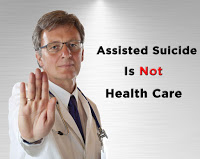
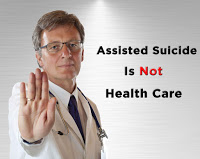
Conscience supporters say assisted suicide is not healthcare, and it is a doctor’s right to refuse to kill his/her patients, or refuse to prescribe lethal medication, and refuse to refer or be complicit with the act.

After Canada’s Supreme Court decriminalized euthanasia in 2015, the College of Physicians and Surgeons of Ontario promoted what they called a “compromise” which did not require doctors to lethally inject patients but it required doctors who objected to refer their patients to a death doctor.

This stripping of individual conscience rights is spreading to the United States. Proposed assisted suicide bills in Massachusetts, Minnesota, New Mexico, and Wisconsin included clauses to force objecting physicians to refer for suicide.

Belgium is following Ontario by pressuring all physicians regardless of conviction to refer for death by euthanasia.

Last year, the Ontario Court of Appeal upheld the College’s coercion, admitting that physicians’ rights were indeed “infringed” by the policy, but the infringement is reasonable in a democratic society. In an unprecedented ruling against Charter rights, the court institutionalized a “limit” on fundamental freedoms in the name of “ensuring access” to death “care.” 
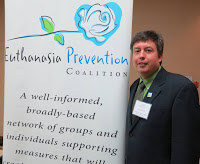
Alex Schadenberg

The Euthanasia Prevention Coalition criticized the decision as no “compromise” at all. Alex Schadenberg stated that facilitating suicide makes one complicit in the act. He said:

“If it’s wrong to do the act, then it’s also wrong to send a patient to somebody else who will do the act,”

Ethicist Dr. Edmund Pelligrino explained that referring is participation. He reasoned.

“Formal cooperation is absolutely and always, forbidden. …This is the case when the physician shares the evil intent, partakes directly and freely, or in any way facilitates an intrinsically evil act like…assisted suicide.”

Pro-assisted suicide politicians and doctors in the U.S. have begun to accuse physicians who refuse to practice assisted suicide of “abandoning patients.” Ironically, even ethicists in professional journal articles have called refusal to refer for death “a toxic form of patient abandonment.”

Alex Schadenberg disagree’s, in life-or-death terms.

“People ask for euthanasia because they have lost hope. They may be in depression or experiencing distress, darkened by their reality, and feel that life has lost its purpose or value. In the past, doctors took this request to die as a cry for help, and they tried to find out what their patient needs to weather his or her overwhelming difficulty. The conscientious physician isn’t abandoning his or her patient, they’re caring for that person.”

Conscience advocates add that this is as much an issue of patients’ rights as it is of physicians’ rights.

“Physician conscience rights are important for physicians, but they are more important for protecting patients,”

Schadenberg pointed out, saying that conscience rights are central to protecting patients when they are most vulnerable. 

“I want a physician who will protect my life when I’m going through my deepest darkest times. When I’m going through that physical, psychological, emotional, or existential distress and I’m so darkened that I can’t see beyond my own difficulty, I need a physician who will say ‘no’ to me and will care for me, not kill me.”

Schadenberg concludes that denying conscience rights to physicians actually denies patients their right to live.

Conscience rights are not just for the religious; there are clear secular reasons to object to assisted suicide. First of all, suicide devalues human life.

The American College of Physicians stated in 2001.

“Both society in general and the medical profession in particular have important duties to safeguard the value of human life,” 

“This duty applies especially to the most vulnerable members of society.”

A second conviction against assisted suicide is that, with modern medicine and advances in palliative care, pain can be managed.

The Canadian Society of Palliative Care Physicians issued a statement against assisted euthanasia that emphasized palliative care’s mission is 

“to help patients live as fully as possible until their natural death. Palliative care strives to reduce suffering, not to intentionally end life… The Canadian public must be able to continue to trust that the principles of palliative care remain focused on effective symptom management and psychological, social, and spiritual interventions to help people live as well as they can until their natural death.”

Janice Strukoff of the Delta hospice spoke out against a 2018 edict by the Fraser Health Authority in British Columbia ordering healthcare facilities –including hospices– to participate in Medical Aid in Dying (euthanasia). 

“Hospice palliative care is not about hastening death, and we object to the bullying currently taking place in B.C.”
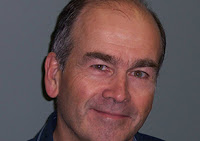
Dr Neil Hilliard

The medical director of Fraser Health Palliative Care, Dr Neil Hilliard, resigned over the edict. He stated

“Providing euthanasia or physician-assisted suicide is not in accordance with palliative care, (which) ‘affirms life and regards dying as a normal process,’”

A third argument against assisted suicide is that physician-complicit killing destroys the doctor-patient trust to heal and do no harm.

“Legalizing euthanasia or physician-assisted suicide would have a profound and detrimental effect on the doctor–patient relationship,” 

The British Medical Association stated just sixteen years ago (2003). 

“It would be unacceptable to put vulnerable people in the position of feeling they had to consider precipitating the end of their lives.”

A fourth argument comes from the experience of states and countries where assisted suicide and euthanasia are legal. History proves that once euthanasia is accepted, limitations on candidates diminish and authorized applications expand.

Examples of the limits on euthanasia eroding are happening now. Since legalizing assisted suicide, the Oregon Health Authority changed the definition of “terminal illness” from its universally-understood meaning of “incurable and irreversible fatal disease” to include treatable medical conditions if a patient refuses to take his or her medicine.

Another example of expansion is the several assisted suicide bills debated in the Oregon legislature. One redefines “self-administer” so that the suicidal patient can legally be killed (commit “suicide”) by someone else. Another bill lengthens the necessary prognosis of six months to live. Another enables a pro-suicide doctor to wave the 15 day waiting period. Another widens “terminal” to include any medical condition that ultimately could “substantially contribute to a patient’s death.”

Some euthanasia activists go so far as to elevate the “right to die” to a “duty to die” for patients whose care “costs” too much for their families or for society at large.

In a speech to the Health Lawyers Association, then-Colorado Governor Richard Lamm stated in 1984 that the terminal elderly have “a duty to die and get out of the way,” because giving them health care would turn the U.S. into a “second-rate economic nation.” Time, the Washington Post, and the New York Times reported his remarks favorably.

It must be noted that this callous, purely economic reasoning is precisely the attitude that led pre-Nazi Germany to “dispose” of human “life devoid of value.” 

Dr. Leo Alexander, a Boston psychologist and the American psychiatric representative to the Nuremberg trials, explained that the foundations of genocide lie in euthanasia. Dr. Alexander wrote in the New England Journal of Medicine in 1949:

“The beginnings were at first merely a subtle shift of emphasis in the basic attitudes of physicians in the 1920s. It started with the acceptance of the attitude, basic in the euthanasia movement, that there is such a thing as a life not worthy to be lived,”

“This attitude in its early stages concerned itself merely with the severely and chronically sick, (then)…the socially unproductive, the ideologically unwanted, the racially unwanted, and finally all non-Germans. But it is important to realize the infinitely small wedged-in lever from which the entire mindset received its impetus was the attitude toward the non-rehabilitable sick.”

Summarizing reasons to oppose euthanasia, a 2012 statement from the Ethics, Professionalism and Human Rights Committee of the American College of Physicians read

“Making physician-assisted suicide legal raised serious ethical, clinical and social concerns and that the practice might undermine patient trust; distract from reform in end-of-life care; and be used in vulnerable patients, including those who are poor, are disabled, or are unable to speak for themselves or minority groups who have experienced discrimination.”

These reasons show that physicians’ right to refuse to prescribe death is not necessarily based on faith, but grounded in foundational understandings about humanity and healthcare.

David Anderson MP

Physicians leaving medicine is just what is happening in Canada. MP David Anderson testified

“I have spoken to doctors who feel overt pressure to leave family medicine because of their conscientious beliefs,”

“I have heard of palliative care doctors in Ontario who have stopped practicing altogether. Nurses who feel increasingly bullied are choosing to shift their focus or retire early. I have had personal conversations with people who work in old folks’ homes who explain they do not want to participate in this but are increasingly feeling pressured to do so.”

The effect of Canada’s euthanasia law is to force euthanasia objectors out of their chosen practice, or out of healthcare altogether. In May of this year, the Court of Appeal for Ontario brazenly exposed that effect as intended, actually advising conscientious medical workers to find a job where assisting suicide would not be required.

Anderson lashed out against the court’s insulting advice, calling it 

“incredibly demeaning to those men and women who have gone through years of training.”

“They are being punished for holding that level of dignity, respect and honor for their patients.”

Anderson continued:

“We have such a shortage of physicians and medical services,” 

“Particularly in rural areas, there is an increasing lack of physicians in an increasingly challenged medical system… The answer does not have to be to do it, find someone else to do it or get out of medicine.”

Fortunately, a flickering spark of common sense has been ignited in various places, and we must fan that into a flame.

The U.S. State Department report on international freedoms singled out a growing trend of prospective healthcare professionals whose potential is destroyed by a lack of conscience rights. 

“Medical and nursing students…expressed their reluctance to enter the health care field as a whole, and particularly specialties…where their objections to…euthanasia might not be respected.”

The Trump administration has officially noted Canada’s trashing of doctors’ conscience rights. Last year, U.S. Secretary of State Mike Pompeo released a report pointing out that Canada’s “regulations requiring doctors to refer patients seeking assisted death…constituted facilitation and violated constitutional guarantees of freedom of conscience and religion.”

Earlier this year, the Trump Department of Health and Human Services (HHS) reversed Obama rules and mandated conscience protections 

“for physicians, pharmacists, nurses, teachers, students, and faith-based charities,” exempting them from “having to provide, participate in, pay for, provide coverage of, or refer for, services such as…assisted suicide.”

HHS regulations now protect healthcare entities that object to 

“assisted suicide, euthanasia, or mercy killing” from “being required to perform, participate in, pay for, provide coverage for, counsel or refer for…euthanasia.”

Freedom of conscience “is the bedrock of American life,” President Donald Trump proclaimed.

The new HHS rules specifically include as unlawful discrimination:

“being steered away from a career in obstetrics, family medicine, or geriatric medicine, when one has a religious or moral objection to…physician-assisted suicide or euthanasia.”

Roger Severino, director of HHS’s Office for Civil Rights, elaborated

“This rule ensures that healthcare entities and professionals won’t be bullied out of the healthcare field because they decline to participate in actions that violate their conscience, including the taking of human life.”

Besides the current U.S. administration, there are other glimmers of hope. Last year the Norwegian Supreme Court handed down a landmark conscience rights ruling supporting a Polish physician who was fired for following her conscience not to kill.

In Canada, the province of Manitoba passed conscience rights legislation in 2017 allowing doctors to opt out of killing. MP David Anderson told Parliament.

“The example of the province of Manitoba…shows there does not need to be compulsion in the medical system when it comes to this issue,” 

“Why would one try to force people into doing what they believe to be wrong?”

David Anderson’s bill (C-418) has enabled debate in the Canadian Parliament. He told Parliament Bill C-418 would:

“provides the teeth” that the current law lacks. “make it an offence to intimidate” a healthcare worker “to take part, directly or indirectly, in the provision of physician-assisted suicide.” It would also stop hospitals and employers from firing healthcare workers who opt out of assisting in a patient’s suicide.

It is said, “Where the battle rages, loyalty is proved.” The fight for conscience rights is immediate and intense, and the outcome is in question not only for Canada, but the U.S. and the rest of the civilized world.

American Medical Association opposes assisted suicide.

Alex Schadenberg
Executive Director – Euthanasia Prevention Coalition

Fabulous news. 

The American Medical Association (AMA) has overwhelmingly upheld its opposition to assisted suicide.

After years of deliberation the (AMA) delegates, at their House of delegates meeting, supported the assisted suicide report of the Council on Ethical and Judicial Affairs (CEJA) by a vote of 360 to 190 and re-affirmed their position opposing assisted suicide by a overwhelming vote of 392 to 162.

Joyce Frieden, reporting for Medscape on the deliberations stated that the delegates supported two opinions. That being:

… Code of Medical Ethics Opinion 5.7, which states that “permitting physicians to engage in assisted suicide would ultimately cause more harm than good. Physician-assisted suicide is fundamentally incompatible with the physician’s role as healer, would be difficult or impossible to control, and would pose serious societal risks. Instead of engaging in assisted suicide, physicians must aggressively respond to the needs of patients at the end of life.”

… E-1.1.7 of the AMA’s Principles of Medical Ethics, states that “Physicians are expected to uphold the ethical norms of their profession, including fidelity to patients and respect for patient self-determination … Preserving opportunity for physicians to act (or to refrain from acting) in accordance with the dictates of conscience in their professional practice is important for preserving the integrity of the medical profession as well as the integrity of the individual physician, on which patients and the public rely. Thus physicians should have considerable latitude to practice in accord with well-considered, deeply held beliefs that are central to their self-identities.

Frieden, reporting for Medscape, stated that Diane Gowski, MD, of Clearwater, Florida, an alternate delegate for the Society of Critical Care Medicine and speaking on behalf of the Chest Caucus stated:

“We would not give our patients a gun or revolver … so we should not be supplying them with lethal drugs. Physician-assisted suicide violates natural moral law. We urge the AMA to stand firm, as any change from the current position will only confuse the public as to the intention and role of their physicians.”

Dr Shane Macaulay

According to Frieden Shane Macaulay, MD, of Kirkland, Wash., speaking for the Washington delegation stated:

“Oregon legalized assisted suicide in 1997 with repeated assurances that it would stay contained and would not become euthanasia,” he said. “Just last month, the Oregon state House of Representatives approved a bill to allow patient death by lethal injection, showing the inevitable progression from assisted suicide to euthanasia once physicians have accepted the idea that taking a patient’s life is permissible.” 

“In Canada, assisted suicide and euthanasia were legalized only 3 years ago, and in the 3 years we’ve debated this topic here, euthanasia has become a runaway contagion in Canada, with over 4,000 deaths last year.” 

“These alarming developments show us that the wheels are coming off bus on assisted suicide. We do not have the luxury of time to continue to fail to act on the CEJA report while the real-world situation deteriorates. Unless we’re willing to embrace widespread euthanasia, we must accept the CEJA report and reaffirm this policy now as a firewall against what is [happening in] Canada.”

At a 2016 meeting of the AMA, delegates voted to ask CEJA to review the AMA policy on assisted suicide.

In May 2018, CEJA upheld the AMA policy on assisted suicide, but in June 2018, AMA delegates asked CEJA to continue reviewing its policy on assisted suicide.

In October 2018, CEJA adjusted the language of its policy while upholding that the AMA maintain its opposition to assisted suicide. In November 2018, AMA delegates once again decided to ask CEJA to continue reviewing the AMA policy on assisted suicide.

After three years of intense review of its assisted suicide policy, AMA delegates overwhelmingly upheld that assisted suicide is incompatible with the physician’s role as healer.

Maine Governor signs assisted suicide bill.

This article was published by the National Review online on June 14, 2019

Wesley J Smith

By Wesley J Smith


Maine Governor Janet Mills (D) just signed a bill legalizing assisted suicide. That means she is pro, at least some, suicides.

But her statement justifying her signing goes even further, and in my view, crosses the line to full-bore pro-suicide advocacy. From the Courthouse News Service story:

“It is not up to the government to decide who may die and who may live, when they shall die or how long they shall live,” Mills said in a statement. “While I do not agree that the right of the individual is so absolute, I do believe it is a right that should be protected in law…

That’s a very opened-ended statement. If government has no right “to decide who may die and who may live, when they shall die or how long they shall live,” we might as well kiss government-sponsored suicide-prevention programs goodbye. We should tell cops not to pull people off bridge precipices. And no more forced hospitalizations for treatment of those found beyond a reasonable doubt to be a danger to their own lives.

Mills also said that she hopes that assisted suicide is committed “sparingly” and that the state “should respect the life of every citizen.” Talk about hollow rhetoric! When committing suicide is depicted as a “right,” on what basis would the exercise of that liberty be rarely used?

Mills also bowed to supporting hospice and palliative care. But hospice is about living. In contrast, assisted suicide is about dying.
Moreover, suicide prevention is one of hospice’s core services — which legalizing assisted suicide substantially undermines. Indeed, where it is legal, most victims of doctor-prescribed death in hospice never receive any suicide prevention at all.

Perhaps Mills was clueless about the import of her words. And I have no doubt she opposes the suicides of teenagers and people with a transitory or impulsive desire to die.

But that isn’t the same thing as being anti-suicide. When a governor supports some suicides — which she clearly does — that is pro-suicide. When a governor affixes her signature to a law granting the state’s imprimatur to suicide facilitation, that is pro-suicide. Indeed, when a governor proclaims that government should have no role in saving the lives of all suicidal people, there is nothing else to call it.

American Medical Association overwhelmingly upholds its opposition to assisted suicide.

Alex Schadenberg

Executive Director – Euthanasia Prevention Coalition

I have great news

The American Medical Association (AMA) upheld its opposition to assisted suicide by a vote of 65% to 35% today. 


The AMA overwhelmingly maintained that:

“Physician-assisted suicide and euthanasia are fundamentally incompatible with the physician’s role as healer, would be difficult or impossible to control, and would pose serious societal risks”

At a 2016 meeting of the AMA, delegates voted to ask the Council on Ethical and Judicial Affairs (CEJA) to review the AMA policy on assisted suicide.

In May 2018, CEJA upheld the AMA policy on assisted suicide, but in June 2018, AMA delegates once again asked CEJA to continue reviewing its policy on assisted suicide.

In October 2018, CEJA adjusted the language of its recommendation while upholding that the AMA maintain its opposition to assisted suicide. In November 2018, AMA delegates once again decided to ask CEJA to continue reviewing the AMA policy on assisted suicide.

After three years of intense review of its assisted suicide policy, AMA delegates overwhelmingly upheld that assisted suicide is incompatible with the physician’s role as healer.

Dr William Reichel: Rejecting assisted suicide is a wise decision.

(Sadly the Maine Governor signed the assisted suicide bill).

I have studied assisted suicide since 1984, mostly at Georgetown University Medical Center. I am a Past President of the American Geriatrics Society and I have published a number of papers on this subject, the most important one in The Lancet in 1989. I also discuss this subject in my text Reichel’s Care of the Elderly, 7th Edition, Cambridge University Press.

I am strongly opposed to assisted suicide because it may be performed for the wrong reasons. Would a selfish family member want to receive the inheritance sooner than the projected estimated time for that relative’s illness? Or can the medical system selfishly want to avoid a prolonged hospital or nursing home stay? Would a doctor want to make it easier by not getting a second opinion that some states require? The literature from the Netherlands and Belgium describe many violations of government policy including not stating the true cause of death and even not getting the patient’s permission.

I imagine that you may be very overwhelmed with this issue and others. But I urge you to please consider what I have shared with you. I feel certain that you will think back and realize that rejecting assisted suicide for Maine is a wise decision.

William Reichel, M.D. 
Affiliated Scholar 
Center for Clinical Bioethics 
Georgetown University Medical Center Washington, D.C.

Design a site like this with WordPress.com
Get started