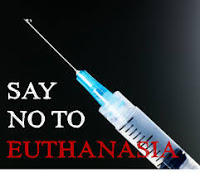
Euthanasia and Physician-Assisted Suicide are Unethical Acts.

The following article was published in the May 2019 edition of the World Medical Association Journal. (Link)

This article is written by Dr’s Ewan Galigher, Maria Gigolini, Alana Cormier, Sinéad Donnelly, Catherine Ferrier, Vladimir A Gorshkov-Cantacuzéme, Sheila Harding, Mark Komrad, Edmond Kyrillos, Timothy Lau, Rene Leiva, Renata Leong, Sephora Tang and John Quinlan.

The World Medical Association (WMA), the voice of the international community of physicians, has always firmly opposed euthanasia and physician-assisted suicide (E&PAS) and considered them unethical practices and contrary to the goals of health care and the role of the physician [1]. In response to suggested changes to WMA policy on this issue, an extensive discussion took place among WMA Associate Members. We, representing a voice of many of those involved in this discussion, contend that the WMA was right to hold this position in the past and must continue to maintain that E&PAS are unethical.
 

The Central Issue Under Debate is the Ethics of E&PAS
 

The question is whether it is ethical for a doctor to intentionally cause a patient’s death, even at his or her considered request. The fact that E&PAS has been legalized in some jurisdictions and that some member societies support these practices has no bearing on the ethical question. What is legal is not necessarily ethical. The WMA already recognizes this distinction, for example, by condemning the participation of physicians in capital punishment even in jurisdictions where it is legal. The WMA should be consistent in this principle also with respect to E&PAS.

E&PAS Fundamentally Devalues the Patient
 

This devaluation is built into the very logic of E&PAS. To claim that E&PAS is compassionate is to suggest that a patient’s life is not worth living, that her existence is no longer of any value. Since the physician’s most basic tasks and considerations are to ‘always bear in mind the obligation to respect human life’ and ‘the health and well-being of the patient’ [2, 3], E&PAS must be opposed. E&PAS distorts the notion of respect for the patient. On the one hand it claims to help suffering persons, while on the other hand it eliminates them. This is a profound internal contradiction; the ethical priority is to respect the fundamental intrinsic worth of the person as a whole.
 

E&PAS Puts Patients at Risk
 

Patients are autonomous agents but are not invulnerable to their need for affirmation from others, including their physician. Amidst the overwhelming fears of those who suffer (4, 5), a free autonomous decision to die is an illusion. Particular concern exists for those who may feel their life has become a burden due to changing perceptions of the dignity and value of human life in all its different stages and conditions, and an explicit or implicit offer of E&PAS by a physician profoundly influences the patient’s own thinking. The troubles of human relationships within families, the presence of depression, and problems of abuse and physician error in an already stressed medical system, make muddy waters even more turbulent [6]. Evidence shows that societies cannot always defend the most vulnerable from abuse if physicians become life-takers instead of healers [1, 6]. The power of the therapeutic relationship cannot be underestimated in the creation of patient perceptions and choices.

E&PAS Totally Lacks Evidence as ‘Medical Treatment’


The consequences of E&PAS are unknown as both physicians and patients have no knowledge of what it is like to be dead. Advocates of E&PAS place blind faith in their own assumptions about the nature of death and whether or not there is an afterlife when arguing that euthanasia is beneficial. E&PAS is therefore a philosophical and quasi-religious intervention, not a medical intervention informed by science. Doctors should not offer therapy when they have no idea of its effects—to offer E&PAS is to offer an experimental therapy without any plans for follow-up assessment. Therefore, key elements in any medical intervention such as informed consent are simply not possible without knowing what stands on the other side of death. Rather than a standard medical discussion of alternatives based on scientific data or clinical experience, the discussion must leave the clinical domain and enter the domain of speculation. This is not an exercise in informed-consent. This is not the accepted medical ethics of medical practice. All this is, in part, why E&PAS cannot be a medical procedure.
 

These Weighty Moral Considerations are Supported by the Ethical Intuition of the Global Medical Community
 

Only a small minority of physicians support E&PAS. The vast majority of doctors around the world wish only to foster the will to live and to cope with illness and suffering, not to facilitate acts of suicide or to create ambiguity around what constitutes a medical treatment. We must remember that
the four regional WMA symposia demonstrated that most doctors would never be willing to participate in euthanasia. Even the insistence of E&PAS proponents on (a) using ambiguous language such as ‘Medical Assistance in Dying’ to describe their practice and (b) avoiding mention of E&PAS
on death certificates suggests that they share to some degree this fundamental ethical intuition about killing patients.
 

Acceptance of E&PAS Undermines Boundaries Between End-Of-Life Care Practices That do not Intend Death (palliative care, withholding/withdrawing lifesustaining therapy) and Those that do Intend Death (E&PAS)
 

Confusion is created at a societal level about what constitutes “medical treatment,” especially when language such as “medical assistance in dying” or “voluntary assisted dying” is used. This renders the reality of such acts and their application unclear. As many patients share our conviction that deliberately causing death is wrong, a misunderstanding of the distinction between E&PAS and palliative care may lead to rejection of palliative care or insistence on futile life-sustaining therapies. The availability of E&PAS also distracts from the priority of providing social services and palliative care to those who are sick and dying [7].

The WMA’s Code of Ethics Strongly Influences Standards for the Practice of Medicine Around the World and Neutrality on E&PAS by the WMA Would be Interpreted Globally as Tacit Approval
 

A change in the WMA statement would imply a tacit endorsement of E&PAS and render the WMA complicit with such practices [8, 9]. Neutrality by professional medical organisations on E&PAS is perceived by society, governments and the international pro-euthanasia lobby as that organisation’s acceptance of them as medical practice, rather than as a response to a societal/political agenda. Those who seek international approval to justify these practices will create a silencing of the majority of the community, which has real medical, societal and ethical concerns around E&PAS and their effects on society internationally.
 

WMA policy on E&PAS reflects that which is in place in hundreds of jurisdictions with widely divergent legal and political traditions. While it may be tempting to placate some member societies so as to avoid dissension, we must not destabilize medical ethics around the world. We must continue to characterize E&PAS as unethical even if it conflicts with the demands of the state or influential groups backed by the law. We must not let imperfect law trump good medical ethics. Undoubtedly many doctors who perform E&PAS believe themselves to be acting nobly; but it does not follow that they should expect others to affirm their views or not to oppose them; nor are they wronged by existing WMA policy. Any society that insists on transforming suicide from a freedom to a right, should stand up a different profession with the duty to fulfil that new right, as killing does not belong in the House of Medicine.
 

Neutrality on E&PAS has Serious Consequences for Physicians who Refuse to Participate 

In jurisdictions where E&PAS is legalized, physicians who adhere to the long-standing Hippocratic ethical tradition are suddenly regarded as outliers, as conscientious objectors to be tolerated and ultimately excluded from the profession [10]. A neutral stance by the WMA would compromise the position of the many medical practitioners around the world who believe these practices to be unethical and not part of health care. In some jurisdictions it is illegal not to refer for these practices, creating a dystopic situation where the doctor who practises quality end-of-life care needs to conscientiously object in order to do so, and may be coerced to refer for E&PAS. Neutrality from the WMA would promote the contravention of the rights and ethical practice of these doctors, undermining their ethical medical position at the behest of a societal demand that can fluctuate with time.
 

In sum, the changes currently being debated, arising from political, social, and economic factors, have been rejected time and again and most recently by the overwhelming consensus of WMA regions. The present debate represents a crucially important moment for the WMA that must not be squandered. Given the influence of the WMA and the profound moral issues at stake, neutrality should not be an option. The WMA policy must continue to stand as a beacon of clarity to the world, bringing comfort to patients and support to physicians around the globe. The WMA should not be coerced into promoting euthanasia and assisted suicide by making its stance neutral.
 

References 
1. Leiva R, Friessen G, Lau T. Why Euthanasia is Unethical and Why We Should Name it as Such. WMJ. 2018 Dec; 64 (4) pages 33-37. [Cited 2019 Feb 05]. https://www.wma.net/wpcontent/uploads/2019/01/wmj_4_2018_WEB.pdf
2. WMA INTERNATIONAL CODE OF MEDICAL ETHICS. WMA [Internet] [cited2019 Feb 05]. https://www.wma.net/policiespost/wma-international-code-of-medicalethics
3. WMA DECLARATION OF GENEVA. WMA [Internet] [cited 2019 Feb 05]. https://www.wma.net/policies-post/wma-declarationof-geneva
4. Zaorsky NG et al. Suicide among cancer patients. Nat Commun. 2019 Jan 14;10 (1):207. [cited 2019 Feb 05]. https://www.nature.com/articles/s41467-018-08170-1
5. Rodríguez-Prat A et al. Understanding patients’ experiences of the wish to hasten death: an updated and expanded systematic review and meta-ethnography. BMJ Open. 2017 Sep 29;7(9):e016659. [Cited 2019 Feb 05].https://bmjopen.bmj.com/content/7/9/e016659.long
6. Miller DG, Kim SYH. Euthanasia and physician-assisted suicide not meeting due care criteria in the Netherlands: a qualitative review of review committee judgements. BMJ Open. 2017 Oct 25;7(10):e017628. [cited 2019 Feb 05].https://bmjopen.bmj.com/content/7/10/e017628. long
7. The Canadian Society of Palliative Care Physicians-KEY MESSAGES RE HASTENED DEATH [Internet] [cited 2019 Feb 05]. https://www.cspcp.ca/wp-content/uploads/2015/10/CSPCP-Key-Messages-FINAL.pdf
8. Sulmasy DP, Finlay I, Fitzgerald F, et al. Physician-assisted suicide: why neutrality by organized medicine is neither neutral nor appropriate. J Gen Intern Med 2018; 33: 1394-1399.
9. Canadian Medical Association softens stand on assisted suicide. Globe and Mail. AUGUST 19, 2014 [Internet] [cited 2019 Feb 05]. https://www.theglobeandmail.com/news/national/canadian-medical-association-softens-stance-onassisted-suicide/article20129000/
10. Euthanasia in Canada: A Cautionary Tale. WMJ 2018 Oct; 64 (3), p 17-23. [cited 2019 Feb 05].https://www.wma.net/wp-content/uploads/2018/10/WMJ_3_2018-1.pdf (Institutional affiliations are provided for identification purposes only and do not imply endorsement by the institutions.)

Tell Governor Mills to veto the Maine assisted suicide bill.

I have bad news: 

Governor Janet Mills signed LD 1313 into law. We had hoped that she would Kill the Bill but now she has agreed to allow doctors to kill patients.  Alex Schadenberg

By Mark Hodges (EPC researcher)

Last week the Maine House of Representatives and Senate passed a bill that would legalize doctors to proscribe lethal drugs to patients who ask to be killed.


Democratic Governor Janet Mills has ten days to sign LD 1313 into law. Mills said. 

“I’m not really sure about it,”   

“I’m still talking to people on both sides.”

But even if she does nothing, after those ten days it will become law automatically. We need you to tell Gov. Mills to veto the assisted suicide bill.

Governor Janet Mills
1 State House Station 
Augusta, ME 04333
Tel: 207-287-3531 
Fax: 207-287-1034
Email: governor@maine.gov

The Democratic-controlled state House approved the death bill by one vote, 73 to 72. The Democratic-controlled state Senate was also close, with a 19 to 16 vote.

Those who oppose assisted suicide say the one-margin vote is yet another example of how important it is to vote for candidates that oppose assisting suicide. The one vote margin also shows how divided the state of Maine is on assisted suicide.

Alex Schadenberg

Assisted suicide bill LD 1313 professes to defend individual “choice” and autonomy“ but in reality these bills deceptively give physicians, the right in law, to prescribe lethal drugs to patients,” Euthanasia Prevention Coalition Executive Director Alex Schadenberg explained. 

“People are needing care and support, not lethal drugs.”

Linda Milliken wrotein the Portland Press Herald.

“Physician-assisted suicide destroys the doctor-patient relationship, as doctors now become agents of death, rather than comforters and healers,” 

Opponents of assisted suicide have pointed out multiple problems with the legislation, including defining “terminal disease” so broadly as to qualify someone with diabetesas eligible for a lethal dose.

Under the proposed law, patients with treatable conditions are considered “terminal” if they decide not to accept effective medication.

The Mainelaw is similar to Oregon’s assisted suicide law. An Oregon Health Authority representative admittedthey interpret “terminal disease” as including treatable conditions:

“If the patient does not receive treatment or medication (for whatever reason) and is left with a terminal illness, then s/he would qualify for the Death With Dignity Act. I think you could also argue that even if the treatment/medication could actually cure the disease, and the patient cannot pay for the treatment, then the disease remains incurable.”

Nancy Elliot

Former three-term New Hampshire State Representative Nancy Elliot stated

“One of the biggest problems is people who qualify for Assisted Suicide are not necessarily dying. Think of a 21-year-old otherwise healthy insulin dependent diabetic. He qualifies if he rejects his insulin. This would be the same for many other people with serious conditions, who take prescription medications.”

Not Dead Yet’s Mike Reynolds cited

“Oregon’s doctors have written suicide prescriptions for individuals whose medical basis for eligibility for assisted suicide was listed as diabetes,” 

“People could qualify as ‘terminal’ who have epilepsy, ongoing infections and other illnesses that can be managed with medication.”

Milliken noted in a New York Times article which reported, 

“According to psychiatric experts, the vast majority of people requesting suicide are suffering from treatable depression, and no longer want to kill themselves once their underlying depression is resolved.” 

“Once the depression lifts and people can think more clearly, the therapists say, those who were determined to kill themselves are thankful to be alive, despite their pain or grim prognosis.” 

Elliot points out.

“With Assisted Suicide on the table these mistakes can be deadly. What about the five percent rate of incorrect medical diagnosis?” 

At a hearing in Massachusetts, John Norton testifiedthat “as a young man he was diagnosed with ALS. He stated that had Assisted Suicide been legal at that time he would have used it. A few years in, the disease’s progression just stopped. Now in his late 70s he stated he has had a great life with children and a grandchild. With Assisted Suicide on the table he would have lost all of that.” 

Critics also note that Maine’s assisted suicide bill allows someone besides the patient to administer the lethal drugs. It defines “self-administer” as the patient voluntarily “ingesting” the poison –a phrase that other pro-euthanasia states interpret very loosely.

Schadenberg explains.

“In Washington State, ‘to ingest’ means ‘to absorb,’ thus enabling another person to administer the lethal drugs, so long as it is ‘absorbed,’” 

Schadenberg points out a potential lack of impartiality in the death decision. 

“The bill requires two witnesses (to the suicide request), but one may be a relative or an heir,” he says. “Clearly, a conflict of interest may exist.” 

“The written request must be witnessed by two individuals, only one of whom may be entitled to any portion of the patient’s estate upon death. The second witness could be a close friend of the potential heir,”  

“This places victims of elder abuse and domestic abuse in great danger since they are unlikely to share their fears with outsiders or to reveal that they are being pressured by family members to ‘choose’ assisted suicide.”

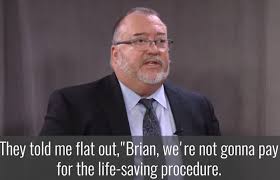
Conflict of interest in assisted suicide is greatest among health insurance companies. Instanceshave been publicizedwhere an insurer refuses to pay for expensive but life-saving treatment, yet will pay for a suicide prescription.

Dr Brian Callister

When Nevadaphysician Brian Callister transferred patients to California and Oregon, where assisted suicide is legal, each patient’s insurer actually asked if he’d suggested assisted suicide – although neither had a terminal illness.


And critics say LD 1313 has no provision for protective oversight against abuse. Once a death doctor writes the lethal prescription, there is no supervision in actually taking the life-ending drugs.

If the person administering the drugs was invested in the patient’s death, such as an heir, the patient could change his or her mind, or even struggle, yet once the poison is “absorbed,” no one would know.

Reynolds told the Bangor Daily News.

“Once the prescription is picked up from the pharmacy, there is absolutely no oversight in the law to protect the ill person from someone else who wants to hurry their death along, be it an insurance carrier, an heir or a caregiver,” 

Reynolds continued

“A friend or relative – even an heir – can ‘encourage’ an elder to make the request, sign the forms as a witness, pick up the prescription, and even administer the drug (with or without consent), because no objective witness is required at death.”

Opponents add that there is no provision for objective, third-party documentation. The same doctor who prescribes poison for his or her patient is the very one who is responsible to report the results of his death procedure.

Schadenberg assessed.

“Self-reporting systems are designed to cover-up abuse. By law, the same doctor is the judge, the jury and the executioner.”

Reynolds concluded.

“The only real protections in the law are for people other than the patient, foreclosing any realistic potential for investigation of foul play,” 

In fact, research proves assisted suicide can result in tremendous sufferingby the patient, including “burning patients’ mouths and throats, causing some to scream in pain.” In other instances, “deaths stretched out hours in some patients — and up to 31 hours in one case.”

Reynolds told the Press Herald,

“This is not a ‘dignified’ death,”“It can take up to 104 hours for people to die.”

Newspaper editor John Balentine notedthat the bill’s oft-repeated mantra. Balentine told The Forecaster.  

“Death With Dignity,” “purposefully avoids the word ‘suicide.’”

“Suicide is anything but dignified, because that person’s hopes and dreams are snuffed forever,” 

“The associated physical decay triggered by death is tragic and disgusting, far from dignified.” 

“Choosing…death…is also not dignified. Choosing life, rather than death, is dignified. Suffering through pain can be dignified. Giving up is not dignified.”

Balentine concluded.

“I’m always skeptical of those who use linguistic subterfuge to lobby their cause. Those employing the term ‘death with dignity’ are doing just that when lobbying for assisted suicide,”  “Here’s hoping Gov. Mills sees through the Legislature’s misguided – and undignified – political tactics.”

The Maine bill, called by supporters the “Maine Death With Dignity Act,” actually says that a lethal prescription is not suicide, and official death certificates must be falsified to list the patient’s medical condition as the cause of death:

“Actions taken in accordance with this Act do not, for any purpose, constitute suicide, assisted suicide, mercy killing or homicide under the law. State reports may not refer to acts committed under this Act as ‘suicide’ or ‘assisted suicide’…State reports must refer to acts committed under this Act as obtaining and self-administering life-ending medication. A patient’s death certificate…must list the underlying terminal disease as the cause of death.”

In other words, “the death certificate is falsified to reflect a natural death,” Elliot summarized.

“All the information is sealed and unavailable to the public.”

Critics also conclude that Maine’s proposed legislation is discriminatory. Assisted suicide not only stifles hope, encourages despair, and takes advantage of the vulnerable, it devalues certain groups of human beings, pushing them into an early death.

Diane Coleman

Not Dead Yet President Diane Coleman  explains

“Assisted suicide sets up a double standard, with suicide prevention for some and suicide assistance for others, depending on their health or disability,” 

“If such distinctions were based on race or ethnicity, we’d call it bigotry.” 

“The dangers of mistake, coercion and abuse it poses to old, ill and disabled people are rooted in a profound and still largely unacknowledged devaluation of our lives.”

Stephanie Woodward

Stephanie Woodward, Director of Advocacy at the Center for Disability Rights, charged.

People with disabilities and certain illnesses and the elderly “will receive a fast pass, because our lives are viewed as less worthy,” 

Reynolds agreed.

“Assisted-suicide laws are the most blatant forms of discrimination based on disability in our society today,” 

Bishop Robert Deeley of Portland came out vehemently against the bill on principle. Hsaid. 

“To allow doctors to prescribe deadly prescriptions to hasten a person’s death would be a horrendous wound to the dignity of the human person,” 

The Mainebishop predicted consequences of the law would include 

“the elderly feeling undue pressure to view this as an option to prevent being a burden to others, a desensitization of the value of human life, as well as teaching young adults that people can be disposable.”

Elliot opined

“These laws are abusive in their very nature. To suggest to someone that they should kill themselves is abuse,” 

“It would be like saying, ‘You are worthless and should die.’”

Reynolds warned

“We should all be concerned about what kind of message a government sponsored, medically administered program of assisted suicide sends to anyone facing difficult times.”

“Kill the bill, not the patient.”

The American Nurses Association Maine, the Maine Medical Association, the Maine Hospice Council, the Maine Right to Life, the American Cancer Society Action Network, the Roman Catholic Diocese of Portland the Maine Osteopathic Association, all oppose the Maine legislation.

Suicide activists have tried several times to legalize assisted suicide in Maine. In 2015, a suicide measure was defeatedin the state Senate by only one vote. A similar bill failedin the state House in 2017. An attempt was made in 2018 to put the issue to a popular vote.

Assisted suicide was first legalized in Oregon in 1997 after the U.S. Supreme Court essentially ruled the issue was up to the states. Since then, the state of Washington (2008), Vermont (2013 in an even less restrictive measure), California (2015, currently in effect but being fought in court), Colorado (2016), Washington D.C.(2017), Hawaii (2018), and most recently New Jersey (2019) have legalized doctor-prescribed death.  In 2009, Montana’s state supreme court did not legalize assisted suicide but created a defense of consent, if a physician is prosecuted for assisted suicide. 

New Jersey Catholic Governor Phil Murphy signed his state’s killing bill in April. He said that while his faith opposed assisted suicide, 

“after careful consideration, internal reflection, and prayer.” 

“as a public official I cannot deny this alternative to those who may reach a different conclusion.”

We need you to tell Gov. Mills to veto the assisted suicide bill.

Governor Janet Mills
1 State House Station Augusta, ME  04333
Tel: 207-287-3531 or Fax: 207-287-1034
Email: governor@maine.gov

Similar bills are pending in several states with New York being the greatest concern.

Nancy Elliott: Letter to Governor Janet MIlls (Maine)

(Sadly, the Maine Governor signed the assisted suicide bill).

Dear Governor Mills,

Nancy Elliott, Chair EPC – USA

Please veto LD 1313, HPO948, which would enact Assisted Suicide.

I am a Former 3 term New Hampshire State Representative, and the Chair of Euthanasia Prevention Coalition (EPC) USA.

The three groups that are the target for Assisted Suicide are the sick, the elderly and the disabled. While there are many other problems with this kind of law, I am going to focus in on these three.

It is said this is only for the sick and dying. One of the biggest problems is people who qualify for Assisted Suicide are not necessarily dying. Think of a 21-year-old otherwise healthy insulin dependent diabetic. He qualifies if he rejects his insulin. This would be the same for many other people with serious conditions, who take prescription medications. What about all the curable cancers? They qualify. What about the 5% of incorrect medical diagnosis? With Assisted Suicide on the table these mistakes can be deadly.

I was at a hearing for Assisted Suicide in Massachusetts a few years back when a gentleman named John Norton gave evidence, that as a young man he was diagnosed with ALS. He stated that had Assisted Suicide been legal at that time he would have used it. A few years in, the disease’s progression just stopped. Now in his late 70’s he stated he has had a great life with children and a grandchild. With Assisted Suicide on the table he would have lost all of that.

Steering is a big deal with all three of the groups that I mentioned. At that same Massachusetts hearing, a doctor stated that Assisted Suicide laws were something he was in favor of. He continued with his points and ended by saying that He felt it was the responsibility for a good doctor “to guide people to make the right choice”. I do not think he intended to say that but, is there any doubt that this pro suicide doctor would try to persuade his patients to follow his wishes concerning their Assisted Suicide.

These laws are abusive in their very nature. To suggest to someone that they should kill themselves is abuse. My husband was terminally ill, and I went to a lot of doctor appointments with him. If medical personnel were to suggest Assisted Suicide to him, he would have been devastated. While he never would have done that, but it would be like saying to him, “You are worthless and should die. That is abuse! The proponents say that would never happen, but that did happen to an Oregon to a woman named Kathryn Judson. She had gone to a doctor’s appointment with her seriously ill husband and exhaustedly sunk into a chair where she overheard the doctor pitching Assisted Suicide to her husband with the clincher, “Think of your wife.” They left and never came back. The husband went on to live another five years

Next seniors are at risk and very easily fall victim to coercion as the process is very open to that. In most states, heirs can be there for the request and even speak. Anyone can pick up the lethal dose. Once in the house all oversight is gone, there is no witness required at the death. Even if they struggled who would know. If that is not enough, the death certificate is falsified to reflect a natural death. All the information is sealed and unavailable to the public. Even if someone suspected foul play, the death certificate says no crime here. Taking advantage of seniors is epidemic in the US. Look at the case of Thomas Middleton. He made Tami Sawyer his trustee and moved into her home. Within a month he was dead by Oregon’s Assisted Suicide law. Two day after his death Ms. Sawyer listed his house and sold it and deposited the money into three companies she owned with her husband. We will never know how much coercion or foul play took place in this case.

Finally, those with a disability are at risk. Most people that “qualify” for Assisted Suicide at that point in their life have a disability. Many with long term disabilities have been labeled terminal all their lives. Without meds, treatments, and assistance they would not survive. This is about disability. If you have a disability you are encouraged to give up, commit suicide. If, on the other hand, you are young and healthy, you are given suicide counselling. This is discrimination against people with disabilities. Why should they trust that they will not be coerced into Assisted Suicide, when they are already discouraged to seek treatments and are not treated fairly? When you think about it this is a law that is written just for them. It is a “special” carve out, for the sick, elderly and disabled.

In closing, I just want to add that Assisted Suicide has been rejected in over 100 legislative, ballot initiative and judicial attempts in the USA, including my state New Hampshire where it was a bipartisan vote. The more it is studied the more uncomfortable people become with it.

Nancy Elliott
Chair – Euthanasia Prevention Coalition USA

An Open Letter to Maine Governor Mills: Veto Assisted Suicide Law LD 1313

(Sadly, the Maine Governor signed the assisted suicide bill). 

This letter was published by Not Dead Yet on June 6, 2019.

Dear Governor Mills:

Diane Coleman, Not Dead Yet

The disability community appeals to you to veto LD 1313, which would legalize a public policy of assisted suicide.

Many people are unaware of the fact that every major national disability organization that has taken a position on assisted suicide laws opposes them. These include over a dozen prominent groups, many of which have undersigned this urgent appeal:

ADAPT
American Association of People with Disabilities
Assn of Programs for Rural Independent Living
Autistic Self Advocacy Network
Disability Rights Education and Defense Fund
National Council on Disability
National Council on Independent Living
National Organization of Nurses with Disabilities
National Spinal Cord Injury Association
Not Dead Yet
TASH
The Arc of the United States
United Spinal Association

Our reasons for opposing assisted suicide laws are many. Most of them are illustrated by these documented examples of significant problems which occurred in states that have courted the danger of a law based on Oregon’s “death with dignity” Act. These examples are available at:

When assisted suicide is legal, it’s the cheapest treatment available—an attractive option in our profit-driven healthcare system. Bitter experiences has shown that insurers are denying expensive life-sustaining treatment but offering lethal drugs instead.

Terminal diagnoses and prognoses are too often wrong, leading people to lose good years of their lives. If one doctor says “no,” people can “doctor shop” for a “yes,” regardless of their actual legal eligibility. The highly touted “safeguards” turn out to be truly hollow, with no real enforcement or investigation authority. Assisted suicide is a prescription for abuse: an heir or abusive caregiver can steer someone towards assisted suicide, witness the request, pick up the lethal dose, and in the end, even administer the drug—no disinterested witness is required at the death, so who would know?

Evidence appears to show that assisted suicide laws also lead to suicide contagion, driving up the general suicide rate. For example, a CDC report reveals that from 1999-2010, suicide among those aged 35-64 increased 49% in Oregon, where assisted suicide has been legal the longest, as compared to a 28% increase nationally.

Finally, although assisted suicide proponents will say that it’s not about disability, the top 5 reported reasons for assisted suicide requests in Oregon throughout the years since legalization are all disability issues: “loss of autonomy” (90.6%), “less able to engage in activities” (89.1%), “loss of dignity” (74.4%), “losing control of bodily functions” (44.3%), and “burden on others” (44.8%). (The same reports show that every year except the first, some of those who died by lethal prescription were not terminal within six months.)

These are issues that many people face, not only those of us commonly considered disabled, but also seniors, people with chronic conditions, and people with advanced illnesses, including terminal illnesses. These reasons demonstrate that virtually all who die by lethal prescriptions in Oregon are disabled, in that they need assistance from another person for daily activities.

As people who have fought for the civil rights and equal protection of all people with disabilities, we in the undersigned organizations understand that our society is permeated with negative stereotypes about disability. Award winning movies deliver the message that it’s “better to be dead than disabled.” We understand the shame people are taught to feel if they become disabled, the pressure to hide that we need help, the guilt for “inconveniencing” others.

There are ways to address the reasons people have for requesting assisted suicide, but it starts with a societal commitment to treat all suicides as a tragedy, to respond to anyone’s expression of suicidal feelings with an equal level of support, affirmation of the value of their life and effort to address their concerns. A two-tiered system where most people get suicide prevention but certain people get suicide assistance is a deadly form of discrimination that should not be accepted. Assisted suicide laws exacerbate the disability stigma that prevails in our culture and undermine people’s genuine autonomy by establishing a medically administered program of suicide approval and assistance in a health care environment already riddled with pressures to cut costs of care.

Assisted suicide is bad medicine for Maine. We hope that this information is helpful in your consideration of this life and death public policy issue, and would welcome the opportunity to communicate about this further.

Sincerely,

Diane Coleman, JD, MBA
President/CEO
Not Dead Yet
497 State Street
Rochester, NY 14608
708-420-0539 C
http://www.notdeadyet.org

ON BEHALF OF:

ADAPT
American Association of People with Disabilities
Association of Programs for Rural Independent Living
Disability Rights Education & Defense Fund
National Council on Independent Living
Not Dead Yet
TASH: Equity, Opportunity, and Inclusion for People with Disabilities Since 1975
United Spinal Association

New Belgian guidelines for psychiatric euthanasia.

Dr Mark Komrad

Dr Mark S. Komrad M.D., DFAPA, DACP Faculty of Psychiatry, Johns Hopkins and University of Maryland sent a summary of The Belgium National Council of Physicians new “guidelines” for the voluntary euthanasia of psychiatric patients
(Link to the guidelines). Mark wrote:

The guidelines include some positive changes even though the eligibility of certain psychiatric patients with “unbearable” and “untreatable” mental illness remains, there have been some changes in the recommend procedures that slightly reign in the practice. I provided a Google Translation. 

The highlights of these changes are:

• Now there must be THREE doctors involved: the one who will administer the euthanasia, and two who are not administering the euthanasia, but are involved in determining a patient’s eligibility. Both consultants MUST be psychiatrists. That is new. [Again, this pertains only to psych patients]. Previously, a psychiatrist as a consultant was recommended but not required. So, it had previously been possible for psychiatric patients seeking euthanasia to not have a second opinion from a single psychiatrist prior to being euthanized.

• The three doctors now MUST MEET IN PERSON to confer about the case. Previously, such a conference was not required. However, “they are not required to agree on everything.” In fact, it is recommended (not required) that other professionals involved in the case, such as nurses, therapists, and psychologists, attend this potentially “interdisciplinary” meeting.

• Heretofore, the established right of patients to refuse certain treatments was also extended to psychiatric patients. So, the concept of an “untreatable” condition was confined to the list of treatments that a patient would accept. Now, to be eligible for psychiatric euthanasia, the patient must have tried “all evidence-based treatments” for that condition. Refusal of one of those treatment options would disqualify a patient for euthanasia. This is a significant step.

• The established “one month” waiting period between requesting and receiving euthanasia, is now deemed insufficient for psychiatric patients. These new guidelines say that one-month is insufficent. Unfortunately, they do not stipulate how long is appropriate for psychiatric patients. Psychiatric patients should have “a treatment process spread over a long-term period.” Unfortunately, no specific time frames are specified. So, this feature may have little value without that clarity.

• Though patients have a right to exclude family members for the euthanasia evaluation and decision process, physicians are urged to include family members unless there is no substantial reason to include them. This only re-iterates suggestions for common sense practice that is largely the status quo anyway. There are no mandates to include family either for corroborative history, or co-consent. But psychiatrists are urged to encourage their patients to include their family. I do not see this as a substantive change.

• Though not a change, there is more emphatic reiteration that a conscientiously objecting physician MUST REFER to an alternative doctor who might be willing to approve euthanasia (no guarantees). In this regard, the Belgian law is similar to the recently litigated and court-supported rules for conscientious objection to euthanasia in Ontario.

A few notes. This is not a new law, but a set of “guidelines” issued by the national organization that regulates physicians, not a legislature. It’s like a “practice guideline” in the U.S. The legal consequences of failing to following these guidelines with its “musts” and its “shoulds,” is not clear. The new disqualification for euthanasia if a patient refuses an “evidenced based” treatment, pertains strictly to psychiatric patients seeking euthanasia for their psychiatric conditions, not those with other kinds of illnesses. In that sense, it is a step away from parity, and interestingly, applies only to those with psychiatric conditions, not other conditions. So, for example, a patient with chronic renal failure, may still refuse dialysis. But, a psychiatric patient who refuses, say ECT for treatment resistant depression, would not be eligible for euthanasia.

Though somewhat tighter, these regulations continue to sustain the eligibility of some psychiatric patients to have euthanasia, helping them to commit suicide, sometimes administered by the same psychiatrists who previously had been trying to prevent their suicides.

Euthanasia for victims of rape.

This article was published by the Australian Care Alliance on June 5, 2019

It was widely reported in the english media that a 17 year old girl was euthanased on Sunday 2 June 2019 at her home in Arnhem, the Netherlands, on the grounds of her suffering as a victim of rape. 

However, Dutch reports indicate she did not die from euthanasia but from starvation/dehydration after refusing to eat with the intention of ending her life.

In fact, euthanasia for rape victims is not unknown in neigbouring Belgium.

In late 2012 a 44 year old woman known as Ann G was euthanased by her psychiatrist on the grounds of unbearable psychological suffering. She had been treated for anorexia since her teenage years by psychiatrist Walter Vandereycken. In 2008 she publicly accused Vandereycken of sexual abusing her under the guise of therapy. In October 2012 he admitted to years of sexual abuse of several of his patients. Following this admission Ann G spoke of some temporary relief from “the cancer in her head” but subsequently persisted in her request for euthanasia. Ann G will not be available to testify against her abuser if charges are laid.

Between 2014 and 2017 there were 25 cases of people under 40 being killed by euthanasia on the grounds of mental illness.

In relation to these troubled young people the Belgian Euthanasia Control and Evaluation Commission observes 

“In the group of patients under 40, it is mainly personality and behavioral disorders. All these patients have been treated for many years, both outpatient and residential. There has always been talk of intractable suffering. For this type of disorder, serious psychological trauma at a very young age have been mentioned several times, such as domestic violence, psychological neglect or sexual abuse.”

So Belgium is treating the victims of child abuse by domestic violence, neglect and sexual abuse by killing them.

Child euthanasia is not new in the Netherlands either. A total of fifteen children have been given euthanasia, including one 12 year old child in 2005, a 16 year old in 2015, five 17 year old children between 2002 and 2015 and two children (aged 16 or 17 years) in 2016, three children in 2017 (one aged 16 or 17 years, other two cases no case report), and three children in 2018 (two aged 16 or 17 years; one case report not available). Up until now all cases with detailed case reports (11 out of 15) involved end stage cancer. It is not known what the condition was in the remaining four cases.

In the case of children aged 16 or 17 years old the child can be put to death without the agreement of the parents.

Supporters of euthanasia who think it can be effectively limited to a handful of hard cases of people imminently dying with unrelievable pain (for whom there is always another response anyway) need to rethink the risk of unleashing the idea of lethal injection or lethal poisons as the answer to life’s problems.

Death of 17 year-old rape victim in the Netherlands was not euthanasia

Alex Schadenberg
Executive Director – Euthanasia Prevention Coalition

Noa Pothoven

It is shocking to read the news about the euthanasia death of Noa Pothoven (17) who was sexually assaulted at age 11 and raped by two men when she was 14. We now learn that some of the english language media did not report her case properly.

An article in Deutche Welle explains that Noa died by refusing food and fluid.

It is a normal response for a woman, who has been raped and violated, to feel that her suffering is unbearable but killing her by lethal drugs or allowing her to die in this manner is abandonment.

The article by Miranda Aldersley that was published in the Daily Mail described the sad case:

The Dutch teenager from Arnhem felt that life had become unbearable and she could no longer carry on after she was attacked and sexually assaulted on three separate occasions, beginning when she was just 11 years old.

The article then quotes from the story in the De Gelderlander newspaper:

According to the Dutch newspaper De Gelderlander, Noa’s parents had no idea she was unwell until her mother discovered a plastic envelope in her room filled with farewell letters to her parents, friends and acquaintances.

‘I was in shock,’ Lisette told De Gelderlander. ‘We didn’t get it. Noa is sweet, beautiful, smart, social and always cheerful. How is it possible that she wants to die?

‘We have never received a real answer. We just heard that her life was no longer meaningful. For only a year and a half have we known what secret she has carried with her over the years.’

That secret, as outlined in her book, was that Noa was assaulted at a schoolfriend’s party when she was 11 years old, and one year later at another teenager’s party.

At the age of 14, she was raped by two men in the Arnhem neighbourhood of Elderveld – but stayed quiet ‘out of fear and shame’. ‘I relive the fear, that pain every day,’ she said last year. ‘Always scared, always on my guard. And to this day my body still feels dirty. My house has been broken into, my body, that can never be undone.’

Noa was living with incredible pain and suffering. 

I am also concerned that reporting that Noa died by a “medically assisted death” (MAiD) may cause others, who have been sexually assaulted, raped and violated to demand death by lethal drugs.

The sad reality of euthanasia is that killing leads to more killing.

Österreich: Staatsanwaltschaft ermittelt gegen eCharge.work wegen Verdacht auf ICO-Betrug

Österreich: Staatsanwaltschaft ermittelt gegen eCharge.work wegen Verdacht auf ICO-Betrug

berichtete Trending Topics, dass die österreichische Korruptionsstaatsanwaltschaft ein offenes Ermittlungsverfahren gegen die echarge.work austria GmbH aufgenommen hat, der vorgeworfen wird, ein betrügerisches Initial Coin Offering (ICO) gestartet zu haben.
Das Unternehmen, welches zu 83 Prozent der deutschen echarge.work GmbH gehört, versprach, bei Hotels in ganz Österreich Ladestationen für Elektrfahrzeuge zu installieren. Um das nötige Kapital dafür aufzubringen, startet das Unternehmen 2018 ein ICO mit der eigenen Kryptowährung ECH. Die ECH-Token sollten dann später an den angeblich geplanten Ladesäulen zum Bezahlen verwendet werden können.
Im Verlauf des vergangenen Jahres meldete sowohl echarge.work austria GmbH als auch die Schweizer Schwester eCharge.work AG Konkurs an, seitdem ist die Webseite des Unternehmens offline und die verkauften ECH-Token wertlos.
Berichten zufolge soll eCharge-Gründer Markus Dold bereits während des ICOs falsche Angaben zur eingenommenen Geldsumme gemacht haben. Zudem werfen ihm ehemalige Mitarbeiter vor, Schulden nicht bezahlt zu haben.
Auf der offiziellen Webseite sprach eCharge davon, ein bereits bestehendes Netzwerk an Ladesäulen auf 50.000 Stück ausbauen zu wollen. Zudem habe man mit Stakeholdern in Jordanien Kooperationsverträge für den Bau von mehr als 10.000 Smart-Electric-Ladestationen unterzeichnet.
Demnach soll nach Angaben der Staatsanwaltschaft ein “offenes Ermittlungsverfahren gegen einen Beschuldigten und zwei Verbände wegen Vorwürfen des teils versuchten und teils vollendeten schweren gewerbsmäßigen Betruges” am Laufen sein. Dabei stehe die “Vorspiegelung der Nutzungsmöglichkeit eines Netzwerks von E-Tankstellen und der Möglichkeit der Bezahlung mittels Netz-eigener Kryptowährung” im Vordergrund, wie Trending Topics schreibt.

Österreichischer ICO “Echarge” steht unter Betrugsverdacht

Österreichischer ICO “Echarge” steht unter Betrugsverdacht

Dass viele ICOs bis auf falsche Versprechungen trotz Einnahmen im mehrstelligen Millionenbereich oftmals nichts lieferten, dürfte für Personen aus der Communuity nichts Neues sein. Wie die Nachrichtenagentur trendingtopics gestern berichtete, soll es sich auch bei dem österreichischen ICO “Echarge” um einen Betrug handeln. 
Seit langem unter Konkursverdacht

Wer denkt, dass es betrügerischer ICOs (Initial Coin Offerings) nur in weit entfernten Ländern gibt, der täuscht sich. Nachdem das bekannte Projekt Savedroid immer mehr in Verruf gerät, soll nun ein österreichisches Projekt unter Betrugsverdacht stehen. Das berichtet die österreichische Nachrichtenagentur trendingtopics am 4. Juni 2019. Demnach soll die Korruptionsstaatsanwaltschaft wegen schweren Betrugs gegen die Gründer von Echarge ermitteln.
Bis Ende 2017 sollten mehr als 500 Ladestationen aufgestellt werden. Dass daraus nichts wurde, sollte heute jedem bewusst sein. Nach Angaben der Roadmap sollte im Januar der Launch der Plattformen, gefolgt von den USA im Juni, folgen. Wie viele, bzw. wie wenige Ladestationen es heute  tatsächlich sind, ist nicht bekannt. Investoren wurde damals versprochen, mit der hauseigenen Kryptowährung “(ECH)” bis zu 30 Prozent an Ladestationen zu sparen.
Für diese Kryptowährung wurde damals das ICO durchgeführt. Aufgrund dessen wurde nach Angaben von trendingtopics von der Korruptionsstaatsanwaltschaft ein “offenes Ermittlungsverfahren gegen einen Beschuldigten und zwei Verbände wegen Vorwürfen des teils versuchten und teils vollendeten schweren gewerbsmäßigen Betrugs” eingeleitet. Bereits im Februar 2018 berichtete trendingtopic über den fragwürdigen ICO.
Nischenwährungen wie diese werden es schwer haben, am Kryptomarkt zu überleben. Denn mittlerweile gibt es große Projekte, die unter anderem Anwendungsfälle wie diese abdecken. So wurde vom Beratungsunternehmen DX-Technologie ein Konzept für eine IOTA-Ladestation präsentiert. In Wien soll bis Ende des Jahres 2019 durch eine Kooperation vom Blockchain-Startup Riddle & Code und der Wien Energie die erste Blockchain-Ladestation aufgestellt werden.

Canada’s Parliament debates Conscience Rights Bill C-418

Alex Schadenberg
Executive Director – Euthanasia Prevention Coalition

Petition supporting Bill C-418 to protect conscience rights (Link).

Bill C-418 is sponsored by David Anderson MP to protect conscience rights for healthcare professionals who oppose Medical Aid in Dying (euthanasia and assisted suicide).

The debate began at: 5:30 pm on May 29, 2019 (Link to the Hansard of the debate). The video of David Anderson’s speech is above.


The Liberals clarified the euthanasia law while the NDP came out against conscience rights Bill C-418.


Mr. David Anderson (Cypress Hills—Grasslands, CPC) moved that Bill C-418, An Act to amend the Criminal Code (medical assistance in dying), be read the second time and referred to a committee.

David Anderson MP

Madam Speaker, the first thing I would like to do is to thank the many people across Canada who have shown up to work on this bill. It has caught on across the country. It has restored my faith in the good judgment of Canadians and, hopefully, we will see that same good sense shown in the House and we can have some restored faith here as well.

I am here today to speak to Bill C-418, which is the protection of freedom of conscience act. I need to point out again that I am surprised at the way this has caught on and caught the attention of the Canadian public. We should thank many Canadians and groups for whom this is an important issue for their work on publicizing and advancing conscience rights in Canada.

To begin to understand Bill C-418, we need to back up a bit. The Charter of Rights and Freedoms has a number of sections in it. Section 1, of course, guarantees our rights and freedoms. However, immediately following that is section 2, which declares the most fundamental rights, and that begins with freedom of conscience and religion. In 2015, the Carter decision in the Supreme Court said that although section 7 of the charter provides for the right to die, it also explicitly said that no one is required to participate in or be part of it.

We then came to Bill C-14, the government’s assisted suicide bill. It is a bill that attracted much attention and controversy and laid out the groundwork for the first round of assisted suicide legislation in Canada. Whether they call it euthanasia, medically assisted dying or assisted suicide, they are all different names for the same thing. Medical practitioners were divided on the issue of participating in ending the lives of Canadians. Whether we supported Bill C-14 or not, it was clear that many within the medical community were very concerned. They did not and still do not want to participate in this activity.

When Bill C-14 was passed, it included subsection 241.2(9) which did say, “For greater certainty, nothing in this section compels an individual to provide or assist in providing medical assistance in dying.” That was not adequate because it did not lay out an offence, there was no framework for it and there was no penalty in Bill C-14 if someone violated that. It ended up being nothing more than a statement in Bill C-14.

While the Liberal talking points have repeated this, and the Liberals also claim that everyone has freedom of conscience and religion under section 2 of the charter, this is not the reality that medical personnel are facing across Canada. In spite of the fact that on the surface the charter, Carter and Bill C-14 supposedly agree, the reality is that physicians and medical personnel in this country are being pressured to participate in something with which they fundamentally disagree and there is no protection provided to them.

Conscience forms the basis of medical professionals’ motivation to pursue their particular field. Doctors practise every day with the knowledge that it is their conscience that motivates them to test the limits of their knowledge and skill. Medical professionals know that patient care will suffer if they are deprived of the ability to live with integrity and to follow their consciences. They know the importance of these beliefs to them and their patients better than anyone else.

For a great many Canadian doctors, the core of their conscience prohibits their participation in taking a life. Indeed, many doctors remain devoted to the black and white of the ancient Hippocratic oath, a pledge that prohibits the administration of a poison to anyone. Through the availability of assisted suicide on demand across Canada, threats to conscience are no longer confined to the theoretical or to the rhetoric of the courtrooms. They are increasingly present in the examination room as well.

That is why I believe it is time to take action in defence of conscience rights that have stood the test of time for generations. Therefore, Bill C-418 seeks to amend the Criminal Code to do two things.

The first is to make it an offence to intimidate a medical practitioner, nurse practitioner, pharmacist or any other health care professional for the purpose of compelling them to take part, directly or indirectly, in the provision of physician-assisted suicide.

The second provision makes it an offence to dismiss from employment or to refuse to employ a medical practitioner, nurse practitioner, pharmacist or any other health care professional for the reason only that they refuse to take part, directly or indirectly, in the provision of physician-assisted suicide.

My bill would provide the teeth that Bill C-14 acutely lacks. The Liberals’ attempt to provide protection for doctors consisted solely of a rudimentary clause, which stated, as I said earlier, that nothing compels someone to provide or assist. However, the provision lacked the teeth needed for its effective enforcement, as evidenced by the ongoing pressure that is being exerted on physicians, particularly by their regulating bodies.

I guess the question is whether these protections are really necessary, and I would say that they are. Throughout the legislative process, I have spoken to doctors who feel overt pressure to leave family medicine because of their conscientious beliefs. I have heard of palliative care doctors in Ontario who have stopped practising altogether. Nurses who feel increasingly bullied are choosing to shift their focus or retire early. I have had personal conversations with people who work in old folks’ homes who explain they do not want to participate in this but are increasingly feeling pressured to do so. The pressure on these professionals exists and they are looking for relief.

What is more, regional associations such as the College of Physicians and Surgeons of Ontario have introduced regulations compelling conscientiously objecting physicians to participate by providing what they call “effective referrals” for physician-assisted suicide. A recent court decision has upheld this directive, contravening the assurances provided in Carter v. Canada and creating an even more urgent need among physicians for protection. This is in spite of the fact that in this situation in Ontario I am told that the majority of physicians support an allowance for conscientious objections, but the college has not taken that position.

As strange as it sounds, the recent court decision refers to the college’s suggestion that if physicians do not like to participate then they can find other areas of medicine to take up. This is unusual, particularly in a situation where we have such a shortage of physicians and medical services. The college suggests that if they do not like participating they can take up things like sleep medicine, hair restoration, sport and exercise medicine, skin disorders, obesity medicine, aviation examinations, travel medicine or perhaps become a medical health officer.

For many of us across this country, particularly those of us in rural areas, we know there is an increasing lack of physicians in an increasingly challenged medical system. I find it passing strange that the college would be the one suggesting such a thing for its physicians. The answer does not have to be to do it, find someone else to do it or get out of medicine. Medical personnel and resources are scarce. Why would one try to force people into doing what they believe to be wrong? The example of the province of Manitoba and its conscientious objection legislation shows there does not need to be compulsion in the medical system when it comes to this issue.

My bill does not address the social acceptability of euthanasia and assisted suicide; that is not the point of it. Protecting physicians’ conscience rights is not at all a physicians versus patients scenario. By protecting physicians’ conscience rights, patients’ rights are enhanced. Bill C-418 is about protecting the fundamental freedom of conscience and religion guaranteed to all Canadians in the Charter of Rights and Freedoms.

Parliamentarians from all parties cannot ignore the groundswell of support this bill has received from average Canadians who believe it is time to stand up for doctors and health care providers who are not willing to leave their core ethics behind when they are at a patient’s bedside. This is not theoretical. I have had photos sent to me of the revolving TV screens that we see in hospital wards, with pictures of what seems to be a physician’s hand gently resting on the arm of a senior citizen, touting assisted suicide as a medical service whereby physicians or nurse practitioners help patients fulfill their wish to end their suffering and a phone number is provided. Interestingly, it makes no mention of palliative care or other ways to reduce pain and suffering. It makes no mention of access to counselling.

With government, the courts and health care facilities promoting access as a right, should not those who object be allowed to have that fundamental freedom of conscience that is so important?

I want to close with a quote from “The Imperative of Conscience Rights” by the CRFI. They write:

The outcomes of the current controversies that engage freedom of conscience will not only signal the extent to which Canadians can conscientiously participate in public life—in other words, whether they can live in alignment with who they are and what they stand for in matters of morality. These outcomes will also speak volumes about who we are and what we stand for—as a society. Suppressing beliefs with which we disagree or that we find offensive in the name of tolerance and liberalism is a contradiction in terms. The fact that the state has deemed something legal does not remove a person’s freedom to express her moral opposition to it. This freedom is not absolute, but its roots—integrity, identity, and dignity—are necessary for human flourishing. These roots must therefore be top of mind whenever limitations on freedom of conscience are proposed. We believe that governments should only limit this human right if there is a compelling justification.

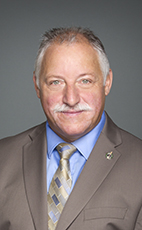
Scott Sims MP (Lib)

Scott Sims MP (Lib) Asked Mr Anderson – what is the response of the Canadian Medical Association to this issue.

David Anderson (MP) (CPC) responded that the Ontario Medical Association supported conscience rights but that the policy requiring physicians to do an “effective referral” was from the College of Physicians and Surgeons of Ontario (CPSO). Mr Anderson then explained that the province of Manitoba has legislated conscience rights for healthcare professionals.
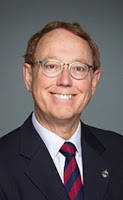
Murray Rankin MP

Murray Rankin MP (NDP) Asked Mr Anderson – Can Bill C-418 be squared with the Ontario Court of Appeal decision that required physicians to provide an “effective referral” when asked for euthanasia.

David Anderson MP (CPC) responded: I believe that we can. It has been done in other places across the country, but there are numerous ways that people can come to information about assisted suicide or medical assistance in dying. There are certainly a number of options open as to how they might access that information. The question is whether physicians are obligated to refer that, to provide that, or if they can opt out and give them another way to find that information. We believe that is very possible.
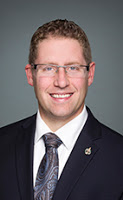
John Nater MP

John Nater MP (CPC) asked Mr Anderson to highlight some of the correspondence he has received on the bill.

Mr Anderson MP (CPC) responded:

Madam Speaker, the interest in this bill has been surprising to me… It has been surprising to me how people have taken this on. There is an onslaught of petitions coming into my office every day and I am passing them on to my colleagues as well so that they can understand the interest that people in their ridings have in this issue.

People generally want to be fair to other people and allow them to have the capacity to operate off of the things they believe in. Every single one of us has a set of beliefs. We have a right to operate under our set of beliefs … In this situation, we should be giving medical professionals, who operate every day from a sense of conscience in what they do, the opportunity to do that.
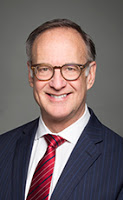
Rob Oliphant MP

Rob Oliphant MP (Lib) asked Mr Anderson: If it comes down to a patient’s right or a physician’s right, which would the member choose?

Mr Anderson MP (CPC) responded:
Madam Speaker, as I mentioned earlier, there are a number of options for people to find the information they need. There are many doctors and facilities that will provide this service if they want it, but there are other doctors and medical personnel who do not feel that assisting in someone’s premature death is a part of the mandate of what they have been called to as physicians or medical personnel.

There are enough choices out there that people can have and we can allow those who disagree with this procedure to have their freedom of conscience and be able to live their professional lives in that fashion.
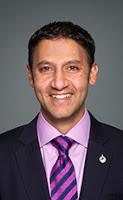
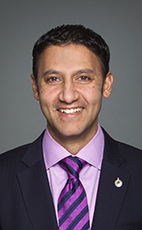
Arif Virani MP

Arif Virani (Parliamentary Secretary to the Minister of Justice and Attorney General of Canada (Lib) delivered the speech on behalf of the government. He essentially stated:

Madam Speaker, it is a pleasure to speak today to Bill C-418, the protection of freedom of conscience act. The bill proposes to create two new Criminal Code offences, an “intimidation offence” as well as an “employment sanctions offence”. Those offences would seek to protect health care professionals’ freedom of conscience by prohibiting the use of intimidation to compel practitioners to provide medical assistance in dying and by prohibiting employers from dismissing practitioners for refusing to take part in medical assistance in dying.

…Providing medical assistance in dying is a gesture with the most serious of consequences. Some health care practitioners view it as an important part of their practice that relieves a patient’s intolerable suffering when approaching death. Others view it as contrary to their conscience, religious beliefs or their professional role. Other health care practitioners might support the availability of medical assistance in dying in principle but simply not wish to be involved in the practice themselves. Our government supports and respects all of these different viewpoints.

…With the utmost clarity in this regard, the House of Commons Standing Committee on Justice and Human Rights adopted an amendment to what was then Bill C-14, adding a new subsection 241.2(9) to the Criminal Code of Canada that clearly states that nothing in the medical assistance in dying provisions compels health care professionals or practitioners to participate in medical assistance in dying.

It is also critically important, since we are debating constitutional law, to keep in mind that paragraph 2(a) of the charter protects freedom of conscience and religion and guards against unjustified government interference in one’s religious beliefs and freedom of conscience. We know that. The law reflects that. The Carter decision of the Supreme Court of Canada incorporated that. I will read part of paragraph 132 of the majority decision in Carter, which says that “nothing in the declaration of invalidity which we propose to issue would compel physicians to provide assistance in dying”. Those words entered Bill C-14 and were further strengthened by the amendment proposed by the justice committee and voted on in Parliament.
(Bill C-418 recognizes that C-14 stated that nothing compels health care professionals or practitioners to participate in medical assistance in dying, the question at hand is what constitutes participation.)

Arif Virani MP (LIB) then referred to the regulations that were instituted by the Minister of Health on November 1, 2018 and the five year review of the euthanasia law that will begin in June 2020.
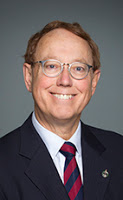
Murray Rankin MP

Murray Rankin MP (NDP) delivered the speech on behalf of the NDP.

Rankin explained that the NDP oppose Bill C-418. He stated:

We must oppose this bill. We are concerned that it creates a loophole whereby health professionals could deny a referral to a patient seeking medical assistance in dying

…However, what is equally important is that there be the ability, always, for the patient to exercise his or her constitutional right to avail themself of medical assistance in dying. In a contest between a physician and that patient, the law is crystal clear. It is the patient’s right that must prevail. I will come back to that in a moment

…In a recent Ontario Court of Appeal decision in 2019, a judge found that the rights of the patient must prevail over the rights of the physician. There must be what the Ontario court terms an “effective referral”

…We believe that coercion and intimidation are always wrong. However, it is important we keep the balance that was carefully struck in this Parliament when we took the step of creating a regime for Canadians to avail themselves of their constitutional right to medical assistance in dying in certain circumstances. We should keep that balance and not destroy it.
(In other words, the NDP believe that coercion and intimidation are always wrong except when it comes to forcing doctors to participate in euthanasia.)
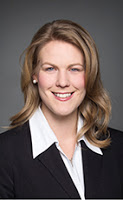
Rachel Harder MP

Rachel Harder (MP) (CPC) then spoke in support of Bill C-418

While Bill C-14, the bill that makes medical assistance in dying legal within our country, advocates for those wishing to participate in the practice, it neglects or altogether fails to protect the medical practitioners whose conscience would be violated if they had to participate. This is a big problem as the professional judgment of many doctors still affirms that good medical care does not include hastening death.

…the current government outright refused to put conscience protections within the federal legislation. This was despite the fact that many witnesses came forward to committee during this time and asked for conscience protections to be explicitly placed within Bill C-14.

I sat there during those committee meetings and listened to that testimony. I was one of the individuals who advocated for those conscience protections. There is absolutely no reason why they should not have been a part of the legislation. However, they are not, so it requires this private member’s bill, Bill C-418, in order to adequately protect the conscience of our medical practitioners in the Canadian system.

…Canadians should never be put in a situation where they feel they are forced to choose between their careers or beliefs. We live in Canada. We have a Charter of Rights and Freedoms. We should be able to engage in the career of our choice and have our ethical and moral values respected. We should be able to function according to our conscience. Currently, that is not the case. Those protections are not granted to medical practitioners the way they should be. Therefore, I call on the House to make a change, as is the member who sponsored this private member’s bill.

..Bill C-418 would restore such freedom of religion and conscience. It acts to defend medical professionals who act in good conscience and within their constitutional rights to not participate in medical assistance in dying. It should be argued that this bill addresses a legislative gap that was left by the current government. It completes the work the Supreme Court asked this place to do.

…In 2016, the College of Physicians and Surgeons of Ontario adopted a medical assistance in dying policy requiring medical professionals, who would not provide medical assistance in dying themselves, to provide an effective referral. This policy was challenged by religious groups.

A group of more 1,500 Canadians came together and challenged this regulatory decision. They said that it violated their constitutional rights, their rights to freedom of religion and conscience. Unfortunately, on May 15, the Court of Appeal for Ontario ruled that religious physicians and medical professionals must provide effective referrals if they themselves would not be involved with medical assistance in dying. It went on to say that those medical practitioners who believed this violated their conscience could go and find a job within the medical profession where medical assistance in dying would not be required of them.

That is incredibly demeaning to those individuals who have gone through years of training and who, with great dedication and commitment to their patients, have served. These are the women and men who have been trained as medical professionals and it is their conscience that motivates them and compels them to function with dignity, respect and honour and to provide the utmost level of care to their patients. Now they are being punished for holding those beliefs, for holding that level of dignity, respect and honour for their patients.

Again, I would plead that it does not have to be this way, that a change can be made to the Criminal Code that would in fact protect the conscience rights of these medical practitioners who, because of their deeply-seeded beliefs, are not able to participate in any way in medical assistance in dying.

I ask that the House rightly respond to the Supreme Court’s decision in the Carter v. Canada case and put this change within the Criminal Code to rightly respond to that decision.
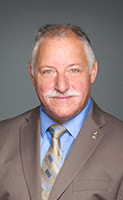
Darrell Samson MP

Darrell Samson MP (Lib) spoke next to the bill. He re-iterated the points from the official Liberal speech, but he did say:

There has also been some independent research conducted in Canada. One study, which is entitled “Exploring Canadian Physicians’ Experiences Providing Medical Assistance in Dying: A Qualitative Study”, found that, in some cases, providers who participate in medical assistance in dying reported that it negatively affected their working relationships with colleagues. This finding is just as alarming as the prospect that practitioners would be physically threatened in order to coerce them into participating.

I ask members of this chamber, and all Canadians, to be respectful of the beliefs, values and perspectives held by others, even when they differ vastly from their own opinions. There is no single right answer when values collide. Our way forward must be a journey in which we engage, listen and try to accommodate, not threaten or provoke conflict.

I am pleased that Bill C-418 again gives us an opportunity to discuss medical assistance in dying and also focus on the vital importance of respecting differences and diversity. I urge all members to approach this bill and ongoing public and policy debates on medical assistance in dying with open minds.

Keith Lamoureux MP

The final speaker was Keith Lamoureux (Lib) whose time was ended soon after he began. He essentially stated:

I was listening to the parliamentary secretary responsible for the legislation providing comment on the government’s official position on the issue. I believe that the concerns the member opposite has, in good part, are addressed by the legislation we passed not that long ago.

May 29 was the first hour of debate on Bill C-418. A second hour of debate will be scheduled before Bill C-418 can do to a vote.
Design a site like this with WordPress.com
Get started