Protection of Freedom of Conscience Act debated at Second Reading

FOR IMMEDIATE RELEASE
OTTAWA, ON – Yesterday in the House of Commons, David Anderson, Member of Parliament for Cypress Hills—Grasslands, began debate on his Private Member’s Bill, C-418: the Protection of Freedom of Conscience Act.
David Anderson MP

“I believe it is time to stand up for the fundamental conscience rights guaranteed to all Canadians in the Charter of Rights and Freedoms,” stated Anderson. “Pressure on medical professionals to act against their beliefs exists and they are looking for relief.”

C-418 seeks to amend the Criminal Code to make it an offence to intimidate a medical practitioner, nurse practitioner, pharmacist or any other health care professional for the purpose of compelling them to take part, directly or indirectly, in the provision of physician-assisted suicide. The legislation would also make it an offence to dismiss from employment or to refuse to employ these professionals for refusing to participate in taking a life.
Through C-418, Anderson hopes to fill the legislative gap left by Liberal bill C-14, the legislation that legalized euthanasia and assisted suicide in Canada. Although C-14 stated that it did not compel an individual to provide or assist in providing medical assistance in dying, it lacked the clarity needed for its enforcement. C-418 would implement a criminal penalty for the act of compelling actions that go against deeply held conscientious beliefs of medical professionals.
Anderson noted that the Supreme Court, the Charter, and even the Liberal government’s euthanasia legislation all align on the importance of freedom of conscience and belief in Canada. He believes that it is time for parliamentarians to do something about it by passing his bill.

“Canadians have enthusiastically responded to this bill and the need for increased conscience rights for our medical professionals,” said Anderson. “Thousands have made their voices heard loud and clear. They support the ability of doctors and nurses to live with integrity and follow their conscience.

“I would like to thank, in particular, the constituents of Cypress Hills—Grasslands who have taken the time to write, sign petitions, and make phone calls in support of this legislation.”

For more information and to sign a petition calling on the Liberal government to pass C-418, visit davidanderson.ca/issues/c418.
-30-
More information, please contact:
Office of David Anderson, MP
(613) 992-0657 or (306) 778-4480

Pushing suicide as Merely a ‘Choice’

Published by National Review online on May 28, 2019

Wesley Smith

By Wesley J Smith

The focus on suicide prevention continues to erode. In Ozy — which bills itself as being about “fresh stories and bold ideas”— self-described “reporter” Molly Fosco applauds that suicidal depression is increasingly being looked upon as a “terminal illness,” and hence, opines that we should view the suicides of the deeply depressed as a normal part of dealing with the disease process. From,“Suicidal Tendencies Should be Treated Like a Terminal Disease”:

If a family member has a terminal illness and decides to stop treatment to end their suffering, we’re far more likely to understand. Sure, it might be upsetting that they don’t want to keep “fighting,” but ultimately, we agree that ending their suffering is more important. 

We should think of suicide the same way.

This is the concept of “rational suicide”— a minority view in the mental health professions–that claims a psychiatrist/psychologist/social worker should “permit” or validate suicides they believe are “rational,” and only unequivocally oppose those they deem “irrational.” Talk about an abandonment of the anguished person by the one person who might be able to make the difference between life and death!

Alas, some in the suicide prevention community apparently want us to look upon suicide in a non-judgmental way:

Cerel thinks the culture around suicide in the U.S. is starting to shift. For example, the American Psychological Association no longer uses the word “commit” when referring to suicide. Instead, “died by suicide” is now used. “‘Committed’ really connotes that someone committed a crime or committed a sin,” Cerel says. “It’s very pejorative.”

Ponder this: If someone stays alive because suicide is seen widely as wrong, isn’t that a good thing? Doesn’t the impact of such “peer pressure” save lives? Why in the world would we want to remove an important impediment to committing suicide? (Yes, I will continue to use that term because I want people to live.)

Of course, Fosco is all on board with the word engineering that will open the door to more suicides:

And that’s the thing. We shouldn’t look at those who die by suicide as bad, selfish or sinful. Of course, it’s devastating to lose someone you love, and it’s normal to be angry. But we need to try harder to put ourselves in their shoes. If every day is unbearable and death is the only way to relieve the pain, perhaps we shouldn’t think of suicide as a choice. 

“I think more people are realizing that those who are suicidal aren’t making a choice to end their lives,” [Dr. Julie] Cerel [president of the American Association of Suicidology] says. “They’re trying to get out of completely intolerable circumstances.”

“Bad, selfish, sinful,” what have you, isn’t the point behind disfavoring all suicides. Saving lives is the point!

Moreover, Cerel makes the exact argument that Compassion and Choices (formerly, the Hemlock Society) makes about why doctor-assisted suicide of the terminally ill should not be considered suicide, and instead be known by the gooey euphemism,“aid in dying.” The purpose is to normalize self-killing. If this deflection succeeds — and expands, as this article promotes — pretty soon we will do away with the accurate term “suicide” altogether so that no one feels negatively about a self-killing. It’s all just “choice,” don’t you know.

Not surprisingly, the American Association of Suicidology has opined that the terminally ill asking for assisted suicide should not receive suicide prevention. Cerel’s statement just furthers the organization’s betrayal of suicidal people.

Fosco gives lip service to suicide prevention. But that’s all it is. Approving some suicides — as she clearly does — is akin to telling a smoker to use filtered cigarettes instead of quitting, making self-harm more, rather than less, likely.

Fosco and Cerel are practitioners of the dark advocacy approach that I call “terminal nonjudgmentalism.” By promoting a neutral stance on self-destruction, the are pushing society in a pro-suicide — or at the very best, only anti-some suicides — direction.

Culture of death, Wesley? What culture of death?

Being Rich and Famous Doesn’t Protect You From Elder Abuse

The following article was published  by HOPE Australia on May 30, 2019

Stan Lee literally made superheroes.

A comic book writer, he was responsible for the creation of characters like Spiderman, the X-Men, Iron Man, the Fantastic Four, Thor and the Hulk. Generations and generations of comic book fans lined up at conventions to receive his autograph.

He was rich and famous but, at 95 years of age, he was also a vulnerable old man.

Police allege that after Lee’s wife of 69 years, Joan, passed away in 2017, Lee’s manager, Keya Morgan, became close to him and attempted to exert influence and control over his life and finances.

Morgan was arrested last week on charges that include theft, forgery, fraud and false imprisonment. In other words, Morgan was charged with elder abuse.

Stories suggest that Morgan changed Lee’s phone number in an attempt to distance him from family and friends, would use Lee’s macular degeneration as an excuse to read and respond to all of Lee’s emails, and attempted to control his financial affairs.

While most elder abuse occurs in private, there were articles reporting the potential abuse in the months before Lee’s death in November 2018, but even this exposure did not protect him from being manipulated.

Lee’s story demonstrates how easily the elderly can be manipulated.

An investigation from The Hollywood Reporter records a declaration signed by Lee stated that three men with bad intentions, Morgan included, were seeking to gain control over Lee’s assets, property and money.

According to The Hollywood Reporter, when Morgan learned that the news outlet had obtained a copy of the declaration, he filmed a video of Lee denying its contents.

The full video is below:

Despite the denials in the video, Morgan was arrested and charged six months after Lee’s death. But the video’s existence begs the question, if a person can make a statement in the presence of their lawyer saying one thing, and film a video retracting the statement shortly thereafter, how is anyone able to know for certain their true wishes?

If elder abuse can happen under media spotlight, to someone who – even in his 90s – attracted crowds to see him, then how can we safeguard elderly Australians against it?

Québec man sentenced to two years in the death of his wife. He claimed it was a "mercy killing."

Alex Schadenberg
Executive Director, Euthanasia Prevention Coalition

Michel Cadotte

Michel Cadotte, the Québec man who killed his wife, Jocelyne Lizette (60) by suffocation on February 20, 2017, was found guilty of manslaughter by a jury.

Cadotte, claimed that his wife wouldn’t have wanted to live this way. Cadotte had asked for euthanasia for his wife and was turned down because she was not capable of making the request herself as repored by CTV news.

Yesterday, Cadotte was sentenced to two years, less day and three years probation for killing his wife by suffocation. Jesse Feith, reporting for the Montreal Gazette stated:

Superior Court judge Di Salvo added while sentencing him to prison Tuesday, Cadotte also “committed the irreparable” by suffocating Jocelyne Lizotte to death, an act that can’t be excused “even if it was done in the name of compassion.”

The article reported Justice Di Salvo state:

“You cannot do this to someone who is ill, vulnerable, dependent and incapable of expressing their will,” she said. “Even if they’ve expressed a desire to die in the past.”

The Canadian government is considering extending euthanasia to incompetent people who made a previous request for euthanasia.

Feith reported that the Crown and the Defense are both examining the sentence. The article reported:

Prosecutor Geneviève Langlois told reporters the Crown will closely review the decision before deciding if it will appeal the sentence.

Defence lawyer Elfriede Duclervil said she was disappointed with the sentence. She then took the opportunity to reiterate how the case shed light on gaps in the health system —  especially when it comes to helping caregivers — that pushed Cadotte to his breaking point.

The Justice system upheld the rule of law by convicting Cadotte but it remains confused when similar acts are done based on “Medical Aid in Dying.”

David Anderson: In defense of conscience rights (Bill C-418)

David Anderson MP (Cyprus Hills Grassland)

Petition supporting Bill C-418 to protect conscience rights (Link).
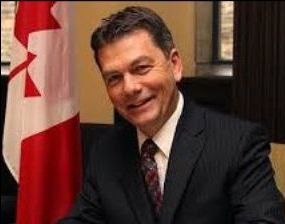
David Anderson MP

The debate around individual rights in Canada is complicated and emotionally-charged. I can think of no better example than the discussion in recent months around the sanctity of conscience rights, particularly those of medical professionals.

Conscience forms the basis of a medical professional’s motivation to pursue their particular field. Doctors practice every day with the knowledge that it is their conscience that motivates them to test the limits of their expertise and skill. They know that patient care will suffer if they are deprived of the ability to live with integrity and follow their conscience. They know the importance of these beliefs to themselves and their patients far better than anyone else.

Freedom of conscience bill to be debated in Canada (Link).

For a great many Canadian doctors, the core of their conscience prohibits their participation in taking a life. Indeed, many doctors remain devoted to the black and white of the ancient Hippocratic Oath – a pledge which prohibits the administration of a poison to anyone.

In Canada, the reality is that the provision of a life-ending ‘poison’ is now permitted by the law of the land. Three years ago, taking a patient’s life through medical means was culpable homicide. Doctors were not obligated by any means to provide these services to patients. In 2016, these once unwavering rights were radically challenged through the Liberal government’s legalization of physician-assisted suicide, or medical assistance in dying (MAiD), through bill C-14. The Liberals’ attempt to provide protection for doctors consisted solely of a rudimentary clause which stated that “nothing…compels an individual to provide or assist in providing medical assistance in dying.” However, this provision lacked the teeth needed for its effective enforcement, as evidenced by the ongoing pressure exerted on physicians by their regulating bodies.

It should be noted that even the premise of C-14 – the Supreme Court of Canada’s Carter v. Canada decision – explicitly said that the legalization of euthanasia did not entail a duty of physicians to provide it. Despite this assurance, assisted suicide/euthanasia now exists in this country and, while the law now permits it, many doctors’ consciences will not.

Through the availability of assisted suicide on-demand across Canada, threats to conscience are no longer confined to the rhetoric of the court room – they are increasingly present in the examination room.

That is why I believe it is time to take action in defence of conscience rights that have stood the test of time for generations. My Private Member’s Bill, C-418, seeks to amend the Criminal Code to make it an offence to intimidate a medical practitioner, nurse practitioner, pharmacist or any other health care professional for the purpose of compelling them to take part, directly or indirectly, in the provision of physician-assisted suicide.

C-418 would also make it an offence to dismiss from employment or to refuse to employ a medical practitioner, nurse practitioner, pharmacist or any other health care professional for the reason only that they refuse to take part, directly or indirectly, in the provision of physician-assisted suicide.

My bill would provide the teeth that C-14 acutely lacks.

Are these protections necessary? You bet. Throughout the legislative process, I have spoken with doctors who feel overt pressure to leave family medicine because of their conscientious beliefs. I have heard of palliative care doctors in Ontario who have stopped practicing all together. Nurses feel increasingly bullied, choosing to shift their focus or retire early. The pressure on these professionals exists, and they are looking for relief.

What is more, regional associations, such Ontario’s College of Physicians and Surgeons, have introduced regulations compelling conscientiously-objecting physicians to participate by providing ‘effective referrals’ for physician-assisted suicide. A recent court decision has upheld this directive, contravening the assurances provided in Carter v. Canada and creating an even more urgent need among physicians for protection.

My bill does not address the social acceptability of euthanasia and assisted suicide. Protecting physicians’ conscience rights is not at all a physician vs. patient scenario. By protecting physicians’ conscience rights and relying on them as the experts, patients’ rights are enhanced. C-418 is about protecting the fundamental freedom of conscience and religion guaranteed to all Canadians in the Charter of Rights and Freedoms.

Parliamentarians from all parties cannot ignore the groundswell of support my bill, C-418, has received from across Canada. Canadians believe it is time to stand up for doctors and health care providers who aren’t willing to leave their core ethics behind when they’re at a patient’s bedside.

David Anderson, MP
French society will be stepping off a moral precipice should it decide to starve Lambert to death.

Alex Schadenberg

Executive Director – Euthanasia Prevention Coalition

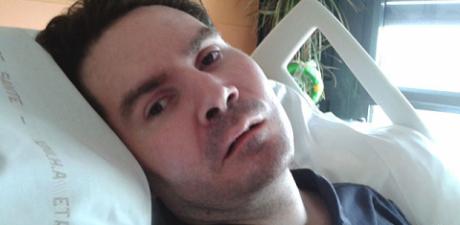
Vincent Lambert

The Vincent Lambert case which concerns the withdrawal of food and fluids of a cognitively disabled man, also opens the question of the goals of the euthanasia lobby.

Sign the petition: Protect Vincent Lambert’s Life (Link). 

Kevin Yuill, author of the book Assisted Suicide: The Liberal, Humanist Case Against Legalisation, examines the Lambert case from a different perspective in his article published by Spiked on May 27, 2019

Kevin Yuill

Yuill examines the Lambert case based on the involvement of the euthanasia lobby. Yuill writes:

Vincent Lambert has become central to the right-to-die debate in France. His face has appeared in French media over the past six years as a symbol of a passionate argument over his future and the future of euthanasia law in France. Lambert, 42, a former nurse, has spent the past 11 years in a vegetative state since suffering severe brain damage from a 2008 motoring accident. 

His high-profile case, which pits his wife and five of his siblings against his devout Catholic parents, a sister and a half-brother, has become a judicial soap opera. It has also divided France, where euthanasia is illegal but doctors are allowed to put terminally ill patients into deep sedation or to withdraw their treatment altogether. The case turns on questions about the degree of Lambert’s consciousness, and about whether or not he would wish to live in such a condition. 

Since 2013, Lambert’s medical team has favoured removing the feeding and water tubes that keep him alive. His parents have resisted. On the evening of 20 May, a French court dramatically ordered doctors to resume life support, reversing an earlier judicial ruling by the European Court of Human Rights that said Lambert should be removed from life support. This follows a request by the Committee on the Rights of Persons with Disabilities at the United Nations, which demanded that the removal of nutrition and hydration be delayed pending further study.

Yuill examines the issues in the case:

There are several significant elements to the story. The first concerns Lambert’s condition… His doctors consider him to be suffering not from ‘brain death’, but rather from severe brain damage. He can open his eyes. He can look at a person. He wakes up, sleeps, smiles, sometimes cries, and responds to stimulations – but there is little evidence that he can communicate. 

Lambert, who breathes on his own, does not benefit from his life, his doctor and his wife and five of his siblings argue. … 

Second, as the medical team has hinted, the question of assisted suicide and euthanasia overshadows the case. Lambert could have had his treatment removed had he left a living will, which are legal in France. Doctors may withdraw care under a 2005 law that says life should not be prolonged ‘artificially’ through ‘unnecessary or disproportionate treatment’. Those opposing the withdrawal of hydration and nutrition point out that a precedent might be set where those whose lives are considered to be ‘without meaning’ might be starved to death.

The Lambert case may affect Organ Donation:

There is another concern. Setting a precedent for Lambert might endanger other young people in similar circumstances because of the potential that their organs might be considered more valuable than their lives. From 2020 in the UK, organ donation will be automatic under the term ‘presumed consent’. A person will have to opt out, actively, of organ donation. The Lambert case is significant for the UK. Will medical teams make decisions about the value of a young accident victim’s life based on the desirability of his or her organs?

Yuill shows how the Lambert case shows the euthanasia lobby lie.

The Lambert case also gives the lie to assisted-dying campaigners’ purported concerns for autonomy. Lambert has no say in the matter – it is impossible to work out what his wishes are. Wesley Smith, with the Patients Rights Council, has argued that cases like this are less about a ‘right to die’ than about having ‘no right to live’. Everyone would be up in arms if a vulnerable person in care was starved to death, but that is where the Lambert case is heading – towards a medically unnecessary but, in some people’s view, a socially desirable killing. 

It is not surprising that right-to-die advocates have leapt upon the case, despite it not being about autonomy or rights. Former French president Francois Hollande used the case in 2014 to publicise his attempt to change the law to allow ‘medical assistance to end one’s life in dignity’. Michel Neveu, a representative of the French campaign for euthanasia and assisted suicide – L’Association pour le droit de mourir dans la dignité (ADMD) – said Lambert ‘would have told his wife that, if he were in a state like the one we know today, he would like to benefit from deep sedation…’. 

Right-to-die campaigners already project their worst nightmares (‘I would never want to live like that’) on to disabled people. As a result, the lives of many disabled individuals are valued as considerably less worthy than others. It is not that Lambert suffers, as neuroscientists noted – it is that his continued existence is an inconvenience. Rather than allow him to live out whatever limited life he has, many in French society argue that it is ‘undignified’ for his life to continue.

Yuill then concludes that food and drink are not futile.

Whereas aggressive medical treatment can and should be withdrawn when it is futile, denying a vulnerable person the food and drink necessary to keep them alive cannot be seen as futile. Lambert’s death will only serve a social purpose. There are no medical reasons at all for it. French society will be stepping off a moral precipice should it decide to starve Lambert to death.

Sign the petition: Protect Vincent Lambert’s Life (Link). 

Kevin Yuill teaches American studies at the University of Sunderland. His book, Assisted Suicide: The Liberal, Humanist Case Against Legalisation, is published by Palgrave Macmillan. (Buy this book from Amazon (UK).)

Chris Ford: Why I changed my mind on euthanasia.

Alex Schadenberg
Euthanasia Prevention Coalition.

Chris Ford, a socially left researcher and disability in New Zealand explains why he recently changed his mind on euthanasia. 

Chris Ford

Ford, who’s commentary was published on May 27 by Newsroom writes:

The turning point for me came about a month ago. I saw the report of a meeting hosted by disabled people’s organisation, People First (a group run by and for people with learning/intellectual disabilities) in the Central North Island. At that meeting, access to health care was discussed, as this is a key issue – particularly for people within this segment of the disability community – for whom find it difficult accessing care for many reasons, including attitudinal issues on the part of some medical professionals. This was exemplified by the stories shared at the meeting where some people – who had gone to hospital for treatment – had discovered upon reading their files that they had ‘no resuscitation’ orders attached to them. More problematically, these orders had not been requested by any of the disabled people or their families. 

Personally, this brought home to me one of the key arguments of the anti-euthanasia camp: that people who are already marginalised or devalued (such as older and disabled people) would be at high risk from euthanasia. The pro-euthanasia lobby would counter that people will have the right to exercise real legal choice and that the rights of vulnerable people would be better protected within the EOLC once it goes through the remaining stages of the parliamentary process. In stating this, I acknowledge that when the legislation returns that Seymour is preparing to remove the ‘irremediable conditions’ clause, which was one of my genuine concerns with it. 

While I am pleased that he has succumbed to pressure on this issue – meaning that the legislation going forward is expected to only cover people with terminal illnesses with a diagnosis of less than six months – I have become more aware over time of the counter-arguments to even this agreed limitation (which I also initially supported). 

The counter-argument is that a diagnosis is not a definitive time statement. For example, a person who is given six months or less to live today can die tomorrow, next week or at the other end of the spectrum, last even a year or many years beyond that. A diagnostic timeframe is simply a clinician’s best-informed opinion about when a person may die – nothing else. Also some people can live for many years with a terminal illness or condition and yet still enjoy a remarkable quality of life if they have the right supports and treatment. One person who illustrates these arguments well is disability rights campaigner and speaker Kylee Black, who lives with a condition that will restrict her lifespan yet refuses to be defined by it. According to the social model of disability, it is how society views people like her and the value that they place on people like her that’s important. 

And that brings me to my next point about the choice element. Voluntary euthanasia proponents say that terminally ill people who fall within the law’s remit will have to prove that they are under no pressure to die and that the choice should be theirs in the end. This sounds great at first glance and this is what drew me to initially support voluntary euthanasia. Yet, I have come to learn that there is no definitive measure or mechanism that will ever be able to check as to whether a person is doing this out of their own free will or is simply being coerced. Indeed, there are far too many reported instances of the abuse of older and disabled people in our society already and this is why even the best safeguards may be vulnerable to failure in the end run. 

More pertinently, the way in which society views disabled people is still largely negative and any introduction of euthanasia laws might further diminish our standing in the eyes of wider New Zealand society. In fact, anecdotal reports from disabled people in countries such as The Netherlands and Belgium (which have both adopted expansive euthanasia laws) suggest how attitudes towards the disability community in those countries have shifted to being more negative than before. In fact, all the above reasons are why Disability Rights Commissioner Paula Tesoriero has cited voluntary euthanasia as a key human rights issue given that I and other disabled people already face considerable barriers to our participation within the Aotearoa community. These include funding constraints on disability supports which – if adequately funded – can definitely improve the quality of our lives. Indeed, the Ministry of Health proposed to cut some key supports (such as home help) recently but were only stopped through activism on the part of the disability community from doing so. 

Therefore, the choices that disabled and older people have are largely determined by wider society. So, if society (through government) starts stripping the supports we need to live from underneath us while, at the same time, introducing euthanasia, then the right of disabled people (like me) to exist becomes even more questioned. … 

This leads to my ultimate argument – wouldn’t the legislation be an effective weapon in a time of economic austerity when spending on social services would be even tighter than it is now? One could imagine that deeper future cuts to health and disability services, for example, would see many more disabled people placed under even greater pressure by both government and wider society to feel worthless and a burden. Moreover, what if government provided support services were privatised under a future government? In my view, that would place even greater strain on services for older and disabled people. 

And if you don’t believe me about the double impacts of the withdrawal of social provision and health care for disabled people, then a disabled man in a Canadian health facility secretly recorded a conversation he had with clinical staff in which he was offered free euthanisation as an alternative to receiving funding for ongoing support to live in the community. Listening to that conversation (recorded in a country where voluntary euthanasia was legalised by court order) shook me greatly too. This revealed to me the quintessential nexus between euthanasia and neo-liberalism in that if you have less choice through fewer supports, then why not take the quicker, easier and cheaper way out – death! 

That’s why many progressive left wingers such as UK Labour Party Leader Jeremy Corbyn and, in the New Zealand context, long-time activist John Minto and blogger Martyn Bradbury (amongst others) have come out against euthanasia. Essentially, they hold the same position that I do in that before we can think about a good death, we need to build fair, equitable and just societies which can sustain good lives for everyone instead. 

That’s how I’ve been moved to see things in recent months – how a good life can be lived and once done, a good death can follow. For that reason, Parliament needs to reject the bill and embrace real choice in living for everyone!

Euthanasia is not a left/right issue, but rather legalizing euthanasia gives physicians the right in law to cause the death of their patients when the patient is in their time of need. Ford is right, social devaluation and attitudes affect everyone’s life because they become personally vulnerable and need social and cultural support.

Québec palliative care physicians continue to resist euthanasia.

Alex Schadenberg
Executive Director – Euthanasia Prevention Coalition

The Montreal Gazette published a pro-euthanasia article by health reporter Aaron Derfel arguing that palliative care physicians continue to resist euthanasia in Québec.

Based on data from the recent Québec euthanasia report, Derfel reports that the rate of euthanasia varies based on where the patient is located. Derfel states:

In Montreal, the number of cases of physician-assisted dying is seven times higher in the east end than on the West Island, suggesting possible resistance by some doctors who are opposed to the practice for ideological or religious reasons.

Derfel reports Dr. Georges L’Espérance, president of the Association québécoise pour le droit de mourir dans la dignité, as blaming mostly palliative-care specialists for the opposition to euthanasia. L’Espérance reportedly said:

“Certain palliative-care specialists do perform assisted dying, especially in the regions, as well as some in Montreal. However, a majority — especially at the MUHC, McGill and CHUM — are rather opposed to assisted dying.”

Dr. Balfour Mount is credited with pioneering palliative care in North America, founding a unit in 1973 at the former Royal Victoria Hospital (now part of the MUHC) that was dedicated to easing the pain and suffering of the terminally ill. Today, some palliative-care specialists argue that administering a lethal infusion at the patient’s request is against their medical ethics.

L’Espérance, who is a promoter of euthanasia, considers euthanasia to be part of a continuum that starts with palliative care.

Derfel completes the article by quoting Dr Michel Bureau, the Chair of the Québec euthanasia commission, stating that the number of euthanasia deaths continue to rise and the resistance will fade.

Derfel’s pro-euthanasia article negates the truth that where patients receive good pain and symptom management, they don’t seek death by lethal injection. Derfel also negates the fact that, according to the aims of palliative care, it focuses on caring for people not killing people.

Petition supporting Bill C-418 to protect conscience rights for medical professionals.

Link to sign the English language petition. 
Link to sign the French language petition.

Petition to the Government of Canada

Whereas:

  • The fundamental freedoms of conscience and religion are guaranteed to all Canadians in the Charter of Rights and Freedoms;
  • Bill C-14 (Medical Assistance in Dying) prohibits the compelling of health care providers or institutions to provide medical assistance in dying, to refer or transfer a patient to another health care provider, or to take other actions which could impact on health care providers’ freedom of conscience or religion;
  • Bill C-14 lacks clarity for effective enforcement;
  • Bill C-418 aims to protect the fundamental freedom of conscience guaranteed to all Canadians; and
  • Bill C-418 makes it an offence to intimidate a health care professional for the purpose of compelling them to take part, directly or indirectly, in the provision of euthanasia and assisted suicide. Bill C-418 also makes it an offence to dismiss from employment or to refuse to employ a health care professional for the reason only that they refuse to take part, directly or indirectly, in the provision of medical assistance in dying.

We, the undersigned, residents of Canada, call upon the Government of Canada to ensure that the conscience rights of medical personnel are protected, by passing Bill C-418.

Link to sign the English language petition.

Euthanasia by Organ Donation – Doctors debate the dead donor rule.

Alex Schadenberg
Executive Director – Euthanasia Prevention Coalition

Several weeks ago I wrote about Dr Wes Ely’s experiences while attending conferences on organ donation. Ely explains that the topic of euthanasia by organ donation was regularly being discussed at organ donation conferences. Ely, who opposes euthanasia, stated:

At each meeting, the conversation unexpectedly shifted to an emerging question of “death by donation” — in other words, ending a people’s lives with their informed consent by taking them to the operating room and, under general anesthesia, opening their chest and abdomen surgically while they are still alive to remove vital organs for transplantation into other people. 

The big deal here is that death by donation would bypass the long-honored dead donor rule, which forbids removal of vital organs until the donor is declared dead. Death by donation would, at present, be considered homicide to end a life by taking organs.

Sharon Kirkey published an article in the National Post (today) concerning the debate that has grown concerning euthanasia by organ donation. Kirkey explains:

Under this scenario, people granted an assisted death would, with their full knowledge and consent, be transported to an operating room, put to sleep under general anaesthesia and their organs removed, including the heart and lungs. Death would follow removal of the beating heart. Under so-called “euthanasia by organ donation,” the act of organ donation itself — not a lethal injection or a doctor-prescribed, life-ending dose of barbiturates — would be the mode of death.

According to Kirkey organ donation after euthanasia has already occurred at least 30 times in Canada, since euthanasia was legalized.

Kirkey points out that the dead donor rule prevents euthanasia by organ donation. 

An article published in the New England Journal of Medicine (NEJM) last September argues that eliminating the dead donor rule provides “benefits” by providing healthier organs for donation. Ian Ball, the lead author of the article explains the scenario:

The dead donor rule isn’t a law, but more an “ethical convention,” said Ball. It’s being questioned more, especially in the advent of assisted dying. “Prior to MAID it was absolutely unacceptable for physicians to intentionally and directly cause the death of a patient,” he said. 

“The extreme perspective — and I’m not taking this, I’m not advocating for this and it’s certainly against current MAID legislation, but some people do — is that, in the case of MAID, why wouldn’t you go to the operating room, get a general anaesthetic and why couldn’t they retrieve your beating heart? Because that would provide your heart in the best possible condition to a recipient.”

It’s important to point out that Robert Troug, a long-time proponent of euthanasia by organ donation was also involved with the publishing of the article in the NEJM.

Kirkey finishes the article by asking Jennifer Chandler who works with Organ and Tissue donation at the University of Ottawa. Chandler suggests that many people would be uncomfortable with the idea of euthanasia by organ donation and it would lead to a grave risk to public trust.

Dr Ely stated in his article published in USA today that:

When physicians are participating in a procedure designed to take a person’s life, will patients feel 100% certain that their physician is firmly on the side of healing? What message does it send about the value of every human life when physicians endorse the exchange of one life for another? What affect has it already had on physicians complicit in such death-causing procedures?

The problem begins when society permits doctors, or others, to kill people. If euthanasia by organ donation becomes an accepted way to kill, then sadly, euthanasia will be promoted as a benefit to society creating another pressure to die.

Design a site like this with WordPress.com
Get started