Health Canada publishes inaccurate and incomplete data on euthanasia in Canada.

Alex Schadenberg
Executive Director – Euthanasia Prevention Coalition

On March 21, I reported that there were 4235 “Medical Aid in Dying” euthanasia deaths in 2018, an increase of 50% over 2017, representing approximately 1.5% of all deaths. The data for my report was obtained from a presentation by Jocelyn Downie, an academic euthanasia activist, for the March 15th Royal Society of Canada luncheon in Ottawa.

I have also reported the provincial data from Ontario and Alberta. The 2018 Ontario data indicated a 78% increase in euthanasia deaths while the 2018 Alberta data indicated a 50% increase. Further to that, last week I published an another article concerning the number of euthanasia deaths in Ontario and Alberta in 2019 (Link to the article).
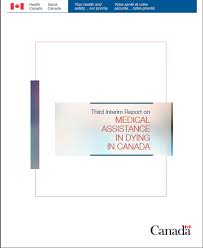
On April 25, Health Canada released the Fourth Interim Report on Medical Assistance in Dying which stated that there were 2614 assisted deaths between January 1 – October 31, 2018. The report indicated that the data was incomplete for Quebec and the three Territories. The report incorrectly stated that assisted deaths represented 1.12% of all deaths in Canada. (Link to the report).

Richard Egan, a researcher with Australian Care Alliance indicated that The Fourth interim Canadian report has wrongly calculated the percentage of deaths by euthanasia as 1.12% when it is actually 1.46%. Egan explains:
Using Statistics Canada’s available data for deaths per month in 2017 and projecting a 2% average annual increase in overall deaths (based on data trends from 2013 to 2017), we estimate that for the first 10 months of 2018, MAID has accounted for approximately 1.12% of the estimated total deaths in Canada during this reporting period.
The data source they refer to is at: (Link).
It gives a total of 276,689 deaths for all of Canada for 2017. Deducting the deaths for November 2017 (23,133) and December 2017 (25,141) gives a total of 228,415 for the 10 months Jan-Oct 2017. Applying the 2% increase the report suggests gives a presumed 232,983 deaths for all of Canada for the 10 months Jan-Oct 2018.

Health Canada does not appear overly concerned about the quality of the Medical Aid in Dying report. Basing percentages on an estimated, two percent increase in deaths is unacceptable. The data concerning the number of 2018 deaths in Canada does exist. Egan continues:

The report gives a total of 2,614 deaths by euthanasia for the same period Jan-Oct 2018 for Canada excluding Quebec. (And the NWT, Yukon and Nunavut for which there is also no data for 2017 deaths in the Statistics Canada death by months report.)
The report appears to have divided 2,614 into 232,983 to get 1.12%. However the correct calculation should use as its denominator the presumed number of deaths for Jan-Oct 2018 for Canada excluding Quebec.
There were 53,612 deaths in Quebec from Jan-Oct 2017. Subtracting these from the total for Canada of 228,415 for the 10 months Jan-Oct 2017 gives 174,803. Applying a 2% increase gives 178,299 presumed deaths in Canada other than Quebec from Jan-Oct 2018.
Dividing 2614 into 178,299 gives a percentage of deaths by euthanasia of all deaths in Canada excluding Quebec of 1.47%.

This more closely matches the data reported by Jocelyn Downie. She reports 4235 deaths by euthanasia for all of Canada (including Quebec) in 2018. The presumed number of deaths in all Canada in 2018 using the expected increase of 2% from 2017 data would be 282,222. 4235/282,222 = 1.5%.

Egan then published further research on the data and published the following information in an article published by Australian Care Alliance:

Euthanasia deaths as a percentage of all deaths varies by province with British Columbia (2.37% of all deaths) nearly three times as deadly as Saskatchewan (0.84% of all deaths).

Other provincial rates are: Quebec 1.54% [Jan-Mar 2018]; Ontario 1.39%; Manitoba 1.25%; Alberta 1.18% and the Atlantic provinces (Newfoundland & Labrador, Prince Edward Island, Nova Scotia, New Brunswick) 0.98%.

One fact the fourth interim report did get right is what is really involved in what the Canadians euphemistically call MAID – medical assistance in dying:MAID is “an exception to the criminal laws that prohibit the intentional termination of a person’s life.”

MAID includes both euthanasia and assisted suicide. As of October 2018 there have only been six cases of assisted suicide under the Canadian law compared to 6743 cases of euthanasia.

This preference for euthanasia over assisted suicide has implications for Victoria (Australia) where both assisted suicide and euthanasia will be legal from 19 June 2019. While euthanasia is only permitted when a person is unable to physically self-administer or to digest the prescribed lethal substance this only requires one doctor to submit a form [Regulation 8 (b)] to the Secretary for Health making this assertion.
The Euthanasia Prevention Coalition requested “Medical Aid in Dying” euthanasia data from every Province since the Federal government has been deliberately slow in releasing data. Most of the Provinces have refused to provide the data. Further to that, Richard Egan’s analysis, shows how the Health Canada report is inaccurate and incomplete.

Assisted suicide goes down in another two states

This article was published by OneNewsNow on April 25, 2019

The fight is well under way over allowing doctor-assisted suicide but two states have pushed back on the push to kill fellow human beings.

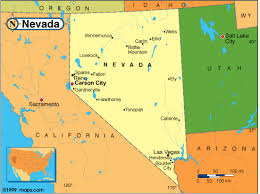
Nevada is the latest to turn down assisted suicide over a lack of support for passage, and a push in liberal Connecticut was defeated despite fewer euthanasia opponents in the state legislature due to last year’s elections.

Alex Schadenberg

Alex Schadenberg of the Euthanasia Prevention Coalition says euthanasia opponents assured Nevada lawmakers they were being fed faulty claims, such as a prognosis of six months to live. Those predictions are often wrong, he says.

“In fact, a study of people in hospice care found that of 486 predictions of a prognosis of how long they were going to have to live, only 20 percent of them are correct,” he tells OneNewsNow.

Another factor in the Nevada political fight was the story of Reno doctor, Robert Rand. He was convicted and sentenced to eight years in prison for overprescribing opioids. Several patients died, including a cancer patient who overdosed.

“if Robert Rand had done this,” Schadenberg explains, “and had done this to many patients, and was able to get away with this for so long, how are you going to control assisted suicide?”

In the state of Connecticut, there was concern the measure might pass because several legislators who vocally opposed assisted suicide were defeated last year.

“So we were very concerned,” Schadenberg recalls. “Nonetheless they defeated the bill again.”

But the issue is not going away and new bills will likely be introduced again, he says.

Good news: The Nevada assisted suicide bill died a natural death. Dr Kirk Bronander wrote an excellent article explaining why assisted suicide should not be legal.

Alex Schadenberg
Executive Director – Euthanasia Prevention Coalition

Congratulations to the many groups and individuals who worked to defeat Nevada’s assisted suicide bill SB 165. SB 165 passed in the Nevada Senate Health and Human Services Committee (3 – 2) on March 25.

A few days ago, a well researched article by Dr Kirk Bronander, a professor of medicine at the University of Nevada, Reno School of Medicine and director of academic hospitalists for UNR Med., titled: Physician assisted suicide a flawed process was published in the Reno Gazette.

Dr Kirk Bronander

In his article Dr. Bronander first challenged the concept of a six month prognosis. He wrote:

The fact is that physicians frequently make errors with diagnosis and predicting timing of death in terminal conditions. My family has personal experience with this: My father was diagnosed with a malignant brain cancer (glioblastoma) and given a prognosis of less than six months to live. He survived for almost four years after his diagnosis. This is also well-documented in the medical literature: A study of hospice patients in the Chicago area showed that of 468 predictions of timing of death, only 20 percent were accurate. Inaccurate diagnoses or prognoses coupled with PAS will result in patients dying that may have years of life remaining.

Dr. Bronander then questioned the ability to regulate the lethal assisted suicide prescriptions. He wrote:

I trust many of my colleagues but there are always going to be some physicians that are unscrupulous, incompetent or unethical. That means this type of law can easily be abused. In Reno, Dr. Robert Rand contributed to the death at least one patient by overprescribing opioids. He did this for years even though opioids are the most highly regulated medications we can prescribe. The lethal drugs used for suicide will be much less scrutinized since there is no requirement for the federal government to monitor them. The law itself will protect the identity of the prescribing doctor, so no one will ever be able to determine if abuse is occurring. Do you trust every physician in Nevada?

Dr. Bronander then examines the effect legalizing assisted suicide has on the elderly and people who become depressed. He wrote:

Unfortunately, many elderly and terminal patients feel they are a burden to loved ones and this law will encourage suicide as an answer. The statistics from Oregon in 2017 (which has a similar law to the one proposed in Nevada) are clear that the reasons stated for obtaining the lethal prescription are for reasons other than pain. “Losing autonomy” is No. 1 and “burden on family, friends/caregivers” is a more frequent reason than “inadequate pain control,” which is sixth on the list. 

Many patients diagnosed with a terminal condition are depressed and there is no requirement to refer to psychiatry or counseling in the law. The Oregon statistics show that only 3.8 percent of patients receiving lethal drugs were referred for psychiatric evaluation while a 2008 study conducted in Oregon found 25 percent of patients requesting assisted suicide were clinically depressed. Depression is a treatable condition; obviously a completed suicide is not treatable.

Thankfully, Nevada’s assisted suicide bill is dead in 2019. Sadly, the assisted suicide lobby will likely introduce another bill in 2020. Hopefully Dr Bronander’s research will help Nevada, and other states, defeat future assisted suicide bills.

The NCET named Dr Kirk Bronander educator of the year in 2018.

Ontario: 368 people die by euthanasia in the first quarter of 2019.

Alex Schadenberg
Executive Director – Euthanasia Prevention Coalition.

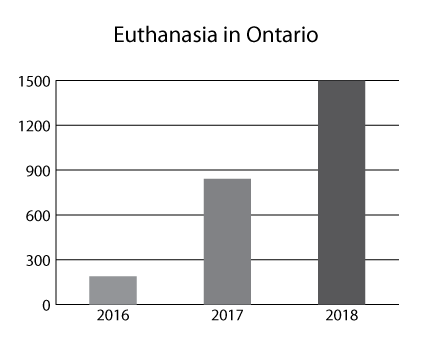
The Ontario Coroner’s Office sent a quarterly report stating that there have been 2897 reported assisted deaths in Ontario since legalization (June 17, 2016) with 368 reported euthanasia deaths in the first three months of 2019.

The current rate of euthanasia, in Ontario, is slightly lower than in 2018. There were 1499 reported assisted deaths in 2018, 841 reported assisted deaths in 2017 and 189 reported assisted deaths in 2016.

The 2897 reported assisted deaths, represented 2896 deaths by euthanasia (lethal injection) and 1 death by assisted suicide (lethal prescription).

The Euthanasia Prevention Coalition works with Compassionate Community Care (CCC) to offer advice and support for family members and friends who are concerned about an assisted death or end-of-life medical treatment decision. Contact CCC at: 1-855-675-8749.

Data from Alberta Health Services indicates that there have been 654 reported assisted deaths since legalization representing 79 reported assisted deaths in 2019. There were 307 reported assisted deaths in 2018 in Alberta.

Contact the Euthanasia Prevention Coalition if you have concerns with the circumstances related to a euthanasia death at: 1-877-439-3348.

Canada’s federal government is slow in releasing data, therefore EPC has been searching for assisted death data from the provinces.

Oregon assisted suicide. The myth of "oversight" and "control."

Alex Schadenberg
Executive Director – Euthanasia Prevention Coalition

As the Executive Director of the Euthanasia Prevention Coalition (EPC) my position opposing assisted suicide is clear. For the sake of this article, I will simply share some information about assisted suicide in Oregon.

Recently two Oregon doctors were investigated for abuse of the assisted suicide act. Since the Oregon assisted suicide act employs a self-reporting system (the physician who assists the suicide is also the physician who reports) it is difficult to uncover abuse of the law.

A search of the Oregon Medical Board disciplinary actions on September 15, 2018, found that Dr Rose Kenny was disciplined by the Medical Board. The order from the meeting states:

3.1 Licensee must not prescribe or manage the prescriptions for any medication for any patient enrolled in hospice care,
3.2 Licensee must not prescribe or manage the prescriptions for any medication for any patient requesting Death with Dignity.

Recent assisted suicide research has uncovered excessive suffering related to death by assisted suicide. An article by JoNel Aleccia published by Kaiser Health News on March 5, 2017 reported that the following occurred while doing research on assisted suicide drug cocktails: 

The first Seconal alternative turned out to be too harsh, burning patients’ mouths and throats, causing some to scream in pain. The second drug mix, used 67 times, has led to deaths that stretched out hours in some patients — and up to 31 hours in one case.

The myth that the Oregon assisted suicide law has effective oversight has enabled the assisted suicide lobby to push for an expansion of the Oregon assisted suicide law.

Oregon is proposing to expand the assisted suicide law.

The Oregon legislature is debating several bill including Bill HB 2217 to expand the assisted suicide law to permit euthanasia (homicide) by redefining the term “self administer” to allow  patients to take the lethal drugs into their body using any method, including an IV tube or injection. The bill states:

“Self-administer” means a qualified patient’s physical act of ingesting or delivering by another method medication to end his or her life in a humane and dignified manner.

Bill HB 2232  proposes to change the definition of terminal from a six month prognosis to:

a disease that will, within reasonable medical judgment, produce or substantially contribute to a patient’s death.

This new definition eliminates the requirement that a person, who dies by assisted suicide, be terminally ill. 

Many people have a disease that will within reasonable medical judgement, produce or substantially contribute to death, are not “terminally” ill. This new definition will give doctors the right to prescribe suicide drugs to many more people.

Oregon Bill SB 0579 enables a physician to wave the 15 waiting period in the assisted suicide law. SB 0579 states:

Notwithstanding subsection (1) of this section, if the qualified patient’s attending physician has medically confirmed that the qualified patient will, within reasonable medical judgment, die before the expiration of at least one of the waiting periods described in subsection (1) of this section, the prescription for medication under ORS 127.800 to 127.897 may be written at any time following the later of the qualified patient’s written request or second oral request under ORS 127.840.

By waving the 15 day waiting period, a person who is approved for assisted suicide could receive the lethal drugs immediately with no opportunity for a depressed person to change their mind.

When analyzing the recent Oregon assisted suicide report we notice significant problems with the law beyond the fact that assisted suicide causes death.

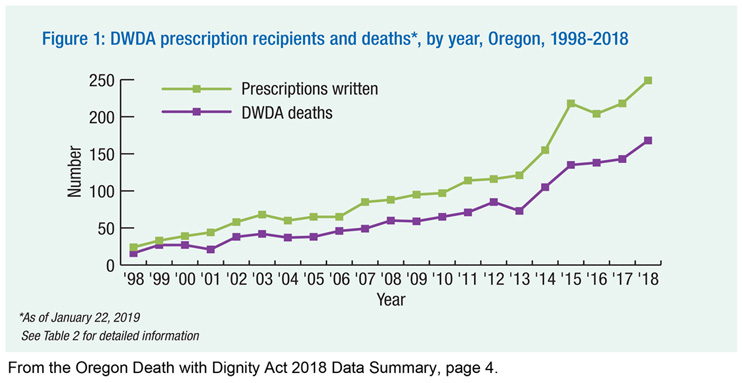
The Oregon assisted suicide report states that there were 168 reported assisted suicide deaths in 2018 up from 158 reported assisted suicide deaths in 2017. The longest duration before death being 21 hours in 2018 while one person died 807 days (more than 2 years and 2 months) after being approved for assisted death.

In December 2017, Fabian Stahle, a Swedish researcher, communicated by email with a representative of the Oregon Health Authority.

Stahle confirmed that the definition of terminal illness, used by the Oregon Health Authority includes people who may become terminally ill if they refuse effective medical treatment.

The responses to Stahle from the Oregon Health Authority also confirmed that there is no effective oversight of the Oregon assisted suicide law.

Assisted suicide and “other” suicide deaths.

The Oregon suicide rate is increasing faster than the national average. In 2007 Oregon’s conventional suicide rate was 35% higher than the national average while in 2014, Oregon’s conventional suicide rate was 43% higher than the national average.


It has been argued that there is not a direct co-relation between the Oregon suicide rate and assisted suicide, nonetheless, it must be noted that there appears to be a suicide contagion effect.

Oregon assisted suicide law is designed to cover-up abuse of the law.

The Oregon law enables the physician who assesses a person requesting assisted suicide to be the same physician who prescribes the lethal assisted suicide drugs and then be the same physician who is required to report the assisted suicide death.

By law, the same doctor is the judge, the jury and the executioner.

The yearly Oregon DWD reports are based on data from the physicians who prescribe and carry-out the assisted suicide death and the data is not independently verified. Therefore, we don’t know if the information from these reports is accurate or if abuse of the law occurs. There is no third party oversight or intervention it is all a mirage.

Since doctors rarely self-report abuse of the law or even self-report controversial decisions, therefore the law enabled a cover-up of any and all concerns.

Every state that has legalized assisted suicide has also employed the same system to cover-up potential problems with the law.

If the facts concerning assisted suicide were known and openly debated, people would reject assisted suicide and demand excellent care.

To share this information, order the pamphlet: Shedding Light on Assisted Suicide in America.

We believe in Caring Not Killing.

Oregon Bill HB 2217 would extend assisted suicide to allow euthanasia.

Alex Schadenberg
Executive Director – Euthanasia Prevention Coalition

Oregon bill HB 2217 which expands assisted suicide to include euthanasia by redefining “self-administer” passed in the House by a vote of 37 to 21. HB 2217 states:

“Self-administer” means a qualified patient’s physical act of ingesting or delivering by another method medication to end his or her life in a humane and dignified manner.

The difference between euthanasia and assisted suicide is how it is done. Euthanasia is done by one person causing the death of another person, usually by lethal injection. Assisted suicide is when one person is directly involved with causing the death of another person, usually by prescribing lethal drugs that patients take themselves. 

Chris Lehman with KLCC in Oregon explains that HB 2217 enables lethal drugs to be taken by any method, including lethal injection:

Oregon’s “Death With Dignity Act” allows doctors to prescribe lethal medications to people who are thought to have less than six months to live. Patients have to take the medicine themselves. Since the law took effect in the late 90’s, that’s generally been interpreted to mean taking the deadly dose through oral ingestion.

The measure under consideration would clarify that patients could take the medication into their body using any method, including an IV tube or injection.

On January 1, In her article: End-of-Life option laws should avoid needless red tape, Kim Callinan, the CEO of Compassion & Choices, (formerly known as the Hemlock society) argued that assisted suicide laws require fewer regulations. Callinan writes:

If lawmakers want to improve medical aid in dying laws, then let’s address the real problem: There are too many regulatory roadblocks already! I am not suggesting changing the eligibility requirements, as our opposition will suggest. I am merely suggesting that we drop some of the regulations that put unnecessary roadblocks in place.

The assisted suicide lobby considers the homicide laws as a roadblock to assisted suicide. If HB 2217 becomes law, it will create an exception for homicide under the assisted suicide act.

Complications with Lethal Drugs Used for Assisted Suicide

The Patients Rights Action Fund published the following information.

Warning: If you are experiencing suicidal thoughts, do not read this article but call: 1-800-273 (talk) 8255

Seconal

· The lethal dose prescribed to cause the death of the patient is 9 grams of seconal (secobarbital) capsules. To reach this dosage, the patient takes 100 capsules which are opened and mixed with a sweet substance to mask the bitter taste.

· The price of seconal in 2009 was estimated at around $200. The price increased over the next few years to $1,500. When Valeant bought seconal in early 2016, the price increased to $3,000 — $7,000. [1]

Phenobarbitol

· To counter the cost increase of seconal, proponents of assisted suicide began experimenting with combinations of drugs to induce death. One of the drug combinations being used is a mixture consisting of phenobarbital, chloral hydrate and morphine sulfate. The patient mixes the powder with water, alcohol, applesauce or juice. This drug combination lowered the cost to $400-$500.

· In Oregon, the phenobarbital combination has been used to cause the death of 65 patients. For known durations, 59.1% of patients experienced deaths from one to six hours in length and 22.7 % experienced deaths over 6 hours in length. [2]

DDMP 1; DDMP2

· Increasingly, a four drug-cocktail consisting of diazepam, digoxin, morphine sulfate and propranolol (DDMP) is being used to reduce costs. DDMP 1 contains 10 grams of morphine sulfate and DDMP 2 contains 15 grams.[3]

· When a patient took 18 hours to die using DDP (diazepam, morphine sulfate and propranolol), digoxin was added to the mix and the dosage was subsequently increased to form DDMP2. Researchers have described DDMP2 as “blue-whale-sized doses…..And the mixture tastes extremely bitter. ‘Imagine taking two bottles of aspirin , crushing it up, and mixing it in less than half a cup of water or juice.’”[4]

· In Oregon, DDMP 1 and DDMP 2 accounted for 145 deaths through 2018. For known durations, 40% of patients experienced deaths from one to six hours in length and 24% experienced deaths over six hours in length. Two patients regained consciousness after ingesting the drugs.[5] “The median time until death was longer for the DDMP2 compound (120 min) than for secobarbital (25 min)…”[6]

· In Oregon in 2018, DDMP was prescribed for 38.1% of patients compared to 13.2% in previous years.[7]

Morphine Sulphate

· In Washington State in 2017, 130 out of 196 deaths (63%) were attributed to use of morphine sulfate in isolation.[8] Deaths from secobarbital and morphine sulfate lasted from 5 minutes to 35 hours in range.[9]

General Complications From Lethal Drugs Used In Assisted Suicide Deaths

· Experimenting with combinations of drugs is “research” which has not been approved by any ethics review committee like an “Institutional Review Board” (IRB), which appears to violate research ethics standards.

· According to The Atlantic: “No medical association oversees aid in dying, and no government committee helps fund the research……… The doctors’ work {to experiment with drugs which kill patients} has taken place on the margins of traditional science. Despite their principled intentions, it’s a part of medicine that’s still practiced in the shadows.”[10]

· According to Kaiser Health News, “The first Seconal alternative turned out to be too harsh, burning patients’ mouths and throats, causing some to scream in pain.”[11] “The second drug mix, used 67 times, has led to deaths that stretched out hours in some patients – and up to 31 hours in one case……the next longest 29 hours, the third longest 16 hours and some 8 hours in length.”[12]

· According to the New England Journal of Medicine: One in five Dutch patients using standard barbiturates to kill themselves experienced complications including vomiting, inability to finish the medication, longer than expected time to die, failure to induce coma, and awakening from coma.[13] 

· According to Anaesthesia: “However, for all these forms of assisted dying, there appears to be a relatively high incidence of vomiting (up to 10%), prolongation of death (up to 7 days), and re-awakening from coma (up to 4%), constituting failure of unconsciousness. This raises a concern that some deaths may be inhumane……”[14]


1. http://www.medscape.com/viewarticle/869023?src=emailthis#vp_2

2. https://www.oregon.gov/oha/PH/PROVIDERPARTNERRESOURCES/EVALUATIONRESEARCH/DEATHWITHDIGNITYACT/Documents/year21.pdf, page 15

3. https://www.oregon.gov/oha/PH/PROVIDERPARTNERRESOURCES/EVALUATIONRESEARCH/DEATHWITHDIGNITYACT/Documents/year21.pdf, page 15

4. https://www.theatlantic.com/health/archive/2019/01/medical-aid-in-dying-medications/580591/

5. https://www.oregon.gov/oha/PH/PROVIDERPARTNERRESOURCES/EVALUATIONRESEARCH/DEATHWITHDIGNITYACT/Documents/year21.pdf, page 15

6. https://www.oregon.gov/oha/PH/PROVIDERPARTNERRESOURCES/EVALUATIONRESEARCH/DEATHWITHDIGNITYACT/Documents/year21.pdf, page 7

7. https://www.oregon.gov/oha/PH/PROVIDERPARTNERRESOURCES/EVALUATIONRESEARCH/DEATHWITHDIGNITYACT/Documents/year21.pdf, page 7

8. https://www.doh.wa.gov/Portals/1/Documents/Pubs/422-109-DeathWithDignityAct2017.pdf, page 9

9. https://www.doh.wa.gov/Portals/1/Documents/Pubs/422-109-DeathWithDignityAct2017.pdf, page 10

10. https://www.theatlantic.com/health/archive/2019/01/medical-aid-in-dying-medications/580591/

11. Kaiser Health News, “Docs in Northwest Tweak Aid-In-Dying Drugs to Prevent Prolonged Deaths”, February 21, 2017

12. Kaiser Health News, “Docs in Northwest Tweak Aid-In-Dying Drugs to Prevent Prolonged Deaths”, February 21, 2017

13. Groenewoud, J.H., van der Heide, A., Onwuteaka-Philipsen, B.D., Willems, D.L., et al. (2000). Clinical Problems with the Performance of Euthanasia and Physician-Assisted Suicide in the Netherlands. The New England Journal of Medicine, 342, 551-556.
 
14. Sinmyee, S., Pandit, V.J., Pascual, J.M., Dahan, A., Heidegger, T., Kreienbuhl, G.,…Pandit, J.J. (2019). Legal and ethical implications of defining an optimum means of achieving unconsciousness in assisted dying. Anaesthesia, 74,557-559.

Scotland is being pressured to legalize assisted suicide. They need to care not kill.

Dr Gordon Macdonald, the parliamentary officer for Care for Scotland, wrote an excellent article that was published in the Scotsman on April 19, explaining why assisted suicide should not be legalised.

Dr Gordon Macdonald

Macdonald begins his article by discussing why the previous assisted suicide bill was defeated.

A new campaign has been launched in the ­Scottish Parliament by a ­cross-party group of MSPs to ­legalise assisted suicide. They plan to bring forward proposals for a new law before the next Scottish parliament election in 2021. 

The last time MSPs voted on the issue of assisted suicide in 2015, they rejected Patrick Harvie’s Assisted Suicide Bill by 82-36. It was a clear, ­comprehensive victory. If you listen back to the speeches made during that debate, it was clear that MSPs did not think the law could be made safe. 

Most members realised then that the risks of legalising assisted suicide were too high and would put vulnerable people at risk of harm. 

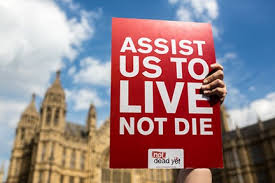
But pro-assisted suicide advocates, including a few MSPs, are determined to change the law in Scotland. The well-funded, London–based campaign group Dignity in Dying are taking their campaign to ­Scotland. They are saying that if they can change the law in Scotland, it will put huge pressure on the rest of the United Kingdom to follow suit. They are fundraising so they can buy ­billboards, posters and placards in order to pressurise MSPs to change the law.

Macdonald argues that legalizing assisted suicide will affect their caring society

Scotland has a long and proud ­history as being a compassionate, caring society where we look after each other. Assisted suicide would undermine this heritage in a radical and unalterable way. 

It would also undermine palliative care, put vulnerable people at risk and put doctors in an invidious ­position. It would heap ­pressure on some of the most vulnerable in ­society to end their life, perhaps ­prematurely because they feel as though they are a burden to loved ones or caregivers. Such an outcome is unavoidable. Instead of encouraging suicide, we should be ­helping ­people to see that they are valuable and of worth to ­family, friends and society, even in old age or ­experiencing ill-health.

Macdonald then explains how assisted suicide laws have expanded in other jurisdictions:

When introduced, assisted suicide laws might be focused on a certain, set of circumstances. As time goes on, the categories of eligibility extend to include more and more people. It can quickly expand from the terminally ill to include those with chronic illnesses, but not terminal conditions; from adults to children; from those with physical illness to include those who have psychiatric and psychological problems and even dementia. 

There are proposals in some ­countries to extend laws to include elderly people who are just tired of life and suggestions that elderly ­people over a certain age should not get significant medical assistance if they are unwell. 

There is a case at the European Court on Human Rights where three doctors are being investigated after a 64-year-old Belgian ­woman in good health with depression was ­euthanised, despite there being no official diagnosis. Her son only found out about it when the ­hospital ­contacted him to arrange the ­disposal of her remains. 

In the USA there are instances of people been denied health insurance for cancer treatment whilst being offered funding to commit suicide. We would be naïve to assume that such cases will not also ­happen here.

Macdonald then explains why assisted suicide safeguards don’t work:

It’s not good enough to talk about safeguards when the ­evidence ­suggests there is no way assisted ­suicide legislation could ever be made fully safe from abuse. Is this really the sort of society in which we want to live? In Scotland, our Christian tradition has left a legacy of concern for the most vulnerable and a sense of responsibility to look after those unable to care for themselves. 

Sadly, our culture too readily equates dependence and vulnerability with weakness. But being vulnerable helps us to realise our dependence upon other human beings.

Dr Gordon Macdonald has been a long-time promoter of the belief that society needs to care for its citizens, not kill.

Bunăciunea Vanessa Youness din dosarul Microsoft NU este amanta lui Emil Boc, ci iubita unui mare fost șef al Serviciilor Secrete românești din Cluj. Vezi CINE! Plus: Stim si cine e denuntatorul Vanessei!​

DNA București a anunțat săptămâna trecută că a trimis în judecată pentru diverse acte de corupție pe numa Vanessa Youness care ar fi comis influență pe lângă înalte capete guvernamentale, pretinzând șpagă de 1 milione de euro pentru rezolvarea unor contracte cu licență Microsoft. 

Pe scurt, DNA crede ca are probe solide ca sa o trimita in judecata pe fatuca. Potrivit procurorilor, in perioada februarie – august 2011, inculpata Youness Amal Vanessa a pretins și ulterior a primit de la un om de afaceri suma de 1.000.000 de euro, promițând că va interveni pe lângă un înalt demnitar în vederea aprobării unor documente ce priveau licențele IT pentru produse utilizate de către Ministerul Educației Naționale în școli.
Documentația respectivă a fost aprobată la data de 06 iulie 2011, independent de presupusele demersuri ale inculpatei, menționate mai sus. Cu toate acestea, inculpata a primit banii pretinși, în două tranșe, printr-un intermediar, astfel:
– suma de 720.621 euro a fost virată în contul unei societăți controlată de Youness Amal Vanessa, exact în ziua în care Ministerul Comunicațiilor și Societății Informaționale a primit confirmarea oficială a aprobării documentelor respective (14.07.2011),
– restul sumei i-a fost înmânată inculpatei în numerar”, se arata pe site-ul DNA.

O mica escroaca cu CV mare de tepe si tunuri

“Independent de presupusele demersuri ale inculpatei” inseamna in traducere libera ca Youness Vanessa l-a escrocat pe omul de afaceri, mintindu-l ca are influenta pe langa un inalt demnitar din Guvernul Romaniei, adica mintindu-l ca o rezolva cu Boc. Va dam acum bomba. Potrivit surselor noastre, dosarul Vanessei a fost disjuns din marele dosar Microsoft si a lancezit foarte mult timp in fisetul controversatei procuroare DNA Mihaela Iorga. Cand a ajuns in mainile procurorului Adrian George Matei, lucrurile s-au miscat cu repeziciune caci, spun sursele noastre judiciare, exista probe solide. Vom vedea cand va incepe procesul. Se pare ca o marturie grea in dosar este a lui Gheorghe Verioti, un om de afaceri roman, de fapt, machidon, din Constanta, cu rezidenta si in Elvetia, inculpat in dosarul Flota acum multi ani, fiind unul dintre cei care a cumparat nave de nave la preturi de nimic. Nu ne intereseaza acum trecutul lui Verioti de aceasta data, ci ne intereseaza ca un om experimentat de afaceri a fost fermecat de fatuca asta combinagioaca intr-atata incat Verioti i-a cascavalit un milion de euro pe niste false promisiuni.

L-am contactat pe Titel Verioti, ca asa il stiu machidonii din Constanta pe puternicul om de afaceri din zona:

“Domnule, nu stiu la ce va referiti, nu vreau sa discut, da? Eu nu am denuntat pe nimeni, altceva nu va mai zic!”, spune cu dreptate Verioti. El nu a denuntat, a fost martor si acolo, in fata procurorilor DNA, a spus cum s-a intamplat totul. 

Interesant e ca Vanessa Youness a refuzat sa faca declaratii in dosar, dar si mai interesant e ca, DIN NOU, Emil Boc reuseste sa ramana anonim ori de catre ori merge la DNA, in timp ce alti politicieni grei sunt dati in gat presei cand intra la parchete.

Revenind la Boc, nu e de lepadat nici asocierea pe care tabloidul de scandal Cancan a facut-o legand-o pe Vanessa Youness de Emil Boc. Cei de la Cancan au scris in clar ca e amanta lui Boc, insa au gresit. Pe bune, nu e.

Noi suntem ziaristi si stim ca ziaristii mai pot gresi. Da, tabloidul Cancan e foarte tare pe dezvaluiri, dar tura asta au gresit. Insa NU de aia au sters articolul, asa cum vedeti in filmarea noastra de mai jos, ci din alt motiv: fiindca sefii Cancan au primit telefoane. De la cine? De la un greu, ca altfel nu se putea scoate un articol. Iar greul ala e ADEVARATUL iubit al Vanessei Youness.

Pana sa va zicem detalii picante despre Youness Vanessa si iubitul sau, vrem sa mai zabovim putin asupra acestei fatuci incredibil de senzuale, care a facut multi barbati sa o ia razna. Caci Emil Boc nu e chiar strain de ochisorii Vanessei, chiar daca a declarat acum 5 zile ca a cunoscut-o pe Vanessa Youness în condiții „absolut întâmplătoare”, în care fusese diagnosticată cu scleroză multiplă, și avea nevoie de o planificare la un doctor de specialitate. 

Am sprijinit-o pentru a avea o planificare la un doctor pentru a putea menține sub control această maladie. Era foarte implicată în a găsi soluții medicale la această boală, astfel încât și alte persoane care suferă să aibă acces la un tratament, în vederea ameliorării bolii. Știu că avea preocupări în acest sens. Avea resurse materiale, provenea dintr-o familie cu resurse financiare, încât nu se punea problema de a nu-și putea suporta costurile medicale, dar avea nevoie de a avea acces la consultanță de specialitate. Era o persoană cu aplecare spre acte de caritate, extrem de preocupată de rezolvarea cazurilor medicale și de sprijinirea celor aflați în nevoie, care aveau o situație materială dificilă”, a mai spus Emil Boc.

Va dati seama ce suflet caritabil e Emiluc asta? Dragul de el, cum se implica el in viata cetatenilor suferinzi.

Totusi, ramane o intrebare: de ce dracu Boc a fost fotografiat in aceeasi masina cu care calatorea si Vanesuca?

Emil Boc baga un tromf de zile mari:

”În nicio situaţie, nici o maşină de la Partidul Democrat nu a fost pusă la dispoziţie. Acea maşină nu am mai folosit-o din momentul în care am devenit premier, nu am avut nicio legătură în consecinţă cu utilizarea ei, este categoric exclus orice demers al meu de a pune la dispoziţie cuiva vreo maşină, clar şi fără echivoc”, a precizat Emil Boc.

Pauza pentru ras. Ahahahahahahahahahahahahaha!

Mai tineti minte o alta coincidenta vizuala surprinsa tot de baietii tari de la Cancan? In 2007, Emil Boc a fost fotografiat de Cancan cumparand, ce coincidenta, un ursulet de plus pe care l-a dus din coincidenta blondei Liliana Bogdan la un apartament unde, din coincidenta, au ramas amandoi peste noapte iesind cu totul intamplator pe aceeasi poarta la ore diferite. Ahahahaha, ce coincidenta! Si Oana Boc, sotia, a inghitit povestea, caci era vorba de o coincidenta, nu?

eCharge (ECHG) in list of Scam, Dead, Hacked Coins and ICOs.

eCharge (ECHG) in list of Scam, Dead, Hacked Coins and ICOs.

This coin is a laughable Ponzi scheme token promoted by a team of fraudster comprised of: Markus Dold, Dariia Manovytska, Holger Czesnat. Just their white paper shows the amateur level these guys run at: full of spelling mistakes and incorrect grammar https://drive.google.com/file/d/1V9Lg4UdTyZskvOOND3Yc-SA4lgcCLjha/viewThe company behind the ICO is in bankruptcy proceedings in Austria according to https://www.trendingtopics.at/echarge-konkursverfahren-mitten-im-ico/
Design a site like this with WordPress.com
Get started