On this edition of Porkins Great Game, Pearse Redmond and I focus on the assassination of Russian opposition politician Boris Nemtsov and the ensuing turf war between Chechen leader Ramzan Kadyrov and Russia's Federal Security Service (FSB). We also take a look at the Georgia-Ukraine connection and the recent attempt by former Georgian President Mikheil Saakashvili to launch a Maidan in Tbilisi. Afterwards, Pearse and I explain what has been going on the Turkmen-Afghan border lately and how Obama's decision to slow the U.S. “withdrawal” affects the Afghan peace talks. We end this episode with an update on the latest shenanigans of journalist/freedom fighter/CIA agent/filmmaker Matthew VanDyke.
The New Great Game Round-Up #92
The Great Game Round-Up brings you the latest newsworthy developments regarding Central Asia and the Caucasus region. We document the struggle for influence, power, hegemony and profits between a U.S.-dominated NATO, its GCC proxies, Russia, China and other regional players.
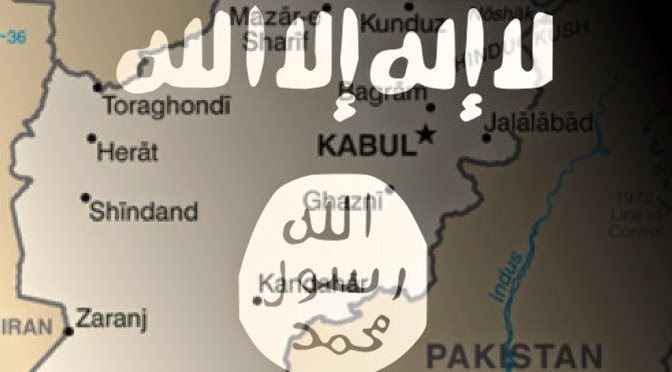
The ISIS threat in Afghanistan has been hyped by everyone and his brother ever since the first ISIS flag was seen in the war-torn country. It didn't take long before some insurgents left the Taliban to join the new hip terrorist group. As the rivalry between the two groups escalated, wannabe Caliph Abu Bakr al-Baghdadi even went as far as calling Taliban leader Mullah Omar “a fool and illiterate warlord.” Predictably, Mullah Omar didn't respond to the insult. The Taliban leader has not been seen or heard from in years, fueling speculation that he is already dead. This is now becoming a major problem for the Taliban because al-Baghdadi has declared himself “Caliph” of the world's Muslims, finding a sympathetic ear with more and more jihadists. In an effort to counter the growing influence of ISIS in Afghanistan and to remind the world that Mullah Omar is still relevant, the Taliban just published a 5,000-word biography of the reclusive Taliban leader but it is highly doubtful whether that will be enough to stop more insurgents from pledging allegiance to ISIS:
Uzbek Group In Afghanistan Pledge Allegiance To Islamic State
A group of Uzbeks in northern Afghanistan, claiming to be from the Islamic Movement of Uzbekistan (IMU), says it is pledging allegiance to the Islamic State extremist group.
A person calling himself Sadulla Urgenji said the IMU no longer views Taliban leader Mullah Omar as leader since he has not been seen for some 13 years and, “according to Shari'a,” can no longer be leader.
Urgenji said his group was recognizing the authority of the Abu Bakr al-Baghdadi, leader of the Islamic State group.
The New Great Game Round-Up #91
The Great Game Round-Up brings you the latest newsworthy developments regarding Central Asia and the Caucasus region. We document the struggle for influence, power, hegemony and profits between a U.S.-dominated NATO, its GCC proxies, Russia, China and other regional players.
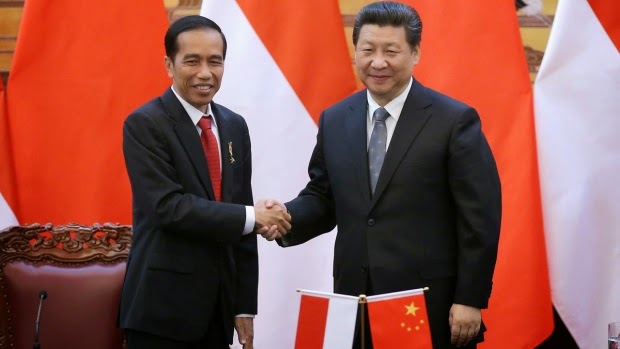
In recent weeks, Uyghur terrorists have been making headlines in several countries, ranging from Turkey to Indonesia and of course China. The Chinese authorities are increasingly concerned that Uyghur would-be terrorists who travel to the Middle East could return and fuel the insurgency in China's Xinjiang Uyghur Autonomous Region. Xinjiang's party chief Zhang Chunxian revealed during a meeting at the annual session of the National People's Congress that local authorities “have broken up terror groups who were plotting violent attacks on Chinese soil after fighting in battles in Syria with the IS.” Although ISIS's threat to China is often exaggerated, Beijing's concerns are not unfounded. As discussed in a recent episode of Porkins Great Game, efforts are underway to smuggle Uyghurs out of China and turn them into jihadist mercenaries for U.S.-NATO terror operations. In order to nip the threat in the bud, Beijing wants to prevent Uyghurs from fleeing the country and catch those who have left:
China's Secret Plan to Track Militants and Bring Them Home
Days after Indonesia arrested four Uighur terrorism suspects in September in the country’s east, China dispatched three intelligence officers to ask authorities to hand them over.
While Indonesia initially demurred, China has now secured a preliminary agreement for the men to be returned after a trial in Jakarta, according to Irfan Idris, a senior official at Indonesia’s anti-terrorism agency. The four, who are yet to be charged, face potential execution if repatriated.
China pressed for the deal as part of a global operation begun last year to return terrorism suspects to Chinese soil, according to two people familiar with the matter who asked not to be identified because the initiative is confidential. Many of the suspects are members of the Turkic-speaking Uighur Muslim minority, they said.
The New Great Game Round-Up #90
The Great Game Round-Up brings you the latest newsworthy developments regarding Central Asia and the Caucasus region. We document the struggle for influence, power, hegemony and profits between a U.S.-dominated NATO, its GCC proxies, Russia, China and other regional players.
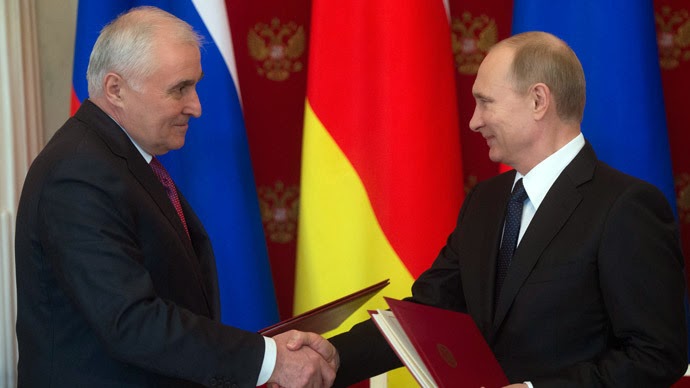
With all eyes focused on Ukraine, recent developments in the South Caucasus have gone largely unnoticed but tensions are running high on Russia's southern border as well. Not everyone is fond of NATO's relentless expansion into post-Soviet space. Contrary to what Western media would have you believe, “it's NATO that's empire-building, not Putin” and some people are having second thoughts about joining “an aggressive military bloc.” Georgian businessman and parliamentarian Gogi Topadze, leader of one of the parties of the ruling Georgian Dream coalition, suggested a few days ago that it might be better to join the Eurasian Economic Union (EEU). Predictably, it didn't take long before some of the most influential Georgian NGOs, including George Soros' Open Society Georgia Foundation, launched a petition against Topadze's “anti-Western statements.” As members of the Georgian government never grow tired of emphasizing, Georgia's Euro-Atlantic integration is irreversible. The next step on this path is a NATO training center. But for some inexplicable reason, this doesn't go down particularly well in Georgia's breakaway region of South Ossetia. South Ossetian leader Leonid Tibilov recently cited NATO's activities in Georgia and Tbilisi's refusal to sign a document on the non-use of force against South Ossetia and Abkhazia as key reasons for signing a wide-ranging alliance and integration treaty with Russia:
Putin signs treaty integrating South Ossetia into Russia
Russia tightened its control Wednesday over a second breakaway region of Georgia, with President Vladimir Putin and the leader of South Ossetia signing a new treaty that calls for nearly full integration.
Georgian President Giorgi Margvelashvili denounced the signing as a “destructive” move against his nation's sovereignty and territorial integrity and said it would further exacerbate tensions. The United States, the European Union and NATO also strongly condemned the signing.
Under the agreement signed Wednesday in the Kremlin, South Ossetia's military and economy are to be incorporated into Russia's. The treaty also promises to make it easier for South Ossetians to get Russian citizenship and to raise salaries for civil servants and state pensions.
 |
| © Photo RIA Novosti/Aleksey Nikolskyi |
The New Great Game Round-Up #89
The Great Game Round-Up brings you the latest newsworthy developments regarding Central Asia and the Caucasus region. We document the struggle for influence, power, hegemony and profits between a U.S.-dominated NATO, its GCC proxies, Russia, China and other regional players.
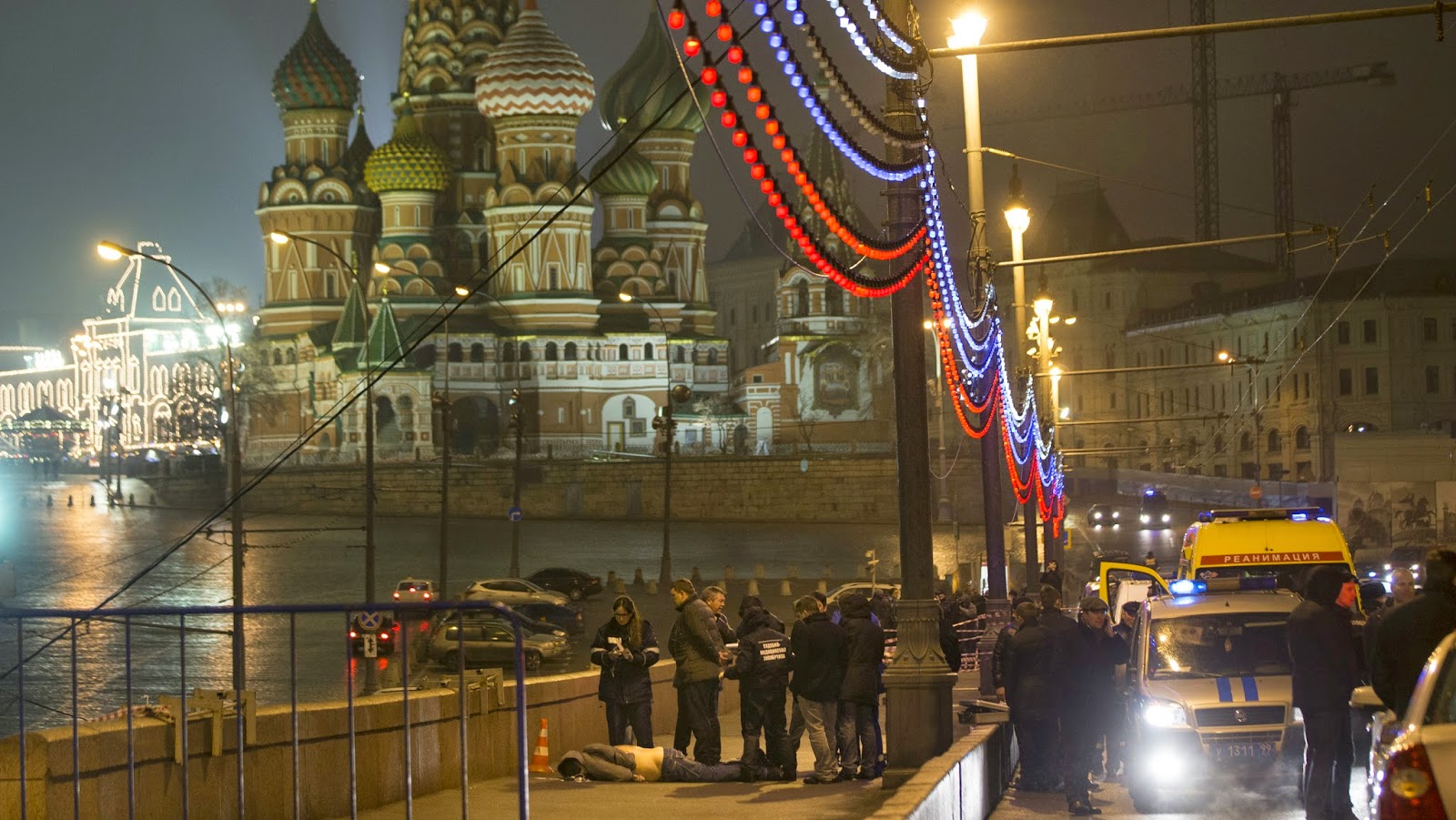
Although it is still not clear who is responsible for the assassination of Russian opposition figure Boris Nemtsov within sight of the Kremlin, it is safe to say that Nemtsov's killing has been a gift from heaven for Washington. Western media had solved the case before Nemtsov's body was cold: Putin did it! And even if Putin did not personally pull the trigger, the Russian President is still responsible for Nemtsov's death because he did create the “atmosphere of hate” in Russia, which enabled the killing. Neither the suspicious timing of the assassination nor the ensuing clan war in the Kremlin led Western pundits to rethink their assessment. But the Russian media's coverage in the aftermath of the murder has been hardly any better. Russian media put out several more or less absurd theories, from promoting the Charlie Hebdo angle to blaming the Nemtsov killing on the inept Security Service of Ukraine (SBU) or the new leader of the “Chechen rebels” fighting for Kiev in the Donbass:
Pro-Kremlin Newspaper Spins Conspiracy Theory That Nemtsov Was Killed By Pro-Kiev Chechen
Two weeks after the assassination of opposition leader Boris Nemtsov, the pro-Kremlin Komsomolskaya Pravda (KP) has revived a claim first floated a few days after his death and then abandoned – that Adam Osmayev, a pro-Kiev Chechen fighting against Russian-backed separatists in the Donbass, is somehow linked to Nemtsov's death.
KP says they have obtained an “exclusive interview” from an officer of the FSB who is in the investigation group for Nemtsov's murder. The unnamed officer “gave the name of the most likely contractor of the shooting of the politician [Nemtsov].”
 |
| © Photo AP/Pavel Golovkin |
The New Great Game Round-Up #88
The Great Game Round-Up brings you the latest newsworthy developments regarding Central Asia and the Caucasus region. We document the struggle for influence, power, hegemony and profits between a U.S.-dominated NATO, its GCC proxies, Russia, China and other regional players.
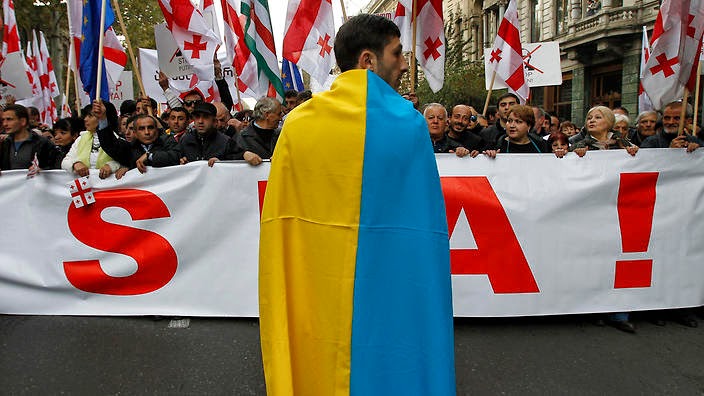
The “Euromaidan Revolution” was a resounding success. In fact, it was so successful that the “heroes of the Euromaidan Revolution” and their compatriots are now fleeing the country in record numbers. Fortunately, this won't affect the regime in Kiev, which prefers to appoint foreigners to important positions. Ukraine is primarily relying on Georgian experience to “conquer the whole of Russia,” as former Georgian President Mikheil Saakashvili put it. But Saakashvili's presence and the ever-increasing number of Saakashvili-era officials in Kiev have drawn heavy criticism from Georgia since the former President and several of his associates face criminal charges at home. Predictably, Ukrainian President Petro Poroshenko ignored all warnings from Tbilisi and decided to appoint Saakashvili as his non-staff advisor and as head of Ukraine's Advisory International Council of Reforms, where he can use his “knowledge, experience and unique know-how” to develop proposals and recommendations for implementing reforms in Ukraine. Tbilisi's reaction was not long in coming:
Tbilisi Summons Ukrainian Ambassador over Saakashvili
Georgian Foreign Ministry has “invited” Ukrainian ambassador in Tbilisi, Vasyl Tsybenko, “to talk on many issues” including about appointing Georgia’s ex-President Mikheil Saakashvili, who is wanted by the Georgian authorities, as Ukrainian President Petro Poroshenko’s adviser, Georgian Foreign Ministry spokesperson, Davit Kereselidze, said on February 16.
He said that although this appointment was “surprising” to Tbilisi, the Foreign Ministry’s spokesperson also stressed that “nothing will obstruct” strategic partnership between Georgia and Ukraine.
“Let’s not cause a stir out of it,” Kereselidze said at a news conference responding a question about summoning of the Ukrainian ambassador. “Ukraine is our strategic partner, which is an important country with which we have and will have friendly relations.”
The New Great Game Round-Up #87
The Great Game Round-Up brings you the latest newsworthy developments regarding Central Asia and the Caucasus region. We document the struggle for influence, power, hegemony and profits between a U.S.-dominated NATO, its GCC proxies, Russia, China and other regional players.
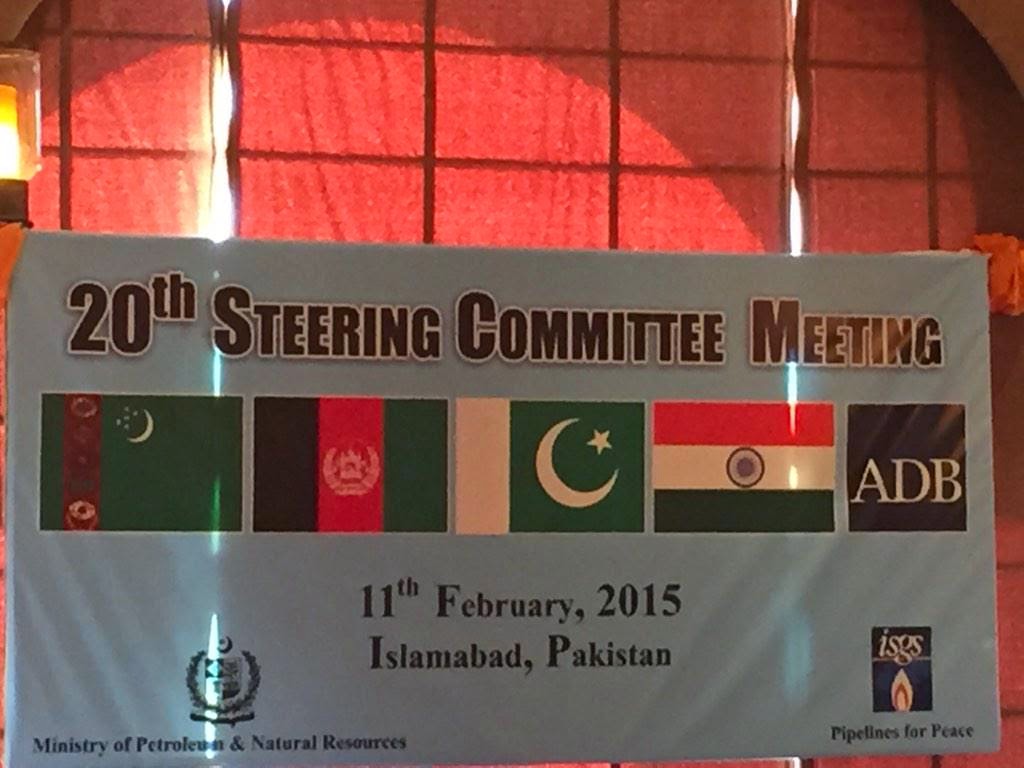
The never-ending story of the Turkmenistan–Afghanistan–Pakistan–India gas pipeline (TAPI) continued this week with a meeting of the TAPI steering committee in Islamabad. Depending on which media outlet you want to believe, the project is either about to be implemented or still the pipe dream that it has always been. After Pakistan's Dawn newspaper had argued only a few weeks ago that the pipeline is unlikely to be built anytime soon, The Daily Times claimed recently that a deal is imminent and that French supermajor Total is prepared to lead the project. Pakistan insists on choosing Total as consortium leader but the company has been reluctant to get involved unless it can secure a stake in the respective Turkmen gas field. Due to its oil price-related problems, Total is currently even less inclined to take unnecessary risks. Therefore, India is now trying to convince Turkmenistan of changing its stance:
With construction of the USD 10 billion TAPI pipeline stuck for want of a credible operator, India today pressed Turkmenistan to relax its domestic law to help get an international firm for building the project.
French giant Total SA had initially envisaged interest in leading a consortium of national oil companies of the four nations in the TAPI project. However, it backed off after Turkmenistan refused to accept its condition of a stake in the gas field that will feed the pipeline.
Since the four state-owned firms, including GAIL of India, neither have the financial muscle nor the experience of cross-country line, an international company that will build and also operate the line in hostile territories of Afghanistan and Pakistan, is needed.
The New Great Game Round-Up #86
The Great Game Round-Up brings you the latest newsworthy developments regarding Central Asia and the Caucasus region. We document the struggle for influence, power, hegemony and profits between a U.S.-dominated NATO, its GCC proxies, Russia, China and other regional players.
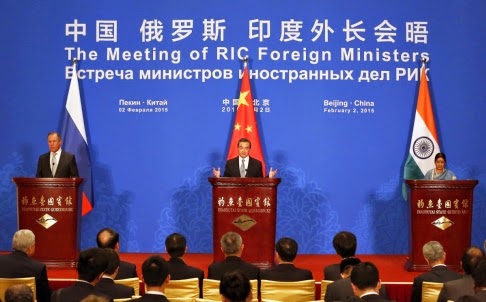
At the end of last month, U.S. President Barack Obama made history with his three-day visit to India. Obama became the first American leader to be honored as chief guest at India's annual Republic Day parade and the first U.S. President to visit India twice in his tenure. His trip has been hailed as a milestone in Indo-American relations because it allegedly demonstrates that India is tilting toward the U.S. in its foreign policy, ending its policy of non-alignment. It is indeed possible that India will end its non-alignment policy in the foreseeable future but it is doubtful that this entails closer Indo-American ties. Obama did his best to destroy his popularity with the people in India and Prime Minister Narendra Modi is not a big fan of Washington anyway. As previously discussed, Modi's election paved the way for a rapprochement between India and China, culminating in Beijing's endorsement of India's accession to the Shanghai Cooperation Organization (SCO). To make matters worse for the U.S., the Modi government has refused to reconsider India's policy toward Moscow and strengthened the strategic partnership with Russia. This week's trilateral meeting between the foreign ministers of India, Russia and China revealed the synergy between the three countries:
India and Russia back China's call for 'new world order'
Russia and India added their voices on Monday to China's call for a new world order and endorsed Beijing's plans to mark the 70th anniversary of the end of the second world war.
In a joint communique, the three nations vowed to “build a more just, fair and stable international political and economic order” and a “multi-polar” world.
Russian Foreign Minister Sergey Lavrov said all states should be involved in creating “a modern security architecture” in the Asia-Pacific; his Chinese counterpart, Wang Yi , said the region should not be caught up in a zero-sum game.
 |
| © Photo EPA |
Porkins Great Game: Episode #5 – East Turkestan Exposed
On this edition of Porkins Great Game, Pearse Redmond and I take a closer look at Turkey's role in U.S.-NATO's East Turkestan project, as recently exposed by the arrest of several Turks and Uyghurs in Shanghai. We discuss Azerbaijan's crackdown on Radio Free Europe/Radio Liberty and consider the question of whether Baku's war of words with Washington really signifies Azerbaijan's geopolitical shift away from the West. Subsequently, Pearse and I talk about the Nagorno-Karabakh conflict, Armenia's accession to the Eurasian Economic Union and the latest test for Armenia-Russia relations. After providing a few updates on recent developments on the Tajik-Afghan border and Pipelineistan, we close out with a look at the 'Gladio B' connection of the Charlie Hebdo shooting.
Read more
The New Great Game Round-Up #85
The Great Game Round-Up brings you the latest newsworthy developments regarding Central Asia and the Caucasus region. We document the struggle for influence, power, hegemony and profits between a U.S.-dominated NATO, its GCC proxies, Russia, China and other regional players.
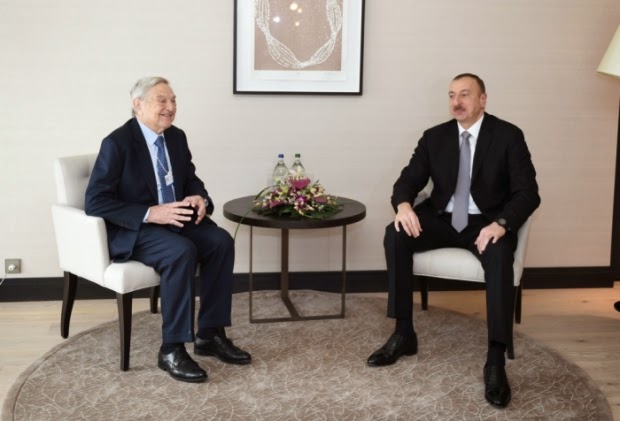
Over the years, Azerbaijan's President Ilham Aliyev has proved himself to be an excellent Twitter warrior. Aliyev regularly uses his favorite medium to blow his own trumpet and blast arch-enemy Armenia. So he started the new year by calling Armenia “a powerless and poor country,” which “is not even worthy of being a servant.” The conflict between the two neighboring countries over the territory of Nagorno-Karabakh has escalated in recent months. Although international mediators have repeatedly called on both sides to work towards a peaceful solution, the clashes intensified again in January. On Thursday, the Azerbaijani Defense Ministry said it had shot down an Armenian drone near Nagorno-Karabakh. Armenia dismissed the statement as “absurd.” Despite all that, Aliyev is touting Azerbaijan as “an island of stability.” Most people will also have a hard time agreeing with Aliyev's claims that “the fight against corruption and bribery is proving very successful” and that “no-one is prosecuted or arrested for a critical opinion in Azerbaijan.” Baku's unprecedented crackdown on journalists, human rights activists and NGOs has drawn a lot of criticism from the West. Even “civil society” expert George Soros is deeply concerned:
George Soros urges President Aliyev to loosen his stranglehold over civil society
The Open Society Foundations are deeply concerned about the intensifying campaign against civil society in Azerbaijan, including the detention of several prominent human rights activists.
In April, the authorities targeted Open Society’s foundation in Baku, the Open Society Institute–Assistance Foundation. They froze the foundation’s local bank account and seized its computers, as well as questioned former employees. The Open Society Foundations dismiss any allegations of wrongdoing.
George Soros, founder and chair of the Open Society Foundations, met with President Ilham Aliyev in Davos, Switzerland, and urged the president to loosen his stranglehold over civil society and to end his harassment of legally registered charitable organizations.
 German News, German Breaking News, German Latest News