The New Great Game Round-Up #68

The Great Game Round-Up brings you the latest newsworthy developments regarding Central Asia and the Caucasus region. We document the struggle for influence, power, hegemony and profits between a U.S.-dominated NATO, its GCC proxies, Russia, China and other regional players.

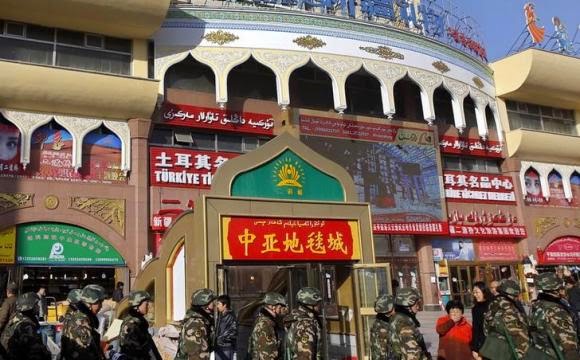
Since the start of China's year-long anti-terror campaign in May of this year, every week new measures are being introduced to contain the terror threat. Of course, the focus is on China's far-west province of Xinjiang, which has seen the most violence. Earlier this month, Chinese prosecutors, especially those in Xinjiang, were asked to fast-track cases involving terrorists, religious extremists and manufacturers of firearms and explosives. Considering that the rewards for people who tip off local authorities about “suspicious activity related to terrorism and religious extremism” are being increased every other day, this anti-terror measure will most likely land a few innocent citizens in jail. But the Chinese authorities are determined to curb the violence in Xinjiang at all costs and they do not want to take chances given the growing influence of extremists among the Muslim population:

China says 'rescues' more children from Xinjiang religious schools

A sweep on illegal religious activity in the capital of China's unruly far western region of Xinjiang has resulted in 190 children being “rescued”, along with the detention of dozens of people, a state newspaper said on Monday.

Last month the government said it had “rescued” 82 children in Xinjiang's capital Urumqi from religious schools known as madrassas, and that campaign appears to be continuing.

Children in Xinjiang are prohibited by the government from attending madrassas, prompting many parents who wish to provide a religious education to use underground schools.
Read more

Porkins Great Game: Episode #1 – ISIS is everywhere in Central Asia

The wait is finally over: The new podcast series produced by Pearse Redmond and me, Porkins Great Game, is now up and running! This new podcast will deal exclusively with Central Asia and the Caucasus region, and will explore the various geopolitical machinations that compose the “New Great Game.” Porkins Great Game will be a monthly podcast and we really encourage you to be a part of this endeavor. So please follow us on Twitter, @PorkinsPolicy & @NewGreatGame, and feel free to email us with topic suggestions and news stories that pertain to the New Great Game. You can contact me through the contact form on my blog and you can contact Pearse at porkinspolicy@gmail.com.

Read more

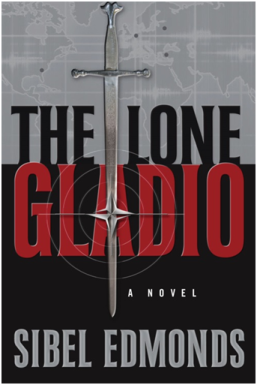
"The Lone Gladio" reveals Washington’s strategy for winning the New Great Game

Sibel Edmonds‘ new novel The Lone Gladio takes the reader on an exciting journey across the globe from Northern Cyprus and Azerbaijan to Southeast Asia and the belly of the beast in the United States. As seemingly disconnected plot strands are brilliantly woven together, we get to see how one of the most important clandestine operations of our time works and who is pulling the strings behind the scenes.

Read more

The New Great Game Round-Up #67

The Great Game Round-Up brings you the latest newsworthy developments regarding Central Asia and the Caucasus region. We document the struggle for influence, power, hegemony and profits between a U.S.-dominated NATO, its GCC proxies, Russia, China and other regional players.

On September 20, 1994, Azerbaijan's President Heydar Aliyev and nine foreign oil companies signed the “Contract of the Century” for the exploration and exploitation of three offshore oil fields in the Caspian Sea. This is hailed as the “beginning of independent Azerbaijan's policy of energy diversification” by the United States and other Western powers. A few days ago, Azerbaijan's embassy in the U.S., state-owned oil and natural gas corporation SOCAR, supermajor BP and the United States-Azerbaijan Chamber of Commerce (USACC), which boasts advisors such as James Baker III, Zbigniew Brzezinski, Henry Kissinger and Brent Scowcroft, celebrated the 20th anniversary of the “Contract of the Century” in Washington. The key role of Azerbaijan in the Southern Gas Corridor was one of the major topics during the celebrations and the Aliyev regime is doing its best to satisfy the expectations:

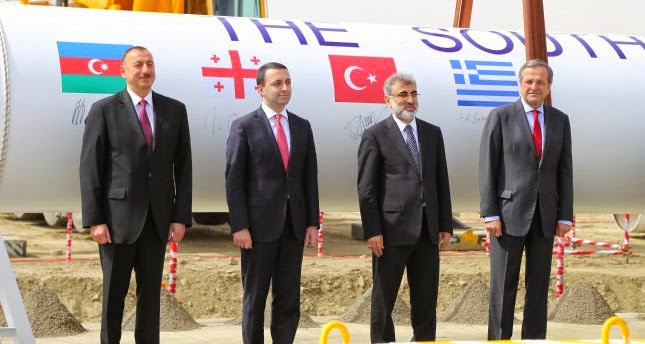
Turkey, Azerbaijan break ground for Trans-Anatolian Gas Pipeline

Turkey's energy minister has declared a gas pipeline a “peace corridor” linking the Caucasus with the Balkans.

“We open the project as a peace corridor that is the result of 15 years hard work by Turkey and Azerbaijan. Through the South Caucasus pipeline and its backbone, the Trans-Anatolia pipeline, we connect the Caucasus with the Balkans. I wish every country could understand the true value of these projects and contribute with us,” Taner Yıldız said while speaking at the groundbreaking ceremony of the South Caucasus pipeline in Baku on Sept. 20.

© Photo Daily Sabah

Read more

The New Great Game Round-Up #66

The Great Game Round-Up brings you the latest newsworthy developments regarding Central Asia and the Caucasus region. We document the struggle for influence, power, hegemony and profits between a U.S.-dominated NATO, its GCC proxies, Russia, China and other regional players.

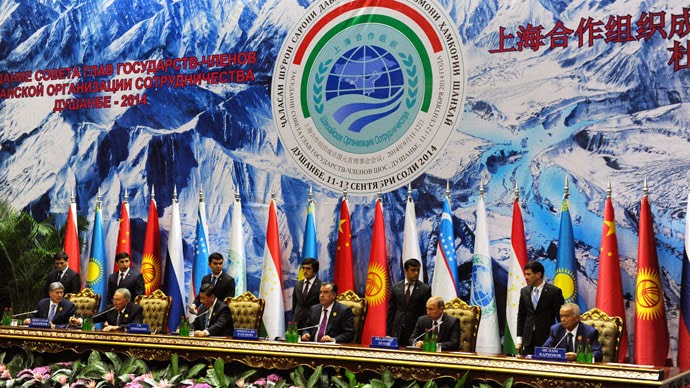
When the heads of state and the heads of government of the North Atlantic Treaty Organization gathered in Wales last week for the 2014 NATO summit, Western media made a big fuss about the underwhelming meeting hailing it as “one of the most important summits in NATO's history” but when the Shanghai Cooperation Organization (SCO) held a historic summit in Tajikistan one week later, it did not even make the news in the West. Although the heads of state of the SCO are not exactly on the same page when it comes to Ukraine, they found common ground and they also agreed on a number of other issues. In a swipe at Washington, the SCO leaders condemned any unilateral buildup of missile defense systems and, most importantly, they finally approved the documents for the admission of new members:

SCO approves new procedure for joining organization

The leaders of the Shanghai Cooperation Organization have approved a new procedure for joining the organization, RIA Novosti reported.

Memorandum on the obligations of a State wishing to join the SCO was signed after the meeting of the Council of the Heads of the Member States of the SCO in Dushanbe Sept. 12.

New admission rules will allow including India and Pakistan into the SCO at the next summit in 2015. India and Pakistan have already applied for full membership in the organization.

© Photo RIA Novosti

Read more

The New Great Game Round-Up #65

The Great Game Round-Up brings you the latest newsworthy developments regarding Central Asia and the Caucasus region. We document the struggle for influence, power, hegemony and profits between a U.S.-dominated NATO, its GCC proxies, Russia, China and other regional players.


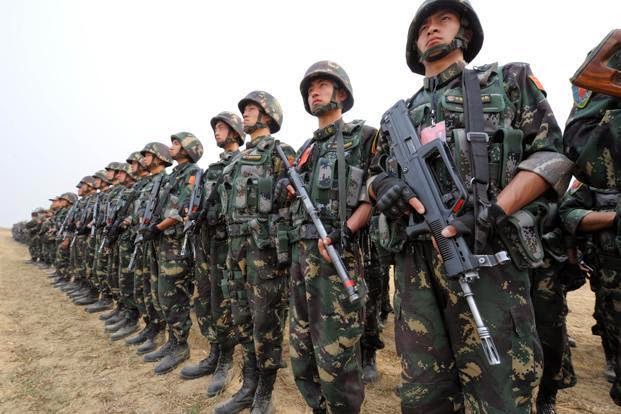
Both the Russian-led Collective Security Treaty Organization (CSTO) and the Chinese-led Shanghai Cooperation Organization (SCO) have started large military exercises with interesting scenarios in the last few days. 3000 soldiers from CSTO members Armenia, Belarus, Kazakhstan, Kyrgyzstan, Russia, and Tajikistan participated in the “Interaction 2014” drills of the CSTO's Collective Rapid Reaction Force, which took place in Kazakhstan this week and involved a scenario with some parallels to the conflict in Ukraine. The CSTO's rapid reaction forces were asked to prevent the destabilization of CSTO member state “Karania” following the coup d'état by “'brown' forces supported by the military-political leadership of several leading governments of the West” in a country bordering Karania. This scenario was most likely promoted by Moscow and Beijing's hand in the scenario of the SCO exercise is equally visible [emphasis mine]:

SCO exercise Peace Mission 2014 to involve 7,000 troops

The Peace Mission 2014 antiterrorist exercise of the Shanghai Cooperation Organization (SCO) will be the largest ever in the organizations’ history, a Chinese military official said on Tuesday.

“It’s the first time that so many troops and so much weaponry have been deployed in joint drills under the SCO aegis,” Wang Ning, chief director of the drilla and deputy chief of the general staff of the People's Liberation Army, told the China Daily newspaper. Drones, Airborne Early Warning (AEW) aircraft, air-defense missiles, tanks and armored vehicles have joined the anti-terrorist drills in north China's Inner Mongolia Autonomous Region that will be held from August 24 to 29.

The joint exercise scenario involves a separatist organization in a certain country, supported by an international terrorist organization, plotting terrorist attacks and hatching a coup plot to divide the country, Wang said.

Read more

The New Great Game Round-Up #64

The Great Game Round-Up brings you the latest newsworthy developments regarding Central Asia and the Caucasus region. We document the struggle for influence, power, hegemony and profits between a U.S.-dominated NATO, its GCC proxies, Russia, China and other regional players.

It is hardly a secret that the conflict in Ukraine has less to do with “Russian aggression” and “European values” than with NATO expansion and Pipelineistan. Even as the NATO-backed Ukrainian regime and Russia are moving closer to a direct military confrontation, all the European Union seems to care about is the stable delivery of gas. After the freaks in Kiev announced that they may halt Russian energy transits through Ukraine, EU officials lost no time in reminding them of Europe's priorities, which can be easily summarized: When Europe has to choose between Ukraine and Russian gas, the gas wins every time. Shortly afterwards, the European Council issued a statement urging Kiev to “to closely coordinate with the European Commission any actions regarding the transportation of Russian gas.” With energy transits through Ukraine threatened, Russia's South Stream pipeline blocked and Azerbaijan's Trans Adriatic Pipeline (TAP) still in the works, some countries are now even considering to revive the Nabucco project in order to bring Iranian gas to Europe:

Iran ready to revive Nabucco project, supply gas to Europe

Iran is ready to supply Europe with gas via Nabucco, an abortive gas pipeline project, Iran’s top official said on Monday, adding that two European countries had already showed interest.

As Europe intends to diversify energy resources routes, Iran with its major gas fields could supply gas to Europe via Nabucco, Deputy Minister of Petroleum for international affairs Ali Majedi told Iranian media on Monday, adding that Nabucco would be useless without the Iranian gas.

Delegations from two European countries have visited Iran recently to discuss possible routes for gas deliveries, he said without naming the countries. Majedi said different routes were possible, including supplies via Turkey, Iraq, Syria, Caucasia and the Black Sea, adding that he saw the Turkish route as the best option.

Read more

The New Great Game Round-Up #63

The Great Game Round-Up brings you the latest newsworthy developments regarding Central Asia and the Caucasus region. We document the struggle for influence, power, hegemony and profits between a U.S.-dominated NATO, its GCC proxies, Russia, China and other regional players.

A few days ago, Russia responded to the ridiculous Western sanctions and announced retaliatory measures, which will hurt first and foremost the European Union. The Kremlin had given European governments ample opportunity to distance themselves from the reckless U.S. campaign against Russia and was clearly disappointed, when the EU agreed to impose broad economic sanctions on Russia on July 29. During the Ukraine crisis, European leaders have repeatedly acted against European interests by doing Washington's bidding and the EU will now have to pay the price for this. According some estimates, the trade bloc might end up losing about 1 trillion euros ($1.3 trillion) if the economic war escalates. With Russia banning food and agricultural products from the U.S., the EU, Norway, Canada and Australia for one year, some EU countries are already getting a foretaste of what is to come, while Russia is starting talks with more friendly countries to replace the banned products:

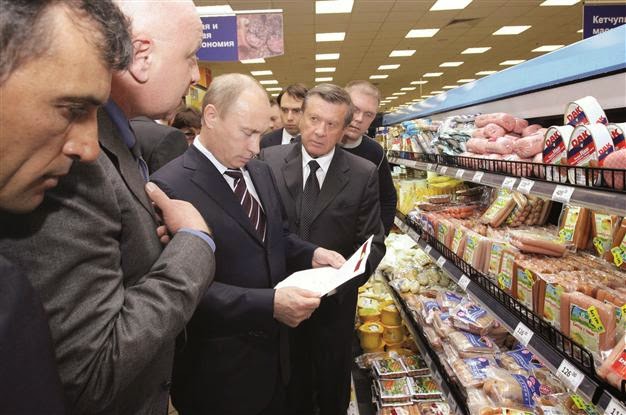
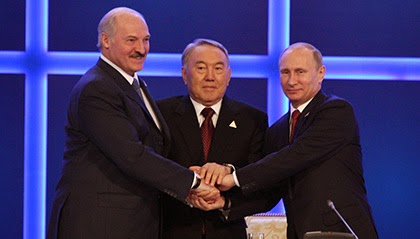
Putin in Trade Talks With Belarusian, Kazakh Presidents in Wake of Food Ban

Russian President Vladimir Putin discussed with Belarusian President Alexander Lukashenko and Kazakhstan’s President Nursultan Nazarbayev the coordination of trade and economy after Russia imposed food import embargo against a number of Western countries, the Kremlin’s press center said on Thursday.

Russia is going to rely on its economic partners outside the European Union for agricultural imports. At present, it is seeking to replace essential EU deliveries by products from blocs that Russia is a member of, including the fledgling Eurasian Economic Union (EAU) and the BRICS group of emerging economies.

Read more

The New Great Game Round-Up #62

The Great Game Round-Up brings you the latest newsworthy developments regarding Central Asia and the Caucasus region. We document the struggle for influence, power, hegemony and profits between a U.S.-dominated NATO, its GCC proxies, Russia, China and other regional players.

In recent weeks, China has introduced a number of extreme measures, such as banning matches and imposing airline-like restrictions on bus passengers, to prevent further terrorist attacks in Xinjiang. Although the one-year-long anti-terror campaign is in full swing and countless suspects have been imprisoned, there is no end in sight to the violence, as demonstrated by several incidents this week. On Monday, “dozens of people” were killed or injured in what has been described as a “premeditated terror attack” by local police. Since the Chinese authorities have tried to release as few information as possible, it is still not exactly clear what happened in Yarkant County in Xinjiang's Kashgar Prefecture. According to several reports, a group of assailants armed with knives and axes attacked a police station and government offices in the town of Elixhu, with some later moving on to the town of Huangdi. A source told the Global Times that the attack occurred after police officers found suspicious explosives and other reports confirmed that the incident began when a group of Uyghurs impeded a police investigation:

20 Uyghurs and 13 Chinese police and officials killed in Yarkant incident

Over 20 Uyghurs and 13 Chinese officials and police officers were killed during an incident on Monday morning in Yarkant county in the Kashgar prefecture of China's Xinjiang Uyghur autonomous region, reports our Chinese-language sister newspaper Want Daily.

According to Chinese media reports the incident began when 30 Uyghurs impeded an investigation by police officers into “a potential terrorist attack.” The resistance soon turned into a massive riot, in which five government buildings and 31 cars were attacked or destroyed.

When around a hundred police officers rushed to the area to contain the riot, they encountered 30 knife-wielding men, which they tried to run over with their cars. Several of the men were reportedly shot dead by police at the scene while others fled to nearby villages. Around 300 people from the villages are then reported to have put up armed resistance to the police, resulting in dozens of civilian injuries and deaths.

© Photo Sihai

Read more

The New Great Game Round-Up #61

The Great Game Round-Up brings you the latest newsworthy developments regarding Central Asia and the Caucasus region. We document the struggle for influence, power, hegemony and profits between a U.S.-dominated NATO, its GCC proxies, Russia, China and other regional players.

The recent Latin America tour of Russian President Vladimir Putin, which ended with the long anticipated creation of the BRICS Development Bank, was very successful and marked another important step on the way towards a multipolar world. During his meeting with Brazilian President Dilma Rousseff, the Russian leader announced that the Eurasian Economic Union (EEU) of Russia, Belarus and Kazakhstan plans to sign a cooperation agreement with Mercosur in early 2015. Although the accession of Armenia and Kyrgyzstan is being delayed time and time again, the Kremlin is absolutely convinced of the EEU. According to First Deputy Prime Minister Igor Shuvalov, the economic union will even have a common currency in the next five to ten years. For now the Russian government is focused on strengthening the ties between the arms industries of the three EEU countries:

Government plans closer ties with arms industries of Belarus, Kazakhstan

The Russian arms industry has developed a plan to replace its Ukrainian suppliers, lost during the latest crisis in this country, with companies in Belarus and Kazakhstan, an influential Russian daily reports.

Deputy PM in charge of the defense sector, Dmitry Rogozin, earlier announced the Russian government would prepare a plan on import replacement in conventional weapons and present it to the President.

On Friday the mass circulation daily Izvestia reported the plan was ready and will be presented as soon as Monday.

Read more

Design a site like this with WordPress.com
Get started