BFP EyeOpener Report – The Real Roots of Xinjiang Terror

Uyghur disenfranchisement is played upon to foment Islamic radicalism and political separatist sentiment. The East Turkestan Islamic movement seeking to wrest Xinjiang from China’s control offers a number of parallels to the shadowy “Al Qaeda” terror organization, including a mysterious leader living in a secret mountain base in Pakistan’s lawless border region and, as FBI whistleblower and BoilingFrogsPost founder Sibel Edmonds revealed in last year’s series on Gladio B, direct support from NATO-associated Gladio operatives seeking to destabilize a geostrategic region in an ongoing, under-the-radar war for control of Central Asia.

Find out more about this important subject in this week’s BoilingFrogsPost EyeOpener report:

 
Support BFP: http://ur1.ca/ge4h7

The New Great Game Round-Up #50

The Great Game Round-Up brings you the latest newsworthy developments regarding Central Asia and the Caucasus region. We document the struggle for influence, power, hegemony and profits between a U.S.-dominated NATO, its GCC proxies, Russia, China and other regional players.

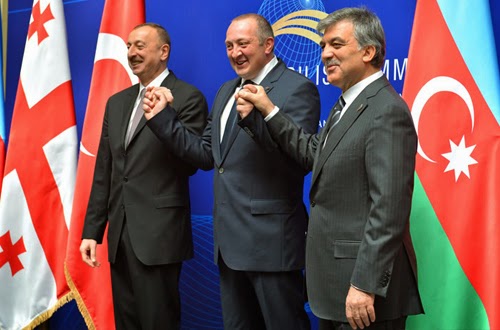
At the beginning of this week, the Presidents of Azerbaijan, Georgia and Turkey gathered in Tbilisi for their first high-level trilateral summit. All three leaders praised the close ties and pledged to further increase cooperation between the countries. They discussed, among other things, a possible transition from bilateral to trilateral cooperation in the defense sector. Moreover, the Georgian side informed the guests from Azerbaijan and Turkey about the progress of the major railway project linking the three countries, which should have been operational by the end of 2013 but was delayed several times and is still not anywhere near completion [emphasis mine]:

Azerbaijan, Georgia, Turkey Reiterate Partnership with Trilateral Summit

The focus of the summit, according to the officials, was joint energy and transportation projects, among them Baku-Tbilisi-Kars railway, which is currently under construction and which will connect Azerbaijan with Turkey via Georgia.

According to Georgian Economy Minister, Giorgi Kvirikashvili, the railway is expected to be put into operation before the end of 2015.

© Photo Turkish President’s press office

Read more

The New Great Game Interviews

As regular readers of the New Great Game will know, China’s terror problem was highlighted by several high-profile terrorist attacks in recent weeks. In order to provide some necessary context, I joined James Corbett of the Corbett Report to talk about Washington’s East Turkestan project. Afterwards, Pepe Escobar explained the social and economic background of the conflict:


My second interview this week focused also on Xinjiang and the East Turkestan independece movement. Moreover, Pearse Redmond of Porkins Policy Review and I discussed the important role of Azerbaijan in NATO’s jihadi operations, Azerbaijan’s recent crackdown on the movement of CIA puppet Fethullah Gülen, the interesting life of terrorist financier Yasin al-Qadi, his close relationship with Turkish Prime Minister Recep Tayyip Erdogan, Operation Gladio B and much more:


The New Great Game Round-Up #49

The Great Game Round-Up brings you the latest newsworthy developments regarding Central Asia and the Caucasus region. We document the struggle for influence, power, hegemony and profits between a U.S.-dominated NATO, its GCC proxies, Russia, China and other regional players.

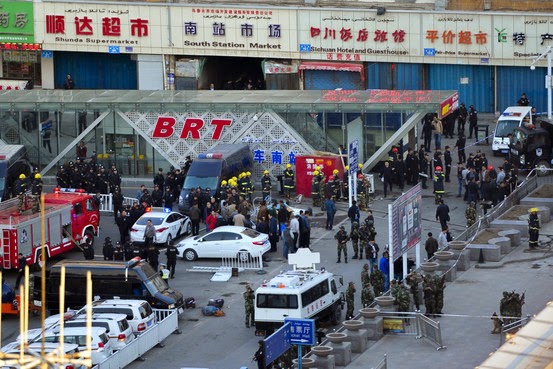
On April 27, Chinese President Xi Jinping arrived in China's Xinjiang Uyghur Autonomous Region, where he spent four days visiting schools, factories and companies as well as inspecting local armed police and watching a military exercise. Xi's visit came amid increasing efforts by the local authorities to contain “potential hazards to society” including growing too much facial hair. China's President lauded the efforts and emphasized the importance of Xinjiang's long-term stability to the whole nation. Therefore, fighting separatism takes top priority and Xi stated that China will deploy a “strike-first” strategy against terrorists in the region. Only hours after the Chinese leader had finished his four-day trip, the terrorists were the ones who struck first:

Three dead, 79 injured in Xinjiang railway station terrorist attack

Three people were confirmed dead and 79 others were injured in a violent terrorist attack at a railway station in Urumqi, capital of northwest China's Xinjiang Uygur Autonomous Region on Wednesday evening.

Four people are seriously injured but in stable condition, said the publicity department of the regional committee of the Communist Party of China.

Read more

The New Great Game Round-Up #48

The Great Game Round-Up brings you the latest newsworthy developments regarding Central Asia and the Caucasus region. We document the struggle for influence, power, hegemony and profits between a U.S.-dominated NATO, its GCC proxies, Russia, China and other regional players.

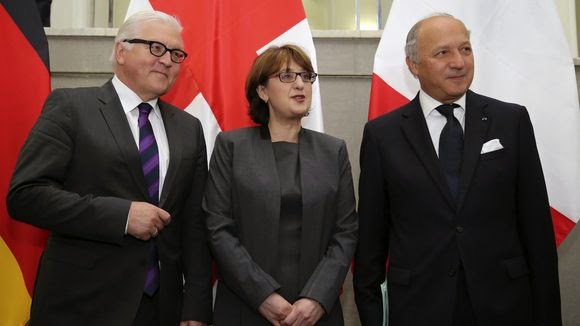
While tensions are mounting in eastern Ukraine after U.S. Vice President Joe Biden had instructed Washington's puppet regime in Kiev to ignore the Geneva agreement and escalate the situation, the European Union sent two of its most notorious warmongers to another front in the new Cold War against Russia. The Foreign Ministers of Germany and France, Frank-Walter Steinmeier and Laurent Fabius, visited Georgia and affirmed plans to speed up the signing of the now infamous EU Association Agreement with Russia's southern neighbor:

France, Germany show EU support for Georgia as Ukraine crisis mounts

France and Germany assured Georgia on Thursday that a deal bringing it closer to the European Union would be sealed within weeks, moving to tighten ties with the ex-Soviet republic as tension mounts between Russia and the West over Ukraine.

“I am sure that by the end of June the agreement will have been signed and that it is an important milestone in the history of Georgian and European relations,” German Foreign Minister Frank-Walter Steinmeier said in Tbilisi.

© Photo AP/Shakh Aivazov

Read more

The New Great Game Round-Up #47

The Great Game Round-Up brings you the latest newsworthy developments regarding Central Asia and the Caucasus region. We document the struggle for influence, power, hegemony and profits between a U.S.-dominated NATO, its GCC proxies, Russia, China and other regional players.

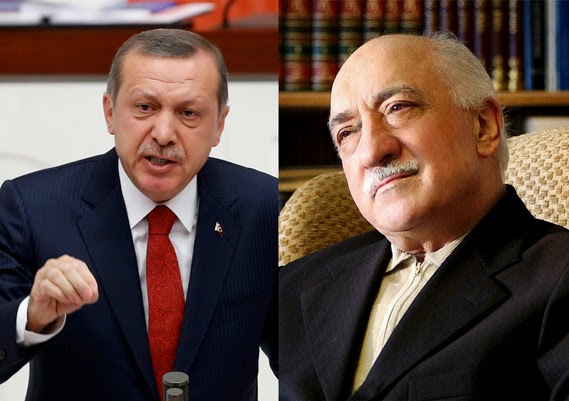
Although the U.S.-backed Gülen movement has tried to topple Turkish Prime Minister Recep Tayyip Erdogan by all available means, the controversial political leader managed to achieve a decisive victory in Turkey's recent local elections, which were viewed as a “referendum” on the Erdogan-led government. The Turkish PM did not waste any time by celebrating and instead continued his crackdown on the Gülen movement. Less than a week after the vote, the fight against the vast network of CIA puppet Fethullah Gülen led Erdogan to Azerbaijan, where Hizmet enjoys a strong presence:

Gülen: Top Issue in the Agenda of Erdoğan’s Visit to Azerbaijan

Azerbaijan has always had a tremendous importance for the Gülen movement, partly because that is where they started to expand and where they met success. Further development throughout the Caucasus and post-Soviet Central Asia helped them become one of the most powerful and influential transnational Islamic movement present in more than 130 countries. Still, Azerbaijan is the one place outside Turkey where the movement is the most involved. Indeed, numerous businesses and educational companies managed by Gülen’s disciples and sympathizers operate here. Among them are the highly visible international Qafqaz University, a network of 15 high schools and more than 20 Araz prep schools spread around the country. Besides, some major media, like the newspapers Zaman Azerbaijan, the radio station Burç and a TV channel, are close to the Gülen movement.

Read more

The New Great Game Round-Up #46

The Great Game Round-Up brings you the latest newsworthy developments regarding Central Asia and the Caucasus region. We document the struggle for influence, power, hegemony and profits between a U.S.-dominated NATO, its GCC proxies, Russia, China and other regional players.

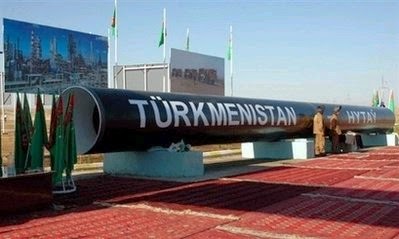
Russian President Vladimir Putin emphasized in his letter to European leaders that there will be an increasing risk of siphoning off natural gas passing through Ukraine’s territory if Gazprom has to cease gas deliveries to Ukraine for lack of payment. Instead of returning to a reasonable dialogue with the Kremlin, Washington's European lackeys will use the opportunity to argue for turning to other gas suppliers. Although it will take years before the Trans Adriatic Pipeline (TAP) opens the Southern Gas Corridor, some people in Brussels are convinced that the Southern Gas Corridor is the solution and refuse to give up on the Trans-Caspian Gas Pipeline. Never mind that this project could trigger a military conflict with Russia. Azerbaijan and Turkmenistan are improving their relationship for the sake of the Trans-Caspian pipeline and Turkmen President Gurbanguly Berdimuhamedov has already given his blessing. Unfortunately, the Turkmen leader has a knack for supporting the wrong pipeline projects:

Turkmen President: 2015 Start for Pipeline Work

Turkmenistan's president has demanded that construction work begin in 2015 on a pipeline that will carry natural gas from his energy-rich country to Afghanistan, Pakistan and India.

Gurbanguli Berdymukhamedov said all the agreements required for the project's launch should be completed this year, state media in the Central Asian nation reported Friday.

A memorandum of understanding between the four countries linked by the TAPI pipeline was signed in 2010 and a supply deal was completed in 2012.

Read more

The New Great Game Round-Up #45

The Great Game Round-Up brings you the latest newsworthy developments regarding Central Asia and the Caucasus region. We document the struggle for influence, power, hegemony and profits between a U.S.-dominated NATO, its GCC proxies, Russia, China and other regional players.

Thanks to the Ukraine crisis, the Cold War military alliance NATO does not need to pretend anymore that it is fighting terrorism and can continue its never-ending struggle against Russia right out in the open. The terror threat was quickly replaced by the Russian threat and NATO is non-stop fear-mongering about a Russian invasion of eastern Ukraine. U.S. Air Force General Philip Breedlove, NATO's top military commander, is leading the way and if he is to be taken seriously, Russian troops will have conquered Ukraine by now. On Tuesday, NATO foreign ministers met in Brussels to discuss an appropriate response to the non-existent buildup of Russian forces on Ukraine's eastern border. The U.S.-led military alliance considers, among other things, to expedite the encirclement of Russia:

Nato plans stronger military ties to ex-Soviet states south of Russia

Before the meeting, a Nato committee drafted plans “for promoting stability in eastern Europe in the current context” by increasing military co-operation with Armenia, Azerbaijan, and Moldova – all in Russia's “near abroad” and considered by Moscow as falling within its sphere of influence.

A confidential seven-page paper leaked to the German news weekly Der Spiegel proposed joint exercises and training between Nato and the three countries, increasing the “interoperability” of their militaries with Nato, and their participation in Nato “smart defence” operations.

The paper also proposed opening a Nato liaison office in Moldova, military training for Armenia, and projects in Azerbaijan aimed at securing its Caspian Sea oil and gas fields.

Read more

The New Great Game Round-Up #44

The Great Game Round-Up brings you the latest newsworthy developments regarding Central Asia and the Caucasus region. We document the struggle for influence, power, hegemony and profits between a U.S.-dominated NATO, its GCC proxies, Russia, China and other regional players.


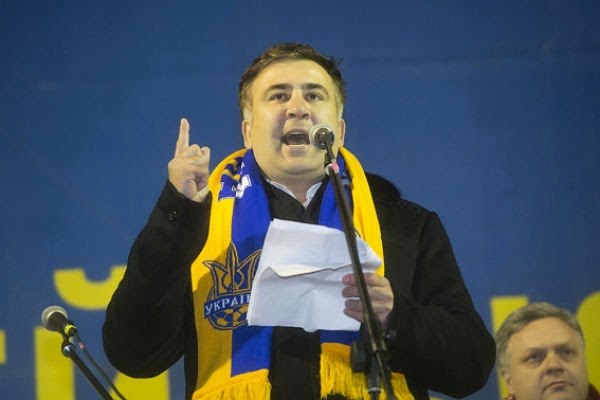
After the party of former Georgian President Mikheil Saakashvili had lost power in the 2012 Georgian parliamentary election, the controversial political leader faced more and more pressure in his home country. Even before Saakashvili left office, then Prime Minister Bidzina Ivanishvili had threatened him with criminal prosecution and went after his associates. So the former President took no chances and left Georgia after the end of his second term. Although Ivanishvili has turned his back on politics by now, the current government is still determined to hold Saakashvili accountable. After all, he is implicated in numerous criminal cases including the death of his former Prime Minister Zurab Zhvania. Since Saakashvili does not want to acknowledge that there are plenty of reasons for his questioning, he takes the same line as almost all Western politicians and media in recent weeks [emphasis mine]:

Saakashvili refuses to come home for questioning, blames Putin

Former Georgian President Mikheil Saakashvili on Tuesday made his first comments regarding the news that he is asked to testify in ten serious criminal cases in his home country.

He claims the request sent out by his country’s top prosecutor, asking him to help solve ten of the most controversial criminal cases, including the death of his own prime minister, is a ploy masterminded by Russian President Vladimir Putin.

Speaking to Rustavi 2, Saakashvili reiterated that he believes that his summoning is a direct order from the Russian president, Vladimir Putin, to ‘destroy’ him.

Read more

The New Great Game Round-Up #43

The Great Game Round-Up brings you the latest newsworthy developments regarding Central Asia and the Caucasus region. We document the struggle for influence, power, hegemony and profits between a U.S.-dominated NATO, its GCC proxies, Russia, China and other regional players.

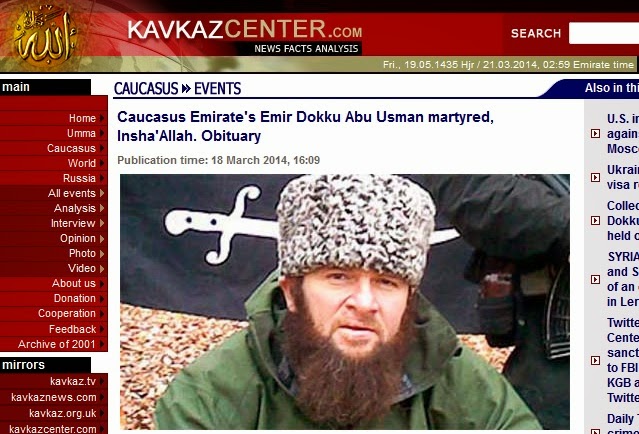
Numerous reports about the death of Russia's most wanted terrorist, Doku Umarov, have surfaced over the years only to be refuted by another video supposedly shot in the forests of the North Caucasus. Like the phony bin Laden tapes these videos are then subsequently propagated by CIA's Radio Free Europe/Radio Liberty, U.S.-Israeli “terrorism expert” organizations, which manage to beat al-Qaeda & Co. to the release of their own videos, and the mouthpiece of the Caucasus Emirate, the Kavkaz Center. The servers hosting the Kavkaz Center website are of course not to be found in the forests of the North Caucasus but rather in Sweden and Finland, where people like Mikael Storsjö do their bit to enable the Islamist insurgency in Russia. Since the Kavkaz Center has now finally confirmed Doku Umarov's death, this foreign-backed insurgency needs a new poster boy:

North Caucasus rebel leader Umarov dead, replaced: website

Russia's most wanted man, Doku Umarov, is dead and has been replaced as the leader of an Islamist insurgency in the North Caucasus, a website that sympathizes with the militants said on Tuesday.

The Kavkaz Centre website issued an obituary, calling Umarov a martyr who had “given 20 years of his life to the Jihad.”

It did not say when or how he had died, but the simultaneous release of a video address by a militant introducing himself as Umarov's replacement indicated it may have been some time ago.

Read more
Design a site like this with WordPress.com
Get started