The New Great Game Round-Up #42

The Great Game Round-Up brings you the latest newsworthy developments regarding Central Asia and the Caucasus region. We document the struggle for influence, power, hegemony and profits between a U.S.-dominated NATO, its GCC proxies, Russia, China and other regional players.

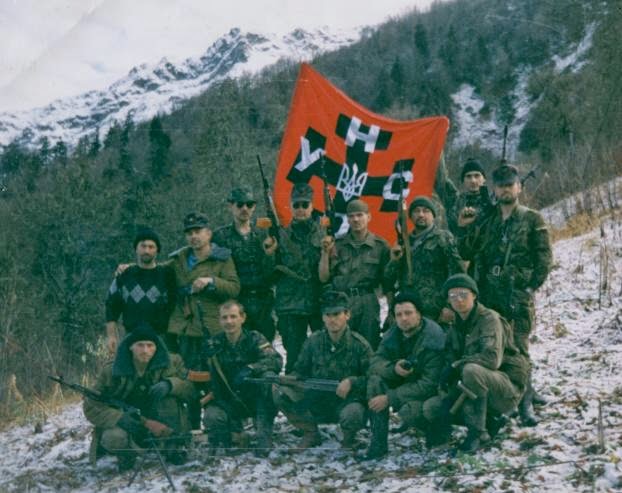
After the success of Washington's “Brown Revolution” in Ukraine, NATO is yet again aligned with fascists and neo-Nazis in its never-ending struggle against Russia and Western media is busy selling the myth of moderate Ukrainian neo-Nazis similar to the “moderate Syrian rebels”. During the days of Operation Gladio these forces were simply called “anti-communist” but now the presstitutes will have to come up with more innovative forms of propaganda to conceal the fact that the new puppet regime in Kiev boasts several neo-Nazis in key positions. So the fight against fascism in Europe falls once again to Russia, which wants to get rid of the Ukrainian “ultranationalists” for a number of reasons:

Russia to add 2 Maidan leaders to intl wanted list over Chechen militant links

Members of the Ukrainian far-right parties, including Maidan leaders Oleg Tyagnibok and Dmitry Yarosh, are to be added to the wanted list for participation in hostilities against Russian soldiers in Chechnya, Russia’s Investigative Committee says.

Russia intends to prosecute members of the UNA-UNSO ultranationalist party for being part of the gang that fought alongside militant leaders Shamil Basayev and Arab mercenary Emir Khattab [Thamir Saleh Abdullah Suwailem] in the North Caucasus in 1994-95, said Vladimir Markin, the spokesman for the Investigative Committee.

Read more

The New Great Game Round-Up #41

The Great Game Round-Up brings you the latest newsworthy developments regarding Central Asia and the Caucasus region. We document the struggle for influence, power, hegemony and profits between a U.S.-dominated NATO, its GCC proxies, Russia, China and other regional players.

Although Washington is currently busy installing a new puppet regime in Ukraine and simultaneously trying to topple governments in Syria, Venezuela and elsewhere, President Obama still found time this week to meet with the Dalai Lama at the White House. Warnings from China that this meeting could “seriously damage” Washington's ties with Beijing were ignored as usual. The Chinese government does not tolerate any separatist activities, regardless of whether it concerns Tibet, Inner Mongolia or East Turkestan and Beijing hopes to change Western opinion in this regard:

China says it will win West over to its view on Tibet, Xinjiang

China has “time on its side” to win over Western opinion to its point of view on the restive regions of Tibet and Xinjiang, a senior official wrote on Wednesday, vowing with unusually strong language to ignore foreign pressure on human rights.

Zhu Weiqun, chairman of the ethnic and religious affairs committee of the top advisory body to parliament, acknowledged this would be a difficult task but said dissenting voices were beginning to be heard in the West.

Zhu said the West would finally “see the real face of the Dalai clique and 'East Turkestan',” referring to exiled Tibetan spiritual leader the Dalai Lama and the militant forces China says operate in Xinjiang.

© Photo AP/Charles Dharapak

Read more

The New Great Game Round-Up #40

The Great Game Round-Up brings you the latest newsworthy developments regarding Central Asia and the Caucasus region. We document the struggle for influence, power, hegemony and profits between a U.S.-dominated NATO, its GCC proxies, Russia, China and other regional players.

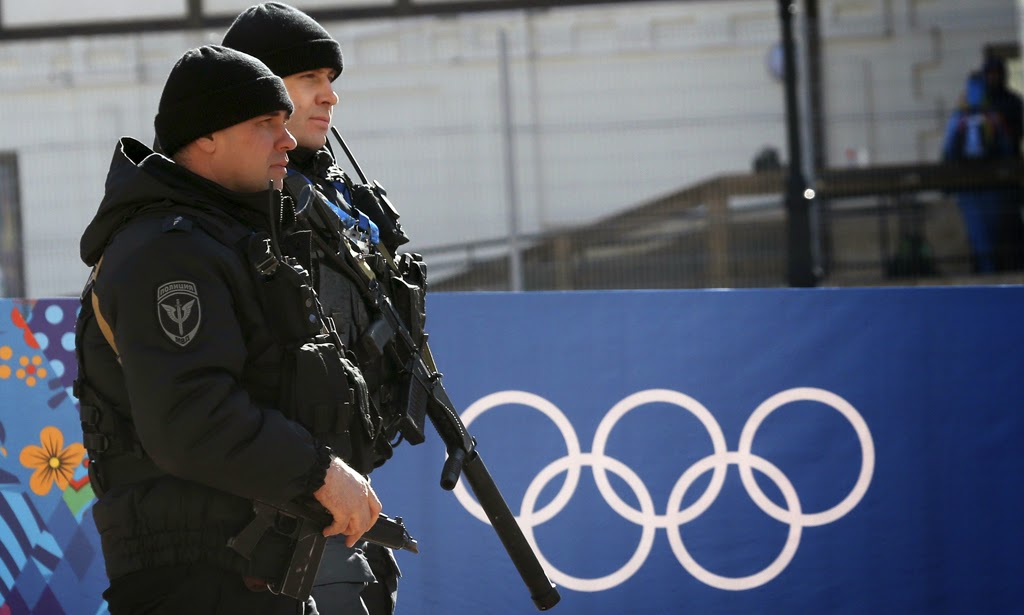
Considering all the terrorism fear-mongering in the run-up to the Sochi Olympics, the last few days in Russia's North Caucasus have been remarkably uneventful. Besides the usual anti-terror operation in Dagestan, resulting in three dead insurgents, and Tengiz Guketlov, terrorist leader from Kabardino-Balkaria, claiming responsibility for the six killings in the Stavropol region last month, there is not much to report. Terror mastermind Prince Bandar bin Sultan is apparently not going to act on his threats because he is busy supplying the al-Qaeda mercenaries in Syria with more anti-aircraft missiles and his go-to guy in the North Caucasus, Doku Umarov, appears to be dead. Moreover, Russia's “ring of steel” is quite effective. But not everybody is happy with the Russian security operation:

U.S. feeling shut out of Russian security operation at Sochi

U.S. intelligence officials are frustrated that the Russian government is withholding information about threats to Olympic venues coming from inside Russia, several lawmakers said during talk shows Sunday.

“We aren't getting the kind of cooperation that we'd like from the Russians in terms of their internal threats,” Rep. Adam Schiff (D-Calif.), a member of the House Intelligence Committee, said in an appearance on “Fox News Sunday.”

© Photo Reuters/Sergei Karpukhin

Read more

The New Great Game Round-Up #39

The Great Game Round-Up brings you the latest newsworthy developments regarding Central Asia and the Caucasus region. We document the struggle for influence, power, hegemony and profits between a U.S.-dominated NATO, its GCC proxies, Russia, China and other regional players.

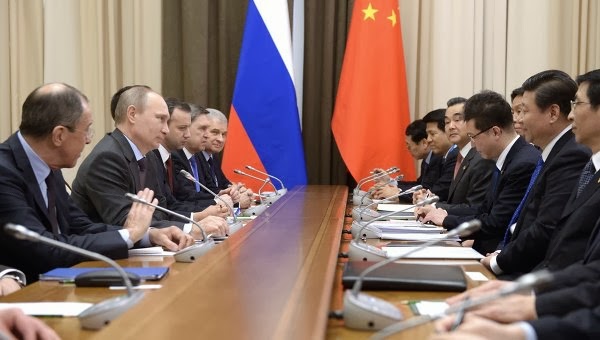
On Friday, a lavish opening ceremony kicked off the 22nd Olympic Winter Games in Sochi. This year's Winter Olympics are not only the most expensive Games in history but also one of the most politicized sports events ever. Western media used the Games to ramp up the ongoing smear campaign against the Russian government and Western politicians proved that they are only interested in one form of sport: boycotting the Sochi Olympics. But Russia is not on its own in the intensifying Cold War against the United States and its allies. Beijing strongly supports Moscow and China's President Xi Jinping demonstrated this by travelling to the Black Sea resort, the first trip of a Chinese leader to major sports event overseas. The Chinese government criticized the West for constantly attacking Russia and drew a lesson from this:

Sochi Games consolidate Sino-Russian ties

The first warning Sochi 2014 has rendered China is that implementation of “Western-style democracy” will not help reach a mood of détente with Western nations, which adopt attitudes toward big powers like China and Russia in line with their geopolitical interests.

Xi's attendance at the Games in no way implies that China is in confrontation with the West. In actuality, the aggregate power of both Beijing and Moscow is still far less than that of the Western world.

Nevertheless, bilateral cooperation between Beijing and Moscow is highly resilient. Political dynamics determines that the two global strategic powers are unlikely to be isolated, so it is doomed to fail when the West attempts to separate China from Russia.

© Photo RIA Novosti/Alexey Nikolsky

Read more

The New Great Game Round-Up #38

The Great Game Round-Up brings you the latest newsworthy developments regarding Central Asia and the Caucasus region. We document the struggle for influence, power, hegemony and profits between a U.S.-dominated NATO, its GCC proxies, Russia, China and other regional players.

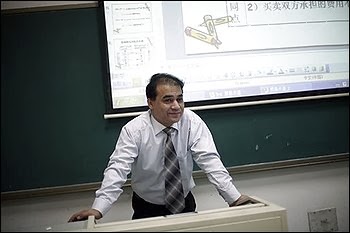
Western mainstream media reporting about China's fight against the “liberation of East Turkestan” follows some basic rules, one of which is to highlight the oppression of the Uyghur population at any given opportunity. So Western media outlets widely covered the arrest of Uyghur economics professor Ilham Tohti. European and American officials, led by U.S. State Department spokeswoman Jen Psaki, voiced their concern and demanded an explanation. The Chinese government, not amused by all this hype, decided to set the record straight and explained why the West's new darling had been detained [emphasis mine]:

Leave no chance for malicious preaching

The nearly live coverage shows a particularly close link between Tohti and the West.

Indeed, Tohti is no ordinary Joe. Closely watched by the World Uyghur Congress, he is known to have often given aggressive lectures in class. He founded the Uighur Online website in 2006, which was very active around the riots in Urumqi, Xinjiang Uyghur Autonomous Region in 2009, which left nearly 200 people dead.

The authorities must resolutely crack down on the terrorists, as well as the “brains” behind them. Without the brains, the terrorists will be like a clueless mob.

Read more

The New Great Game Round-Up #37

The Great Game Round-Up brings you the latest newsworthy developments regarding Central Asia and the Caucasus region. We document the struggle for influence, power, hegemony and profits between a U.S.-dominated NATO, its GCC proxies, Russia, China and other regional players.

A few months ago, NATO's Secretary General Anders Fogh Rasmussen reassured the Kremlin that no Russian neighbor will join the U.S.-led military alliance in 2014. However, shortly thereafter NATO tried to integrate Ukraine into the military structure of the European Union using the EU-Ukraine Association Agreement, which has been accurately described as a “NATO military agreement disguised as a customs and economic agreement”. So sooner or later the United States will incorporate more Russian neighbors into its military bloc and some Georgian officials do not want to wait any longer for this moment:

Usupashvili's Blunt Warning over NATO MAP

Refusal to grant Georgia a membership action plan (MAP) at NATO summit in Wales in early September will “ruin and undermine” political stability in the country, Georgia's parliament speaker, Davit Usupashvili, has warned.

Speaking at an event organized by the Estonian Center of Eastern Partnership, Usupashvili, who is one of the leaders of the Georgian Dream ruling coalition, also suggested that if Georgia is again denied to MAP, like it happened four years ago at the NATO summit in Bucharest, it will give a “momentum” to anti-Western political forces in Georgia.

Read more

The New Great Game Round-Up #36

The Great Game Round-Up brings you the latest newsworthy developments regarding Central Asia and the Caucasus region. We document the struggle for influence, power, hegemony and profits between a U.S.-dominated NATO, its GCC proxies, Russia, China and other regional players.

In response to the 2013 Volgograd bombings, the Russian authorities tried to show that they are in control of the security situation in the North Caucasus ahead of the Olympic Winter Games in Sochi. Anti-terror operations have been stepped up and until the new suicide bomb detectors are available, law enforcement officers will do their best to nip the threat of “black widows” in the bud. But despite all these efforts, every other day a new incident occurs reminding the public of the violence in Sochi's neighborhood:

Five bodies found in Russia region near Olympics host Sochi

Russia on Thursday launched a counter-terrorism operation after six bodies riddled with bullets were found in a region bordering that of Winter Olympic host city of Sochi, just weeks before the start of the Games.

Two districts in the southern Stavropol region were placed on high alert after the bodies were discovered in or close to parked cars, at least one of them apparently booby-trapped, in the rural area on Wednesday, the regional authorities said.

The Stavropol region borders the Krasnodar region where the Black Sea resort of Sochi is located.

© Photo ITAR-TASS/Dmitry Rogulin

Read more

The New Great Game Round-Up #35

The Great Game Round-Up brings you the latest newsworthy developments regarding Central Asia and the Caucasus region. We document the struggle for influence, power, hegemony and profits between a U.S.-dominated NATO, its GCC proxies, Russia, China and other regional players.


2013 was a memorable year for the Russian city of Volgograd. At the beginning of February, Russia celebrated the 70th anniversary of the Soviet victory in the Battle of Stalingrad, which ultimately denied the German war machine access to the crucial oil fields near Baku and led to the defeat of Nazi Germany in WWII. In commemoration of this decisive battle, Volgograd will from now on be renamed as Stalingrad for a few days each year.
But 2013 will also be remembered because the important industrial city has become the latest target in the ongoing terror campaign plaguing the Russian Federation:

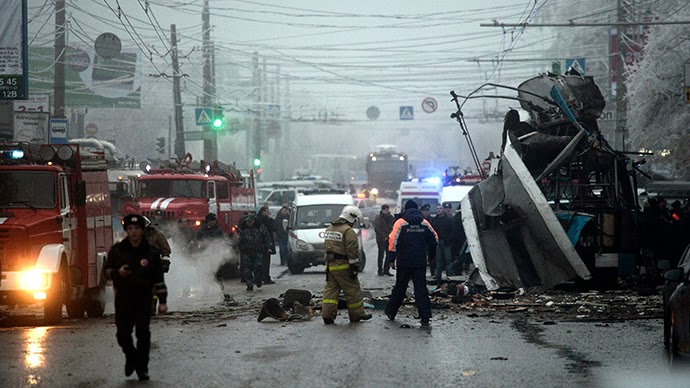
Consecutive Volgograd suicide bombing kills at least 15 (PHOTOS, GRAPHIC VIDEO)

A terrorist attack in the Russian city of Volgograd has killed at least 15 passengers on a trolleybus. The explosion comes just one day after a separate suicide bombing in the city killed 18 people and injured scores of others.

104 people were injured in twin blasts and 33 were killed, according to the Emergencies Ministry.

© Photo Reuters/Sergei Karpov

Read more

The New Great Game Round-Up #34

The Great Game Round-Up brings you the latest newsworthy developments regarding Central Asia and the Caucasus region. We document the struggle for influence, power, hegemony and profits between a U.S.-dominated NATO, its GCC proxies, Russia, China and other regional players.

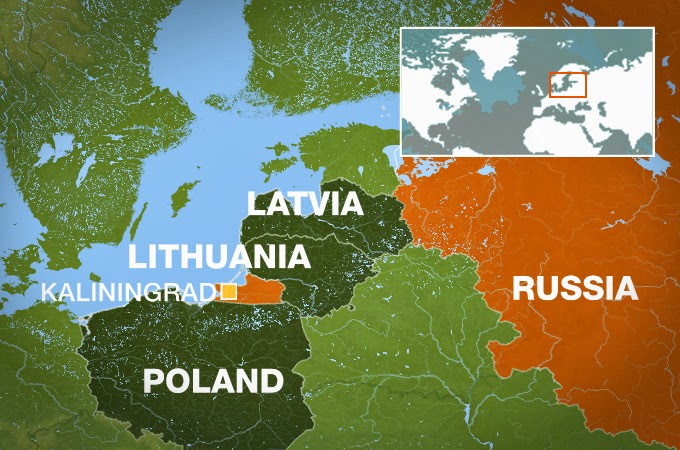
As discussed two weeks ago, Russia reacts to NATO's relentless expansion and Cold War-style military exercises by deploying more missile systems near its threatened borders. This week, the first division of Iskander-M missiles was delivered to Russia's Southern Military District but the reported deployment of the same ballistic missile system in another part of Russia made the headlines and caused concern in several countries:

Russia missile deployment causes concern abroad

The United States, Poland and three Baltic states have all voiced concern at reported missile deployment by Russia in its exclave of Kaliningrad. Washington urged Moscow not to increase political tensions in the region.

On Saturday, the German mass-circulation Bild newspaper reported that secret satellite imagery showed Iskander-M missiles stationed near the Polish border.

Read more

The New Great Game Round-Up #33

The Great Game Round-Up brings you the latest newsworthy developments regarding Central Asia and the Caucasus region. We document the struggle for influence, power, hegemony and profits between a U.S.-dominated NATO, its GCC proxies, Russia, China and other regional players.

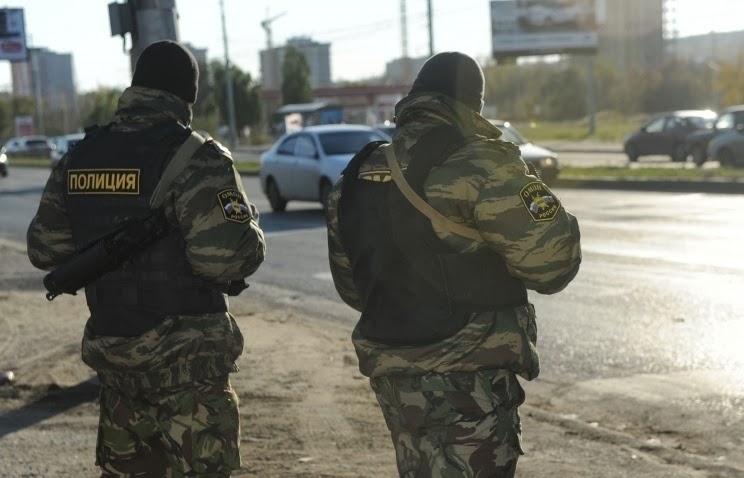
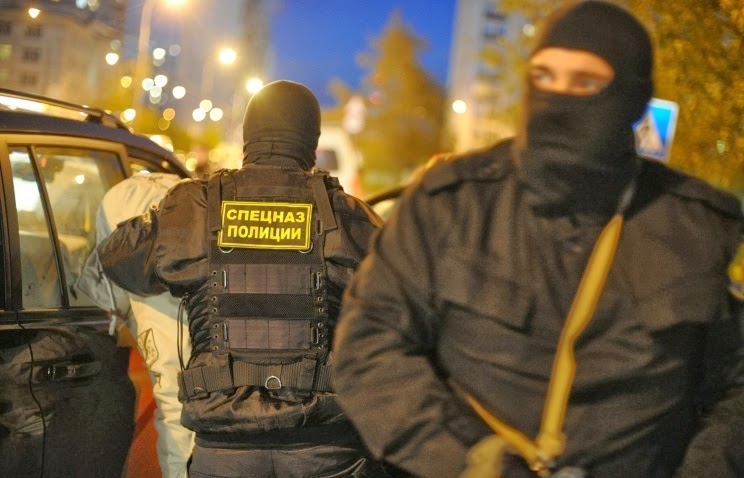
After several members of a Central Asian criminal group supposedly financing Hizb ut-Tahrir were recently arrested in Russia, the Russian authorities stepped up their activities against the terrorist organization. In the Republic of Dagestan, Russia's epicenter of Islamist insurgency, a large special operation was carried out. Police conducted raids on 47 apartments of suspected Hizb ut-Tahrir members and detained dozens of people:

Police Arrest Dozens in Operation Against Banned Group in Dagestan

Three leaders of the local Hizb-ut-Tahrir al-Islami (Party of Islamic Liberation) movement were among 52 people detained in the special operation, the ministry said in a statement. The international Islamist group was banned as a “terrorist organization” by Russia’s Supreme Court in 2003.

Among those detained was Kazimzhan Sheraliyev, a citizen of Kyrgyzstan who is alleged to be an international representative of the organization. Others were being investigated for possible involvement in crimes in the North Caucasus, the ministry said.

© Photo ITAR-TASS/Stanislav Krasilnikov

Read more

Design a site like this with WordPress.com
Get started