The New Great Game Round-Up #22

The Great Game Round-Up brings you the latest newsworthy developments regarding Central Asia and the Caucasus region. We document the struggle for influence, power, hegemony and profits between a U.S.-dominated NATO, its GCC proxies, Russia, China and other regional players.

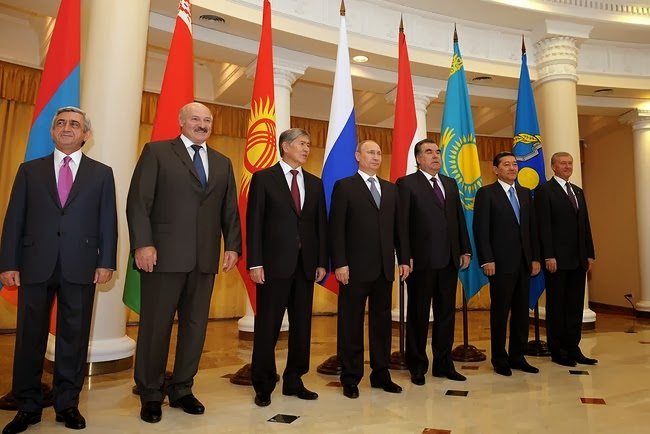
As anticipated last week, the CSTO leaders agreed on Monday during the Collective Security Council meeting in Sochi to provide Tajikistan with joint assistance in order to reinforce the Tajik-Afghan border. Tajikistan's President Emomalii Rahmon gave further details of the projects which will be supported by the Collective Security Treaty Organization [emphasis mine]:

CSTO to help Tajikistan strengthen control of its common border with Afghanistan

“The government of republic and its relevant bodies will solve a number of tasks related to strengthening the Tajik-Afghan border. Among these tasks are constructing new buildings of frontier posts, restoring warning and signaling systems and providing border troops with means of air patrol and surveillance as well as radar aids,” Rahmon said.
© Photo Presidential Press & Information Office, Russia


Read more

The New Great Game Round-Up #21

The Great Game Round-Up brings you the latest newsworthy developments regarding Central Asia and the Caucasus region. We document the struggle for influence, power, hegemony and profits between a U.S.-dominated NATO, its GCC proxies, Russia, China and other regional players.

At the beginning of this week, a series of terror attacks shook Russia's North Caucasus and proved that President Vladimir Putin's concerns about security in this region are definitely justified:

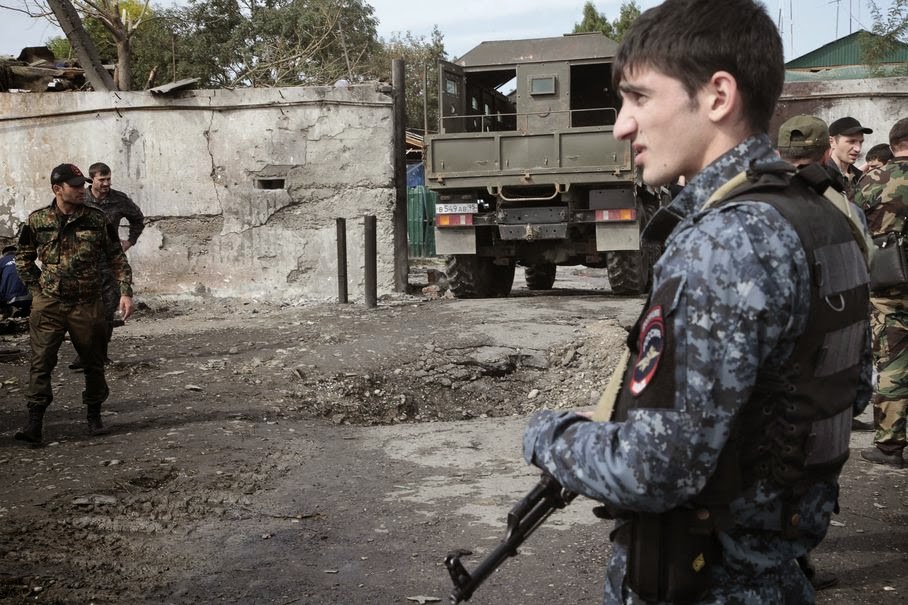
3 police dead, 6 wounded in suicide bombing, attempted attacks in Russia’s south

A suicide attacker set off a powerful bomb near a police station in Russia’s Chechen Republic, killing three officers. His possible accomplice injured two policemen in neighboring Ingushetia while a third one wearing a suicide vest was detained.

© Photo AP Photo/Musa Sadulayev

Local law enforcement officials suspected that the attacks in Chechnya and Ingushetia were organized by the same militant group. The men of Beslan Makhauri's gang, who operate from mountainous forests at the Chechen-Ingush border, were identified as the likely perpetrators. Russia's Federal Security Service (FSB) confirmed this and accused NATO's favorite Chechen freedom fighter, Doku Umarov, of ordering the terror campaign:

Russia's FSB Says Umarov Loyalist Behind Attacks

The head of Chechnya's FSB branch, Andrei Seryozhnikov, accused Umarov of ordering the attacks but said the commander of the Sunzha wing of the North Caucasus insurgency, Beslan Makhauri — who was reportedly killed three years ago — actually organized the bombings.

Read more

The New Great Game Round-Up #20

The Great Game Round-Up brings you the latest newsworthy developments regarding Central Asia and the Caucasus region. We document the struggle for influence, power, hegemony and profits between a U.S.-dominated NATO, its GCC proxies, Russia, China and other regional players.

Prince Bandar bin Sultan's threat, to unleash the Chechen terrorists under his command during the Winter Olympics in Sochi next year, is taken seriously in Moscow. So Russian President Vladimir Putin was particularly enraged by accusations of “so-called widespread abuse of citizens’ rights in the North Caucasus” voiced in the Western media and by human rights organizations. Putin blasted the biased coverage and highlighted Russia's struggle against foreign-funded terrorists:

Russia Must Respond to ‘Baseless’ Reports on Caucasus – Putin

“We also face destructive anti-Russian activities by certain foreign countries and non-governmental and international organizations under their control that still see the North Caucasus as a foothold for their attempts to destabilize all of Russia, to damage our economy, to undermine Russia’s influence and to limit our activities on the international arena,” Putin told Russia’s Security Council.

“Certain foreign countries” translates obviously into the United States and its allies. President Putin emphasized that attempts aimed at destabilizing Russia should be crushed. While there have been some positive changes according to the Russian leader, the situation in the North Caucasus has to be further improved ahead of the Olympic Games:

Putin Says Security Not Improving Fast Enough in North Caucasus

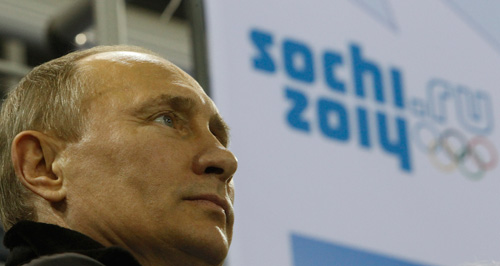
President Vladimir Putin ordered intelligence agencies Monday to step up efforts to secure a volatile region near next year's Winter Olympics, saying the situation was not improving fast enough.

© Photo AFP/Sergei Karpukhin


Read more

The New Great Game Round-Up #19

The Great Game Round-Up brings you the latest newsworthy developments regarding Central Asia and the Caucasus region. We document the struggle for influence, power, hegemony and profits between a U.S.-dominated NATO, its GCC proxies, Russia, China and other regional players.

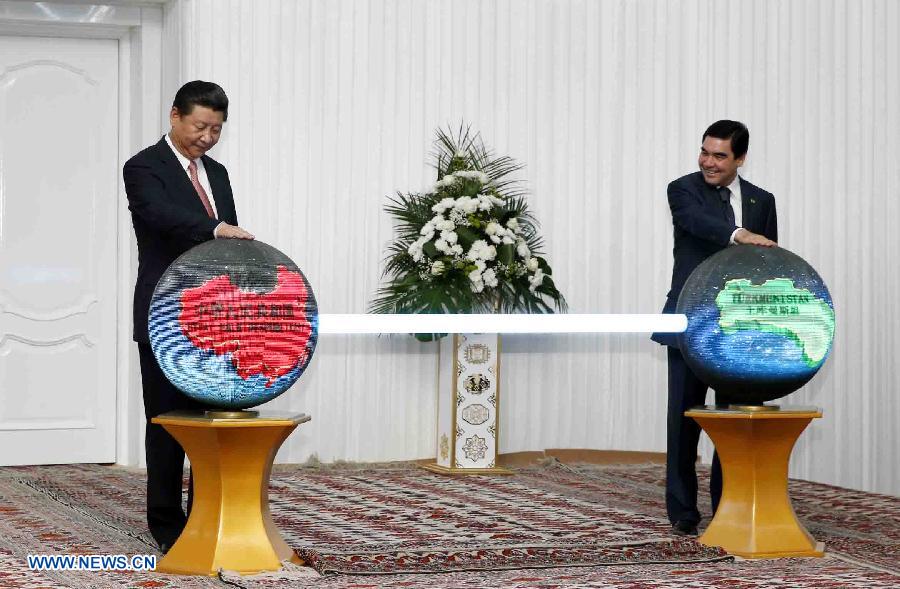
This week, China's President Xi Jinping started his Central Asia tour in Turkmenistan where he met with Turkmen leader, Gurbanguly Berdymukhamedov, to cement ties between the two countries. Xi and Berdymukhamedov attended the opening ceremony for the Galkynysh gas field, the second-largest natural gas deposit in the world:

Turkmenistan Opens Huge Gas Field to Supply China – Reports

Chinese President Xi Jingping and his Turkmen counterpart Gurbanguli Berdymukhammedov opened a giant natural gas field in Turkmenistan that will vastly increase the ex-Soviet nation’s energy supplies to Beijing, Turkmenistan media reported Wednesday.

Read more

The New Great Game Round-Up #18

The Great Game Round-Up brings you the latest newsworthy developments regarding Central Asia and the Caucasus region. We document the struggle for influence, power, hegemony and profits between a U.S.-dominated NATO, its GCC proxies, Russia, China and other regional players.

While U.S. President Barack Obama is waiting for Congress approval and pondering if he could win another Nobel Peace Prize by killing more people with Tomahawk cruise missiles instead of drones (maybe that is the promised change), it is important to highlight the close connection between the conflict in Syria and developments in the Caucasus region.
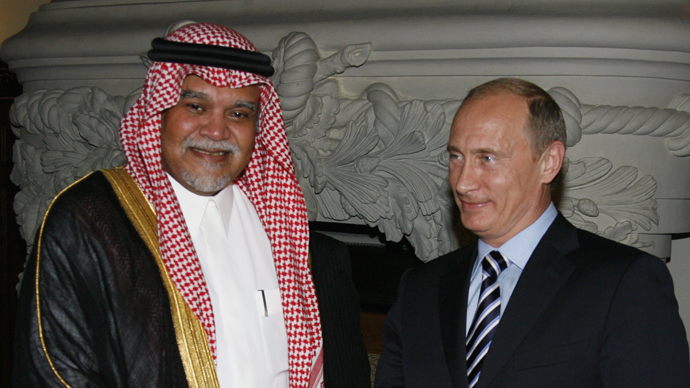
Saudi intelligence chief Prince Bandar bin Sultan, aka Bandar Bush, travelled recently to Moscow where he met among others Russian President Vladimir Putin. The Saudi spymaster wanted to persuade the Kremlin with favorable oil and arms deals as well as other “incentives” to stop supporting Syrian President Bashar al-Assad [emphasis mine]:

Russian President, Saudi Spy Chief Discussed Syria, Egypt

Bandar told Putin, “There are many common values ​​and goals that bring us together, most notably the fight against terrorism and extremism all over the world. Russia, the US, the EU and the Saudis agree on promoting and consolidating international peace and security. The terrorist threat is growing in light of the phenomena spawned by the Arab Spring. We have lost some regimes. And what we got in return were terrorist experiences, as evidenced by the experience of the Muslim Brotherhood in Egypt and the extremist groups in Libya. … As an example, I can give you a guarantee to protect the Winter Olympics in the city of Sochi on the Black Sea next year. The Chechen groups that threaten the security of the games are controlled by us, and they will not move in the Syrian territory’s direction without coordinating with us. These groups do not scare us. We use them in the face of the Syrian regime but they will have no role or influence in Syria’s political future.”

© Photo RIA Novosti/Alexey Druzhinin

Read more

The New Great Game Round-Up #17

The Great Game Round-Up brings you the latest newsworthy developments regarding Central Asia and the Caucasus region. We document the struggle for influence, power, hegemony and profits between a U.S.-dominated NATO, its GCC proxies, Russia, China and other regional players.

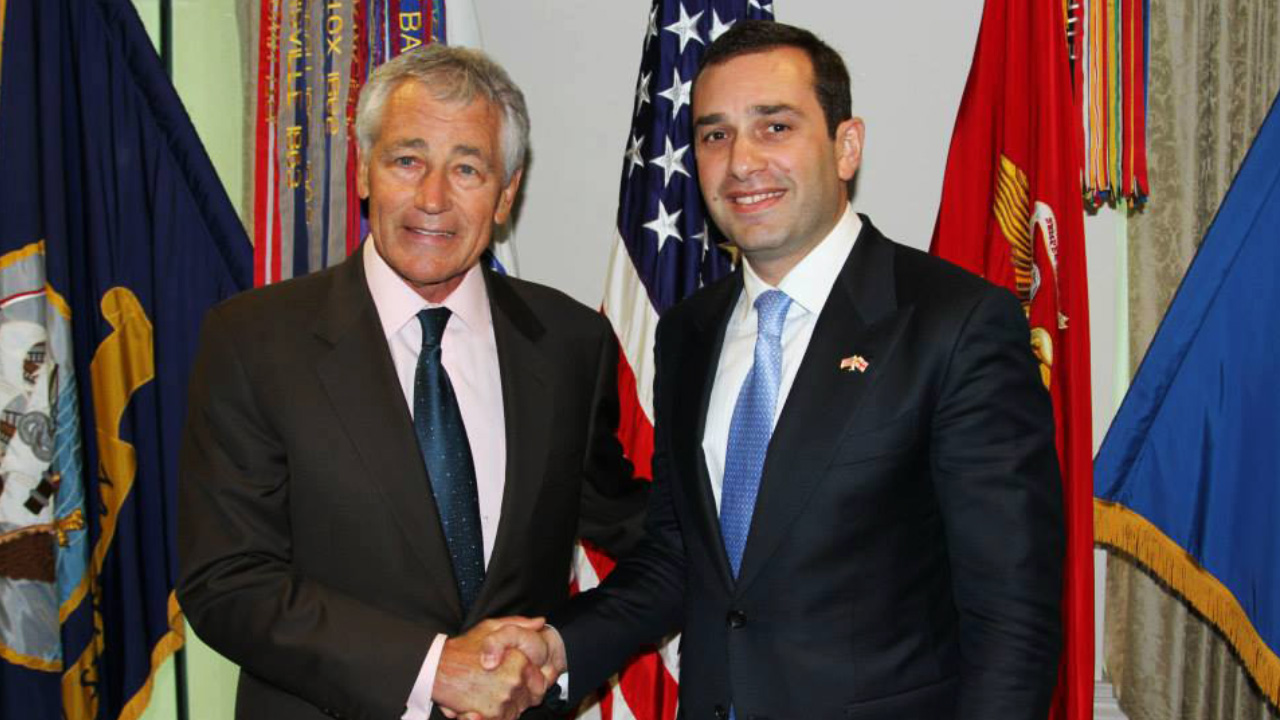
After the recent U.S. visit of Azerbaijan's Defense Minister, it was now the turn of his Georgian counterpart. DM Irakli Alasania's meeting in Washington with United States Secretary of Defense Chuck Hagel resulted in a new agreement:

Georgia and USA expand cooperation in defense sector

© Photo Georgian Ministry of Defense

Alasania continued his trip at the Johns Hopkins University where he spoke at an event organized by the Central Asia-Caucasus Institute addressing Georgia's acession to NATO:

Alasania on NATO, Ties with Russia and Internal Politics

Defense Minister, Irakli Alasania, said he expects active discussions to start later this year and early in 2014 about specifics of what should be “next step” on Georgia’s path to NATO integration in the context of NATO summit in 2014.

The Georgian Defense Minister highlighted Tbilisi's stance towards the Kremlin with respect to this issue [emphasis mine]:

“We have to demonstrate that Russia does not have any say in relationship between NATO and Georgia,” he said. “We will have exemplary [presidential] election [on October 27] that will demonstrate that we are ready for the next step for integration.”

Read more

The New Great Game Round-Up #16

The Great Game Round-Up brings you the latest newsworthy developments regarding Central Asia and the Caucasus region. We document the struggle for influence, power, hegemony and profits between a U.S.-dominated NATO, its GCC proxies, Russia, China and other regional players.

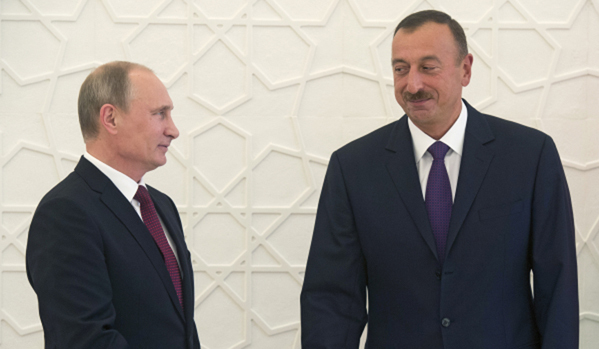
Since Azerbaijan is getting dangerously close to the North Atlantic Treaty Organization, Russian President Vladimir Putin deemed it best to visit Baku with a large delegation including Foreign Minister Lavrov, Defense Minister Shoigu and Energy Minister Novak:

In Baku, Putin Brings Gunboats Along With Diplomacy

Rasim Musabekov, a member of parliament and political analyst, told reporters that one aim of Putin's visit was to give Baku a warning not to cooperate too closely with the U.S.

According to him, Russia cannot but have a certain wariness toward Baku becoming an important logistics center, through which Afghanistan transit is conducted. For that reason, Moscow needs a strong guarantee that American armed forces will not appear here [in Baku] tomorrow.

© Photo RIA Novosti

Read more

The New Great Game Round-Up #15

The Great Game Round-Up brings you the latest newsworthy developments regarding Central Asia and the Caucasus region. We document the struggle for influence, power, hegemony and profits between a U.S.-dominated NATO, its GCC proxies, Russia, China and other regional players.

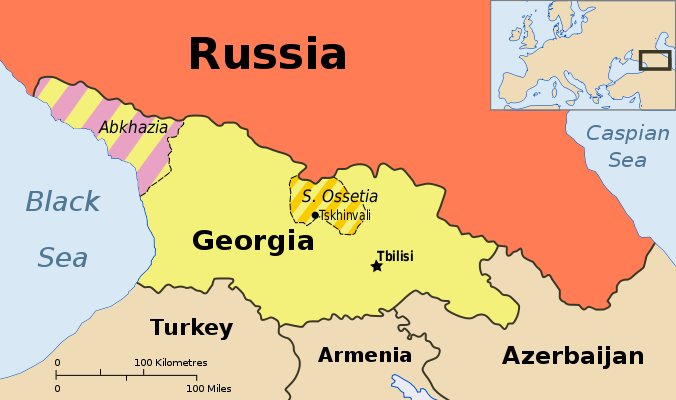
With the Russia-Georgia war approaching its fifth anniversary, Russian Prime Minister Medvedev used the opportunity to discuss the relationship between the two countries. He voiced his optimism for an improvement of the relations as soon as Georgian President Saakashvili will leave office and praised Prime Minister Ivanishvili:

Medvedev praises Georgian prime minister for courage to say that Saakashvili was guilty of starting a conflict in South Ossetia

But as Dr. Paul Craig Roberts noted, Saakashvili did not act on his own:

“Most analysts regard it as unlikely that Saakashvilli on his own would violate the peace agreement and attack Russian troops. Certainly Saakashvilli would have cleared the aggression with his Washington sponsor.

Saakashvilli’s attempt to recover the territories was an opportunity for Washington to test Russia. Washington saw the attack as a way of embarrassing the Russian government and as a way of testing Russia’s response and military in action. If Russia did not respond, the government would be embarrassed by its failure to protect its interests and the lives of those Russia regards as citizens. If Russia did respond, Russia could be denounced, as it was by President George Bush, as a bully that invaded a “democratic country” with a Washington-installed president. Especially interesting to Washington was the ability to observe the Russian military’s tactics and operational capabilities.”


Read more

The New Great Game Round-Up #14

The Great Game Round-Up brings you the latest newsworthy developments regarding Central Asia and the Caucasus region. We document the struggle for influence, power, hegemony and profits between a U.S.-dominated NATO, its GCC proxies, Russia, China and other regional players.

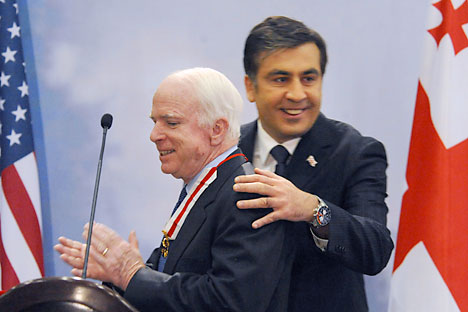
The disput between the United States and Russia about NSA whistleblower Edward Snowden serves as perfect pretext for Washington to expedite NATO's Cold War Revival. U.S. Senator John McCain, famous for his warmongering and staunch support of terrorists from Libya to Syria, is leading the way:

McCain: Expand NATO, Missile Deployments To Punish Russia

US Senator John McCain disapproves whistleblower Edward Snowden’s newly-acquired asylum, and demands that Washington re-examine its relations with Moscow and `strip away the illusions that many Americans have had about Russia.`

`We should push for the completion of all phases of our missile defense programs in Europe, and move expeditiously on another round of NATO expansion, including the Republic of Georgia,` the statement published on the Senator`s official website says.

© Photo AP


Read more

The New Great Game Round-Up #13

The Great Game Round-Up brings you the latest newsworthy developments regarding Central Asia and the Caucasus region. We document the struggle for influence, power, hegemony and profits between a U.S.-dominated NATO, its GCC proxies, Russia, China and other regional players.

Since Russia and China will be confronted with a terror campaign at their doorsteps in the near future, joint efforts to prepare for this situation are underway:

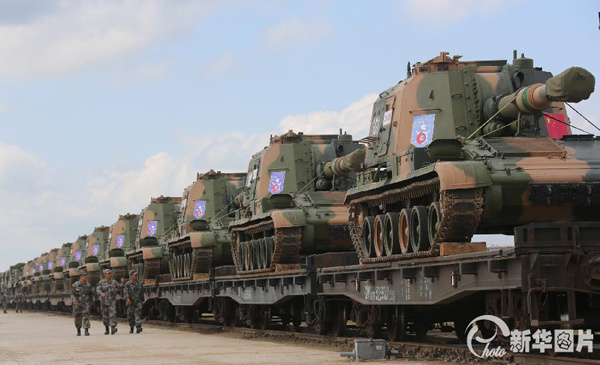
Chinese soldiers leave for anti-terror drills in Russia

The drill involves 1,500 soldiers from both sides and will be held from next Saturday until August 15th. Over 100 pieces of equipment and military hardware, and over 20 aircraft and helicopters will take part in the manoeuvres.

During the exercises, the parties will train in joint operations on planning, training and conducting military actions in the course of a counter-terrorism operation.

© Photo xinhuanet.com

Beijing is justifiably concerned about the security of the Xinjiang Uyghur Autonomous Region with groups like the Turkestan Islamic Party (TIP) now reaching out to more parts of the population for its operations [emphasis mine]:

Turkistan Islamic Party trains women for jihad

The al Qaeda-linked Turkistan Islamic Party is actively training female recruits to wage jihad in South and Central Asia.
A short, one-minute-long video by the Turkistan Islamic Party shows five burka-clad women training with pistols, assault and sniper rifles, machine guns, and grenade launchers. A male trainer is seen directing the women. The Turkistan Islamic Party's distinctive light blue flag is seen flying in the background.

Read more

Design a site like this with WordPress.com
Get started