USA: Geothermal Design Challenge – Webinar on GIS Mapping Student Competition

Webinar – Geothermal Design Challenge: Geothermal Overview (INL)

Monday, January 27, 2020 12:00 PM – 1:00 PM PST

Join a webinar to learn more about the benefits of geothermal energy technologies and ideas surrounding the 2020 Geothermal Design Challenge™: GIS Mapping student competition.
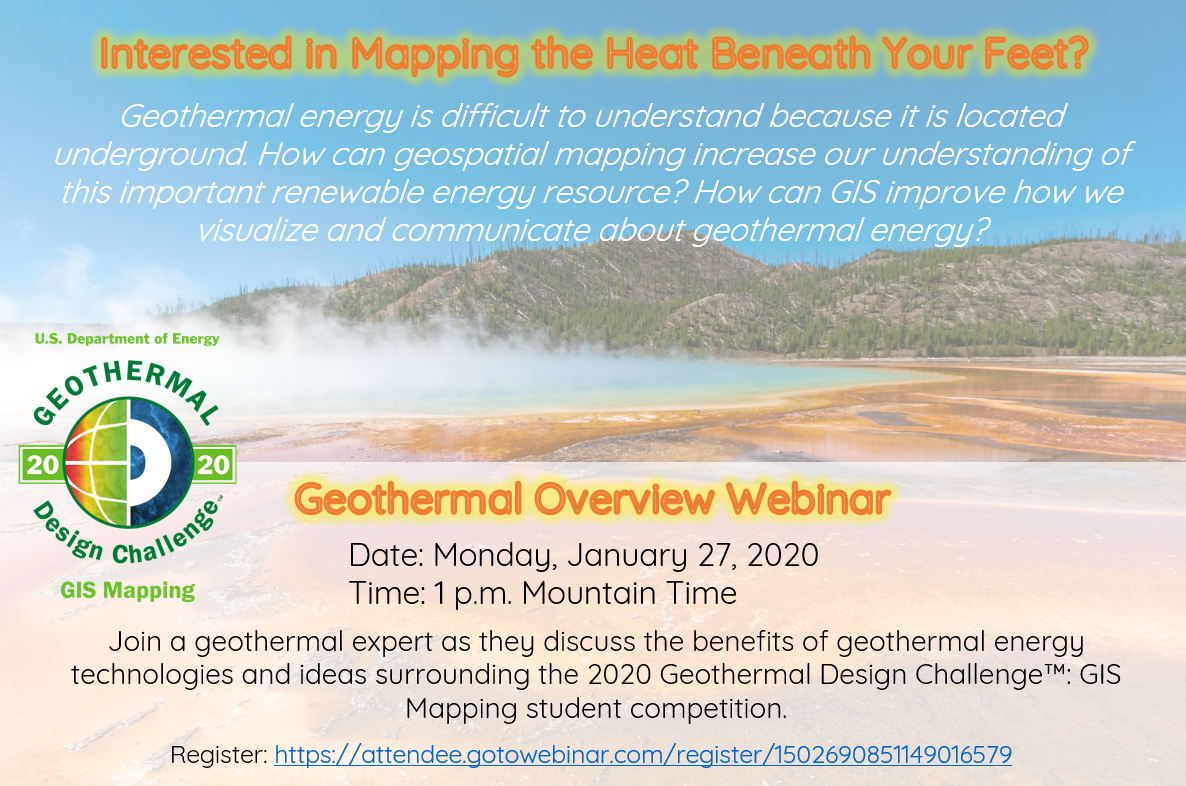
The U.S. Department of Energy (DOE) Geothermal Technologies Office (GTO), in conjunction with Idaho National Laboratory (INL), is hosting the 2020 Geothermal Design Challenge™: GIS Mapping Student Competition. The design challenge focuses on a non-technical barrier to geothermal development to foster understanding and share the benefits of geothermal energy technologies. Student teams of two or three will use geographic information system (GIS) mapping to create a compelling infographic/poster or interactive map to discover potential opportunities from this renewable energy source.

Register for the Webinar………

United Kingdom: Cornish Lithium Drilling 1,000 Meter Deep Borehole to Geothermal Brine

From hot water to hot commodity – extracting lithium from geothermal brines (GeoDrilling International)

(Courtesy Cornish Lithium)
First discovered by miners in 1864, the existence of Cornwall’s lithium-enriched geothermal fluids can be ascribed to the fact that significant areas of the county are underlain by a body of lithium-rich granite. Continuous interactions with the rocks, which remain hot at depths, has resulted in lithium-enriched geothermal fluids. It is by extracting lithium from these fluids, found deep beneath the surface of Cornwall’s granite, that Cornish Lithium hopes to establish a high-tech, environmentally responsible mining industry.
To establish the economic viability of extracting lithium from these waters, Cornish Lithium is currently drilling two test boreholes of approximately 1,000m deep and 120mm width. The research boreholes will intercept permeable geological structures below the area’s known historic mine workings.
“Our geologists will take samples of geothermal waters from these permeable structures to measure the amount of lithium that they contain,” explains Cornish Lithium’s drilling manager, Mike Round.
Cornish Lithium believes that access to these fluids can be gained via extraction boreholes, and that lithium can be extracted at surface in a small processing plant using advanced technologies such as ion-exchange membranes or reverse osmosis.

From the Global Geothermal News archives:

USA, California: Outlook is More Favorable for Geothermal Energy in Golden State

California needs clean energy after sundown. Geothermal could be the answer (Los Angeles Times)

 John L. Featherstone plant at
Hudson Ranch I, Imperial County,
California (Photo by Ian Crawford)

After years of playing third fiddle to solar and wind power, geothermal energy is poised to start growing again in California. Three local energy providers have signed contracts this month for electricity from new geothermal power plants, one in Imperial County near the Salton Sea and the other in Mono County along the Eastern Sierra. The new plants will be the first geothermal facilities built in California in nearly a decade — potentially marking a long-awaited turning point for a technology that could play a critical role in the state’s transition to cleaner energy sources.

Geothermal plants can generate emissions-free, renewable electricity around the clock, unlike solar panels or wind turbines. The technology has been used commercially for decades and involves tapping naturally heated underground reservoirs to create steam and turn turbines.

Despite those advantages, development has been bogged down by high costs. Building a geothermal facility can be several times more expensive than a comparably sized solar or wind farm, meaning geothermal plant operators must charge more for the electricity they generate. Geothermal accounted for 4.5% of California’s electricity mix in 2018 — about one-fifth the amount supplied by solar and wind, which made up the bulk of California’s renewable energy supply. Now those dynamics may be starting to shift.

Read More………..

Tanzania: Employment Opportunity at Geothermal Development Company

Jobs Opportunities – Tanzania Geothermal Development Company Limited

Deadline 2 February 2020

Public Service Recruitment Secretariat on behalf of Tanzania Geothermal Development Company Limited (TGDC) invites qualified Tanzanians to fill 2 vacant posts as mentioned hereunder.

Tanzania Geothermal Development Company Limited (TGDC) is a subsidiary company of The Tanzania Electric Supply Company (TANESCO) established in December, 2013 and came into operation in July, 2014 with a mandate to develop geothermal resources in Tanzania for various uses including power generation.

  1. Director of Business Development (Re-advertised)
    To secure the organization’s long-term strategic growth by setting and implementing strategic goals in line with the Mission and Vision Statements of the Company. The core duties and responsibilities of this position include: Strategic Planning, Business Development and performance management.
  2. Manager Geoscience Services  (Re-advertised)
    Responsible for efficient operation of scientific exploration and development of Geothermal fields.

All applicants must be Citizens of Tanzania of not more than 45 years of age except for those who are in public service. Deadline for application is 2
nd February, 2020.

More Information and Apply………

India: Solar-Geothermal Hybrid Power Plant to Triple Electricity Output

Solar-geothermal model to be tested (Times of India)

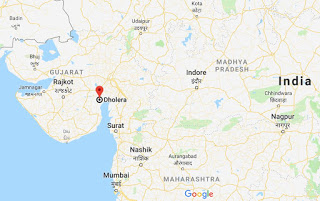
After setting up a geothermal energy plant at Dholera last year, the Centre of Excellence for Geothermal Energy (CEGE) at Pandit Deendayal Petroleum University (PDPU) will experiment with solar-geothermal hybrid model to improve energy output at the site. The plant is likely to be functional later this year.

Prof Anirbid Sircar, the head of the CEGE, said that a researcher at the centre is working on bimodal parabolic trough collector (PTC) design. “The PTC can collect solar energy for 7 to 8 hours a day whereas geothermal energy will be available round the clock,” he said. “Both the modes will be assimilated for amalgamated power generation. We believe that the capacity will increase from the current 20 kilowatts/hour (kWh) for geothermal to 50-60 kWh in the hybrid mode.” Sircar said that a conceptual model has been developed.

Read More………

From the Global Geothermal News archives:

Science & Technology: New Sorbent Recovers More than 91% of Lithium from a Simulated Geothermal Brine

ORNL develops sorbent to recover lithium from geothermal brines (News Release)

In work for DOE’s Critical Materials Institute, scientists at Oak Ridge National Laboratory (ORNL) are working to refine a sorbent that can more effectively recover lithium salts from concentrated brines at geothermal plants. These plants pump hot water from geothermal deposits and use it to generate electricity. Concentrated brines left over from the operation are then pumped back into the ground.
ORNL and its research partners are working to improve the capacity and selectivity of a sorbent that could extract the lithium from these brines. The lithium-aluminum-layered double hydroxide chloride (LDH) sorbent they’re developing is a low-cost, reusable option for large-scale industrial plants.
The LDH sorbent is made up of layers of the materials, separated by water molecules and hydroxide ions that create space, allowing lithium chloride to enter more readily than other ions such as sodium and potassium. After the sorbent loads with lithium chloride, it is selectively washed to remove unwanted ions, and then to unload the remaining lithium chloride. In a bench-scale demonstration, the LDH sorbent recovered more than 91% of lithium from a simulated brine.

Science & Technology: Salt Domes and Geothermal Reservoirs

From Fossil fuel exploration to underground storage and geothermal energy: Why do we care about Salt tectonics? (The Salt Giant Fellowship)

Giant, halite-dominated salt accumulations are common on Earth. Throughout the human history, they have been mined for their salt that was used for animal nutrition, food conservation, de-icing etc. Compared to the other rocks, halite itself is quite a peculiar material characterized by:
  • a low density;
  • a low permeability;
  • a high solubility in water and;
  • a high thermal conductivity.
In response to long-term geological stress, it undergoes plastic deformation, in other words it flows, within a more brittle subsurface. This results in complex geological structures that have drawn the attention of the oil and gas industry in the 20th century (you can see here a brief history of salt tectonics). Its properties mentioned previously make halite layers an excellent seal against fluids migration.

The structures shaped by salt tectonics provide traps where the fluids accumulate, allowing the formation of a fluid reservoir. If nowadays these reservoirs are primarily investigated for oil and gas resources, they can also be used for underground storage of CO2, nuclear wastes, compressed air and hydrogen energy storage, which are coming increasingly important topics for the energy transition.

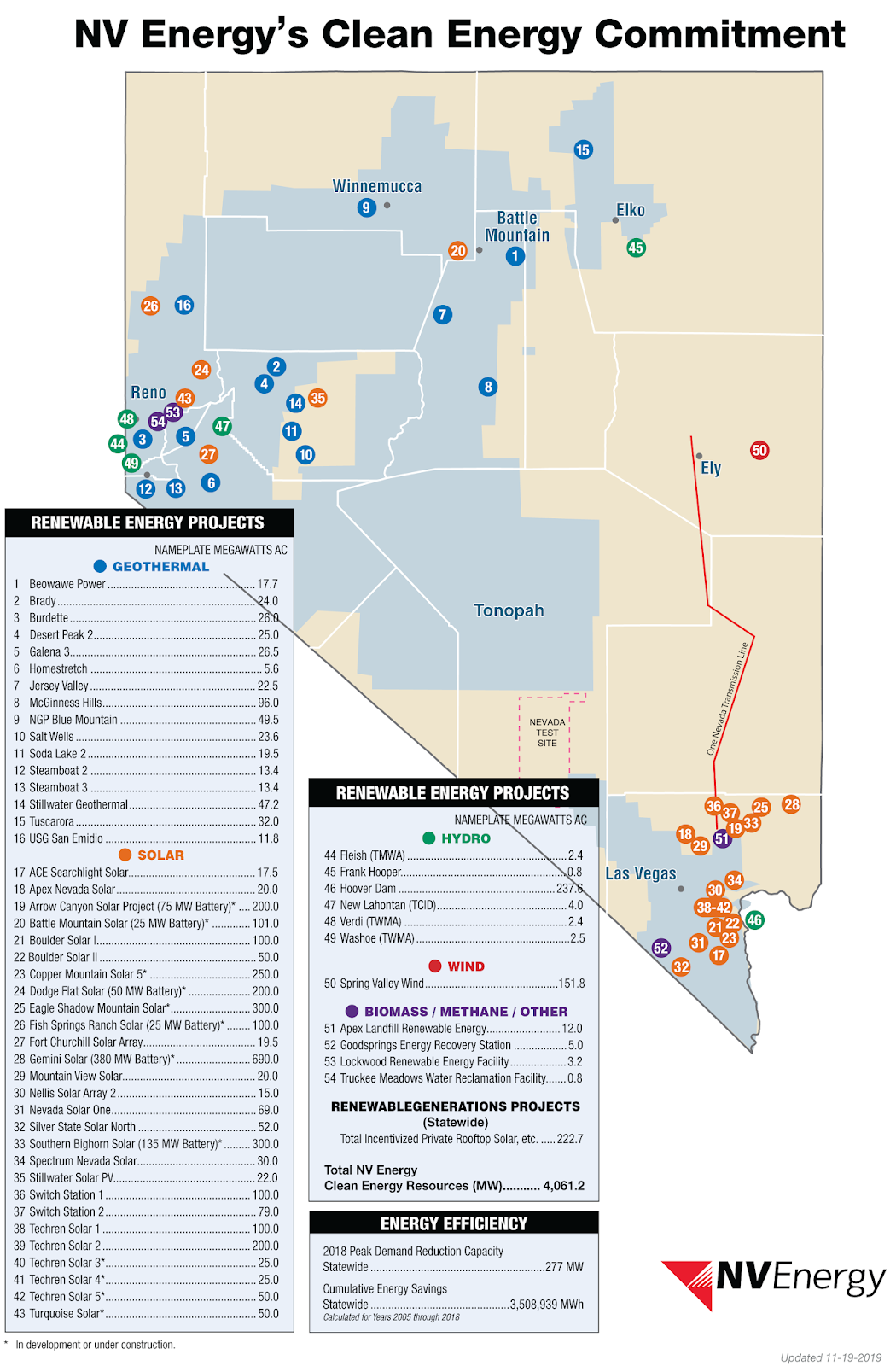
USA, Nevada: Opportunity to Provide Geothermal Energy in Silver State

NV Energy Requests Bids for Major Addition to Renewable Energy Portfolio (News Release)

NV Energy today issued a request for proposals to add new renewable energy projects to its portfolio.

The request for proposals seeks solar, geothermal, wind, biomass and biogas technology projects that are compliant with Nevada’s existing renewable portfolio standards. NV Energy will also consider adding supplemental energy storage systems that are integrated with the proposed renewable energy resource and stand-alone energy storage systems. Projects will be competitively evaluated on a number of factors, including best value to customers of NV Energy and creation of economic benefits to the State of Nevada.

NV Energy requests that all parties interested in becoming a bidder for this opportunity register on the company’s website here and follow each of the directives under the “Steps to Complete” section of the website.

Bids are due by 4 p.m. on March 9. Projects proposed by successful bidders will require the approval of the PUCN. It is anticipated the projects would be completed and producing energy for customers by December 31, 2025.

Germany: Insheim Geothermal Power Plant Successfully Supplies Brine for Lithium Extraction Demonstration Plant

Maiden Indicated Resource Insheim Vulcan Zero Carbon Lithium (News Release)

Australian company Vulcan Energy Resources Ltd. has announced the completion of the maiden Indicated Lithium-Brine Mineral Resource Estimate at the Insheim Licence, in the Upper Rhine Valley (or Upper Rhine Graben) of South-West Germany.

Vulcan has acquired direct access to lithium-enriched brine at the operating Insheim Geothermal Plant and Insheim Exploitation Licence via a binding Memorandum of Understanding with German utility Pfalzwerke geofuture GmbH (announced November 26, 2019).

The Insheim Geothermal Plant is currently pumping hot (approximately 165ºC), high-flow, lithium-enriched brine from aquifer depths of >2,980 m to the surface for power generation. Pfalzwerke geofuture GmbH is not processing or extracting lithium as part of the power generation circuit before the reinjecting the brine back down into the reservoir and the Memorandum of Understanding grants Vulcan an initial collaboration period that allows access to the Insheim Licence brine and data, with a pathway to construct a lithium extraction demonstration plant at Insheim in the future.

Read More……..

Design a site like this with WordPress.com
Get started