Science & Technology: New Model to Calculate Hydraulic Fracture Propagation

Predicting hydraulic fracture propagation more accurately (EPFL)
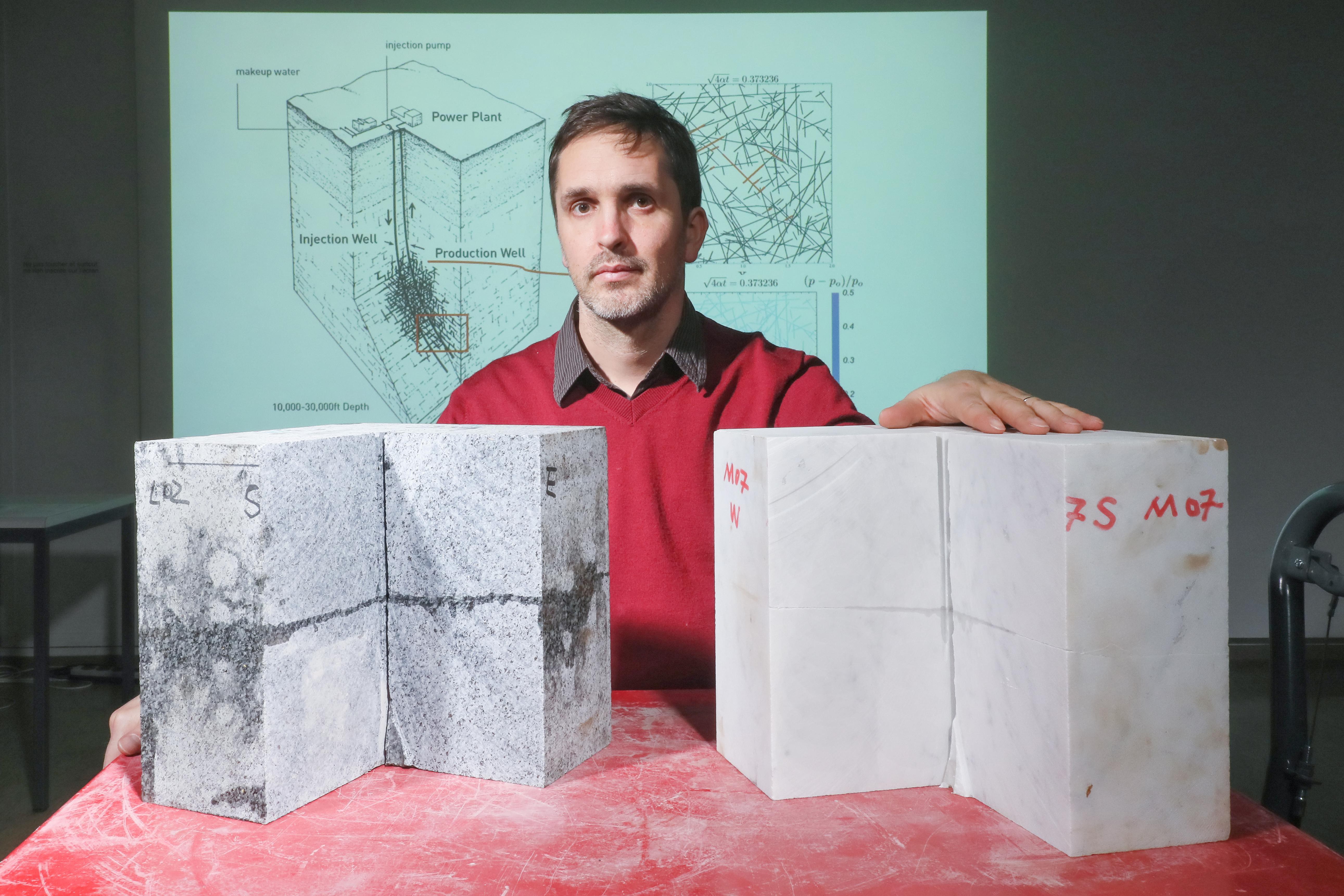
Brice Lecampion is tenure track assistant professor at EPFL. © Alain Herzog/EPFL
Researchers at the Swiss Federal Institute of Technology Lausanne EPFL (École polytechnique fédérale de Lausanne) have developed a new model to calculate hydraulic fracture propagation. 
Acclaimed for its accuracy by experts, the model better predicts fracture geometry and the energy cost of hydraulic fracturing – a widely used technique in areas such as CO2 storage, hydrocarbon extraction, dams and volcano hazard monitoring.

Engineers need to be able to calculate how these fractures propagate so they can determine precisely how much liquid to inject, and estimate the geometry – or length – of the resulting fractures. Improved estimation of the propagation is also vital to ensure the safety of the process, and helps engineers estimate its energy cost.
USA: FERC Records 3,850 MW Installed Geothermal Capacity in 2019

Renewables take the lead for new US power capacity in 2019 (Renewables Now)

According to a review by the SUN DAY Campaign of data released by the Federal Energy Regulatory Commission (FERC) for the first eleven months of 2019, the mix of renewable energy sources (i.e., biomass, geothermal, hydropower, solar, wind) is now in first place in the race for new US generating capacity added in 2019.
FERC’s latest monthly “Energy Infrastructure Update” report (with data through November 30, 2019) reveals renewable sources accounted for 8,784 MW of new generating capacity through the end of November. That is 8% more than that of natural gas (7,819 MW), nuclear (155 MW), oil (77 MW), and coal (62 MW) combined. Combined, renewables provided 52% of new generating capacity through the first eleven months of 2019 and seem poised to increase their share once the final December numbers are released.
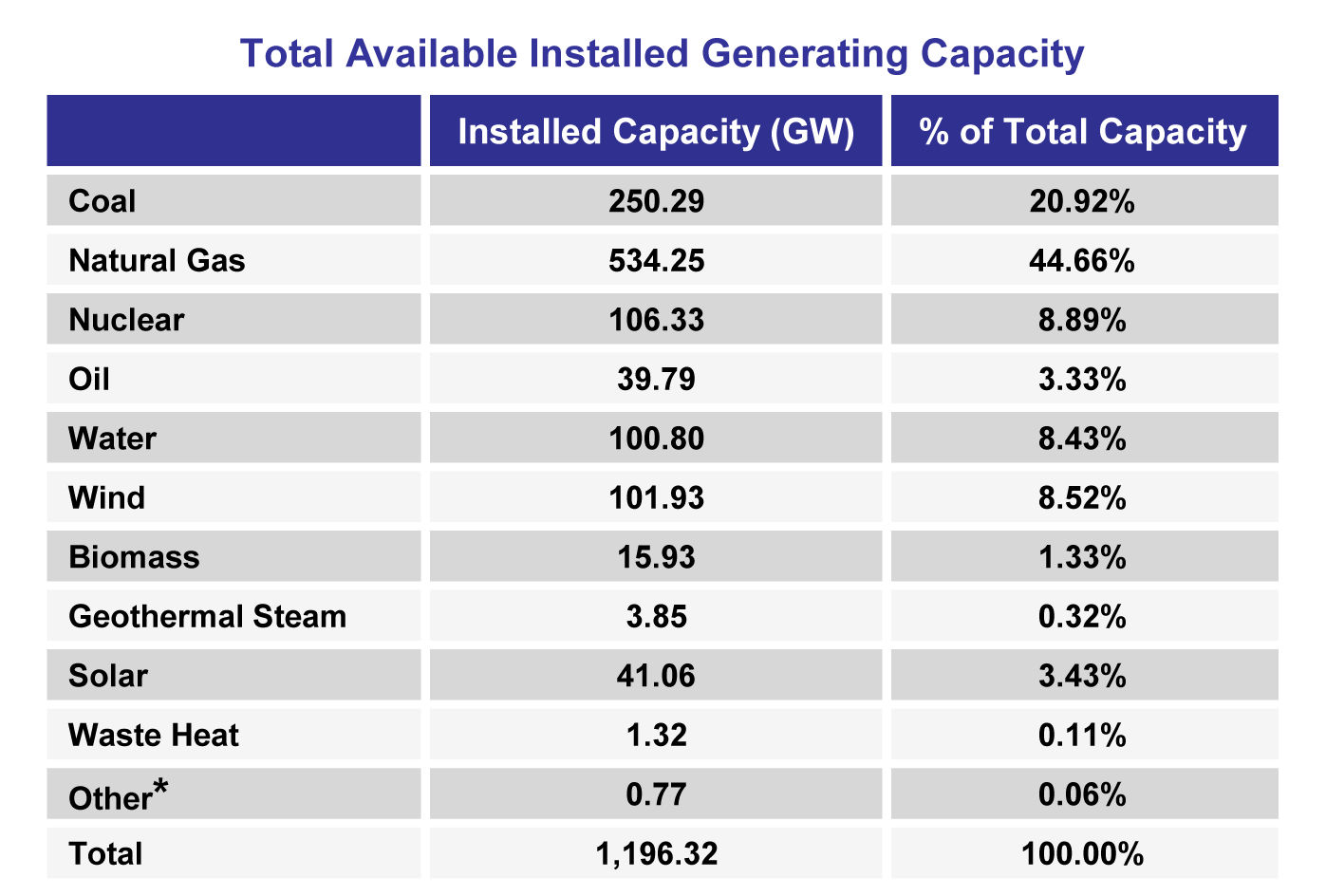
Renewables have now also surpassed 22% (i.e., 22.03%) of the nation’s total available installed generating capacity – further expanding their lead over coal capacity (20.92%). Among renewables, wind can boast the largest installed electrical generating capacity – 8.52% of the US total, followed by hydropower (8.43%), solar (3.43%) [2], biomass (1.33%), and geothermal (0.32%).
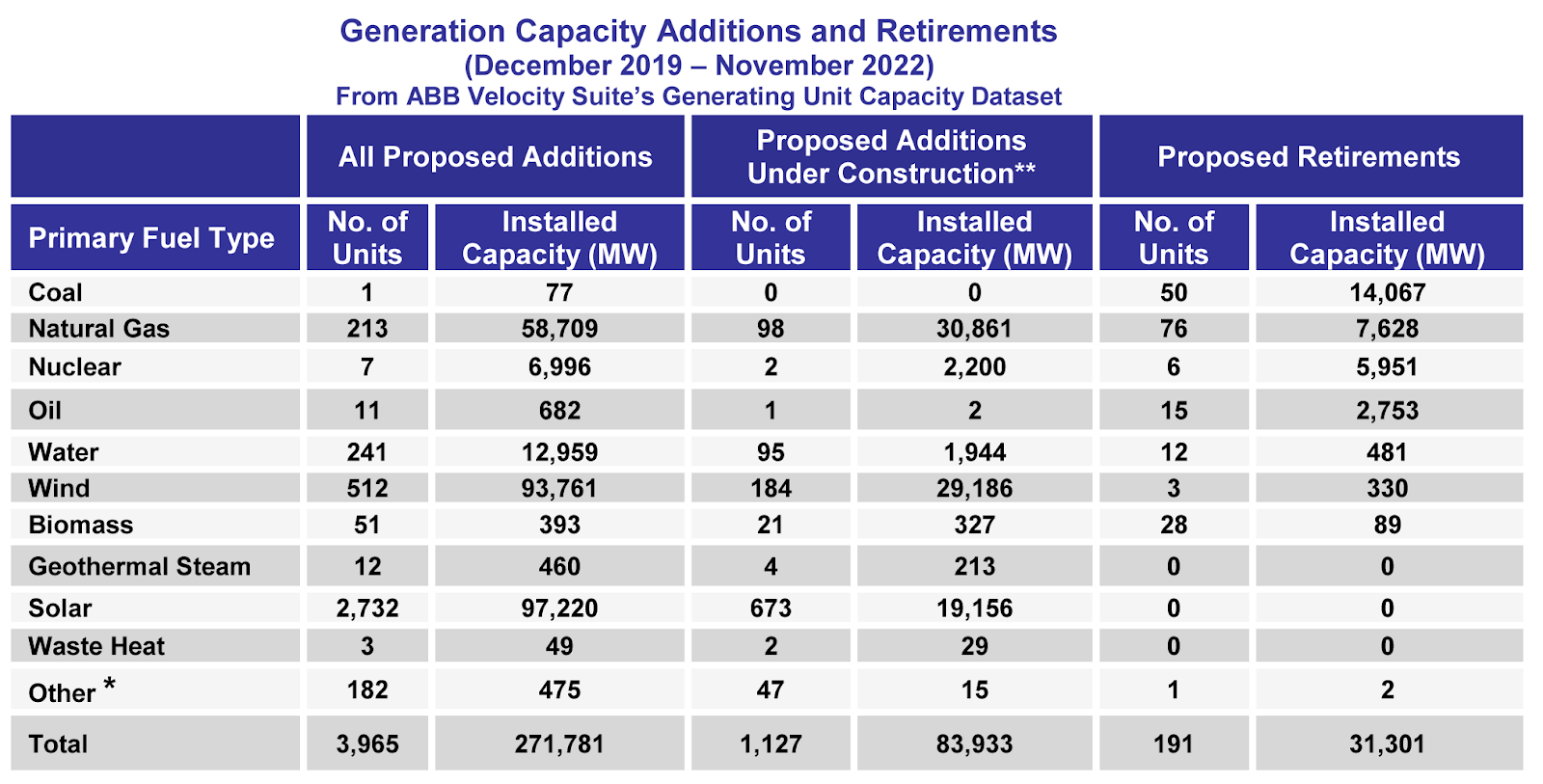
Moreover, FERC foresees renewables dramatically expanding their lead over fossil fuels and nuclear power in terms of new capacity additions during the coming three years (i.e., December 2019 – November 2022). Net generating capacity additions (i.e., “proposed additions under construction” minus “proposed retirements”) for renewable sources total 49,926 MW including 213 MW for geothermal – another 247 MW of future geothermal capacity is proposed.

USA, Texas: Funding Provided for Fort Bliss Geothermal District Heating Network

Today the U.S. Department of Energy (DOE) announced more than $5 million in funding for 11 federal agency projects to catalyze the adoption of energy and water efficiency and renewable energy technologies at facilities across the Federal Government. 
Projects funded under the 2019 AFFECT Federal Agency Call include a geothermal district heating system:

Fort Bliss, U.S. Army: (El Paso, Texas) Develop a geothermal resource by collecting geothermal site data and leveraging an earlier collaboration with DOE’s Geothermal Technologies Office that would implement a renewable, geothermal district heating system, increasing the resilience posture of the base and reducing reliance on exterior energy sources.

USA, Colorado: Geothermal Powered Brewery in Pagosa Springs

Earth-Powered Brewery Taps Deepest Hot Spring in the World (9 News)


Riff Raff Brewing co-founder Randy Schnose helps run one of only two “earth-powered” breweries in the nation. Riff Raff uses advanced technology to tap into an ancient energy source, and does it all in a 120-year-old building.

“We’ve got such an old building with so much character housing so much technology,” Schnose said.

It’s also providing an example for other businesses. “We have this fantastic resource literally in our backyard,” said Madeline Bergon, who runs marketing and events for Riff Raff. “We as a business and community are showing people alternative resource possibilities.”

The brewery happens to be one of 31 sites that can tap into a downtown geothermal heating district, which uses 144°F water to heat sidewalks, schools and buildings from October to April. The district was originally funded by a federal grant, and is operated by the city of Pagosa Springs.

The geothermal pipes tap into the deepest hot spring in the world. It’s even listed in the Guinness Book of World Records. The geothermal system heats the brewery, kitchen and restaurant, as well as a couple of upstairs vacation rentals. And it melts the snow on the brewery’s back lot.

The system preheats the brewery water, but Schnose points out that the brewery only uses pure river water that is heated through geothermal pipes. No worries that your beer will have the aroma or the heavy minerals of hot springs water.

Read More……….

Climate Change: Need to Deploy Additional Zero-Carbon Technologies – Bloomberg Report

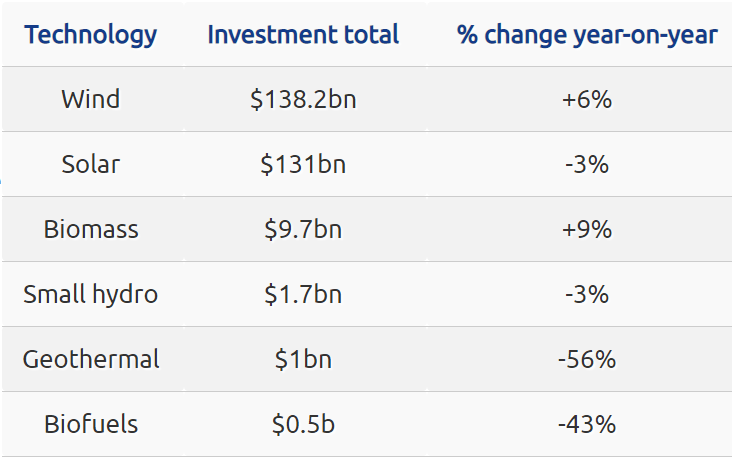
Clean Energy Investment Trends, 2019 (Bloomberg NEF)

Investment in geothermal was USD
billion in 2019, a decrease of
56% on the year

Solar, Wind, Batteries To Attract $10 Trillion to 2050, But Curbing Emissions Long-Term Will Require Other Technologies Too

Investment in geothermal was USD billion in 2019, a decrease of 56% on the year
  1. Wind and solar make up almost 50% of world electricity in 2050 – “50 by 50” – and help put the power sector on track for 2 degrees to at least 2030. 
  2. A 12TW expansion of generating capacity requires about $13.3 trillion of new investment between now and 2050 – 77% of which goes to renewables. 
  3. Europe decarbonizes furthest, fastest. Coal-heavy China and gas-heavy U.S. play catch-up.
  4. Wind and solar are now cheapest across more than two-thirds of the world. By 2030 they undercut commissioned coal and gas almost everywhere.
  5. Consumer energy decisions such as rooftop solar and behind-the-meter batteries help shape an increasingly decentralized grid the world over.
  6. Batteries, gas peakers and dynamic demand help wind and solar reach more than 80% penetration in some markets.
  7. Coal continues to grow in Asia, but collapses everywhere else and peaks globally in 2026.
  8. Gas-fired power grows just 0.6% per year to 2050, supplying system back-up and flexibility rather than bulk electricity in most markets.
  9. Making heat and transport electric lowers emissions. The challenge is scale.
  10. To keep an electrified energy sector on a 2-degree trajectory, we will need to deploy additional zero-carbon technologies that are dispatchable and economic running at low capacity factors, or technology that can capture and sequester emissions at scale.

Read More……….

Disability rights leaders praise Massachusetts court decision that there is no right to assisted suicide.

Alex Schadenberg
Executive Director, Euthanasia Prevention Coalition


*Massachusetts Court explains why assisted suicide should be prohibited (Link).

John Kelly, Second Thoughts

Disability rights leaders praised the Massachusetts court decision that there is no right to assisted suicide. The assisted suicide lobby doctors have decided to appeal the decision. 

The Second Thoughts Massachusetts media release stated:

Second Thoughts Massachusetts praises the decision by Suffolk Superior Court Judge Mary K. Ames rejecting a right to physician-assisted suicide in the state. She ruled that any Massachusetts doctor who prescribes a lethal dosage of drugs could be subject to prosecution for involuntary manslaughter. 

Second Thoughts director John B. Kelly said, “we are gratified that the court reaffirmed the law against assisted suicide, and referred the matter to the legislature where lawmaking belongs. Disability rights advocates will continue to press the legislature that assisted suicide is just too dangerous.” 

Judge Ames wrote that at the point of a patient ingesting the lethal drugs, they would be vulnerable to improper persuasion. “In such a situation, there is a greater risk that temporary anger, depression, a misunderstanding of one’s prognosis, ignorance of alternatives, financial considerations, strain on family members or significant others, or improper persuasion may impact the decision.” 

Ruthie Poole is president of the board of MPOWER, a group of people with lived experience of mental health diagnosis, trauma, and addiction. Poole said, “Personally, as someone who has been suicidal in the past, I can relate to the desire for ‘a painless and easy way out.’ However, depression is treatable and reversible. Suicide is not. The current bill in the legislature pretends otherwise.”

The Cape Cod Times reported that the assisted suicide doctors, who brought the case to the Massachusetts court, are appealing the decision. The report stated:

“We’re disappointed that the court didn’t rule in our favor,” Kligler said. “We’re hoping that the appellate court or Supreme Judicial Court will.”

The Euthanasia Prevention Coalition (EPC) emphasized that the Massachusetts court decision is not the only court decision stating that there is no right to assisted suicide. EPC hopes that this decision will prevent the legalization of assisted suicide in Massachusetts.

USA, California: Conference for Community Choice Aggregator Offers Opportunity for Geothermal Energy Providers

Community Choice Energy Summit (Infocast)

22-24 January 22-24, Sacramento, California

Community Choice Aggregator (CCA)s will be procuring a quarter of the 3.3 GW load call for California. Major cities in Southern California are forming their own CCAs, including Los Angeles joining with dozens of cities, San Diego and South Coast beach cities, while the City of Long Beach has completed its Feasibility Plan.

Join 13 leading and emerging CCAs to learn about their plans, programs, and initiatives for transforming the California energy market.

Agenda………

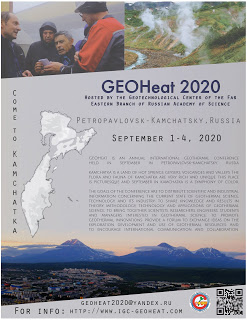
Russia: Four Day Geothermal Conference on Kamchatka Peninsula

GEOHeat 2020 (Research Geotechnological Center of Far Eastern Branch of Russian Academy of Sciences)

1-4 September, Research Geotechnological Center of Far Eastern Branch of Russian Academy of Sciences, Petropavlovsk-Kamchatsky, Russia

Kamchatka is a very unique region of Russia. It is a part of Pacific Ring of Fire (circum-Pacific orogenic belt) and it is washed by cold Okhotsk Sea, Bering Sea and the Pacific Ocean. Petropavlovsk-Kamchatsky is the capital of Kamchatka peninsula. It is a sea-port and one of the most spectacular towns in the whole world. It is a land of Hot Springs and geysers, volcanoes and valleys with lush vegetation.

The goals of the conference are to distribute scientific and industrial information concerning current state of geothermal science, technology and industry; to share knowledge and results in theory, methodology, technology and applications of geothermal science; to bring together scientists, researchers, engineers, students and managers interested in geothermal science; to promote geothermal innovations; provide a forum to exchange ideas on the exploration, development and use of geothermal resources; to encourage international communication and collaboration.

More Information……….                             Flyer………

Iceland: Early Bird Registration for World Geothermal Congress 2020 Expires Today

World Geothermal Congress 2020 – Early bird registration expires today! (WGC 2020)

The early bird registration for WGC 2020 will expire after January 15th. Save by registering now!

Members of the Geothermal Resources Council (GRC) are automatically members of the International Geothermal Association (IGA) and are therefore eligible for the IGA Member discount of ISK 120,000, if you register before January 15th. Non-members can register for ISK 140,000 and students pay just ISK 60,000.

The World Geothermal Congress is a unique platform which attracts a global audience of decision makers in the geothermal world. The event brings together industry leaders, and key stakeholders both from established and emerging geothermal countries as well as government officials and international financial institutions.

WGC will bring together more than 3,000 delegates attending from Africa, Asia, Europe and the Americas, sharing their experience and vision for our industry and shaping the direction of geothermal for decades to come. The delegates will have a unique opportunity to see first-hand how Iceland became a global leader in geothermal utilization during short field trips in the evenings or longer excursions to the islands many geothermal areas. Hopefully they will go home to their respective countries ready to take the next step towards implementing sustainable energy solutions based on their own geothermal resources.

More Information………

Indonesia: Video Highlights the Potential for Geothermal – In Indonesian Only!

Potensi Panas Bumi Untuk Indonesia Maju Energi – Geothermal Potential for Indonesia to Develop Energy (DW Indonesia)

Featuring Pri Utami, Ph.D., Head of Geothermal Research Centre, Gadjah Mada University, Yogyakarta, Indonesia.

(Video 6:34 minutes)

Design a site like this with WordPress.com
Get started